One of the most significant contributions of the profound transformation experienced in Türkiye in recent years has undoubtedly been the revitalization of a sense of self-confidence that had long been interrupted. The hegemonic Western discourse, which has consistently rendered societies passive, has shaped not only perceptions of the present but also the way society relates to its past. During this period, turning toward the past functioned largely as a form of defensive resource against this hegemonic pressure. However, as this dominant discourse has gradually been broken in recent times, self-confidence has been restored, and the possibility of establishing a healthier relationship with the past has correspondingly increased.
At this stage, the effort underway in Türkiye to reconstruct a new language grounded in this accumulated heritage – by re-strengthening the severed ties with the past – does not merely represent a rhetorical or symbolic attempt to reconnect with history. Rather, it signifies a foundational rethinking of the sources of knowledge, its legitimacy and its modes of circulation. In this context, although often overlooked, the activities of the Presidency of the Manuscripts Institution of Türkiye (TÜYEK) constitute one of the most critical foundations forming the intellectual ground of this new language.
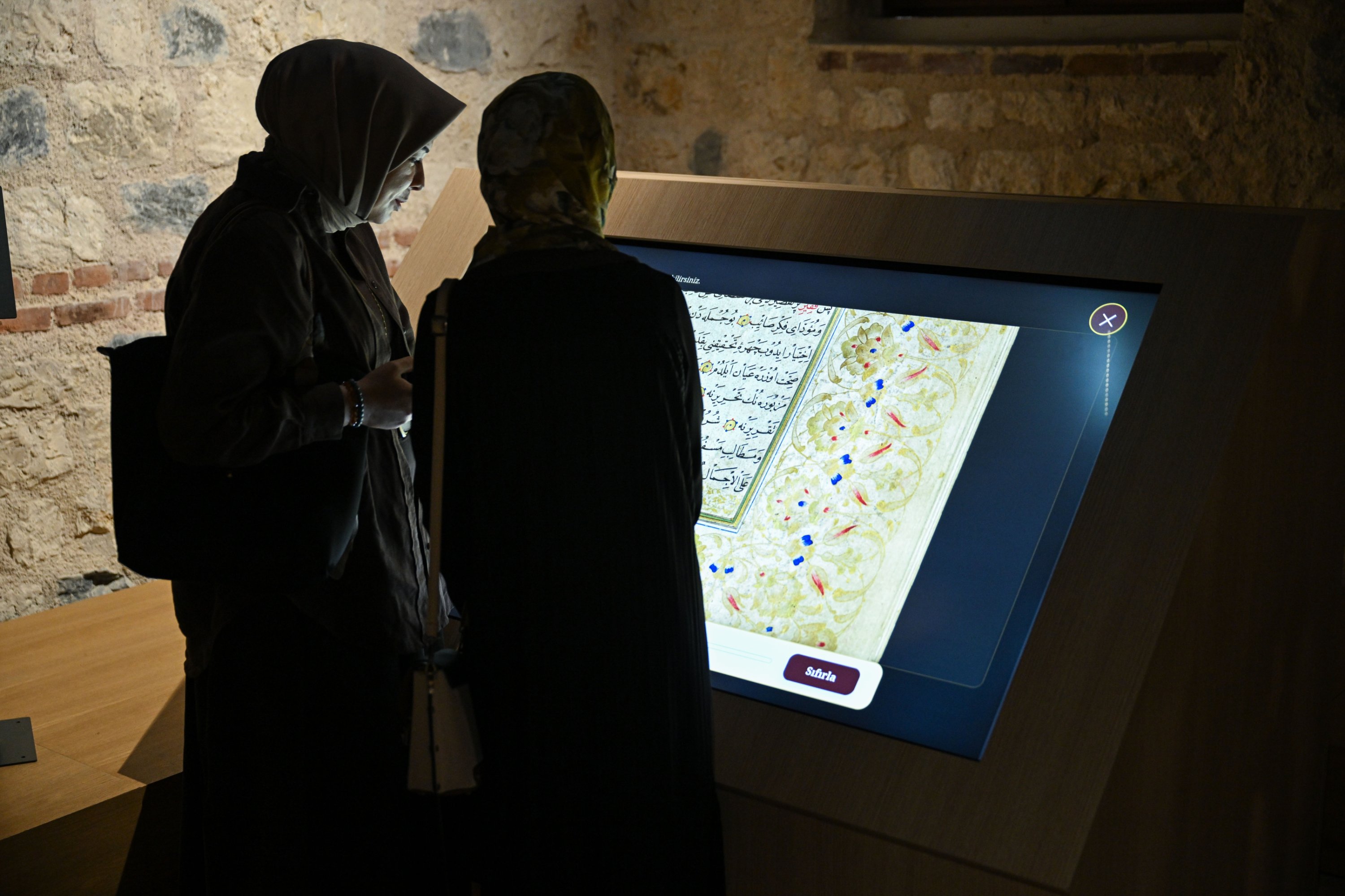
Established in 2010, TÜYEK has consistently continued its efforts to make accessible the foundational works that bear witness to the intellectual development of Turkish-Islamic history across a broad temporal span – from the eighth to the 20th centuries – and a wide geographical landscape. These sources encompass all fields of knowledge, ranging from religious sciences to mathematics, physics, astronomy, philosophy, medicine, literature, history and political thought. Through the institution’s website, digital copies of 465,000 manuscripts and rare printed works are accessible, while bibliographic records for approximately 640,000 works are available.
The construction of a new language requires transforming the way in which the relationship with the past is established. For many years in Türkiye, engagement with manuscripts was confined to a narrow field of academic specialization. This situation rendered the past either an unrecognized heritage or a closed domain to be examined solely through technical analysis. The approach adopted by TÜYEK, in contrast, corresponds to an effort to move the past beyond being a frozen point of reference and to reconstitute it as a field of memory and knowledge that can be reread, debated and actively employed in contemporary discourse. In this respect, the institution enables the language of the present to reconnect with the depth of the past.
A past whose memory is fragmented, inaccessible, or physically damaged cannot generate a new language; it can produce only symbolic references. The systematic preservation of manuscripts and their being made accessible allows the past to be transformed from a selective and fragmented narrative into a coherent field of reference. In particular, processes of digitization, cataloguing and opening collections to researchers enable this memory to enter both social and academic circulation. The emergence of a new language requires not merely that the past be “known,” but that it be re-examined and reinterpreted by different disciplines, generations and intellectual communities. By moving manuscripts from closed shelves into national and international academic networks, the scope of reference for intellectual production in Türkiye is expanded, paving the way for a language that can move beyond one-directional narratives of Western modernity.
Bringing texts to light through critical editions demonstrates not only the claim that the past “belongs to us,” but also the reality that it can be read by us and transformed into productive intellectual output. This, in turn, allows the new language to acquire a confident and constitutive character rather than a defensive or reactive one. In this way, the past ceases to function as an archive that merely supplies material for defensive responses in contemporary ideological debates and instead becomes a living source that nourishes ongoing intellectual production.
One of the most significant contributions of this process is the repositioning of the intellectual subject. The systematic work carried out on manuscripts creates and strengthens a foundation on which scholars can speak through their own sources and re-examine and circulate their own concepts. This enables the new language to move away from being imitative or defensive and to construct its own conceptual specificity.
The deepening and consolidation of this process depend on universities embracing more strongly the opportunities provided by TÜYEK and on the qualitative strengthening of institutional ties. The published works need to be sustained and enriched through postgraduate studies, research projects, and long-term scholarly endeavors conducted within universities. However, from the perspective of our universities, there are mental barriers that must be overcome in this regard. Above all, manuscripts are still associated with a very limited domain within universities. As a result, manuscript studies are perceived as a narrow field of expertise shouldered by only a few departments, or even a handful of individuals. This perception prevents the establishment of the natural connections that manuscripts have with disciplines such as philosophy, law, political science, economics, sociology, and education.
Yet manuscripts are not merely objects of philological or historical inquiry; they are constitutive texts capable of nourishing multiple domains of intellectual production. Because of this barrier, the catalogues, digital collections, and editions provided by TÜYEK are not sufficiently reflected in thesis topics and research agendas in many universities in a systematic manner. Thesis processes often gravitate toward fields that yield quicker results, offer ready-made literature, and possess well-established methodologies, while manuscript-based studies are perceived as risky, time-consuming, and lacking institutional support. On the other hand, universities also tend to fall short of acting with sufficient courage and creativity in relating manuscripts to contemporary problems. Manuscripts are frequently approached solely within their historical contexts, and how these texts might speak to the present in terms of law, politics, ethics, economics, or social imagination is not systematically explored. This situation removes manuscripts from the realm of living intellectual sources and confines them to narrowly defined domains.
Of course, this is not an easy process. Given that the dominant mode of knowledge production in our universities has long been shaped by Western discourse and methodology, the difficulty is understandable. Nevertheless, the construction of a new language requires confronting and overcoming these challenges. As these obstacles are gradually surmounted, the processes of critical examination of these works will be strengthened, making it possible to carry them into the present and to open up perspectives capable of shedding light on contemporary problems. At the same time, this will enable the formation of a sustained school of thought and methodology for young researchers. Such a sphere of interaction would remove manuscripts from being merely a heritage preserved in archives and integrate them into the natural processes of knowledge production within universities. In doing so, it would allow the new language – one that strengthens its connection with the past – to be grounded on a far more solid institutional and academic foundation.
On the other hand, making manuscripts accessible will also narrow the distance between civil society and academia. As foundations, associations, think tanks and cultural initiatives are able to incorporate these texts into their own fields of activity, the new language will move beyond the confines of academic writing and enter broader social circulation. In this way, the social diffusion and rooting of the new language will become possible, allowing it to acquire a form that is tested, transformed and refined within the practices of civil society. Moreover, a language developed through engagement with manuscripts will enable civil society to position itself not merely as an actor reacting to the problems of the present, but as the continuation of a long intellectual tradition. Such a positioning will not only enhance the self-confidence of civil society but also strengthen its resonance within society at large. Consequently, the intellectual production facilitated by TÜYEK will become a living resource that nourishes the ways in which civil society thinks, speaks, and takes positions. In this manner, the new language will be transformed into a lasting intellectual foundation that permeates the everyday practices of civil society.
In conclusion, the activities of TÜYEK make a highly significant contribution to the construction of a new language that has begun to take root in recent years – one that strengthens its connection with the past on a sound and healthy foundation. The institution’s work ensures that this new language is not merely an assertion lacking infrastructure but a concrete intellectual practice built upon archives, texts, research and production. In this respect, the activities carried out around manuscripts constitute the quiet yet enduring infrastructure of a confident, deep and sustainable language of thought in Türkiye.
DAILYSABAH
هلدینگ کاسپین استانبول | خرید ملک در ترکیه | صرافی معتبر ایرانی در ترکیه | خرید و فروش طلا در ترکیه | مهاجرت به ترکیه | واردات و صادرات در ترکیه | نیازمندیهای ترکیه | اخبار ترکیه | اخبار جهانی | توریست ایران | خدمات توریستی در ایران | تورهای گردشگری ایران | هلدینگ اول | خدمات کاریابی و فریلنسری و شغل | مرجع اطلاعات ایران (همه چیز در ایران) | کیف پول و خدمات مالی و پرداخت یار | اخبار ایران | تابلو زنده قیمت ارز در ترکیه و استانبول | صرافی آنلاین ترکیه | قیمت طلا و نقره در ترکیه | سرمایه گذاری در ترکیه | جواهرات در ترکیه | نرخ لحظه ای ارزها در استانبول | قیمت دلار امروز در ترکیه | قیمت دلار استانبول امروز | قیمت لحظه ای دلار | اخبار روز ترکیه استانبول | اپلیکیشن ISTEX | اپلیکیشن قیمت لحظه ای دلار و یورو و لیر و ارزها در ترکیه
About the Author