Home – CBSNews.com
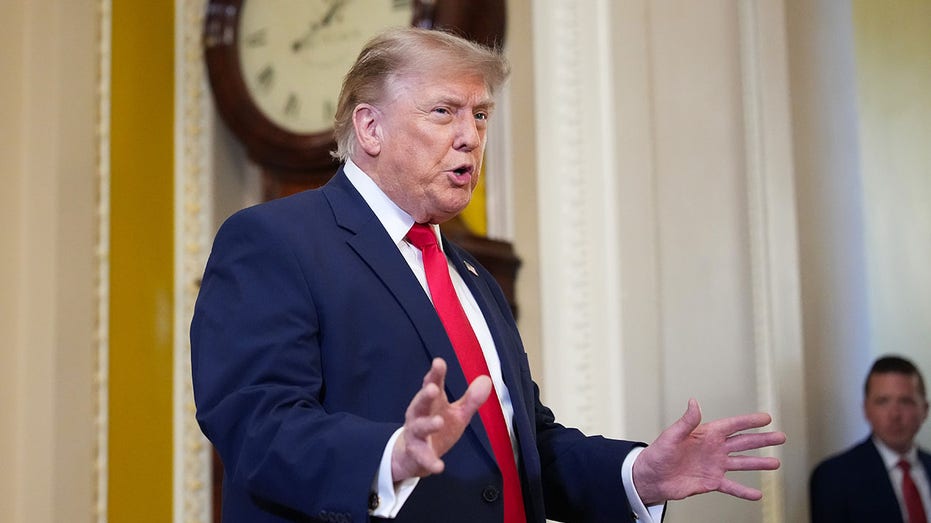
President Trump formally notified Congress that “military action” against Iran “commenced on July 7,” according to a letter obtained by CBS News on Monday. The letter was dated July 10.
“United States Armed Forces remain postured to take further action, as necessary and appropriate, to address further threats and attacks upon the United States or its allies and partners and to ensure the Government of the Islamic Republic of Iran ceases being a threat to the United States and to our allies and partners,” the letter says.
The letter adds that he’s providing the notification “as part of my efforts to keep the Congress fully informed, consistent with the War Powers Resolution.”
Under the War Powers Resolution of 1973, the president must notify Congress within 48 hours of the start of military hostilities. The Trump administration’s position had been that hostilities against Iran began in late February and formally ended on April 7, when the two sides agreed to a ceasefire, but Mr. Trump declared last week that the ceasefire was “over.” The U.S. has launched several rounds of strikes against Iran over the last week, starting on July 7.
Both the House and Senate passed a war powers resolution last month, seeking to limit Mr. Trump’s ability to carry out further military action against Iran without congressional authorization. Democrats have said they’re considering their legal options to force Mr. Trump to comply. The president has argued that he is acting under his constitutional authority.
President Trump will give a primetime address Thursday, he announced on Truth Social Monday amid heightened hostilities with Iran.
“President Trump will be making a Speech to the Nation on Thursday evening, at 9 P.M. Eastern. Thank you for your attention to this matter!” he wrote.
He did not immediately provide other details on the address.
The U.S. will continue blocking maritime traffic from entering and exiting Iranian ports at the direction of President Trump, U.S. Central Command announced Monday.
The naval blockade will resume Tuesday at 4 p.m. ET.
The U.S. military will continue to support traffic flow through the area for other permissible vessels, U.S. Central Command said.
The formal announcement comes after Mr. Trump said on Truth Social that the U.S. would resume the blockade, the latest effort to manage an uncompliant Iran.
“We are reinstating the THE IRANIAN BLOCKADE, so named because it is only stopping Iran’s ships or customers from entering or leaving,” the president posted on Truth Social Monday morning. “All other countries will have fair and open use of the Strait.”
In the same post, the president said the U.S. would “probably run” the Strait of Hormuz and impose a 20% fee on cargo shipments.
Iranian Foreign Minister Abbas Araghchi weighed in on Mr. Trump’s suggestion that the U.S. will impose a 20% fee on cargo transiting the Strait of Hormuz, writing in a social media post that Iran would “be fair” in determining what such a toll might look like.
“POTUS is absolutely right. Whoever provides secure and safe passage of commercial vessels through the Strait of Hormuz should be compensated for this service,” Araghchi wrote. He added: “Iran has always been the GUARDIAN of the Strait and will remain so FOREVER. 20% is of course too much. We will be fair.”
The International Maritime Organization, the United Nations agency overseeing international shipping, said Monday that it was waiting to find out more about Mr. Trump’s proposal but remained opposed to tolls for passage through international waterways.
“There is no legal basis through which to introduce mandatory tolls simply to transit through a strait,” it said in a statement.
It said in a separate statement Monday that the agency’s executive body “stressed that any arrangement between the littoral States of the region shall guarantee the non-discriminatory and unimpeded right of transit passage of all ships.”
The Council of the International Maritime Organization has also “reaffirmed that passage through the Strait should remain free of any tolls and charges, in accordance with international law, including the IMO Convention.”
The council also condemned attacks on commercial ships and called for the de-escalation of tensions in the region.
CBS/AP
United Nations Secretary-General Antonio Guterres raised the alarm Monday over U.S. strikes on Iran as well as Tehran’s attacks on shipping in the Strait of Hormuz and its neighbors.
Guterres expressed “deep concern at the serious escalation of renewed military confrontation in the Gulf region, including Iranian attacks on ships on the Strait of Hormuz, attacks by the United States on the Islamic Republic of Iran, and attacks by Iran on targets in neighboring countries,” his spokesman Stephane Dujarric said.
Just 14 vessels – half of which were commercial ships – crossed the Strait of Hormuz on Sunday, according to data from maritime tracker Kpler, suggesting the waterway was not completely closed as Iran had announced.
At least three commodity vessels crossed so far on Monday, according to Kpler.
However, traffic is significantly disrupted by security risks.
Sunday recorded the lowest daily number of transits since June 13, before a memorandum of understanding outlining a fragile truce between the U.S. and Iran briefly boosted traffic through the strait. Half of the vessels that crossed on Sunday were Iran-flagged.
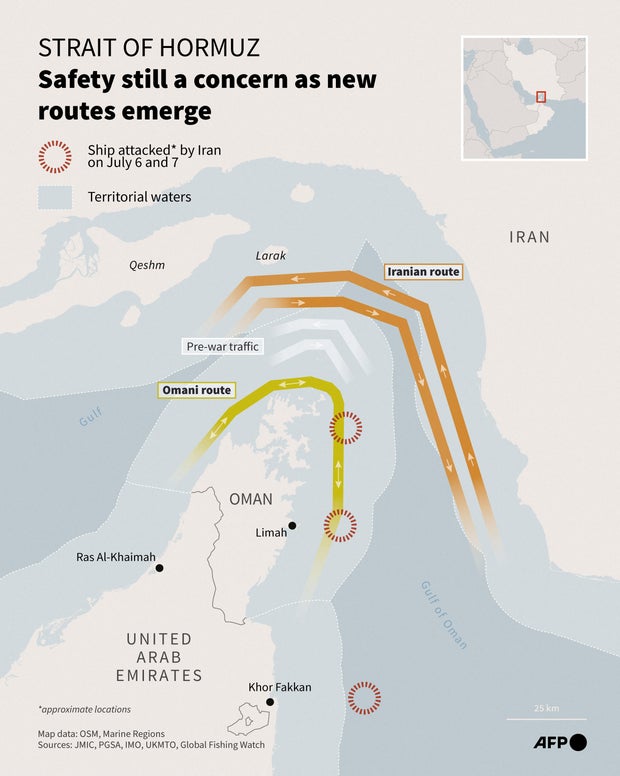
Amongst the non-Iranian traffic, only two vessels crossed with their transponders switched on – one crossed through the Iranian route and another passed through the peacetime shipping corridor, which the International Maritime Organization has warned is currently unsafe because of the risk of sea mines.
According to Kpler, no ship over the weekend passed through the Omani route with its transponder switched on.
But the U.S.-supported corridor in the southern part of the strait remains in use, according to Barun Gupta, an analyst at maritime intelligence provider Vanguard Tech.
He told AFP on Monday that some Vanguard Tech clients crossed through that route with U.S. support.
“The U.S. is able to provide support to vessels by, for example, shooting down projectiles or advising them on the best time to cross,” Gupta said.
However, the risk is high.
“Any vessel that Iran perceives to be U.S.- or Israeli-affiliated, or that transits without coordination with Iranian authorities or outside Iran-designated routes, could attract heightened scrutiny,” he said.
Iran and Oman are to continue political and technical talks on the management of the Strait of Hormuz, according to the Iranian foreign minister.
In a post on his Instagram page Monday, Abbas Araghchi said he had briefly visited Muscat, the Omani capital, to meet his counterpart Badr al-Bousaidi, “and together with the legal and technical boards, we discussed the coordination of the two coastal countries of the Strait of Hormoz for managing the Strait.”
“These talks will continue at the political and technical levels,” he added.
One of the points of the memorandum of understanding signed by Iran and the U.S. is that Iran will define with Oman “the future administration” of the crucial waterway.
Qatar condemned Iranian strikes on Jordan, Bahrain and Kuwait Monday as tension between the U.S. and Iran appeared to mount after the latest exchange of attacks.
Iran claimed it had struck facilities in several Gulf countries Monday, while the Jordanian military said it had shot down several Iranian missiles in its airspace. Tehran called the attacks retaliation for U.S. strikes and said they had targeted U.S. military installations – though American officials reported no damage.
In a statement posted on X Monday, the Qatari foreign ministry stressed “the need to spare the region the consequences of these unjustified attacks and to advance the path of dialogue, diplomacy, and de-escalation.”
Qatar and Pakistan have been acting as the lead mediators between Iran and the U.S., and indirect talks between the two countries were held in June and early July, before being paused for the funeral of Iran’s slain supreme leader, Ali Khamenei.
President Trump has since said the memorandum of understanding signed by himself and his Iranian counterpart in mid-June is, in his view, “over,” and even returning to meaningful peace talks looked unlikely Monday as Mr. Trump declared unilateral U.S. control over the Strait of Hormuz and a reimposition of the American naval blockade of Iran’s ports.
The U.K. will seek to proscribe Iran’s Islamic Revolutionary Guard Corps as a terrorist organization under a new law set to be voted on by lawmakers this week in parliament, the government said Monday.
“If approved by Parliament later this week, those conducting acts of sabotage including arson on behalf of these groups could face life imprisonment,” the Home Office said in a statement. “The move will step up the government’s ability to counter state threats linked to foreign powers including espionage, foreign interference in our democracy, sabotage and physical attacks. “
The Islamic Movement of Companions of the Right (IMCR), which has claimed seven attacks targeting the Jewish community in the U.K., and Russia’s GRU Volunteer Corps, will be included in the ban.
Analysts told CBS News early this year that the IMCR attacks appeared to have been carried out by an “Iran-aligned network,” but U.K. Security Minister Angela Eagle went further Monday, saying the group was linked to the IRGC.
“Sitting behind IMCR were members of Iran’s Islamic Revolutionary Guard Corps Qods Force, who almost certainly directed IMCR attacks across Europe,” she said.
A common factor in many cases linked to IMCR and similar incidents was the alleged involvement of intelligence agencies linked to Iran’s close ally, Russia, according to research by the The Royal United Services Institute for Defense and Security Studies.
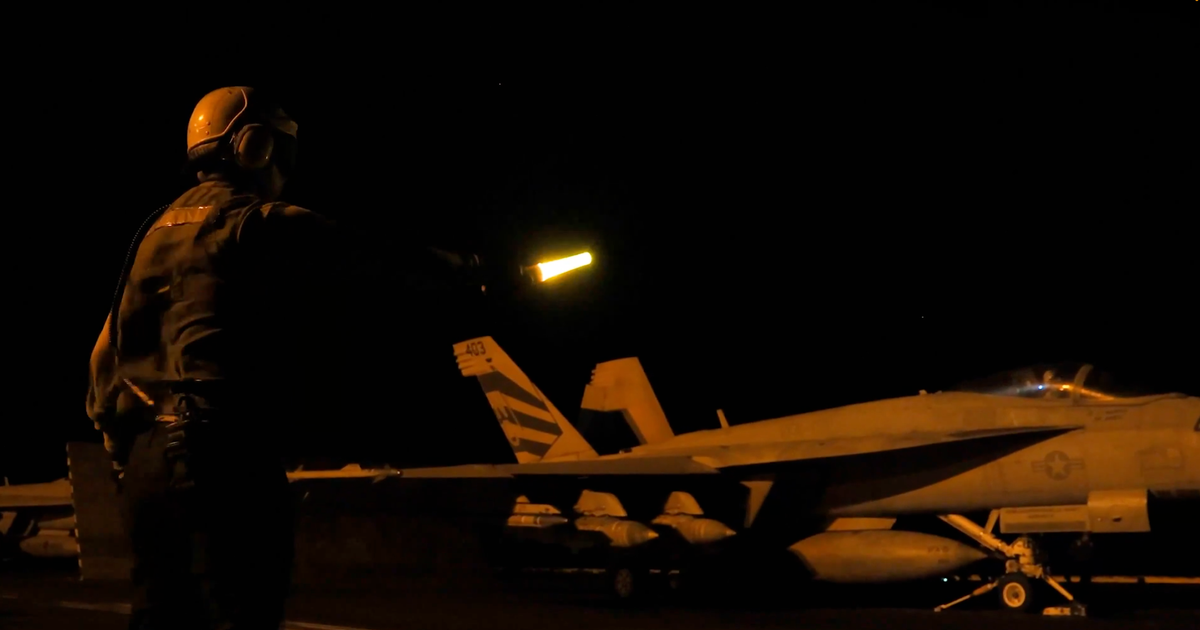
The U.S. military’s Central Command said Monday that the latest attacks on Iran hit “a submarine and ship maintenance facility” at Bandar Abbas Naval Base on the country’s southwest coast in the Strait of Hormuz.
CENTCOM said in its social media post that the strikes were carried out using “three Corsair unmanned surface vessels … marking the first time American forces have employed sea drones in combat operations.”
“Last night’s strikes degraded Iran’s ability to continue attacking commercial shipping,” CENTCOM said.
The post was accompanied by black and white video, labeled “unclassified,” that showed a small watercraft approaching a raised dock structure holding what appeared to be a submarine before blowing up.
“The Hormuz Strait is OPEN, and will remain OPEN, with or without Iran,” President Trump insisted again Monday in a Truth Social post, announcing a reinstatement of the U.S. military blockade of Iranian ports and associated vessels.
“We are reinstating the THE IRANIAN BLOCKADE, so named because it is only stopping Iran’s ships or customers from entering or leaving. All other countries will have fair and open use of the Strait.”
Mr. Trump declared that the U.S. would henceforth be “known as ‘THE GUARDIAN OF THE HORMUZ STRAIT,’ but as such, and as a matter of FAIRNESS, will be reimbursed, at the rate of 20% on all cargo shipped, for any and all costs necessary to do the job of providing safety and security to this very volatile section of the World. The process and formation will begin immediately.”
“Due to recent hostile actions by the US forces, passage through the Strait of Hormuz is currently unfeasible,” Iran’s Persian Gulf Strait Authority declared in a social media post Monday.
“As soon as stability and calm are restored, all applications will be reviewed in accordance with the scheduled timeline, and the permitting process will resume,” the PGSA added, reminding vessels that in Iran’s view, “the sole means of obtaining a passage permit” to transit the strait is through its website.
The PGSA was created by Iran during the war and Tehran insists that all commercial vessels wishing to transit the waterway seek permission via the agency and then use a northern route, close to Iran’s coast.
Iran does not recognize the legitimacy of a southern route through the strait, close to the Omani coast, that the U.S. insists is open and available. Iranian forces have attacked multiple vessels trying to use the route.
Iranian and U.S. authorities have argued publicly, via social media, for days about whether the strait is open or closed, with President Trump insisting it remains open via the Omani route, and declaring on Monday that the U.S. will “keep” control of the waterway “and we’ll probably run it.”
After condemning Iran for weeks over suggestions that it would charge commercial ships for passage, President Trump told Fox News on Monday that the U.S. was “going to get paid for guarding it, a lot of money.”
Mohammed Mokhber, a senior aide to Iran’s Supreme Leader Mojtaba Khamenei, said Monday in a post on social media that the Strait of Hormuz “has irreplaceable strategic value as well as security and economic importance for the Iranian nation,” stressing that the Islamic Republic would not back down on its demand to have control over the strategic waterway.
“The Strait of Hormuz, with its historical lessons, is today our ‘Battle of Uhud,’ he said, equating the importance of the shipping lanes to an existential battle led by the Prophet Muhammad in the early days of Islam.
“We will defend it, so that in the future, our ships will not be forced to pay concessions to the enemy in order to pass through,” Mokhber said. “Retreating from this important matter has no place in the mind of anyone who loves Iran.”
The strait was always a free and open shipping passage – the only way to access the gas and oil ports of the Persian Gulf – before the U.S. and Israel launched their joint war on Iran on Feb. 28. That prompted Iran to attack ships and Gulf states, and to demand that all vessels seek permission for transit.
President Trump said Monday, speaking with Fox News, that the U.S. would not only take control of the Strait of Hormuz, but that other countries – which he did not name but he implied were the Persian Gulf energy producers – would pay the U.S. for securing it.
“We’ll become the guardian of the strait. Maybe we’ll call it ‘the Guardian Angel of the Strait,’ and we should be reimbursed for that. When we do that, we’re going to be reimbursed, because the other nations are very wealthy; they’re on our side, and we can’t be expected to do that for nothing,” Mr. Trump said in the phone interview.
He claimed the U.S. had “guarded the strait for 50 years, more, and we never got paid for it,” saying other nations “made all the money … We guarded it for nothing, and now we’re going to guard it. We’re going to get paid for guarding it, a lot of money.”
The strait was completely open to all vessels before the U.S. and Israel launched their joint war on Iran on Feb. 28, prompting Iran to attack ships and threaten any that attempt to transit the waterway without seeking permission.
AFP via Getty
President Trump told Fox News on Monday that the U.S. was “going to keep the Strait, and we’ll probably run it. We’ll become the guardian of the Strait. Maybe we’ll call it the ‘Guardian Angel of the Strait’. And we should be reimbursed for that.”
He reiterated during the phone interview, a few times, that the U.S. should be paid for securing the Middle Eastern waterway, which Iran insists it has control over.
The two countries’ dispute over control of the shipping lanes, through which maritime traffic has been significantly reduced since the U.S. and Israel launched their joint war on Iran on Feb. 28, has derailed attempts to reach a lasting peace deal.
Referring to the latest round of U.S. strikes on Iran, Mr. Trump said “we hit them very hard last night,” adding: “Every time they send a drone, we hit them very hard … We have them on the run.”
U.S. strikes killed two people Monday in southwest Iran, in an oil-producing region near Kuwait and Iraq, Iran’s semi-official Fars and Tasnim news agencies reported.
“At this time, two people have been reported dead and three wounded,” the agencies said, citing a Khuzestan province official, who mentioned strikes in “three different locations” on the outskirts of the city of Abadan.
Meanwhile, Iranian state TV reported Iranian forces fired “warning shots” at two ships attempting to transit the Strait of Hormuz.
Iran’s embassy in the U.K. said Monday that the Islamic Republic had “established a temporary safe & secure maritime corridor, free of technical & military barriers” through the Strait of Hormuz, indicating a reopening of the crucial shipping lanes from Tehran’s perspective.
It was not clear if the embassy’s post on social media, in referring to a lack of “technical & military barriers,” was suggesting an easing of Iran’s own demand for ships to coordinate with its military to use a northern route, close to its coast, through the strait, or speaking about a more southerly route that the U.S. has urged vessels to use over the last couple weeks.
The U.S. military on Sunday contradicted a claim by Tehran’ that the Strait of Hormuz was again closed, insisting that “Iran does not control” the vital shipping lanes amid an ongoing disagreement between the nations over commercial access to the waterway.
In its statement, the embassy accused the U.S. of having “done nothing but violate the MoU since day one,” specifically by “pushing vessels toward a dangerous southern parallel route” through the strait, close to Oman’s coast, that it called “not only legally questionable but also unsafe, unreliable, and prone to accidents.”
Iran attacked several ships attempting to use that southern route last week, and on Saturday it also struck a container vessel near the western entrance to the strait, prompting the U.S. to launch multiple rounds of airstrikes on Iranian targets.
Iran has long argued that the vaguely worded MoU signed in mid-June with the U.S. gave it the right to control shipping through the strait, and it balked at the U.S. government and military’s calls for ships to use the southern route close to Oman, which President Trump has insisted is open.
“U.S. military aggression, including attacks on Iran’s port & tower infrastructure, has turned the Strait of Hormuz into a tense, high-risk zone for maritime traffic,” the Iranian embassy in London said Monday, adding a jab that appeared to be directed at Oman: “Those who enabled this perilous situation must reconsider their stance, if they truly seek safe passage through the Strait of Hormuz. Security is a two-way street.”
Bahrain’s military on Monday accused Iran of targeting civilians with its latest attacks on the kingdom, after Tehran said it had struck U.S. military facilities and infrastructure there.
“Iran continues its systematic hostile approach through its heinous attacks with missiles and drones that target civilians in the Kingdom of Bahrain,” the general command of Bahrain’s military said in a statement, adding that air defences “intercepted and destroyed a number of Iranian aerial attacks” on Monday morning.
Iran said Monday it would not agree to a resumption of international inspections at some of the country’s nuclear facilities.
In response to a question on whether Iran would accept theUnited Nations’ International Atomic Energy Agency’s (IAEA) request to access nuclear facilities, Foreign Ministry spokesman Esmail Baqaei said the regime would not.
The memorandum of understanding signed with the U.S. calls for negotiations to take place between both parties on the future of Tehran’s nuclear program, but it doesn’t bind the regime to any specific terms or schedule.
After the first of just two days of direct negotiations between U.S. and Iranian officials since the MoU was signed, Vice President JD Vance said he expected IAEA inspections to resume within days. But two days later, a senior Iranian negotiator said any such arrangements would only be solidified as part of a final agreement with the U.S.
The IAEA regularly carried out inspections and had cameras installed to monitor Iran’s enrichment work for years under the previous nuclear deal negotiated by the Obama administration, known as the JCPOA.
Iran slowly denied that access in the wake of President Trump withdrawing the U.S. from the JCPOA during his first term, while ramping up its uranium enrichment to produce its first-ever near-weapons-grade material.
Explosions of unknown origin were heard in southern Iran near the Strait of Hormuz on Monday, a news agency reported, following an exchange of attacks between Tehran and Washington.
“Media and residents reported having heard on Monday at midday explosions near Bandar Abbas and the island of Qeshm,” the semi-official Mehr news agency said, adding that the blasts “appear to be coming from the West Coast of Bandar Abbas.”
Iran said Monday it was continuing talks with mediators from Qatar, Pakistan and Oman in an effort to prevent any further escalation with the United States.
“The role of the mediators is to continue their efforts to prevent an escalation of tensions,” said Iranian foreign ministry spokesman Esmaeil Baqaei, stressing that Tehran would pursue diplomacy along with military measures.
“Wherever necessary, we will use military means to defend our interests, and wherever circumstances require, wherever the country’s interests dictate, we will use the tool of diplomacy,” the spokesperson said.
Iran’s foreign ministry said Sunday the latest wave of U.S. attacks on its territory had rendered recent diplomatic efforts “futile.”
Iran has blamed the U.S. for escalation of attacks over the last week over control of the Strait of Hormuz.
“Everything that has happened over the past several weeks, especially in the past few days, is the direct responsibility of the United States, because they cheated from the very first day,” Esmail Baqaei, a spokesperson for Iran’s foreign ministry, said Monday.
He claimed the U.S. did not allow Iran to carry out the work which would make the Strait of Hormuz safe to transit, as set out in the fifth clause of the memorandum of understanding, and instead created other routes in the waterway that Tehran claims are not safe.
The U.S. resumed major strikes on Iran on June 7, calling them retaliation for Iranian attacks on oil tankers in the Strait of Hormuz, which were hit in the south of the strategic waterway, near the Omani coast.
The United Nations Secretary-General warned of “catastrophic consequences” for the region if fighting resumes.
“A return to full-scale hostilities would have catastrophic consequences – for the peoples of the region, for international peace & security & for the global economy,” António Guterres said in a statement.
The UN chief expressed his concern for the recent escalation and said the attacks “must all stop.”
The price of Brent crude, the international standard, gained 4.7% to $79.59 per barrel, while U.S. benchmark crude oil added 4.8% to $74.85 per barrel.
Prices for both types of crude oil recently had slipped back to around the levels they were at before the war with Iran began, after the two sides set an interim agreement on ending the conflict and ships resumed transporting oil through the Strait of Hormuz.
However, the United States launched several waves of strikes on Iran into Monday morning over an Iranian attack on a container ship in the strait that set it ablaze and left a crew member missing over the weekend. Iran retaliated by targeting countries across the Middle East.
Iran has condemned the latest wave of U.S. attacks on its territory, saying they had “rendered futile” all the diplomatic efforts of the last few months.
The United States has also “caused the return of insecurity in the Strait of Hormuz and disruption of international commercial shipping by openly interfering in the process of Iran implementing the necessary arrangements in the Strait of Hormuz,” a foreign ministry statement said Sunday.
Iran’s Revolutionary Guards on Monday claimed strikes against Bahrain and Oman, saying they destroyed radar systems in Oman and targeted U.S. military facilities on the southern edge of Manama.
Additionally, the Jordanian military said on Monday it had shot down four Iranian missiles over the country, which Tehran said were intended as retaliation for U.S. strikes.
“At dawn today, air defence systems intercepted and shot down four missiles that had entered Jordanian airspace from Iranian territory,” an official source from the Jordanian General Staff said, adding that there were no reports of injuries or damage to property.
U.S. Central Command (CENTCOM) said it struck dozens of Iranian targets on Sunday.
“Forces struck Iranian military air-defense systems, coastal radar sites, missile and drone capabilities, and small boats using U.S. fighter aircraft, naval vessels, one-way attack aerial drones, and one-way attack sea drones for the first time,” CENTCOM said in a statement.
It added that Iran “does not control” the Strait of Hormuz, in response to earlier claims by Tehran that the vital waterway was effectively closed.
wp:paragraph
هلدینگ کاسپین استانبول | خرید ملک در ترکیه | صرافی معتبر ایرانی در ترکیه | خرید و فروش طلا در ترکیه | مهاجرت به ترکیه | واردات و صادرات در ترکیه | نیازمندیهای ترکیه | اخبار ترکیه | اخبار جهانی | توریست ایران | خدمات توریستی در ایران | تورهای گردشگری ایران | هلدینگ اول | خدمات کاریابی و فریلنسری و شغل | مرجع اطلاعات ایران (همه چیز در ایران) | کیف پول و خدمات مالی و پرداخت یار | اخبار ایران | تابلو زنده قیمت ارز در ترکیه و استانبول | صرافی آنلاین ترکیه | قیمت طلا و نقره در ترکیه | سرمایه گذاری در ترکیه | جواهرات در ترکیه | نرخ لحظه ای ارزها در استانبول | قیمت دلار امروز در ترکیه | قیمت دلار استانبول امروز | قیمت لحظه ای دلار | اخبار روز ترکیه استانبول | اپلیکیشن ISTEX | اپلیکیشن قیمت لحظه ای دلار و یورو و لیر و ارزها در ترکیه
/wp:paragraph wp:paragraph /wp:paragraph
About the Author