Home – CBSNews.com
Add CBS News on Google
Washington — A blood test may predict if apparently healthy older adults are likely to develop Alzheimer’s symptoms in the next five or 10 years, researchers reported Wednesday.
That information could be reassuring or terrifying, but for now it’s a potential tool to speed drug development by helping to identify and enroll high-risk people into studies of possible Alzheimer‘s treatments or preventive strategies.
Already large clinical trials are testing if certain drugs could prevent or at least delay the disease — and if any of those pan out, doctors will need an easy way to tell who should try them.
The scientists behind the new study stress that it’s too soon for healthy people to seek out the so-called p-tau217 test, which is currently used to help diagnose whether people experiencing cognitive problems have Alzheimer’s or another disorder.
“Wait and get tested when you can potentially do something about it,” stressed Dr. Reisa Sperling of the Mass General Brigham Neuroscience Institute, the study’s senior author. “At this point, it wouldn’t change what I would tell someone to do. I’d still tell them to eat well, sleep well, exercise a lot and stay engaged.”
The new findings showed that symptom-free older adults who harbored very high levels of p-tau217 had a 38% risk of developing cognitive impairment over five years. That risk grew to 78% by 10 years.
The research was published in JAMA and presented at the Alzheimer’s Association International Conference in London.
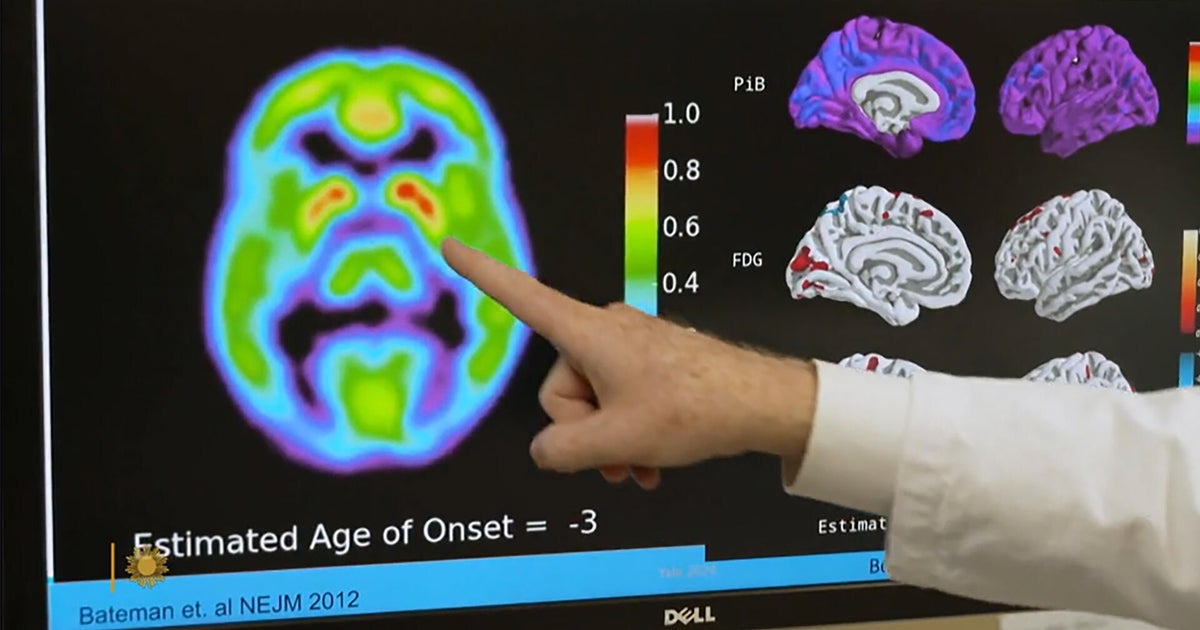
It’s not clear exactly what causes Alzheimer’s, but its telltale markers are brain-clogging amyloid plaques and neuron-killing tau tangles. The p-tau217 test measures a form of tau that correlates with how much plaque buildup someone has and gives a hint about tangles, Sperling said.
Details on the study
The Mass General Brigham team analyzed data from 2,684 older adults who were healthy when they’d joined some long-running Alzheimer’s studies, receiving the p-tau217 blood test at enrollment and yearly cognitive checkups. Between the earliest enrollment in 2004 and last year, about 478 had developed cognitive impairment.
Study participants with very low p-tau217 levels likewise had a low risk of developing cognitive impairment over the five- to 10-year period.
There’s a conundrum in predicting Alzheimer’s: Lots of people harbor high levels of amyloid plaques yet never get dementia. A leading theory is that at some point amyloid buildup triggers an abnormal type of tau to form tangles, leading to symptoms.
Sperling said the blood test data offers some new clues. While different intermediate levels of p-tau217 signaled progressive risk, only the very highest level seemed to correlate with other evidence about that tipping point.
“This is a gradual process where amyloid and tau build up in the brain and this blood-based biomarker is telling you how far you are in that process,” she said.
Some researchers say “not so fast”
Scientists not involved in the study praised it but also offered some reasons to be cautious. One is that only a small fraction of study participants had been tracked for a full decade, so there’s less confidence in the 10-year risk estimate than the five-year risk estimate.
Also, the predictions could be clouded by other factors – older people may be at risk of dying from something else, or have heart-related problems that can cause vascular dementia rather than Alzheimer’s, noted Drs. Suzanne Schindler of Washington University in St. Louis and David Wolk of the University of Pennsylvania in a commentary published in JAMA.
The blood tests “are not yet precise enough to guide individualized prognosis,” wrote Schindler, who also studies p-tau217’s prognostic potential, and Wolk. Still, they said the new work has “provided a crucial piece of the puzzle.”
Already “we have people coming saying, ‘I want this blood test. I have a family history of Alzheimer’s disease,'” said Jessica Langbaum of the Banner Alzheimer’s Institute in Phoenix, something she strongly discourages – for now.
“These findings are quite strong,” Langbaum added, and a predictive blood test would be “really important” – but only if ongoing studies eventually find a drug that could help people before symptoms begin.
wp:paragraph
هلدینگ کاسپین استانبول | خرید ملک در ترکیه | صرافی معتبر ایرانی در ترکیه | خرید و فروش طلا در ترکیه | مهاجرت به ترکیه | واردات و صادرات در ترکیه | نیازمندیهای ترکیه | اخبار ترکیه | اخبار جهانی | توریست ایران | خدمات توریستی در ایران | تورهای گردشگری ایران | هلدینگ اول | خدمات کاریابی و فریلنسری و شغل | مرجع اطلاعات ایران (همه چیز در ایران) | کیف پول و خدمات مالی و پرداخت یار | اخبار ایران | تابلو زنده قیمت ارز در ترکیه و استانبول | صرافی آنلاین ترکیه | قیمت طلا و نقره در ترکیه | سرمایه گذاری در ترکیه | جواهرات در ترکیه | نرخ لحظه ای ارزها در استانبول | قیمت دلار امروز در ترکیه | قیمت دلار استانبول امروز | قیمت لحظه ای دلار | اخبار روز ترکیه استانبول | اپلیکیشن ISTEX | اپلیکیشن قیمت لحظه ای دلار و یورو و لیر و ارزها در ترکیه
/wp:paragraph wp:paragraph /wp:paragraph
About the Author