Sudan’s rival factions are profiting from the country’s resources, with a growing war economy fueling the conflict, the United Nations said Wednesday.
To fund the growing cost of military operations, the two sides rely on exploiting territory, trade routes and commodities, contributing to a conflict that has become “increasingly self-perpetuating,” said the U.N. human rights office, OHCHR.
The war between Sudan’s regular army and the paramilitary Rapid Support Forces (RSF), which erupted in April 2023, has killed 200,000 people by some estimates and displaced upward of 11 million. Several areas of Sudan have been plunged into hunger and famine.
OHCHR called on the two sides and corporations involved in collecting and selling Sudanese commodities to ensure compliance with international law.
“Sudan’s vast wealth of natural resources should benefit its people,” said U.N. rights chief Volker Türk.
“Distressingly, what we are seeing today is anything but that. In fact, this wealth is only serving to undermine human rights and drive conflict, bringing pain and suffering on an enormous scale,” he said.
“This war economy must be disrupted, and the international community must pay much closer attention to the commodities and trade routes that help keep it alive,” he added.
Gum arabic trade
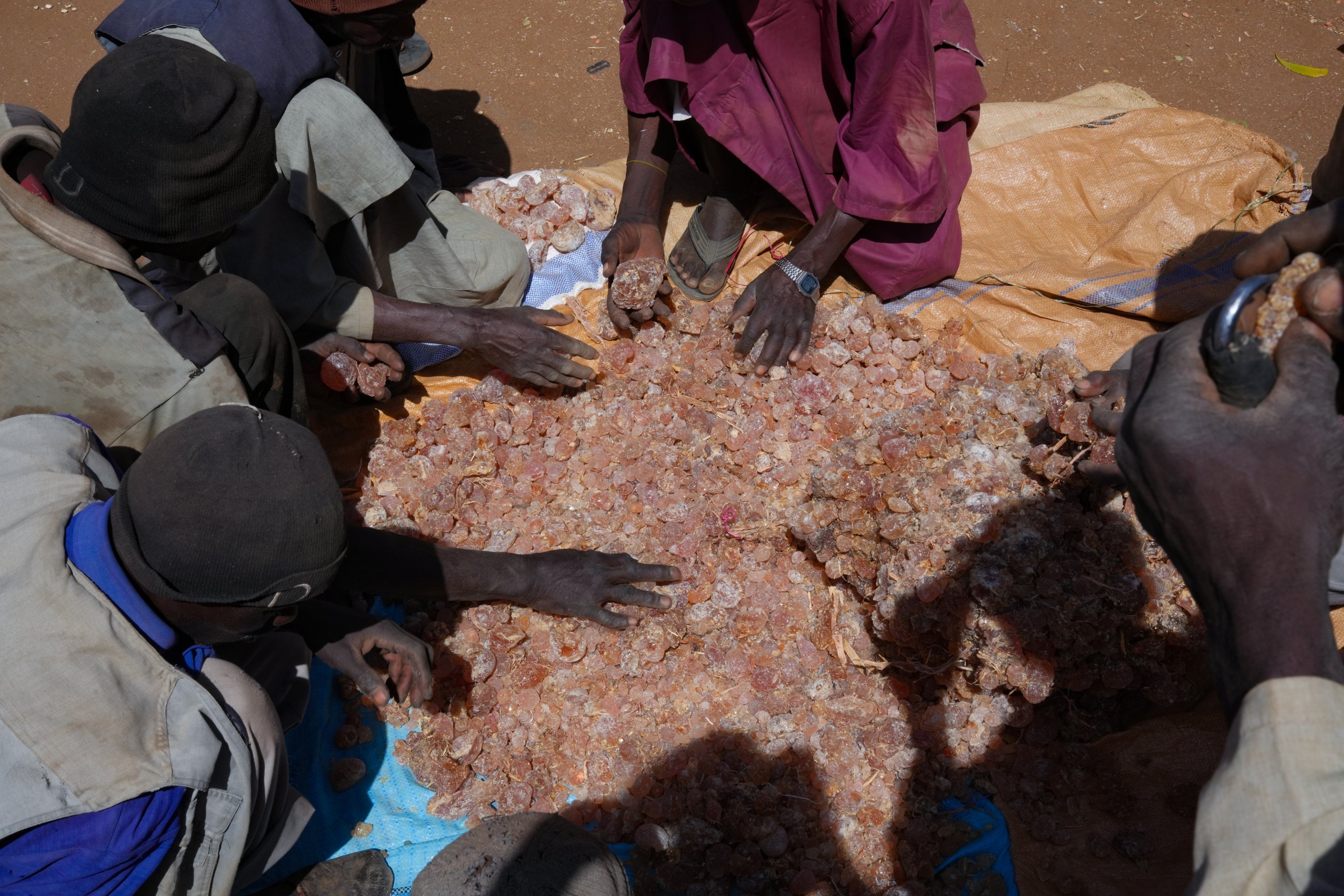
OHCHR issued a report focusing on the trade in gum arabic – a key ingredient in products, ranging from soft drinks to cosmetics and pharmaceuticals.
Sudan accounted for 70-80% of global crude gum arabic exports before the war.
Although modest in export value compared with other commodities, it is an important income source for millions of Sudanese and remains one of the country’s most internationally relied-upon exports.
The report found that many who depend on the gum arabic trade have faced looting, extortion, arbitrary detention and threats – particularly at the hands of the parties to the conflict and their allies.
In May 2025, for instance, the Gum Arabic Exchange and its warehouses, plus part of the local market in el-Nuhud in West Kordofan state, were reportedly looted by the RSF when stocks were full and ready for export.
This severely disrupted local trade and livelihoods, the report said.
OHCHR said that Sudan’s gum arabic trade had been reshaped by the fragmentation of the country since the war started.
Gum arabic from areas controlled by the armed forces goes toward Port Sudan for export, while significant quantities from RSF-controlled areas have been redirected to neighboring countries via cross-border smuggling routes.
The report said this may then be treated and traded as locally produced, making its origin hard to verify.
Türk, the U.N. high commissioner for human rights, urged countries and companies linked to trade in Sudanese commodities, including gum arabic, to ensure their business was not fueling the conflict or damaging human rights.
He urged countries to strengthen accountability, traceability and regulatory oversight and respect human rights.
“Companies cannot continue business as usual when sourcing from conflict-affected value chains,” Türk said.
DAILYSABAH
هلدینگ کاسپین استانبول | خرید ملک در ترکیه | صرافی معتبر ایرانی در ترکیه | خرید و فروش طلا در ترکیه | مهاجرت به ترکیه | واردات و صادرات در ترکیه | نیازمندیهای ترکیه | اخبار ترکیه | اخبار جهانی | توریست ایران | خدمات توریستی در ایران | تورهای گردشگری ایران | هلدینگ اول | خدمات کاریابی و فریلنسری و شغل | مرجع اطلاعات ایران (همه چیز در ایران) | کیف پول و خدمات مالی و پرداخت یار | اخبار ایران | تابلو زنده قیمت ارز در ترکیه و استانبول | صرافی آنلاین ترکیه | قیمت طلا و نقره در ترکیه | سرمایه گذاری در ترکیه | جواهرات در ترکیه | نرخ لحظه ای ارزها در استانبول | قیمت دلار امروز در ترکیه | قیمت دلار استانبول امروز | قیمت لحظه ای دلار | اخبار روز ترکیه استانبول | اپلیکیشن ISTEX | اپلیکیشن قیمت لحظه ای دلار و یورو و لیر و ارزها در ترکیه
About the Author