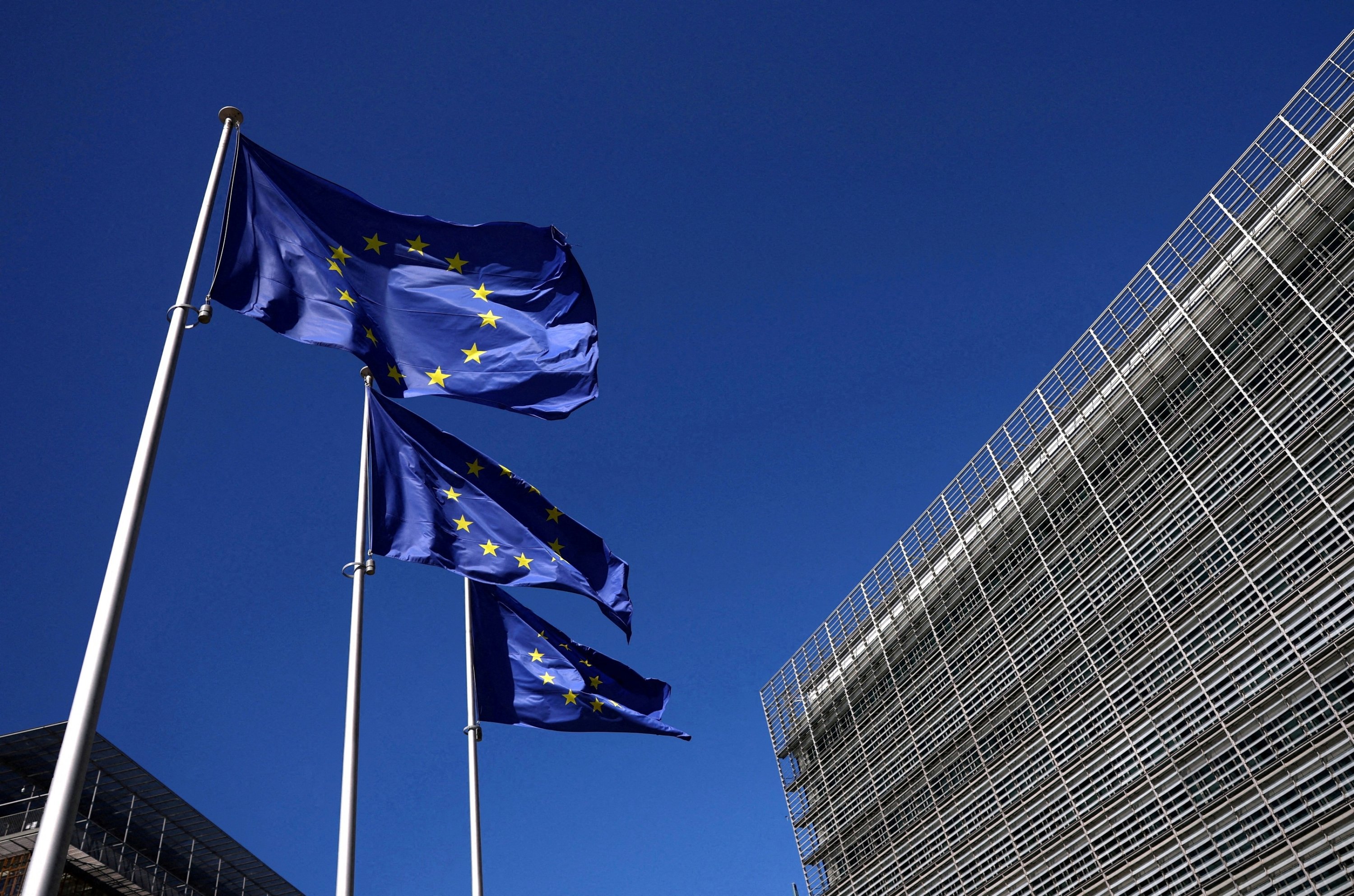
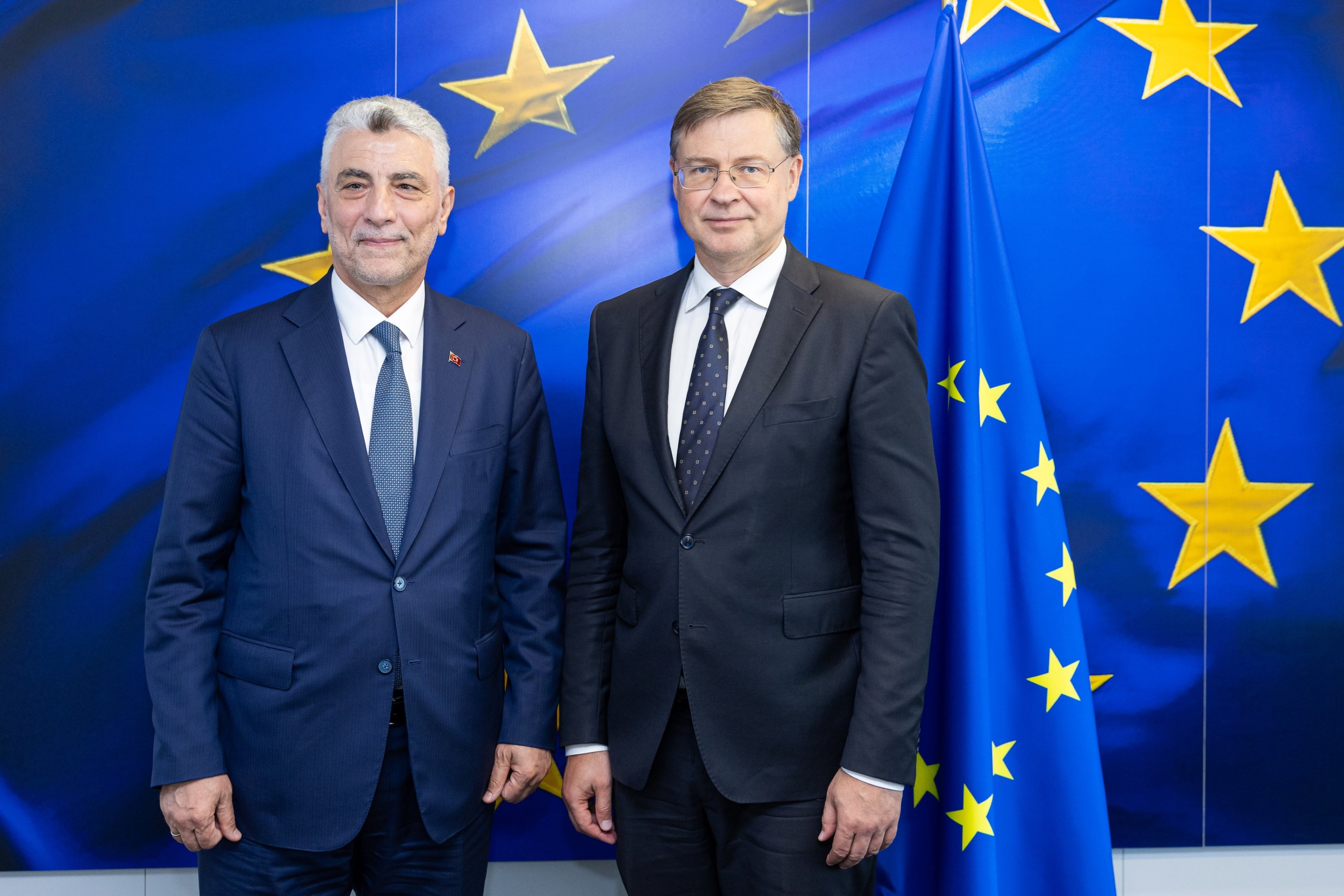
Trade Minister Ömer Bolat said Friday that Türkiye is engaged in intensive negotiations with the European Union to ensure the bloc’s new industrial policies and its “Made in EU” strategy do not undermine bilateral trade and investment.
Bolat’s remarks came following his two-day visit to Brussels, where he held a series of meetings with EU officials and European automotive industry representatives.
Ankara is closely monitoring the EU’s industrial policy initiatives, including the bloc’s Industrial Acceleration Act and the “Made in EU” agenda, as well as broader protectionist trends in global trade, Bolat said.
“We are conducting intensive efforts to ensure these developments do not harm Türkiye-EU trade, investment, economic relations or the future of the automotive industry,” he told Anadolu Agency (AA).
Bolat said opinions within the EU remain divided, with some member states favoring greater protectionism while others support deeper economic integration with partners such as Türkiye.
Although bloc membership talks have been stalled for years, both Ankara and Brussels say they want to modernize their customs union and boost economic ties.
Türkiye’s interests
Bolat said the Turkish government and private sector are working together to expand support among European policymakers for maintaining open trade and strengthening economic cooperation.
“We are working to protect Türkiye’s rights and interests, deepen Türkiye-EU economic relations on the basis of mutual benefit, attract more investment and further increase bilateral trade,” Bolat said.
Bilateral trade between Türkiye and the EU reached $233 billion in 2025, with the automotive sector, including finished vehicles and components, accounting for about $62 billion.
“The EU is Türkiye’s most important export market, while Türkiye is the EU’s fifth-largest trading partner,” Bolat said.
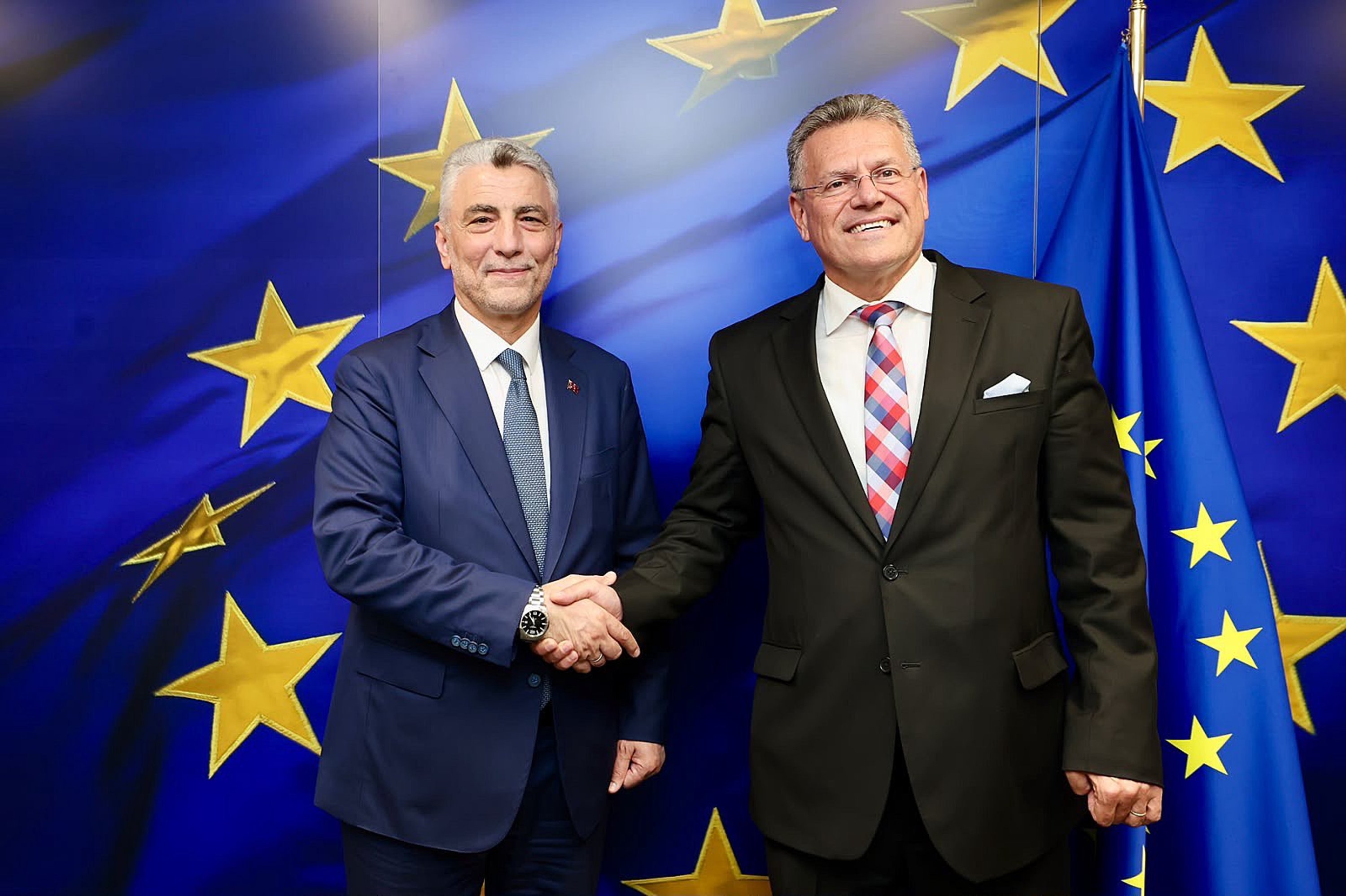
He reiterated Ankara’s call for negotiations to modernize the 30-year-old EU-Türkiye Customs Union, saying both sides recognize the need to update the agreement, although talks have yet to begin because of objections from some EU member states.
For decades, Türkiye and the bloc enjoyed good trade ties and cooperation on migration. However, relations have been strained over multiple issues, including the prolonged process of expansion of the scope of the customs union agreement and maritime issues with Greece and the Greek Cypriot administration.
The deeper 1990s-era trade agreement would be expanded to services, farm goods and public procurement. The current deal only covers a limited range of industrial products. Business groups have long argued that the deal is outdated and ill-suited for today’s trade environment.
‘Sweeping’ protectionism
Although the pact has enabled their economic ties to reach unprecedented levels, Bolat said new global developments require close coordination between the two partners.
“Protectionist winds are sweeping across the world,” he noted.
Bolat pointed to rapidly increasing imports from East Asia, changes in U.S. trade policy, and the EU’s own industrial initiatives. “We are closely monitoring these developments,” he said.
Bolat also said discussions covered visa issues, noting that the EU’s Cascade visa system, introduced last year, had shortened appointment waiting times and improved application processing in some member states, although technical constraints continued to cause delays in others.
Frustration has been growing in Türkiye over Schengen visa delays and rising rejections. Last year, Turkish nationals submitted 1.25 million visa applications for the Schengen zone, up from 906,000 in 2019, European Commission figures show.
Of that number, 1.07 million were approved. But the rejection rate has also risen – from 9.7% in 2019 to 14.6% in 2025.
Bolat added that Turkish road transport operators still face quota restrictions despite growing trade volumes, with road freight accounting for more than half of Türkiye-EU trade flows.
Moving relations forward
The minister acknowledged that advancing negotiations requires navigating the complex political structure of the EU.
“The European Union is not a single, compact entity,” Bolat said. “It consists of 27 countries, hundreds of political parties, different governments and different economic interests.”
Some member states favor more open trade and stronger economic cooperation with Türkiye, while others advocate greater protection of domestic industries, he noted.
Bolat said Türkiye continues to engage with EU member states through ministerial and leadership-level diplomacy, including contacts involving President Recep Tayyip Erdoğan, while maintaining dialogue with European institutions and the private sector.
“Our objective is to move Türkiye-EU relations forward on the basis of a balanced win-win approach, attract more investment to our country and further increase bilateral trade,” he said.
He said Ankara’s priority is to increase support among European partners for closer economic cooperation and secure decisions that will strengthen Türkiye-EU relations in the coming period.
“I can confidently say that we have seen positive and constructive approaches from many different groups,” Bolat said.
“Our efforts are focused on increasing the number of those who support Türkiye’s views and strengthening our circle of friends so that future decisions will further advance Türkiye-EU relations in a positive direction.”
DAILYSABAH
هلدینگ کاسپین استانبول | خرید ملک در ترکیه | صرافی معتبر ایرانی در ترکیه | خرید و فروش طلا در ترکیه | مهاجرت به ترکیه | واردات و صادرات در ترکیه | نیازمندیهای ترکیه | اخبار ترکیه | اخبار جهانی | توریست ایران | خدمات توریستی در ایران | تورهای گردشگری ایران | هلدینگ اول | خدمات کاریابی و فریلنسری و شغل | مرجع اطلاعات ایران (همه چیز در ایران) | کیف پول و خدمات مالی و پرداخت یار | اخبار ایران | تابلو زنده قیمت ارز در ترکیه و استانبول | صرافی آنلاین ترکیه | قیمت طلا و نقره در ترکیه | سرمایه گذاری در ترکیه | جواهرات در ترکیه | نرخ لحظه ای ارزها در استانبول | قیمت دلار امروز در ترکیه | قیمت دلار استانبول امروز | قیمت لحظه ای دلار | اخبار روز ترکیه استانبول | اپلیکیشن ISTEX | اپلیکیشن قیمت لحظه ای دلار و یورو و لیر و ارزها در ترکیه
About the Author