In a sunlit reception hall on Chicago’s South Side this summer, Mayor Brandon Johnson handed a gold-framed proclamation to Halil Demir, a Turkish American community leader, declaring August as Turkish Heritage Month in one of America’s largest cities. It was a small ceremony, two men laughing over a document neither quite knew how to hold, but it marked something larger. Another American city had chosen to write Turkish heritage into its own civic calendar.
Chicago is not alone in making that choice this year. In Maryland, Governor Wes Moore issued a similar proclamation, naming August 2026 as Turkish Heritage Month statewide and pointing to the value of countering old stereotypes at a time of real tension both at home and abroad. Two very different corners of the United States, a governor and a mayor, arrived at the same conclusion within the same summer. For a diaspora community that has spent decades building quietly rather than loudly, recognition like that matters enormously.
What actually holds a city together has less to do with official proclamations than most people think. Turgut Cansever, the only architect ever to win the Aga Khan Award for Architecture three times, spent his career arguing that a city’s real order comes not from grand plans imposed from above but from different communities, buildings and streets gradually knitting themselves together through mutual respect and coexistence. A festival does exactly that work, without anyone planning it. It puts a Turkish tea seller next to a Mexican elote cart, and an Anatolian folk dancer within earshot of a gospel choir warming up two blocks over. The proclamation only names a bond that festivals like this one have already been quietly weaving for years, stall by stall, contact by contact.
The community being honored this way has deep roots in the city. Turkish immigration to Chicago dates back more than a century, from the Ottoman-era laborers who worked the city’s factories in the early 1900s to the wave of students and professionals who arrived after the Immigration and Nationality Act of 1965 opened the door wider. Newer institutions within the community have kept building on that foundation too. The Chicago chapter of the Turkish American Religious Foundation (TARF), founded only in 2019, has already become one of the quiet engines behind gatherings like this one, proof that an institution does not need decades or a building to matter to a community. What is happening this August is not the beginning of something. It is the public recognition of something that was already more than a century in the making.
Man behind the Proclamation
The man Chicago’s mayor honored this way built his own path under difficult circumstances. Halil Demir grew up poor in a village in southeastern Türkiye, moved to Switzerland to study sociology, then in 1997 to the United States, where he pursued graduate work in nonprofit management and history before eventually completing an executive leadership program at Harvard. Along the way, he picked up six languages. In 2001, he founded the Zakat Foundation of America, but he did not stop there. Under his leadership, the organization went on to establish the Khalil Center, which has grown into one of the largest Muslim mental health organizations in the United States, offering therapy and counseling to thousands of people. In Gaziantep, he also founded Zahraa University, one of the first universities in the world dedicated entirely to refugees, which graduated its first class after nearly seven years of work: 35 Syrian refugees earned their bachelor’s degrees last year. He has said more than once that whatever recognition comes his way belongs to the people who work alongside him, not to him personally.
There is one winter night that shows what that instinct looks like in Chicago itself. On the city’s coldest night in 50 years, with every shelter full, Demir found 20 homeless people sheltering at a public library with nowhere else to go. He fed them, arranged emergency hotel rooms near Zakat Foundation’s Bridgeview office, and personally covered their breakfasts and dinners for several days. That same morning, in an interview on a Catholic radio station, he asked Chicago a simple question: how does a city with this many billionaires and this much technology still have this many people going hungry and unhoused? A civilized society, he said, is not measured by its skyscrapers but by how it treats its poor, its orphans, its widows. The Rohingya and Afghan community centers he later founded in Chicago grew out of that same instinct, making the invisible visible, pulling one more chair up to the table.
Now the stage belongs to Chicago
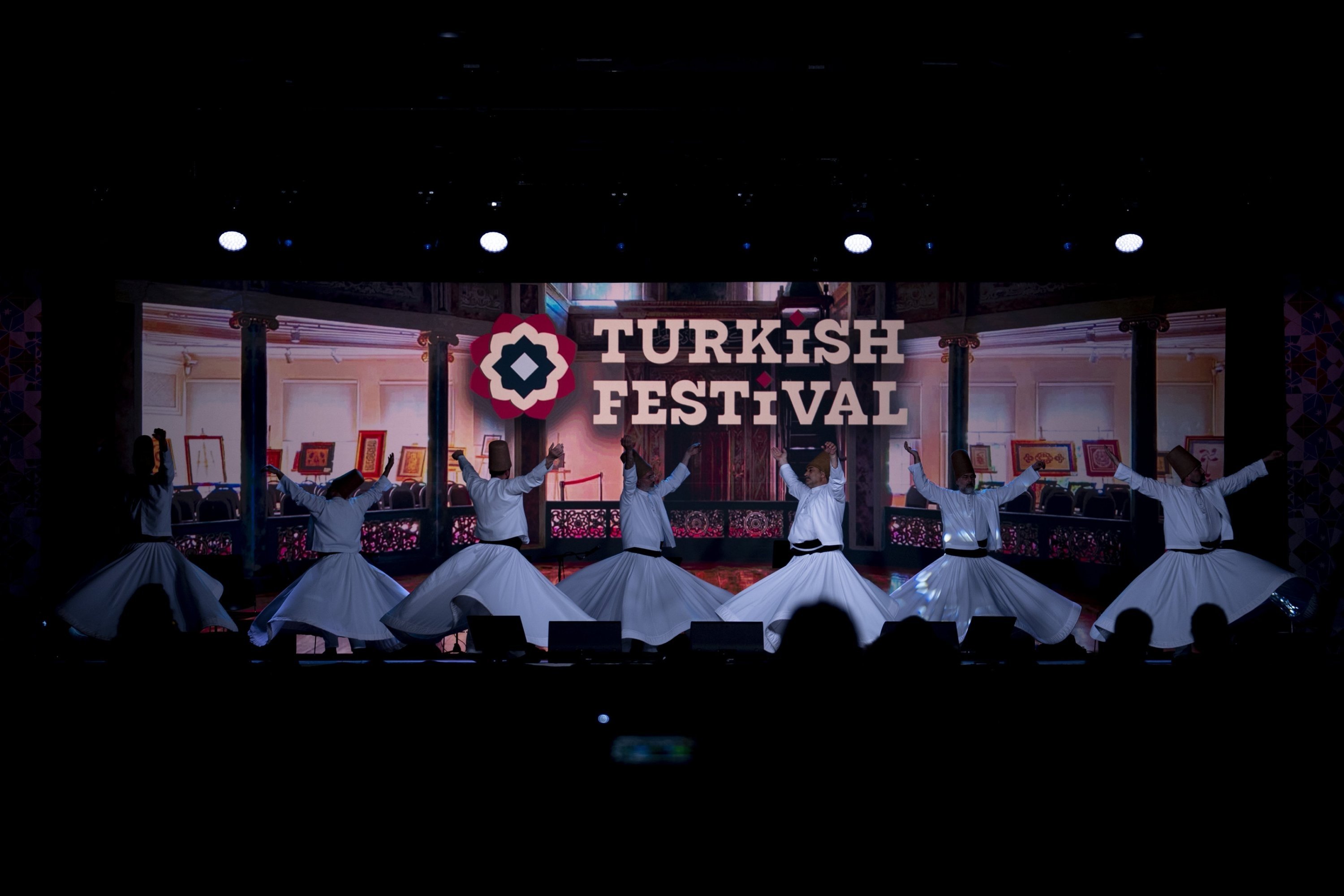
The Chicago Turkish Festival launched in 2024 with more than 10,000 visitors, a striking debut, and by its second year organizers were projecting attendance north of 30,000. This year’s program reads like a small map of the Turkic world set to music. A Macedonian Turkish vocalist known as one of the biggest names in devotional music will perform, alongside a Moldovan Turkish singer who moves comfortably between half a dozen languages. Whirling dervishes will turn beneath a Midwestern sky. A Karagöz shadow puppet troupe will bring centuries-old storytelling to a new audience, and a full slate of scholars will sit down for public conversation on Turkish history and culture. The Grand Bazaar alone will host more than 200 vendor booths, and this year’s charity raffle, whose proceeds fund Zakat Foundation’s humanitarian work abroad, includes round-trip flights to Istanbul among its prizes.
There is a broader story here too, one that reaches beyond Chicago’s city limits. The performers headlining this year’s festival, a vocalist from North Macedonia’s Turkish minority and a singer from Moldova’s Turkish-speaking Gagauz community, are living proof that Turkish culture has never respected modern borders. It traveled with Ottoman-era migrations centuries ago and it keeps traveling now, carried by musicians, chefs and humanitarian workers who left home and built something new without ever fully letting go of where they came from. Watching that culture take a bow at a convention center outside Chicago is a small reminder of how far it has traveled, and how many different countries now claim a piece of it as their own.
That curiosity shows up daily too, not just once a year. New Turkish and Anatolian restaurants have kept opening across Chicago in recent years, from Wicker Park to the Loop, carrying flavors that used to require a plane ticket to taste. Long before a mayor signed anything, ordinary Chicagoans were already lining up for kebab and Turkish coffee. The festival simply gives that everyday appetite a stage, a bazaar and a soundtrack once a year.
None of this happened by official decree. It happened because a diaspora community kept showing up, building an institution one summer and one century at a time, until American officials had little choice but to notice. A proclamation from a mayor or a governor does not create culture. It only recognizes what was already there, patiently, at potlucks and prayer halls and festival grounds and refugee camps thousands of miles away, long before anyone signed a document about it. This August, in Chicago and in Maryland, that patience is finally getting its due, and so is the man who spent 25 years building it, one well, one clinic and one classroom at a time.
DAILYSABAH
هلدینگ کاسپین استانبول | خرید ملک در ترکیه | صرافی معتبر ایرانی در ترکیه | خرید و فروش طلا در ترکیه | مهاجرت به ترکیه | واردات و صادرات در ترکیه | نیازمندیهای ترکیه | اخبار ترکیه | اخبار جهانی | توریست ایران | خدمات توریستی در ایران | تورهای گردشگری ایران | هلدینگ اول | خدمات کاریابی و فریلنسری و شغل | مرجع اطلاعات ایران (همه چیز در ایران) | کیف پول و خدمات مالی و پرداخت یار | اخبار ایران | تابلو زنده قیمت ارز در ترکیه و استانبول | صرافی آنلاین ترکیه | قیمت طلا و نقره در ترکیه | سرمایه گذاری در ترکیه | جواهرات در ترکیه | نرخ لحظه ای ارزها در استانبول | قیمت دلار امروز در ترکیه | قیمت دلار استانبول امروز | قیمت لحظه ای دلار | اخبار روز ترکیه استانبول | اپلیکیشن ISTEX | اپلیکیشن قیمت لحظه ای دلار و یورو و لیر و ارزها در ترکیه
About the Author