
In September 2024, I was asked to paint the portrait of an 86-year-old man. He had apparently always wanted a formal portrait of himself, and a binge watch of Portrait Artist of the Year had finally spurred him to action. I had been receiving painting commissions for about three years, so I knew the drill: take receipt of a photo, render a painting that wouldn’t look out of place on a county cricket clubhouse wall, and pocket my semi-hard-earned money.
On this occasion, there were two immediate sticking points: first, the sitter wanted me to paint him in person, which would involve commuting to Reading from London and making small talk – to my mind the very worst of obligations. And second, to quote his WhatsApp message, he wanted me to “capture him”. How hard could that be, I thought?
What I didn’t realise was that my sitter and I had something in common: we both had trouble identifying what we look like. For portrait painters, looking into the mirror is an essential part of the job. Every dauber worth their salt has spent hours, days, months gazing at their own reflection and recreating what they see on stretched fabric; it’s as much a narcissistic pursuit as an academic one. But I don’t enjoy it. My eyes gravitate to flaws and imperfections. I torture myself wishing I were slimmer, more sculpted, had a stronger jaw or smaller ears. In a world of looksmaxxers, I feel extremely looksminned.
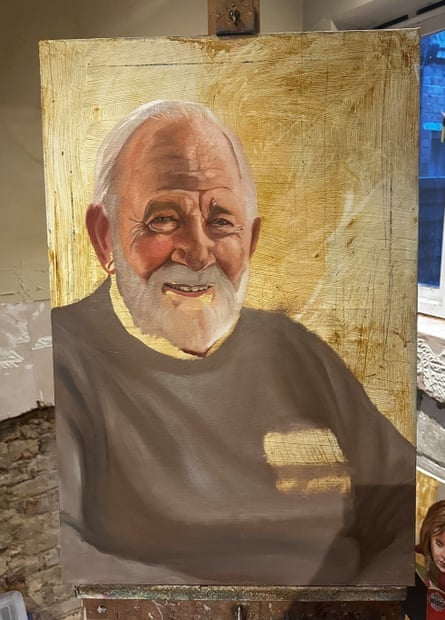
So when I came to paint this gentleman, I put together a basic composition – I sat him down in front of a nondescript wall and did a head-to-elbow painting – to create a likeness I thought he’d be happy with. It took about a week, and by the weekend I had sent him a photo of the 80% finished work.
He did not hold back with his criticism. He said he didn’t recognise the man in the portrait – that I hadn’t, in fact, “captured him” at all. I had failed.
He also sent me a raft of notes: his eyes weren’t as I’d shown them, they were kinder and wiser; his hair was fuller, his smile brighter. So I tried again. I flattered him so much that by the time I had finished the second painting, it was like Paul Newman and Brad Pitt had a child who had fallen out of the handsome tree and caressed every leaf on the way down. But this attempt was also met with indifference. He sensed he had been “yassified” and he wasn’t happy about it.
I felt bewildered and frustrated. I could see that, like me, he had an unshakeable idea of who he was – and it didn’t necessarily have anything to do with his current appearance. He wanted me to conjure up the image of himself – inside and out – that he held as a fixed idea in his mind.
I knew I needed to take a different approach. Instead of simply attempting to recreate features on a canvas, I needed to go deeper. I began chatting with him, teasing out details of his life and learning more about who he felt he was. I found he had a romantic side: he was a dreamer and a yarn spinner, a voracious reader of detective and historical novels. He loved fiction – to the extent that he was prone to embellishing or exaggerating his own story at times. What I painted became a collaboration between what he saw and what I saw. Art is a dialogue, and the eventual portrait went beyond acrylics to become a product of our conversations. Comparing the two, I can see that his smile became a fraction more impish than in my original rendition, the eyes possessed more of a glint.
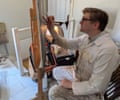
Sadly, the man died before he could see the finished painting. But I take solace in the fact that what he truly wanted was to be seen, maybe for the last time. I had shown him a work in progress, at which he had grinned broadly, and can only hope he would have approved of the finished piece.
During the process, I also learned more about the disconnect – some may even call it a dysmorphia – that I often experience when it comes to self-perception. I always find plenty of room for improvement: weight to be lost, blemishes to be removed, crooked teeth to be straightened. But when I get despondent about my appearance, I also remind myself that my negative self-talk is just one side of the conversation – it’s not necessarily how someone else would paint me. Although I may gain weight and lose my hair, and although I’ll definitely age, that doesn’t make me any less “me”. Despite the desire to control how we’re seen by others, we’re all a work in progress, right until the end.
Tom Neenan: Portrait of a Tom as a Young Neenan is at Underbelly, George Square, Edinburgh from 5 to 30 August at 15:15pm.
Do you have an opinion on the issues raised in this article? If you would like to submit a response of up to 300 words by email to be considered for publication in our letters section, please click here
The Guardian wp:paragraph
هلدینگ کاسپین استانبول | خرید ملک در ترکیه | صرافی معتبر ایرانی در ترکیه | خرید و فروش طلا در ترکیه | مهاجرت به ترکیه | واردات و صادرات در ترکیه | نیازمندیهای ترکیه | اخبار ترکیه | اخبار جهانی | توریست ایران | خدمات توریستی در ایران | تورهای گردشگری ایران | هلدینگ اول | خدمات کاریابی و فریلنسری و شغل | مرجع اطلاعات ایران (همه چیز در ایران) | کیف پول و خدمات مالی و پرداخت یار | اخبار ایران | تابلو زنده قیمت ارز در ترکیه و استانبول | صرافی آنلاین ترکیه | قیمت طلا و نقره در ترکیه | سرمایه گذاری در ترکیه | جواهرات در ترکیه | نرخ لحظه ای ارزها در استانبول | قیمت دلار امروز در ترکیه | قیمت دلار استانبول امروز | قیمت لحظه ای دلار | اخبار روز ترکیه استانبول | اپلیکیشن ISTEX | اپلیکیشن قیمت لحظه ای دلار و یورو و لیر و ارزها در ترکیه
/wp:paragraph wp:paragraph /wp:paragraph
About the Author