Childhood returns to Traci Carr in fragments.
Night-time. She is five. She wakes to shadows on the wall, her room strange in the dark. Her footie pyjamas slip against the wood as she pads downstairs and climbs into bed next to her foster brother, Steven Judy.
He scoots over, and the monsters recede. She burrows under the covers, feeling safe.
Morning. Traci and Steve share Froot Loops, their favorite cereal, the milk turning pink. He teases her, tells funny stories, acts extra goofy to make her laugh.
Later, they play hide and seek. He’s all theater, snapping a belt in the air as he searches for Traci and her three older siblings. They collapse in giggles when he finds them.
Then one day, Steve disappears.
No one explains where he went. Her parents are away for long stretches, too. When they are home, conversations drop into whispers. Doors click shut. The television is switched off when she enters the room.
The year Traci turns seven, her parents take her on a car ride. At Conkle funeral home just outside Indianapolis, the room smells of carnations and furniture polish.
She is led to the coffin at the end of the room. She peers over the edge.
It’s Steve.
His eyes are closed, his face composed. His hair isn’t right – a wig, she’ll learn later. But otherwise, he looks like himself.
Her mother, Mary, leans close. Touch him, she urges.
I don’t want to.
Her mother insists. Don’t be afraid. Just touch him. Traci extends a single finger. It leaves a dent in his cold skin.
Three days earlier, on 9 March 1981, the state of Indiana had executed Steven Judy. Traci would not fully grasp this for years.
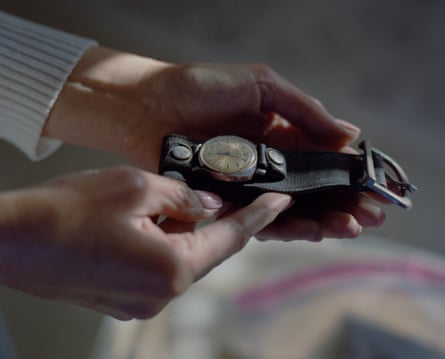
Decades on, she still carries the confusion of that day. It flickers across her face as we sit in her kitchen, a plastic storage bin between us filled with his belts, his wallet, his watch, letters, photographs: the small, stubborn evidence of a brother they once loved. A brother whose grave drew hate-filled handwritten notes decades after his death.
For decades, Judy’s crimes have been revisited in books, documentaries and true-crime retellings. His atrocities have been replayed, his psychology dissected. But Traci and her siblings are missing from those narratives. The families of condemned people are among the least visible casualties of capital punishment, even as the death penalty is on the rise again.
The Carr children loved and lost a foster brother the rest of the world called a monster. No one asked what it was like to be them. For decades, they were not ready to say.
I was there the day Judy died.
I was a young Associated Press journalist assigned to cover the family’s side of the story and had arrived in Michigan City on Sunday, the day before the execution.
As reporters and photographers gathered outside the prison, I sat in a hotel room with the family. Over months of reporting, I had quietly slipped into their orbit. I wasn’t a friend, exactly, but I had become a witness to their unraveling at a moment when most people looked away.
Eleven years earlier, a young man murdered my eighth-grade friend Cindy Winter in the Sonoran desert about a quarter of a mile from her home. We children had no language for this; neither did the grownups around us. After the first days of sorrow, we stopped speaking of Cindy altogether. Assigned to the Judy case, I did not yet understand that I was trying to report my way back into a story I already belonged to: violent death, bewildered survivors, and grief with nowhere to go.
That day, Traci had stayed home with a babysitter. In the afternoon, I went swimming with the other Carr children. We had lunch, and then dinner, though no one ate much.
Around 11pm, Judy’s foster father, Bob Carr, left for the prison. He had reluctantly agreed to Judy’s request that he witness the execution, which was scheduled shortly after midnight. By then, the kids were asleep, or appeared to be.
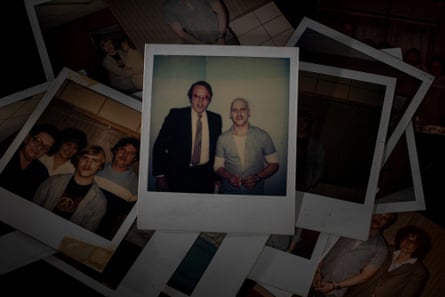
Mary thumbed through Polaroids of Judy that she had brought with her, sometimes glancing at the clock beside the bed. She smoked the way some people pray, steadily, wordlessly, through the waiting.
Shortly before 1am, Carr returned to our hotel with attorney Steve Harris. For Mary’s benefit, he described Judy’s final 71 minutes.

A shaved head. A cigarette. A phone call to a girlfriend who had sent him a last-minute telegram – Judy joked that if she proposed marriage, he might ask for a stay. A final Polaroid taken for the Carrs, never made public until now. A Valium to calm Judy’s nerves before the end. Some tears, some jokes.
At 12.04am, the guards blindfolded Judy and led him a few paces to the chair in the next room. Harris and Carr moved to the witness room.
“I don’t hold no grudges. This was my doing. I’m sorry it happened,” Judy said from the chair before the switch was thrown.
Mary soaked in every detail, hanging on every word, sometimes asking Harris to repeat himself. The ashtray beside her filled with cigarette stubs.
Within the month, she admitted herself to a psychiatric hospital for a brief period, shattered by what had happened. I visited her there. Wearing a hospital gown, she seemed emptied of the force that had animated her for months – defending Judy, raging at the state, willing him somehow to survive. The fight had fled her body.
I spent months with the Carrs, but I shed no tears for Judy. I did not mistake him for an innocent man. Still, I could not believe justice had been served by strapping him into a chair and killing him. The state had not restored his victims to life; it had only widened the circle of suffering. Our world, as I saw it, had room for outrage, punishment and fascination, but little space for certain kinds of grief.
I did not yet know that this story would stay with me for the next 45 years.
The facts of the case are these: on the morning of 28 April 1979, around 6.30am, Judy, 22, raped and murdered Terry Lee Chasteen, 21, along the banks of White Lick Creek outside Indianapolis.
When her three children – ages two, four and five – cried, he threw them into the creek to drown.
It wasn’t his first violent crime, but it was the one for which he would be executed.
The four bodies were discovered later that morning by mushroom hunters. Residents called it the worst crime Morgan county had ever seen.
A distinctive red and silver truck seen near the site of the killings was traced back to Bob Carr. He told police his foster son had borrowed it the night before. Judy was arrested the next day.
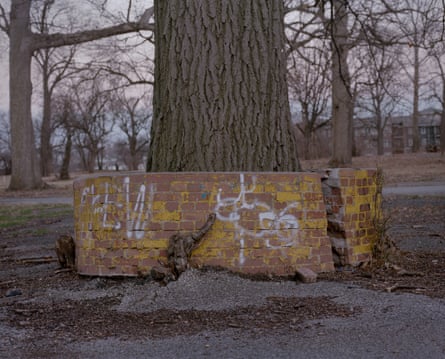
Public outrage hardened quickly. Even before all the evidence was presented, a grassroots group called Protect the Innocent demanded the death penalty.
At first, Judy said he couldn’t remember what happened. Later, he confessed. Harris, the attorney, initially pursued an insanity defense, but two court-appointed psychiatrists concluded Judy was legally sane.
After the guilty verdict, Judy made his preference clear: death over life in prison. Determined to eliminate any possibility of leniency, he proposed leaping across the table to attack the prosecutor before sentencing.
“You can’t do that,” Harris told him. “There are 50 officers in that courtroom.”
Instead, Judy asked to address the jury. He told them he knew their names, where they lived, where they worked, and would kill anyone who failed to vote for the electric chair. Then he turned toward the bench. “That goes for you too, bud,” he said to the judge.
The jury deliberated 20 minutes before recommending the death penalty.
Forty-five years later, one of the people I most wanted to find was Harris. He had witnessed the crime’s aftermath and Judy’s final hours. I wondered what remained with him after all this time.
Before Judy, Harris had handled three other murder cases. After the execution, he vowed never to take another death penalty case. “It was time-consuming and emotional,” he recalls now. “I just made the decision I would never do one again.” He represented only one other murder defendant, then gradually left criminal law altogether.
He drove me to the bridge overlooking the stretch of White Lick Creek where the killings took place, about a mile and a half from his office. State Road 67 hums nearby now, busy and indifferent. Round the bend, the creek remains as secluded as it was then; teenagers still go there to hang out beyond the sight of their parents.
A rope swing dangles beneath a railroad bridge where someone has painted: “THE DEVIL WAS HERE.” The water moves on.
Steve saved Randy Carr’s life when Randy was two years old.
Randy was playing in a mud puddle in the alley behind their house when a family friend known as Stinky climbed into Bob Carr’s truck and began backing it up, running over Randy’s legs. Steve saw the scene unfold and began yelling and waving his arms.
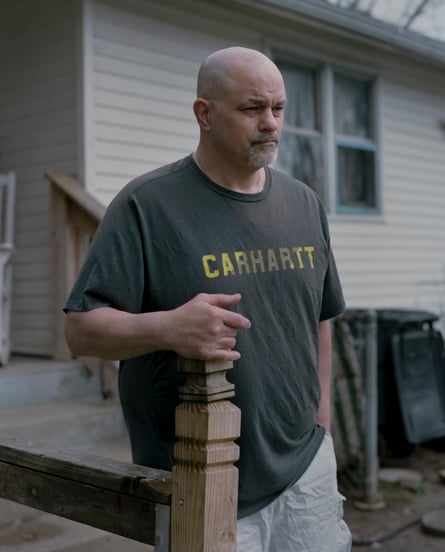
“He stopped him,” Randy says. “Another minute and Stinky would have run over my head.”
After that, Steve became Randy’s person. “The only one who paid me any attention,” Randy recalls. Saturdays were their day. Together, they cleaned the basement, mowed the grass. When the chores were done, Steve took him for ice-cream. “Never failed,” Randy remembers.
Steve entered the Carr family through a friendship with Randy’s Uncle Tony. On the day of the Chasteen murders, Randy, who was nine, and his brother Bobby, who was 11, helped Steve clean out the garage. They drove trash to the dump. They swept out their father’s pickup truck, the one Steve had been driving earlier that morning.
Then they went for ice-cream.
The next day, the police came. Steve was out with a friend, but they questioned the boys. They drove them back to the dump and asked where the trash had been thrown.
“I wasn’t going to tell them,” Randy says. “I pointed everywhere except where we dumped.”
Back at home, Randy went to the window with a pair of binoculars and watched as officers dusted the truck for fingerprints. He watched them wait for Steve to come back. “I didn’t grasp what was happening,” he says. “Dad never told us anything.”
After Steve’s arrest, children at school avoided Randy. He began fighting. “I would get mad if anybody told me Steve was guilty of this. I couldn’t see it in my mind. Steve couldn’t do this.”
Eventually, Steve told Randy himself.
“You’ve gotta let it go,” Steve said. “I’m guilty of this. It’s something I can’t control.”
He joked about the electric chair. “Man, I’m gonna ride that lightning.”
Randy thought he meant an amusement park ride. “I still didn’t understand,” he says.

Years later, Randy came to believe Steve deserved to die. He says that plainly now. But then he adds, quietly, tearing up: “To this day, I hate that he did that. Because he was everything I had in life.”
In the months before the execution, Randy started spiraling. He skipped school for the first time. He stole diet pills to get high. “I just felt like I needed to do something.” When his mother told Steve during a prison visit that Randy was acting out, Steve wrote Randy a seven-page letter about his own childhood, about how he had started screwing up.
In a letter to Mary, Steve mentioned that he had written to Randy, and offered her some parenting advice: “Listen, Mary, I just wrote Randy that letter we talked about. It was hard, too. I don’t know if it was exactly what you wanted but I think it will help if he listens. But you have to understand if you keep telling someone not to do this or that, it sometimes pushes them to do it anyway for spite.”
Randy read the letter “a thousand times” when he was a kid. He never skipped school again. “I loved Steve to death. I defended him for a long time. I broke a lot of jaws of people who didn’t really deserve it.”
Randy begged Steve to appeal against the death penalty. “I cried with him for a long time. Finally Steve said: ‘Look at me. Don’t bring this up again. It’s over with. Don’t be sad, because this is what I need.’”
Randy visited Steve the afternoon before his execution. “I was so upset. But Steve was laughing and carrying on like nothing was happening. It just blows my mind how he knows he’s going to his death, and he was just worried about how I was.”
A few months after the funeral, Traci noticed the spine of a book jutting from a stack of papers on the kitchen countertop.
Burn Judy Burn.
Published between Judy’s conviction and his execution, the book was written by Bette Nunn, managing editor of the Reporter-Times in Martinsville, Indiana.
Traci pulled it free and turned immediately to the photographs. One showed a small body just beneath the water’s surface. Another showed a little boy lying on a metal table, his shirt half pulled up from his torso.
They were children, very small. She could tell they were close to her age.
“I was starting to piece it together,” she told me. “I think I knew Steve had killed somebody. But I still didn’t understand what had happened to him.”
So she asked Randy. What happened to Steve? He told her what he could, as much as he understood.
She couldn’t reconcile the brother she knew with the killer described in the book. Yet she kept returning to the photographs. “I had a morbid interest,” she says. The more she grasped, the more terrified she became. The house itself seemed altered. When she returned from school and found no one there, she wouldn’t go inside, pacing the sidewalk instead.
She didn’t ask her parents any questions. She had already noticed the way her mother seemed always on the verge of tears, the way her parents argued in low, urgent voices. The whole house seemed stretched tight with things no one knew how to say aloud.
My editor at the Associated Press asked me to begin reporting on the case in early March 1980, 10 months after the murders of Terry Chasteen and her three children. Judy would become the first person executed in Indiana since 1961 and among the first handful nationally after the supreme court reinstated the death penalty in 1976.
I saw two possible ways into the story. I could try to reach Judy through his attorney, or I could try to understand the family waiting outside the prison walls.
I called Mary Carr. She invited me over immediately.
Mary worked as a drill operator at a manufacturing plant; Bob laid brick and stone for a living. Their house sat in a working-class neighborhood outside Indianapolis, small and crowded, every surface carrying its own accumulation of papers, toys, ashtrays, cups. Four children moved constantly through the rooms. Mary was not yet 31.
Bob was warm but reserved. Mary directed the energy of the house. Within minutes, she had seated me in a padded brown chair and placed a photo album in my lap. She pointed to photographs of Steven Judy.
“Look at him,” she said. “He’s handsome, isn’t he? He’s not cold and detached the way they say.”
I felt myself recoil. I understood that I could never look at Judy the way Mary Carr did.
When I was in eighth grade, my friend Cindy Winter was murdered in Tucson while riding her bicycle to a close friend’s house on a Sunday afternoon. Her body was found under a mesquite tree at the edge of a dry wash. The man who killed her was 24. He was arrested after he raped and killed another woman, leaving her two children alive beside the road.
The similarities between his case and Judy’s were striking. Before Cindy’s murder, we thought the desert between houses belonged to us. Afterward, the fear never fully left.
Meeting the Carrs conjured that dread back to life. After that first visit, I wrote in my journal: “Walking from my sturdy Scout to my apartment after midnight, the bushes seem to reach out as menacing men, and in the moonlight, I can see my fear.”
I could never understand the killer. But I wanted to understand the family living in the aftermath of what he had done.
I began to spend time at the Carrs’ kitchen table. I ate pizza with them, went swimming with the kids, phoned Mary to check in. Her warmth as a mother, I learned, was instinctive rather than structured. She wasn’t the kind of parent who tracked homework or studied report cards. What she offered instead was openness, noise, food, a place to belong. She believed that when her family took Steve in, they were finally giving him something no one else had: a loving family, a permanent place at the table.
“She thought she could save him,” Traci says. And that was exactly who Mary Carr was, a woman who believed in second chances, in the redemptive power of love and a full table. She had been raised by a mother who withdrew support, but Mary had chosen a different path: she made room. She fed people. She believed damage could be repaired if you loved hard enough and long enough.
This impulse would define the next eight years of her life, but Judy had arrived carrying damage the Carrs could not fully see.
In court records and later interviews, Judy described his childhood as violent and unstable. Both parents drank heavily. His father beat his mother and once, in a fit of fury, butchered a pet dog, leaving pieces scattered on the porch for the children to see. His mother brought men home; sometimes the children witnessed them having sex. She occasionally summoned Judy to kiss her while she was bathing or undressing, placing him on her lap and running her fingers through his hair. Pornographic magazines, he said, were kept openly in the house.
By age 10, he was pushing high school girls to the ground and molesting them. At 11, he began shoplifting; by 12, he was drinking. On 17 April 1970, at 13, he raped a 22-year-old woman and attacked her with a knife and a hatchet so severely that she required brain, abdominal and open-heart surgery to survive.
He was detained and transferred to the juvenile section of Indiana’s Central State hospital. Opened in 1848 as the Indiana hospital for the “insane”, central state closed in 1994 amid scandals over patient treatment and funding shortfalls. The old pathology building, where autopsies were once performed in search of the physical causes of madness, now houses the Indiana Medical History Museum. Brains sit in glass jars, labeled with names, dates, symptoms.
At Central State, Judy was diagnosed as a sexual psychopath. He became friends with Bob Carr’s younger brother, Tony, who also was a resident after getting in trouble at school and home. Through him, he met the rest of the family.
When Judy was released at age 15, Mary and Bob agreed to take him in. As a juvenile, he needed to be released to adults; this must have felt like astonishing good fortune to him.
He lived with the Carrs, ate at their table, and worked construction for Bob. But the violence continued: more assaults, more jail time, a robbery.
The Carrs even paid his bond weeks before the Chasteen murders.
Throughout, “Mom always loved Steve,” Traci recalls. “She never said anything bad about him, no matter what.”
Prison life became a world of letters. Steve wrote and received hundreds of them.
Mary kept many of them in a bedroom drawer: letters from strangers who prayed for him, or from women who had never met him but said they loved him.
For Mary and Bob, he described his life in prison with flashes of humor and longing. Without his television set, he would “go bonkers”, Steve wrote. “So far I’ve earned $15,000 on the Joker’s Wild, gotten three dates on the Dating Game, and outdrawn Marshall Dillon twice.”
“Tell the kids I said hi and I love them,” he wrote time and again. Sometimes he mentioned them by name: “You tell Traci I said hi and that I love her too and that I’ve got a get-rich-quick scheme for us. I’m going to write the cereal company and tell them me and her are going to quit eating cereal and put them out of business unless they pay us a million dollars (50 cents anyway, ha ha).”
During prison visits, Steve offered Mary tips on staying safe and told her to pass them on to his foster sisters. Lock the car doors. Watch the blind spot. Don’t pull over if a man waves you down.
After he was sentenced to death, Harris filed a routine appeal. But in October 1980, Judy told the court he did not want to pursue it, clearing the way for his execution six months later.
Steve wrote to his foster parents soon after. “I know you can’t accept what I’m doing but I hope you don’t hate me for it either,” he told them. Mary had cried during a prison visit, and he had avoided telling her in front of the boys.
“I’m sorry you had to find it out like you did,” he wrote. “I’m not going to get into my reasons and feelings on why I wanted it like this because I think it would be better to tell you here where we can look at each other’s faces.”
Steve was determined to carry through with the death penalty, but there were moments of fear. Right after he was transferred to death row in Michigan City, he wrote: “Mary, don’t ever let anyone tell you this isn’t bad, because it is, and I’m scared to death.”
Later he wrote: “I’m worried about how the kids are taking it all. There’s just so much on my mind that can’t ever be put into words.”
On 5 Febuary 1981, 32 days before the execution, he apologized for not writing. “I just let myself get so far down in the dumps that it was hard to do anything.” He warned Mary that people might try to persuade her to intervene. “I know a few of them might try and get you to interfere but I hope you don’t,” he wrote. “About the only thing you could possibly do is cause a short delay and that would only hurt me.” Then, as he often did, he turned back to the children: “Tell me, how are the kids doing? I really hope they’re taking all this okay. Tell them I said hello and I send my love.”
Steve considered Bob’s mother, Rosita Mary Colvin, his foster grandmother. He affectionately called her “the old lady” and asked about her in letters. She wrote him shortly before his execution: “I have loved you from the first time I saw you at Central, your blond hair flying around, you and Tony playing basketball. You was a beautiful child. If you had been my own son, I could not have loved you more. I’m so sorry, Steve. I don’t know what went wrong. I just want you to know you are loved by all of us and our lives will never be the same.”
His last letter was written to his attorney. Judy told Harris that he had committed about 50 robberies and burglaries and 15 rapes. He confessed directly to one additional murder, indicated there was a second, and said he’d left women tied up so there might be others. He promised to list all his crimes in a letter to be opened after his death.
That last day, he gave Harris a thick sealed envelope.
Police knew this list of confessions was coming and they were waiting. Immediately after the execution, Harris opened the envelope.
In front of him was one page of writing followed by seven blank sheets.
When I visited Harris this year, he spread the letter on his desk so I could read it: “I’m sorry Steve [Harris] but I’ve decided to handle it this way because I care too much for my foster mom and family. I hope you can understand. Thank you for all you’ve done for me. Steve.”
In his final photo, Judy stands next to Harris in the holding cell, minutes before the execution. His head is shaved. A cigarette rests between the fingers of his right hand. “I’m gonna give these things up,” he quipped to Harris.
“It was kind of scary that he could be so dangerous and actually a likable person,” Harris recalled. “He had a sense of humor.”
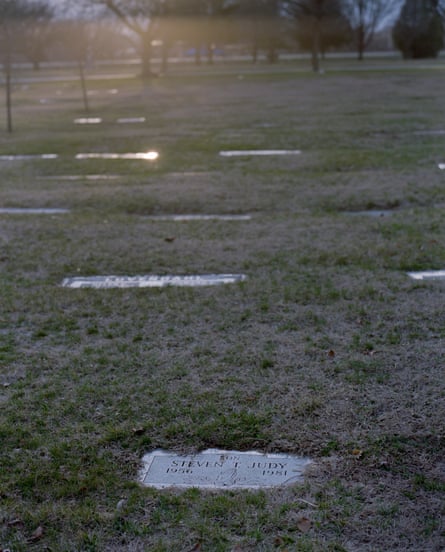
Steve asked that he not be interred behind Indiana state prison, where prisoners whose families don’t claim them are buried. The Carrs bought him a plot and headstone in Floral Park cemetery, less than a mile away from Central State hospital, where they first met him.
In the cemetery office, I asked for a map to help me locate the gravesite.
“Steven Judy,” the clerk said slowly. Hate letters were regularly left on Steve’s grave until about five years ago, he said. “Our groundskeepers removed them every morning. It became routine.”
The story of death penalty cases is usually told through a narrow cast of characters: the victims, the condemned, sometimes the families of those murdered or the legal teams. Almost no one asks what happens to the families who loved the condemned, especially when they are children.
Scholars who study capital punishment have identified those families as a distinct and largely invisible group. Sociologist Susan Sharp began studying them in 1996. In her book Hidden Victims, she describes them as living in a kind of moral exile.
“They are tainted by association,” Sharp told me. “We assume they must have done something wrong.”
Sharp estimates that roughly 30% of death row prisoners have no family contact, either because of long estrangement or because relatives cut ties after the crime. For the other 70%, she said, the family’s punishment can continue long after the condemned person is executed.
To outsiders, it can seem inexplicable that a family member can feel both horror for the victims and heartache for someone who has done monstrous harm. “We treat those family members as if they don’t have a right to grieve. We take away their right to be human,” Sharp says. “We fail to realize everyone is multifaceted. None of us is equal to the worst thing we’ve ever done.”
Families who provide primary support to prisoners on death row, as the Carrs did, are likely to suffer from depression, anxiety and PTSD that often go untreated or unrecognized, according to a report by the Texas After Violence Project, a non-profit oral history organization.
Sociologist and death penalty scholar Michael L Radelet is deeply familiar with the Steven Judy case; it partly inspired his first book, Facing the Death Penalty. “The family members of the executed are among the most powerless in our communities,” he told me. “The death penalty just doubles the number of innocent families who are mourning the loss of a loved one.”
With no institutional support and little public sympathy, many families carry loss, shame and sorrow for decades. “They are victims of the system,” Sharp said. “We need to find ways to intervene and help them make sense of it.”
After the execution, threatening and abusive calls flooded the Carr home. They took the phone off the hook for days, but the noise did not stop.
Inside the house, Mary and Bob fought constantly, often about Steve, and Bob moved out. Traci found her mom’s house chaotic and undisciplined so she went with her father; Randy and his brother stayed with Mary, who seemed unreachable, crying often, sunk in a sorrow with no clear edges.
Isolation hardened around them. Parents forbade their children from playing with the Carr kids. On the playground, though, the question surfaced anyway: Hey, what was he like, your brother? Traci refused to answer. “I wouldn’t talk about it. I just wouldn’t,” she recalls. “I thought we did something wrong. I was really ashamed of it.”
Randy kept getting into fights. Strong, athletic and ready to use his fists, he swung at anyone who tried to force him to accept what Steve had done.
The stain of being Steven Judy’s foster siblings followed Traci and Randy through high school and beyond. It entered rooms before they did.
When Traci moved into her first apartment, eager for the ordinary independence of adulthood, she slept with the lights on. “The dark terrified me,” she said.
Later, motherhood gave the fear somewhere new to live. She found herself watching her children obsessively, imagining dangers before they arrived. “The worst thoughts still pop in my head,” she says. “I have to mentally block them out.”
For a long time, Traci carried anger toward her parents for bringing Steve into their home, for not knowing more, for not protecting them better.
She has forgiven them now, at least mostly. “They grew later in life,” she said. They were young. They didn’t know the full extent of Steve’s crimes. “Mom had the best intentions. She was always trying to rescue people. Steve was charming so she really thought she could turn it around for him and make something good out of something terrible. She was trusting to the end of her life. And it’s a good quality.”
Mary died in 2023, and her husband, Bob, died two years later. The bin containing Steve’s belongings went to Traci. After we spent a day going through the bin together, Traci carried Steve’s belongings back to a corner of her garage. She doesn’t love having his stuff. “Was he wearing that belt when he did that? And that watch. Was he wearing that?” she asked. “I know Mom loved him, but I would never have kept this if it were up to me.” But even now, the final act of throwing it away still feels impossible.
Asked what she would say to Steve today, knowing all she knows now, Traci hesitated.
“I’m sorry for what he had to go through as a child. It makes me sick to think about the things he had to witness.” She paused. “Some people can pull through,” she said, “and other people can’t.”
Mary’s attachment to Steve did not end with his execution.
For 20 years, on the anniversary of his death, Mary would check into a hotel room alone and try to connect. She said she could feel him. She said he came to her. The kids sometimes teased her about this, but she just laughed good-naturedly. She was not religious, but recalled her grandmother communicating with spirits. She believed she came from a psychic family.
Though she kept a connection with Steve, Mary cut herself off from her parents for a time after the execution. “If anyone ever needed support and love from their family, I needed it this month,” she wrote to her mother. “We buried Steve yesterday and not one member of my family was there. I think I know how Steve must have hurt when his family turned their back on him. My family did the same to me. And all I did was give a very lost kid some love.”
Traci says when she discovered that letter, “it broke my heart. She never told me about any of that.” It took Traci years to understand that her mother’s grief carried its own kind of exile.
For Randy, the spiral that began after Judy’s arrest never fully stopped. A star high school athlete, he later went to prison on drug-related charges. “Everybody always told me I was going to turn out like Steve, and I’m thinking I didn’t mind that because I loved Steve to death,” he said. “But I felt like everybody expected me to screw up, so it wasn’t no big deal to meet their expectations.”
Traci is married to a police officer. She works as a patient advocate at a hospital now. She sits with families in crisis, helping them navigate what they don’t understand. In the evenings, she knits thick blankets, the yarn moving through her hands row by row.
Her mother has begun appearing again in her sleep: Mary holding her, comforting. Almost as if speaking aloud what had been buried for decades had called her mother back.
“Everyone hated Steve, and we were told we should too,” Traci says. “For a long time, I thought we did something wrong, and I was ashamed. People treated us like we had raised a murderer. It’s still how people remember us. I don’t think Mom ever got to grieve properly. I don’t think any of us did.”
This year, somewhere in the United States, another family will be sitting in a hotel room like the one Mary sat in, waiting for a phone call.
Forty-seven executions took place in 2025, the most in any year since 2009. Fifteen more by early June of this year, with the federal government moving to add firing squads, electrocution and gas asphyxiation to how a life can be taken.
The methods have changed, but for families, what is on the other side of the execution has not.
Recently, I took a road trip with three friends I’ve known since elementary school. For the first time in decades, we spoke together about my childhood friend Cindy Winter, whose murder forced its way into our childhood before any of us really understood death, shattering trust and turning our Sonoran desert into a place of danger.
When Terry and her children were killed, Traci and Randy were younger than I had been when Cindy was murdered. What struck me in both cases was the force of the damage: how completely one person’s violence could unmake life for children who had nothing to do with it.
But the Carrs carried something I never had to carry. Cindy’s killer was a figure of fear to me. To them, Judy was the brother who was “everything I had”, the protector who made room beneath the covers, the boy Mary could not stop trying to reach.
They had to go on knowing the worst thing about him, without being able to unknow the rest.
-
Information and support for anyone affected by rape or sexual abuse issues is available from the following organizations. In the US, Rainn offers support on 800-656-4673. In the UK, Rape Crisis offers support on 0808 500 2222. In Australia, support is available at 1800Respect (1800 737 732). Other international helplines can be found at ibiblio.org/rcip/internl.html
The Guardian wp:paragraph
هلدینگ کاسپین استانبول | خرید ملک در ترکیه | صرافی معتبر ایرانی در ترکیه | خرید و فروش طلا در ترکیه | مهاجرت به ترکیه | واردات و صادرات در ترکیه | نیازمندیهای ترکیه | اخبار ترکیه | اخبار جهانی | توریست ایران | خدمات توریستی در ایران | تورهای گردشگری ایران | هلدینگ اول | خدمات کاریابی و فریلنسری و شغل | مرجع اطلاعات ایران (همه چیز در ایران) | کیف پول و خدمات مالی و پرداخت یار | اخبار ایران | تابلو زنده قیمت ارز در ترکیه و استانبول | صرافی آنلاین ترکیه | قیمت طلا و نقره در ترکیه | سرمایه گذاری در ترکیه | جواهرات در ترکیه | نرخ لحظه ای ارزها در استانبول | قیمت دلار امروز در ترکیه | قیمت دلار استانبول امروز | قیمت لحظه ای دلار | اخبار روز ترکیه استانبول | اپلیکیشن ISTEX | اپلیکیشن قیمت لحظه ای دلار و یورو و لیر و ارزها در ترکیه
/wp:paragraph wp:paragraph /wp:paragraph
About the Author