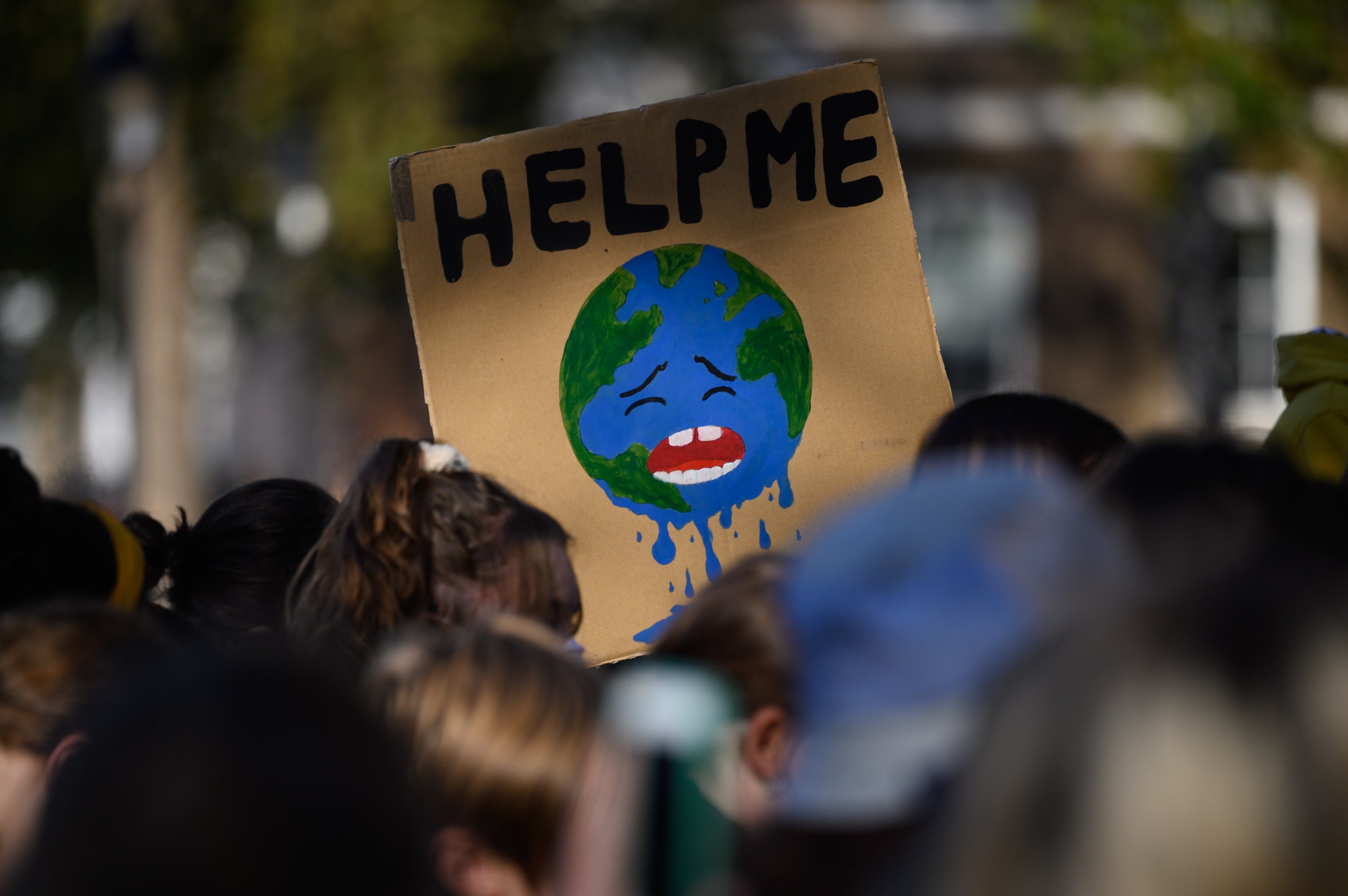
Why are more young people questioning whether to have children, plan long-term careers or even imagine their future with confidence? Experts say growing climate anxiety is increasingly shaping how they think, feel and live.
Researchers have a name for it: eco-anxiety. They say it can trigger fear, anger, grief, guilt, helplessness and frustration, while also disrupting sleep, impairing concentration and causing people to question major life decisions, including whether to have children.
Senior researchers Emma Lawrance and Jessica Newberry Le Vay of Imperial College London said eco-anxiety is generally an understandable response to the climate crisis rather than evidence of mental illness.
However, it can become harmful when it interferes with daily functioning, they said.
“Many young people tell us that the future … feels threatened by a changing climate.”
“For instance, they don’t necessarily feel okay to bring children into the world, or they don’t know whether they can live and work in the ways that they want now or in the future because of a changing climate,” Lawrance and Le Vay said in written comments to Anadolu Agency (AA).
Youth gloom
UNICEF’s latest Children’s Climate Risk Report shows that 1.5 billion children, nearly two-thirds of the world’s child population, face worsening heat waves, while 1.2 billion face extreme heat.
According to a study by the European Youth Portal, 75% of young respondents expressed fear about the future and 85% reported at least moderate concern over climate change.
A 2021 study published in The Lancet Planetary Health, which surveyed 10,000 people aged 16 to 25 in 10 countries, found 59% were very or extremely worried about climate change and more than 45% said such feelings negatively affected their daily lives.
Some 75% described the future as frightening, nearly 56% believed humanity was doomed and 39% said they were hesitant to have children.
‘It’s not fair’
Caroline Hickman, a psychotherapist and lecturer at the University of Bath, said she once believed climate change itself was the primary cause of young people’s distress.
“Really, what causes the greatest distress is the failure and the inaction of adults, particularly governments … to take action on climate change and protect the population,” Hickman told AA.
“I realized that a lot of children and young people were talking about this in terms of it’s not fair. We’ve got to deal with this, but we’ve not caused it,” Hickman said.
Eco-anxiety can therefore include a sense of abandonment by the adults and institutions expected to protect them, she explained.
Most vulnerable
Eco-anxiety is reported across countries and cultures, but it is not experienced equally.
Lawrence and Le Vay said global research suggested people living in more climate-vulnerable regions were generally more eco-anxious. Those who reported having experienced climate-related events were also more likely to be affected.
Research in the Philippines, she said, found greater effects among people in poorer communities and those living in less stable housing.
People whose livelihoods, professions or cultures are closely connected to land and nature may also experience particularly strong distress, she said.
A Lancet survey recorded the highest levels of fear in the Philippines. Some 92% of Filipino respondents said the future was frightening.
Finland recorded the lowest level among the 10 countries, but even there 56% held the same view.
According to a UNICEF analysis, children under 13 who have experienced or witnessed the destruction caused by floods, wildfires or droughts may be especially prone to worrying that the disaster could happen again.
Triggers
The effects may begin not with a major disaster.
“It can look surprisingly ordinary: a child who cannot sleep during a heat wave and struggles to concentrate the next day, a student exposed to wildfire smoke or traffic pollution who develops headaches or has more difficulty with attention and learning,” said neuroscientist Burçin Ikiz.
Ikiz said climate change could affect the developing brain because the brain systems responsible for detecting threats, regulating emotions and making long-term decisions are still developing during childhood and adolescence,
“Heat can disrupt sleep and make it harder to regulate attention, emotions and behavior. Air pollution has been associated with differences in cognitive development and poorer performance on measures of attention, memory and learning,” she told AA.
So, “persistent climate-related stress may keep a young person focused on danger and uncertainty,” she said.
Distress across screens
Young people need not experience a flood or wildfire directly to be affected by it. Disaster footage now moves instantly from a burning forest to a child’s phone.
This summer, videos circulating across Europe showed people rushing into stores for the last air conditioner or fan, families covering windows with aluminum foil and reflective sheets and residents improvising barriers to keep the heat outside.
Behind those scenes was a growing human toll. Europe recorded 10,650 excess deaths during the week of June 22-28, when a record-breaking heat wave swept across France, Spain, the U.K. and other parts of the continent, according to EuroMOMO data.
For young viewers elsewhere, the images allow them to imagine how easily the danger could reach them.
“So, it’s hearing stories of other people having to run away from fires and both those things are equally impactful,” Hickman said.
Truth, agency
When children express eco-anxiety, adults may instinctively tell them not to worry and assure them that everything will be fine, according to experts.
The difficulty is that children can observe record temperatures, wildfires and floods for themselves.
Ikiz said meaningful collective action could transform helplessness into purpose.
Teachers and counselors could be trained to recognize eco-anxiety without minimizing young people’s concerns or automatically treating them as mentally ill, according to Ikiz.
“The inaction of leaders is a big driver of climate distress. Governments and public institutions must take real action to create a safer climate future,” Lawrance and Le Vay said.
DAILYSABAH
هلدینگ کاسپین استانبول | خرید ملک در ترکیه | صرافی معتبر ایرانی در ترکیه | خرید و فروش طلا در ترکیه | مهاجرت به ترکیه | واردات و صادرات در ترکیه | نیازمندیهای ترکیه | اخبار ترکیه | اخبار جهانی | توریست ایران | خدمات توریستی در ایران | تورهای گردشگری ایران | هلدینگ اول | خدمات کاریابی و فریلنسری و شغل | مرجع اطلاعات ایران (همه چیز در ایران) | کیف پول و خدمات مالی و پرداخت یار | اخبار ایران | تابلو زنده قیمت ارز در ترکیه و استانبول | صرافی آنلاین ترکیه | قیمت طلا و نقره در ترکیه | سرمایه گذاری در ترکیه | جواهرات در ترکیه | نرخ لحظه ای ارزها در استانبول | قیمت دلار امروز در ترکیه | قیمت دلار استانبول امروز | قیمت لحظه ای دلار | اخبار روز ترکیه استانبول | اپلیکیشن ISTEX | اپلیکیشن قیمت لحظه ای دلار و یورو و لیر و ارزها در ترکیه
About the Author