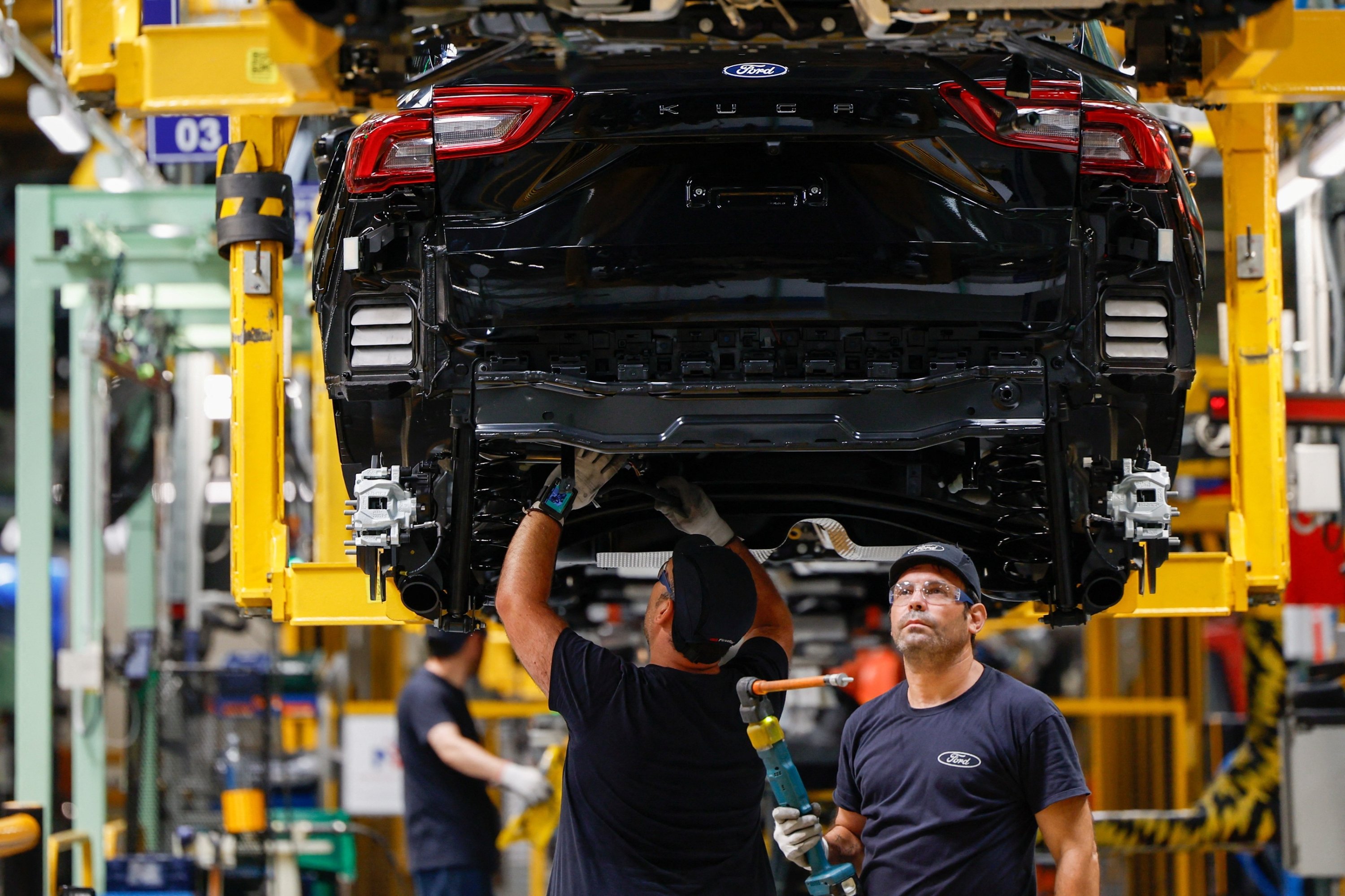
Ford is preparing for the possibility that Chinese automakers could enter the American market in the next five to 10 years, even though the country has erected numerous trade barriers to cars from China, the company’s CEO Jim Farley told employees on Thursday.
That’s according to a report by Reuters, which cited three people who viewed the meeting.
Farley has been among the most vocal about how competitive Chinese auto giants like BYD are in the industry. Ford is preparing to roll out a family of affordable electric vehicles that it engineered from the ground up to match the cost and efficiency of the Chinese companies.
The Ford chief, along with other senior leaders, said in a question-and-answer portion of a town hall that it is more likely Chinese companies would enter the market at the latter end of that range. The comments come as the U.S. Senate is pushing to expand a ban on Chinese car sales in the world’s second-largest and most lucrative auto market.
A Ford spokesperson declined to comment on discussions that took place during a private meeting with employees.
Leaders at the Dearborn, Michigan, automaker have previously warned that China was on America’s doorstep, but have not been as specific with the time frame as executives were in the Thursday meeting.
Ford Executive Chair Bill Ford spoke on the topic earlier this month.
“We have to go toe-to-toe with China,” Ford said at an Axios event. “We can’t expect to keep them out forever, and we have to be able to beat them at their own game.”
Chinese automakers have gained significant market share in neighboring Mexico, and under a trade deal with Canada are allowed to sell a limited number of EVs there. Auto industry experts see Canada, which is very similar to its U.S. neighbor, as a test market for Chinese automakers that are eager to sell to American consumers.
American consumers have signaled increasing interest in these models, surveys show, especially as affordable electric options are scant.
The U.S. currently blocks Chinese electric vehicles through tariffs of about 100%, in addition to U.S. Commerce Department rules banning Chinese software by model year 2027 and hardware by model year 2030.
The connected-vehicle rules were adopted in January 2025 under U.S. President Joe Biden, based on national security concerns around data privacy, and have been kept in place under the Trump administration. Automakers, including Ford, have worked to obtain authorizations under the rule to continue selling some China-produced vehicles in the United States.
While the automaker is not yet competing with China in the U.S., it certainly is abroad.
In an attempt to revive sales in Europe’s cut-throat market, where Chinese automakers are gobbling up market share, Ford recently announced a joint venture with China’s Geely. While the partnership was criticized by some U.S. lawmakers, Ford said Chinese competition in the region was prompting every carmaker to get “leaner and smarter,” which was the goal behind the Geely deal.
DAILYSABAH
هلدینگ کاسپین استانبول | خرید ملک در ترکیه | صرافی معتبر ایرانی در ترکیه | خرید و فروش طلا در ترکیه | مهاجرت به ترکیه | واردات و صادرات در ترکیه | نیازمندیهای ترکیه | اخبار ترکیه | اخبار جهانی | توریست ایران | خدمات توریستی در ایران | تورهای گردشگری ایران | هلدینگ اول | خدمات کاریابی و فریلنسری و شغل | مرجع اطلاعات ایران (همه چیز در ایران) | کیف پول و خدمات مالی و پرداخت یار | اخبار ایران | تابلو زنده قیمت ارز در ترکیه و استانبول | صرافی آنلاین ترکیه | قیمت طلا و نقره در ترکیه | سرمایه گذاری در ترکیه | جواهرات در ترکیه | نرخ لحظه ای ارزها در استانبول | قیمت دلار امروز در ترکیه | قیمت دلار استانبول امروز | قیمت لحظه ای دلار | اخبار روز ترکیه استانبول | اپلیکیشن ISTEX | اپلیکیشن قیمت لحظه ای دلار و یورو و لیر و ارزها در ترکیه
About the Author