We don’t always have the answers, but we have some people on speed dial who do — which is why we present to you our series FYI where we have experts explain if lip balm is actually bad, how often you should wash your hair and more.
Jelly flats are having a major moment this summer, and it’s easy to see why: the playful, translucent shoes offer trendy’90s nostalgia and they go with tons of different looks. But before you add a pair to your cart, it’s worth pausing to ask the obvious question: Are jelly shoes actually comfortable to wear, or just fun to look at? I asked podiatrists to weigh in on whether this trend is safe for your feet — or something you should limit to occasional use.
Are jelly shoes bad for your feet?
The short answer: Jelly shoes are not inherently bad for your feet, but they do come with some real caveats. Because jelly shoes are made from polyvinyl chloride (PVC) or similar plastics, they don’t offer the same flexibility as more traditional shoe materials.
“I’ve personally experienced blisters from these types of shoes,” says Dr. Samantha Landau, a podiatrist and professor at New York College of Podiatric Medicine at Touro University. “The friction of plastic against your feet can cause abrasions and blisters.” Unlike softer materials — think canvas or leather — the plastic used for jelly sandals doesn’t have much give, so it’s more likely to rub against your feet and cause pain.
Beyond blisters, there’s another issue worth considering before you wear jellies all day — a lack of arch support. “They tend to lack arch support, which will result in foot fatigue if you wear them for long periods of time,” Landau says. “Wearing shoes without arch support for long periods of time can lead to things like plantar fasciitis, Achilles tendonitis and posterior tibial tendinitis.”
That doesn’t mean jelly shoes are completely off-limits, it just means moderation matters. For example, save them for quick errands, poolside lounging or a few hours out rather than a full day on your feet.
When should you wear jelly shoes?
Despite their downsides, jelly shoes still have a real place in your summer shoe rotation. “Jelly shoes are cute, lightweight and fun for summer,” says Landau. They’re especially practical for the beach and the pool, since they dry quickly and are easy to slip on and off — no fumbling with laces or straps when you’re headed from the sand to the water and back. Just think of them as a stylish, low-commitment option for short lengths of wear rather than an everyday shoe.
Jelly shoes that won’t hurt your feet
Everyone’s feet are different, so what might be comfortable for one person may not be for the next. When we say these shoes won’t hurt your feet, this is based on their supportive features and the materials they’re made from — what you need in a jelly shoe (or any shoe for that matter) should be considered when shopping these recommendations.
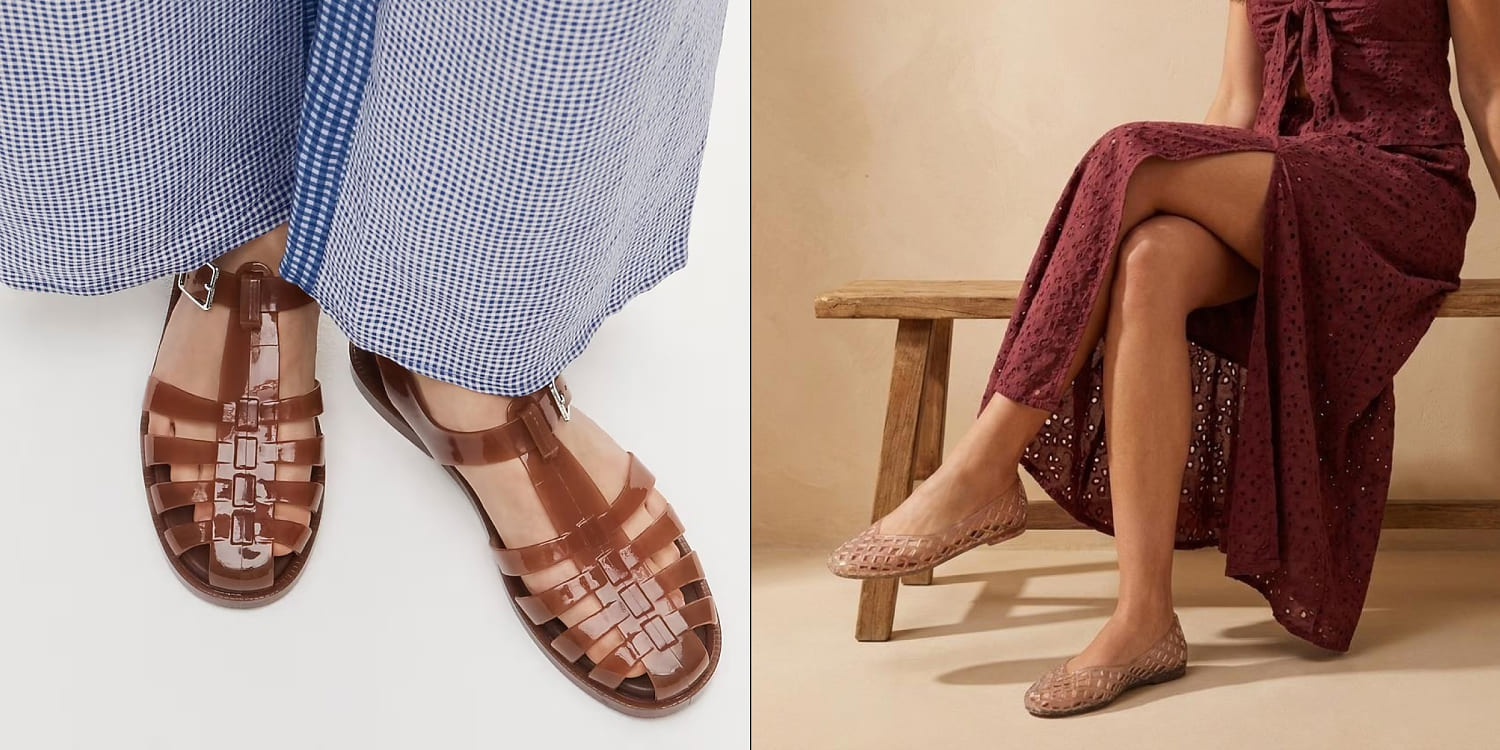
Landau likes that these jelly flats offer visible arch support and a cushioned sole. The shoe has a lattice design and a slightly pointy toe. They also come in six different colors so you can find what will work with your wardrobe best. The shoes do run large, so if you are in between sizes, it’s best to size down.
A cork insole gives these jelly Mary Janes a soft, cushioned feel underfoot, while the square toe offers extra room for your toes to spread out. The shoes also have an adjustable buckle strap that helps secure a comfortable, customized fit.
Adjustable fisherman-style straps let you customize the fit around your foot on these shoes, which helps prevent rubbing. Reviewers note that the sandals feel cushioned underfoot and comfortable for all-day wear, though they say breaking them in may take a bit of time before they feel as comfortable as possible.
If you’re worried about blisters, this sandal may be a good option because there is minimal plastic to cause friction. The jelly straps are soft and flexible and the cushioned foam footbed helps soften each step. That combination makes these sandals fairly easy on your feet, even with minimal arch support.
How to shop for jelly shoes that won’t hurt your feet
If you want to try the jelly trend, Landau suggests prioritizing the following things when you are shopping to ensure they are as comfortable as possible.
- Support: Look for a pair with at least some built-in arch support or a contoured footbed rather than a completely flat sole. This will keep your feet (and body) aligned and feeling good as you wear them. If the shoe doesn’t offer any support on its own, consider adding a thin gel insole to help cushion your feet and reduce fatigue.
- Heel drop: A lot of jelly shoes on the market are completely flat, which goes back to the issue of support. Look for a pair with a slight heel drop — the height difference between the back and front of the shoe — since a small amount of elevation in the heel matches your foot’s natural anatomy more closely. Even a few millimeters will help with stability and more.
- Roominess: Make sure there’s enough space in the toe box so your feet aren’t rubbing against the plastic with every step. A shoe that’s too snug will only increase your risk of blisters, so if you’re between sizes, go up rather than down.
Want more from NBC Select? Sign up for our newsletter, The Selection, and shop smarter.
It depends on who you ask — and which pair you’re wearing. Plenty of shoppers rave about how surprisingly comfortable certain jelly shoes are, especially ones with a cushioned footbed or a bit of give in the material. But comfort with jelly shoes tends to be more inconsistent than with traditional footwear, since the rigid plastic construction doesn’t mold to your foot the way leather or canvas does.
Some people find they can wear a pair for longer stretches with no issues, while others deal with rubbing, blisters or foot fatigue after just a few hours. If you’re going to try the trend, look for details like a contoured or padded insole, some flexibility in the material, and a roomy toe box — those features tend to make the biggest difference in how comfortable a jelly shoe actually feels on your foot, according to Landau.
If you’re set on wearing jelly shoes but worried about blisters, there are a few ways to add some protection before they become a problem. “You can apply silicone band-aids to the posterior heel or moleskin as well to create a buffer to the shear forces to prevent skin irritation and rubbing,” says Landau. Applying these to any spot on your foot that tends to rub — like the back of your heel or the sides of your toes — before you put your shoes on can help prevent friction from ever turning into a blister in the first place.
Meet our foot health expert
At NBC Select, we work with experts with specialized knowledge and authority based on relevant training and/or experience. We also ensure all expert advice and recommendations are made independently and without undisclosed financial conflicts of interest.
- Dr. Samantha Landau is a podiatrist and professor at New York College of Podiatric Medicine at Touro University.
Why trust NBC Selected?
I am a commerce editor at NBC Select and a journalist who regularly covers wellness, beauty, home and lifestyle. I have written about the best wide toe box shoes, moisture-wicking socks and more. I am also a big fan of jelly shoes and have two pairs that are in constant rotation during the summer months. For this story, I spoke with a podiatrist about the potential risks of wearing jelly shoes.
Catch up on Selected’s in-depth coverage of tech and tools, wellness and more, and follow us on Facebook, Instagram, Twitter and TikTok to stay up to date.
NBC News Top Stories wp:paragraph
هلدینگ کاسپین استانبول | خرید ملک در ترکیه | صرافی معتبر ایرانی در ترکیه | خرید و فروش طلا در ترکیه | مهاجرت به ترکیه | واردات و صادرات در ترکیه | نیازمندیهای ترکیه | اخبار ترکیه | اخبار جهانی | توریست ایران | خدمات توریستی در ایران | تورهای گردشگری ایران | هلدینگ اول | خدمات کاریابی و فریلنسری و شغل | مرجع اطلاعات ایران (همه چیز در ایران) | کیف پول و خدمات مالی و پرداخت یار | اخبار ایران | تابلو زنده قیمت ارز در ترکیه و استانبول | صرافی آنلاین ترکیه | قیمت طلا و نقره در ترکیه | سرمایه گذاری در ترکیه | جواهرات در ترکیه | نرخ لحظه ای ارزها در استانبول | قیمت دلار امروز در ترکیه | قیمت دلار استانبول امروز | قیمت لحظه ای دلار | اخبار روز ترکیه استانبول | اپلیکیشن ISTEX | اپلیکیشن قیمت لحظه ای دلار و یورو و لیر و ارزها در ترکیه
About the Author