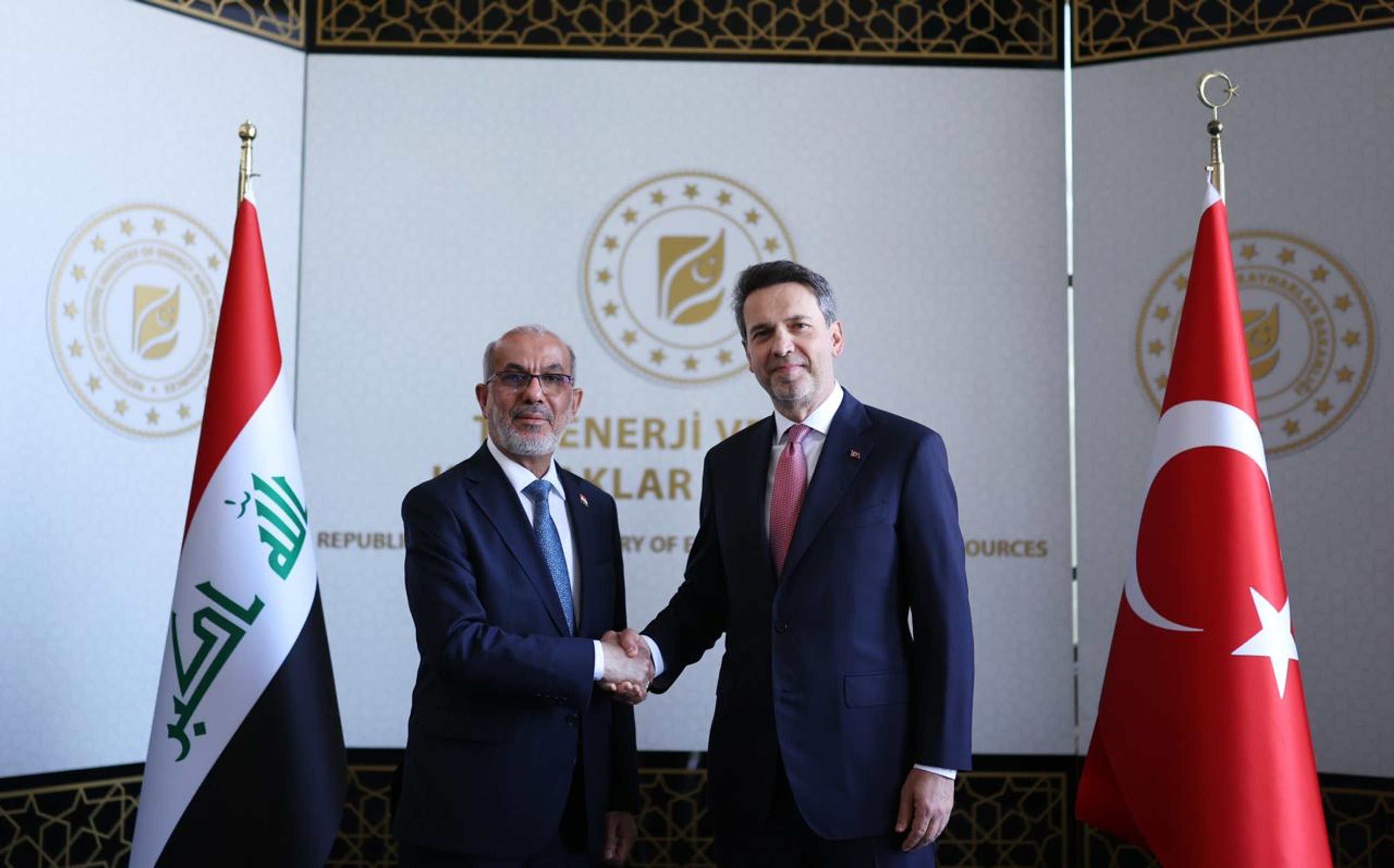
Türkiye and Iraq said on Saturday they agreed to extend a key oil pipeline agreement by one year, just days after a top-level visit by Iraqi Prime Minister Ali al-Zaidi to Ankara, officials on both sides said.
In a post on X, Energy and Natural Resources Minister Alparslan Bayraktar said the agreement was signed following a “productive meeting” in Ankara with Iraqi Oil Minister Bassem Mohammed Khudair.
Zaidi also hailed the deal in a post on X, describing it as “an important strategic milestone” which would involve “a minimum export capacity of 750,000 barrels per day.”
The decades-old agreement on the pipeline, which carries Iraqi crude to Türkiye’s Mediterranean export terminal of Ceyhan, a key outlet for regional oil shipments, had expired on Monday.
“While our efforts continue toward a new long-term agreement for this pipeline.. we have implemented this transit arrangement covering a daily capacity of 750,000 barrels,” Bayraktar wrote.
Zaidi said Iraqi and Turkish companies would begin implementing the agreement, while the two governments would push ahead with efforts “to finalize a comprehensive framework agreement covering the oil, electricity, and water resources sectors.”
The Kirkuk-Ceyhan pipeline has a maximum capacity of about 1.5 million barrels per day, although actual flows have been well below that in recent years.
Bayraktar went to Baghdad for talks on oil and gas cooperation in early July, and on Tuesday, the Iraqi premier and several top ministers were in Ankara to meet President Recep Tayyip Erdoğan and their counterparts.
During the visit, Bayraktar said both countries were committed to “fully utilizing the existing infrastructure of Türkiye-Iraq energy cooperation.”