Latest & Breaking News on Fox News
NEWYou can now listen to Fox News articles!
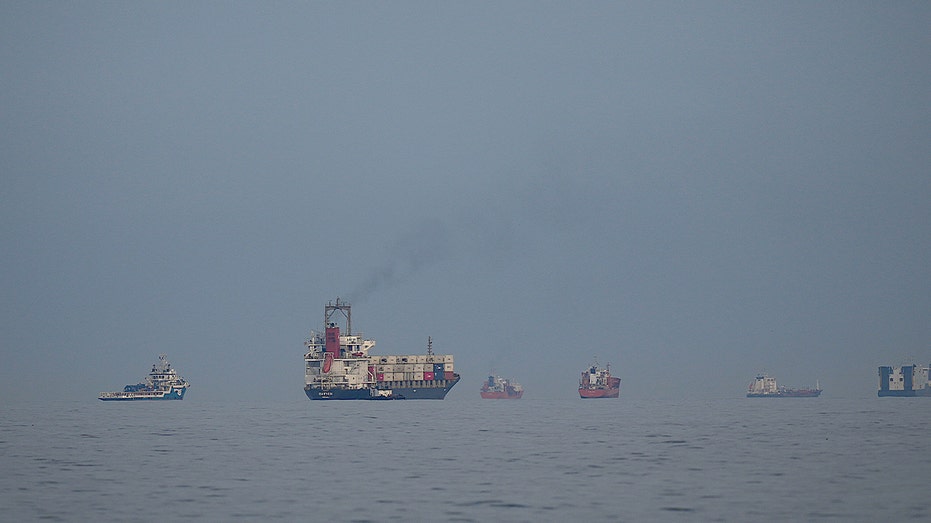
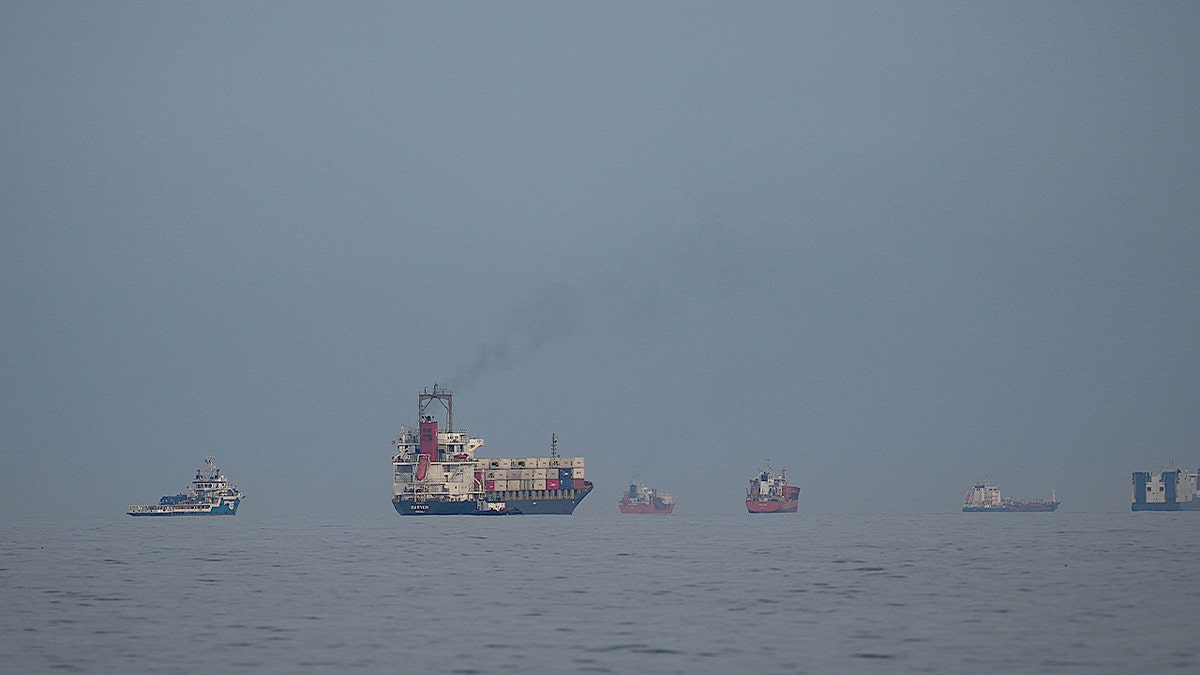
In July, Iran attempted to make good on its threat to close the Strait of Hormuz. Yet the strait had already ceased functioning as reliable commercial infrastructure long before. Since the conflict started, more than 1,100 vessels recorded GPS and AIS interference in a single day, ships appeared on tracking systems at airports or deep inside Iranian territory, and ship crews navigated one of the world’s busiest waterways by radar alone because satellite navigation could no longer be trusted. Iran did more than threaten a chokepoint. It demonstrated what a determined adversary can do to the satellite infrastructure the modern world has taken for granted.
America depends on a second, invisible choke point: the Global Positioning System. GPS timestamps every credit card swipe and equity trade, synchronizes the power grid and cellular networks, and guides combines through fields, container ships into port, and infantry through contested terrain.
That faint signal – engineered in the 1970s in a different time when our enemies weren’t as savvy – now carries the weight of the entire global economy and our military edge. That world is gone. Global aviation logged roughly 430,000 jamming and spoofing incidents in 2024, a sharp 62% increase in a single year. A basic jammer can be built from off-the-shelf parts for a few hundred dollars.
GEN. JACK KEANE WARNS AGAINST TRUSTING IRAN ON STRAIT OF HORMUZ
I know what reliable navigation means in combat. As a Ranger, I never thought about GPS in combat. It located my team, guided the aircraft above us, and synchronized fires without ever announcing itself. We took it for granted. Today’s service members enjoy no such luxury. We are sending American forces into contested spaces with a vulnerable system designed half a century ago.
No incremental upgrade can fix GPS. Its weakness is physics, not engineering oversight. A satellite in medium Earth orbit broadcasting at limited power will always produce a faint signal at the receiver. A nearby jammer will always overpower it. Military M-Code offers marginal improvements but does not change the fundamental math.
China has drawn the obvious conclusion. The Chinese Communist Party is rapidly expanding next-generation navigation satellites, including low Earth orbit (LEO) constellations that operate closer to Earth, broadcast far stronger signals and are designed with electronic warfare in mind.
Beijing aims to dominate the navigation layer of the 21st-century economy. Congress has noted this shift in unusually blunt terms, stating in last year’s defense authorization that the United States is falling behind China in satellite navigation.
The solution is not another slow government program. It is emerging from American commercial industry. U.S. companies have designed and launched navigation satellites in domestic factories using private capital. These systems now operate in LEO, delivering signals up to 100 times stronger than GPS.
They resist spoofing by design, provide centimeter-level accuracy, and work with the GPS receivers already installed in millions of aircraft, vehicles, vessels and weapons. A software update is often all it takes to transition equipment America already owns to navigation that can survive attacks.
The Space Force understands this. Earlier this year, it canceled plans for a government-owned “Resilient GPS (R-GPS)” constellation in favor of leveraging commercial services. The fiscal year 2027 defense bill now advancing in the House would require the Air Force to demonstrate capabilities with commercial LEO providers – testing operation without GPS, resistance to jamming and spoofing, and rapid restoration if satellites are lost.
The demonstration is a good start, but it is not enough. Three concrete steps would turn congressional direction into deployed capability: first, fund what Congress has already directed. The 2027 defense appropriations bill should create a dedicated budget line for the commercial LEO demonstration and follow-on services. This investment would cost a fraction of a single GPS III satellite – and far less than the $1 billion once earmarked for R-GPS.
No incremental upgrade can fix GPS. Its weakness is physics, not engineering oversight.
Second, procure operational services, not more studies. Commercial providers are already placing production satellites into orbit with private capital. The Department of Defense should contract for resilient navigation as a service – just as it does for launch services – and pay for proven performance in orbit.
CLICK HERE FOR MORE FOX NEWS OPINION
Third, set resilience standards for critical infrastructure. Merchant crews navigating the Strait of Hormuz by radar this spring used receivers roughly 15 years out of date. Farmers, utility operators, and airline pilots face the same exposure. Federal regulators should establish minimum resilience requirements that legacy GPS can no longer meet on its own.
CLICK HERE TO DOWNLOAD THE FOX NEWS APP
In 1973, the United States wagered that a constellation of navigation satellites would transform warfare and the global economy. That wager succeeded beyond any planner’s dreams, and it taught our adversaries precisely what to hold at risk. Iran disrupted a strait the world assumed would remain open. Our more capable adversaries intend to disrupt a signal America assumes will always be overhead.
The next era of navigation will belong to the first nation to focus on fielding resilient capabilities. American industry has already placed them in orbit. Whether the U.S. government moves at the speed of relevance will determine if America retains the decisive advantage it has held for 50 years – or cedes it to another power.
wp:paragraph
هلدینگ کاسپین استانبول | خرید ملک در ترکیه | صرافی معتبر ایرانی در ترکیه | خرید و فروش طلا در ترکیه | مهاجرت به ترکیه | واردات و صادرات در ترکیه | نیازمندیهای ترکیه | اخبار ترکیه | اخبار جهانی | توریست ایران | خدمات توریستی در ایران | تورهای گردشگری ایران | هلدینگ اول | خدمات کاریابی و فریلنسری و شغل | مرجع اطلاعات ایران (همه چیز در ایران) | کیف پول و خدمات مالی و پرداخت یار | اخبار ایران | تابلو زنده قیمت ارز در ترکیه و استانبول | صرافی آنلاین ترکیه | قیمت طلا و نقره در ترکیه | سرمایه گذاری در ترکیه | جواهرات در ترکیه | نرخ لحظه ای ارزها در استانبول | قیمت دلار امروز در ترکیه | قیمت دلار استانبول امروز | قیمت لحظه ای دلار | اخبار روز ترکیه استانبول | اپلیکیشن ISTEX | اپلیکیشن قیمت لحظه ای دلار و یورو و لیر و ارزها در ترکیه
/wp:paragraph wp:paragraph /wp:paragraph
About the Author

