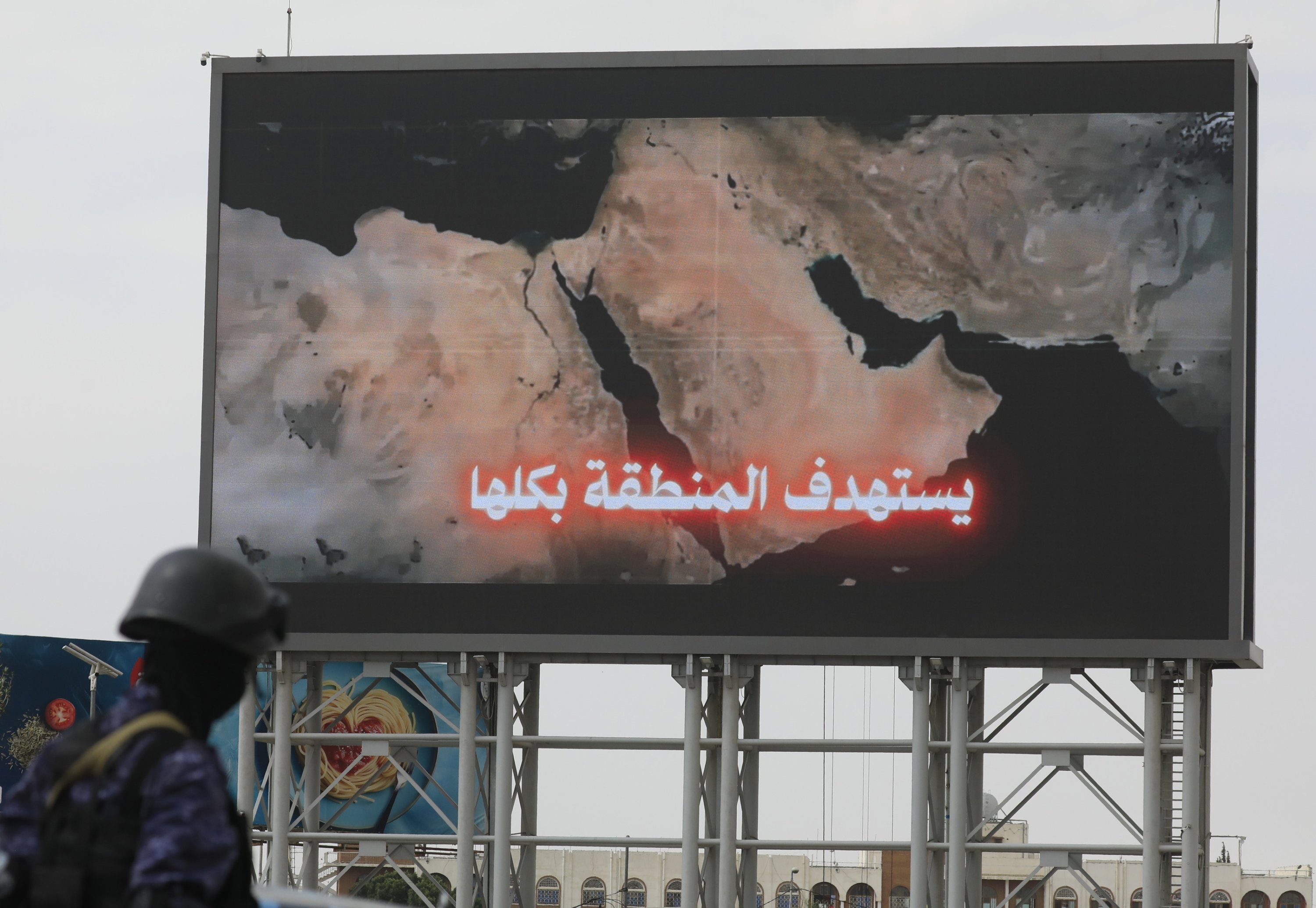
Stretching 1,400 miles (2,250 kilometers) between Northeast Africa and the Arabian Peninsula, the Red Sea is one of the world’s most critical maritime arteries. Every year, between 12% and 15% of global seaborne trade, valued at more than $1 trillion, passes through this waterway extending from the Suez Canal in the north to the Bab el Mandeb Strait in the south. While a substantial share of energy flows between Asia, the Middle East and Europe depends on this route, Houthi attacks on commercial vessels have created a new source of risk for global oil and liquefied natural gas (LNG) markets alongside the Strait of Hormuz.
According to the United States Energy Information Administration (EIA), during the first half of 2025, approximately 4.9 million barrels per day of crude oil and petroleum products were transported through the Suez Canal and the Suez Mediterranean (SUMED) Pipeline at the northern end of the Red Sea. At the southern entrance, around 4.2 million barrels per day passed through the Bab el-Mandeb Strait. Combined, shipments through these three routes accounted for roughly 6% of all seaborne oil trade during the period. By comparison, average oil flows through the Strait of Hormuz reached nearly 21 million barrels per day over the same period.
The Red Sea is also considered a digital chokepoint because nearly 90% of the submarine fiber optic cables connecting Europe and Asia pass through this corridor. The principal concern is therefore not the volume of oil transiting the Bab al-Mandeb Strait, but the gradual erosion of confidence in the security of navigation through both the strait and the wider Red Sea. As Houthi attacks intensified, tanker operators were forced to reassess maritime security risks. A growing number of energy carriers abandoned the Red Sea route in favor of the Cape of Good Hope around southern Africa.
For crude oil tankers, traffic through the Bab al-Mandeb Strait has shown signs of recovery during 2026. Before attacks intensified again in June, daily tanker transits had approached normal levels at around 30 vessels per day. However, renewed attacks in July triggered another sharp slowdown in energy shipping. According to Kpler data, the number of oil tankers transiting the Bab el-Mandeb Strait fell to approximately eight vessels per day on some days following the attacks, representing a significant decline from the normal level of around 30 vessels per day.
The situation has been more complicated for liquefied natural gas (LNG) shipping. LNG carriers are considerably more sensitive to security risks than crude oil tankers because of the high economic value of their cargoes, specialized transportation requirements and the insurance market’s greater emphasis on security assessments. Several LNG cargoes moving from Qatar to Europe were rerouted away from the Suez Canal and the Bab el-Mandeb Strait, extending voyage durations. For LNG operators, the key question is no longer whether the route remains open, but whether it can still be regarded as sustainably secure.
Türkiye’s current LNG supply structure suggests that there is little evidence of an immediate supply disruption. While maintaining long-term LNG supply agreements with Qatar, Türkiye also imports LNG from the United States, Algeria and Nigeria. This diversified portfolio substantially reduces dependence on any single producer or maritime route. Based on publicly available information, there has been no verified cancellation of contracted LNG deliveries or physical supply interruption involving imports carried out by the Petroleum Pipeline Corporation (BOTAŞ). Consequently, Türkiye’s primary risk does not stem from the inability to produce LNG, but from the necessity of transporting available cargoes through longer and more expensive routes.
Alternatives, consequences
The diversion of shipping routes away from the Red Sea to avoid Houthi attacks significantly strengthened ton-mile demand, creating favorable conditions for investors in publicly listed tanker owners. As security conditions deteriorated in the Bab el-Mandeb Strait, major energy companies including BP, Shell, Equinor and QatarEnergy suspended their use of the Red Sea corridor. Instead, vessels began sailing around the Cape of Good Hope. This shift did more than extend voyage times. It effectively reduced global tanker supply because the same vessel could complete fewer voyages over a given period. In shipping economics, this resulted in a rapid increase in what is known as ton-mile demand. Since ton-mile calculations incorporate both cargo volume and transport distance, longer voyages around the Cape of Good Hope artificially boosted tanker demand. As a result, freight rates increased independently of oil prices, allowing tanker operators to generate higher revenues. The decisive factor, however, was the contractual structure under which each vessel operated. Two principal models dominate maritime transportation.
The first is the long-term time charter agreement. Under this model, a vessel is leased for months or even years in return for a fixed daily rate. Even if freight rates increase sharply, the shipowner continues to receive the previously agreed daily payment. The second model is the spot or voyage charter market, where every voyage is priced separately. As freight rates surged severalfold following the Red Sea crisis, tankers operating in the spot market were able to translate these higher rates directly into their earnings. The same vessel generated substantially higher daily income than before the crisis. Consequently, tanker companies with significant exposure to the spot market became the primary financial beneficiaries.
The same logic applies to LNG contracts. Many long-term LNG sales agreements are structured on a Delivered Ex Ship (DES) basis. Under DES contracts, the seller is responsible for delivery. If the producer does not own its own fleet or must charter vessels in the spot market, it may have to absorb the higher freight costs. By contrast, under Free on Board (FOB) contracts, the buyer charters the vessel, meaning that higher freight expenses are ultimately borne by the importer or the shipowner contracted by the importer.
The economic consequences of the Red Sea crisis therefore depended not only on energy prices, but also on whether contracts were structured under FOB or DES terms. Throughout the crisis, major international tanker operators emerged as the principal beneficiaries. In crude oil transportation, companies including Frontline, CMB.TECH, operating the former Euronav fleet, International Seaways and DHT Holdings benefited from longer voyage distances. In refined petroleum product shipping, Hafnia, Scorpio Tankers and TORM stood out. Operating primarily in the Medium Range (MR), Long Range 1 (LR1) and Long Range 2 (LR2) product tanker segments, these companies generated higher Time Charter Equivalent (TCE) earnings as voyages around the Cape of Good Hope extended vessel utilization. Hafnia’s financial results for the first quarter of 2026 illustrate a notable increase in both average TCE earnings and net profit. Their competitive advantage did not come from transporting greater volumes of oil, but from benefiting from a tighter effective tanker supply as the same vessels remained committed to longer voyages.
The Red Sea crisis reshaped the economics of maritime transportation far more than it transformed energy prices. Contrary to widespread assumptions, oil producers were not always the biggest winners. Shipowners often were.
DAILYSABAH
هلدینگ کاسپین استانبول | خرید ملک در ترکیه | صرافی معتبر ایرانی در ترکیه | خرید و فروش طلا در ترکیه | مهاجرت به ترکیه | واردات و صادرات در ترکیه | نیازمندیهای ترکیه | اخبار ترکیه | اخبار جهانی | توریست ایران | خدمات توریستی در ایران | تورهای گردشگری ایران | هلدینگ اول | خدمات کاریابی و فریلنسری و شغل | مرجع اطلاعات ایران (همه چیز در ایران) | کیف پول و خدمات مالی و پرداخت یار | اخبار ایران | تابلو زنده قیمت ارز در ترکیه و استانبول | صرافی آنلاین ترکیه | قیمت طلا و نقره در ترکیه | سرمایه گذاری در ترکیه | جواهرات در ترکیه | نرخ لحظه ای ارزها در استانبول | قیمت دلار امروز در ترکیه | قیمت دلار استانبول امروز | قیمت لحظه ای دلار | اخبار روز ترکیه استانبول | اپلیکیشن ISTEX | اپلیکیشن قیمت لحظه ای دلار و یورو و لیر و ارزها در ترکیه
About the Author