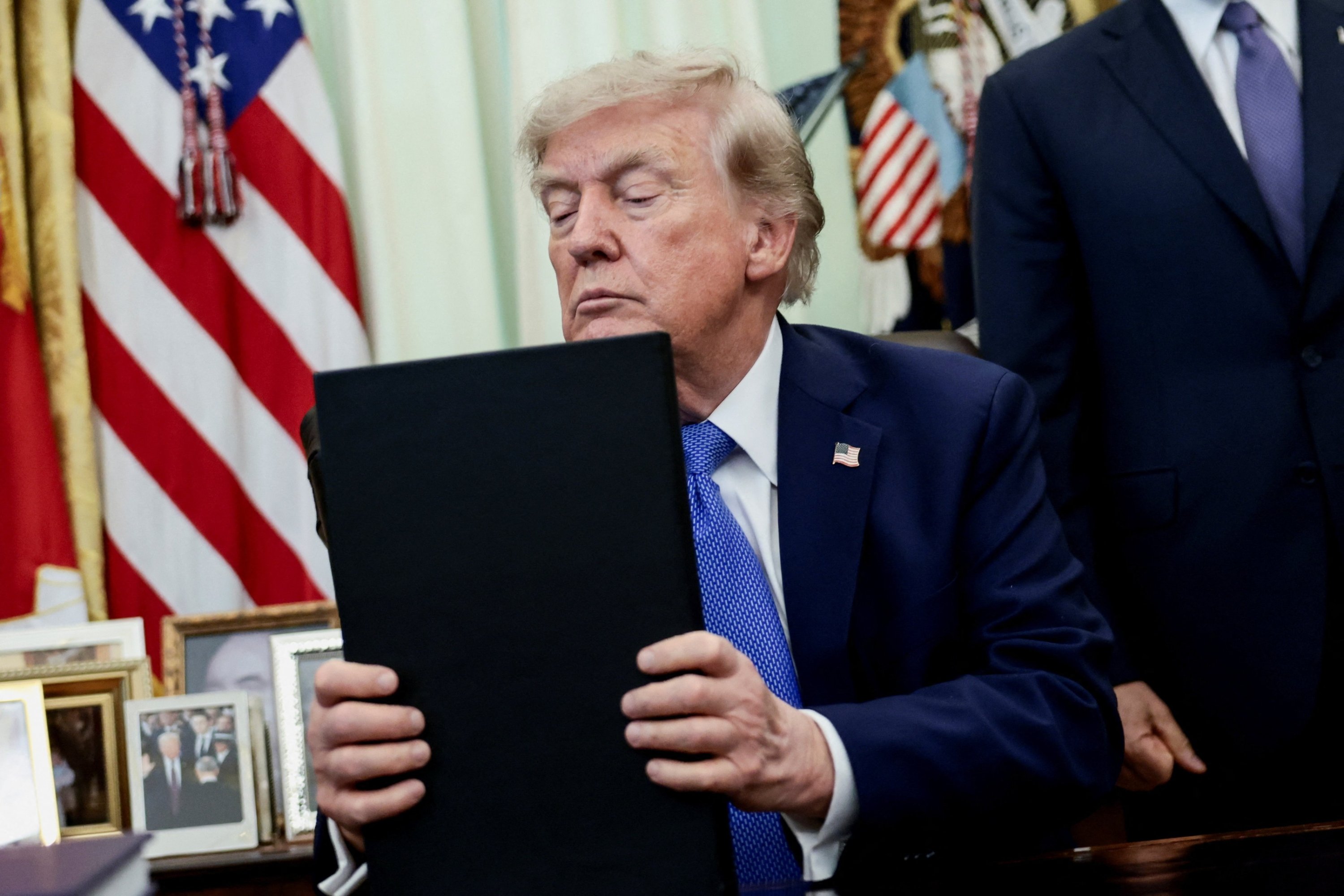
U.S. President Donald Trump said Thursday that he is once more trying to limit the number of people born in the country who can become American citizens.
It’s a sign that even after his first attempt to limit birthright citizenship was rejected by the Supreme Court, the president is ready to try again.
Trump said Thursday he was signing two executive actions on immigration.
One will limit the number of people eligible for U.S. citizenship after being born in the United States, he said.
The second order seeks to curb what Trump called “birth tourism” by increasing restrictions on visitors to the U.S. who want to obtain visas to give birth while in the country.
“They’ve taken birthright citizenship and they’ve made a joke out of it,” Trump told journalists in the Oval Office.
“We’re making adjustments because it’s very unfair,” he said.
Trump said he thought his latest actions would be constitutional.
Later on Thursday, the White House said people planning to engage in birth tourism will be denied entry to the U.S. and may be permanently barred.
The secretary of Homeland Security may exempt a foreign national on humanitarian grounds or when that person’s entry is in the national interest, according to the text of the order.
In June, the Supreme Court upheld a broad conception of birthright citizenship, rejecting Trump’s previous efforts to declare that children born to people in the U.S. illegally or temporarily aren’t American citizens.
Under the Citizenship Clause of the 14th Amendment to the U.S. Constitution, nearly everyone born on U.S. soil is an American citizen.
The Supreme Court agreed in a majority opinion penned by Chief Justice John Roberts that was joined by two other conservative-leaning justices and the three liberal-leaning justices.
Trump’s bid to end birthright citizenship is part of his wider campaign to limit immigration, which includes expelling millions of undocumented migrants and removing deportation protections from nationals of more than a dozen countries.
The 14th Amendment states that “All persons born or naturalized in the United States, and subject to the jurisdiction thereof, are citizens of the United States.”
It does not apply to those not subject to U.S. jurisdiction – the children of foreign diplomats, for example – and under U.S. law, visas can already be denied if a consular officer believes the applicant is traveling to the country for the primary purpose of giving birth.