The explosive drone discovered at Halle Airport, Leipzig, on Aug. 4 did not detonate. Its fuse failed, but its political impact did not. Found in the security zone near a Ukrainian Antonov cargo aircraft, the device carried about 600 grams of explosives and could have caused a catastrophe. On Sept. 1, the German government formally blamed Russia, turning a failed attack into a potential turning point in German-Russian relations.
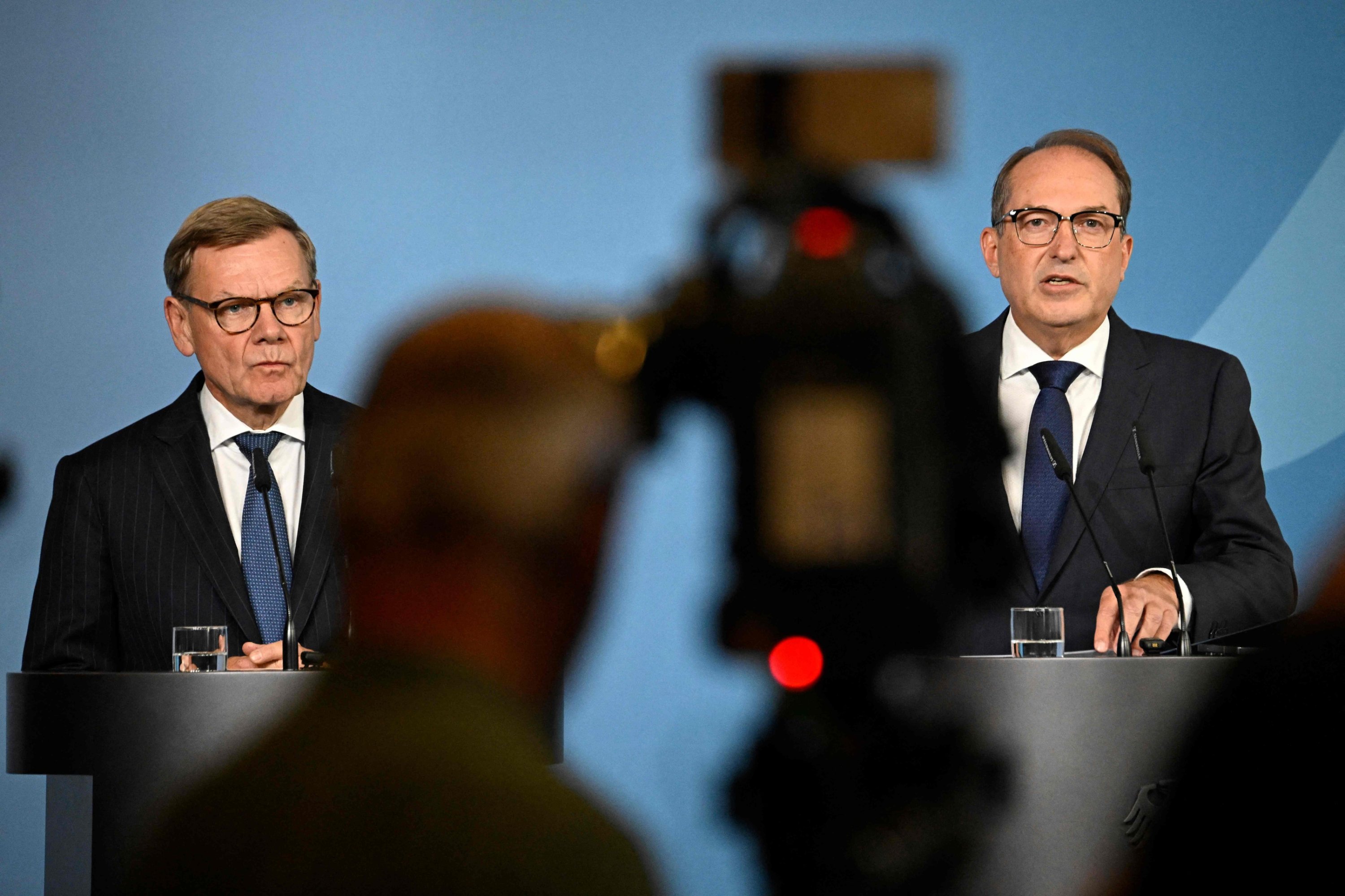
Interior Minister Alexander Dobrindt said German and allied intelligence pointed clearly to Russian involvement. Foreign Minister Johann Wadephul announced the closure of Russia’s Consulate General in Bonn, the termination of the agreement governing the Russian House in Berlin, tighter entry controls and greater pressure on Russia’s shadow fleet. Berlin will also seek additional European Union sanctions. The complete body of evidence has not been made public, but Germany has crossed an important threshold: It is no longer merely warning about Russian hybrid warfare; it is attributing an attempted attack on German soil directly to Moscow.
Moscow’s answer demonstrated how little diplomatic space remains. President Vladimir Putin accused Berlin of fabricating evidence and called the measures a serious mistake. Foreign Ministry spokesperson Maria Zakharova promised a reciprocal response. The Russian Embassy described Germany’s actions as an unprecedented escalation that would not remain without consequences. Former President Dmitry Medvedev went further, threatening direct strikes against German military production facilities and even other locations in Berlin. His rhetoric reinforced the very threat perception Moscow claims is being manufactured.
This exchange marks more than another quarrel produced by the Ukraine war. It threatens to close the last chapter of a policy that shaped Germany’s approach to Russia for decades: the belief that trade, personal relationships and energy interdependence could moderate geopolitical conflict.
Ghosts of Ostpolitik
Former German Chancellor Gerhard Schröder embodied this bargain. His close relationship with Putin, his support for Nord Stream and his later positions in Russian energy companies transformed economic cooperation into a political project.
Former German Chancellor Angela Merkel was more cautious toward the Kremlin and supported sanctions after the annexation of Crimea, yet she continued to defend Nord Stream 2 as a commercial venture. Germany’s industrial model benefited from relatively cheap Russian pipeline gas, while Moscow gained revenue, access and influence.
The full-scale invasion of Ukraine shattered this arrangement, but its networks did not disappear. In July, former Chancellery chief Ronald Pofalla, former Social Democratic Party leader Matthias Platzeck and former Swiss diplomat Tim Guldimann met Russian representatives in Baku. The Russian group was led by Viktor Zubkov, a former prime minister and current Gazprom supervisory board chairman.
This was not an official Merkel delegation, and there is no public proof that energy deals were discussed. The German government denied authorizing or even knowing about the talks. Nevertheless, Baku revealed that figures associated with the old engagement policy still wanted a back channel to Moscow. The Leipzig incident now shows how politically toxic even limited rapprochement has become.
Germany’s energy paradox
The rupture comes at an economically painful moment. Germany has diversified its gas supplies through liquefied natural gas terminals and pipeline imports from countries such as Norway. Supply is more secure than in 2022, but security is not the same as affordability. In the first half of 2025, German households still paid 77.6% more for natural gas than in the second half of 2021. In 2022 alone, gas prices rose 64.8%, heating oil 87%, and motor fuels 26.8%. The energy shock helped drive inflation to 6.9% in 2022 and 5.9% in 2023. The bill was not only paid at kitchen tables: Production in energy-intensive industries fell 15.2% between February 2022 and March 2026.
The Iran war and instability around the Strait of Hormuz have again pushed oil and gas prices upward, reopening the same wound. If Germany’s old economic model was fueled partly by cheap Russian energy, why not restore at least part of that relationship? Leipzig turns the argument on its head: Can a country entrust a strategic resource to the power it accuses of placing explosives beside critical cargo aircraft on its own territory?
Germany is therefore choosing strategic insulation over cheaper energy precisely when that choice is becoming more expensive. At the same time, security is consuming a growing share of national resources. Germany’s defense spending rose from 1.27% of gross domestic product (GDP) in 2021 to 2.14% in 2025; the 2026 total is projected at 117.2 billion euros ($136.02 billion). Leipzig gives this shift a new domestic logic. Security policy will increasingly mean not only tanks and ammunition, but drone defenses, intelligence, cyber resilience and the protection of airports, ports and energy networks.
Schröder once assumed that pipelines and personal trust could turn geopolitical rivals into predictable partners. Germany is not harvesting the fruits of that project. It is removing its final remnants. The Leipzig incident may become a critical juncture if sanctions, counterintelligence and infrastructure protection harden into permanent policy. The drone’s explosive charge failed, but it may still have destroyed the last plausible route back to the German-Russian special relationship – with consequences extending far beyond Berlin and Moscow to Europe’s security architecture, energy strategy and capacity for future diplomacy.
DAILYSABAH
هلدینگ کاسپین استانبول | خرید ملک در ترکیه | صرافی معتبر ایرانی در ترکیه | خرید و فروش طلا در ترکیه | مهاجرت به ترکیه | واردات و صادرات در ترکیه | نیازمندیهای ترکیه | اخبار ترکیه | اخبار جهانی | توریست ایران | خدمات توریستی در ایران | تورهای گردشگری ایران | هلدینگ اول | خدمات کاریابی و فریلنسری و شغل | مرجع اطلاعات ایران (همه چیز در ایران) | کیف پول و خدمات مالی و پرداخت یار | اخبار ایران | تابلو زنده قیمت ارز در ترکیه و استانبول | صرافی آنلاین ترکیه | قیمت طلا و نقره در ترکیه | سرمایه گذاری در ترکیه | جواهرات در ترکیه | نرخ لحظه ای ارزها در استانبول | قیمت دلار امروز در ترکیه | قیمت دلار استانبول امروز | قیمت لحظه ای دلار | اخبار روز ترکیه استانبول | اپلیکیشن ISTEX | اپلیکیشن قیمت لحظه ای دلار و یورو و لیر و ارزها در ترکیه
About the Author


