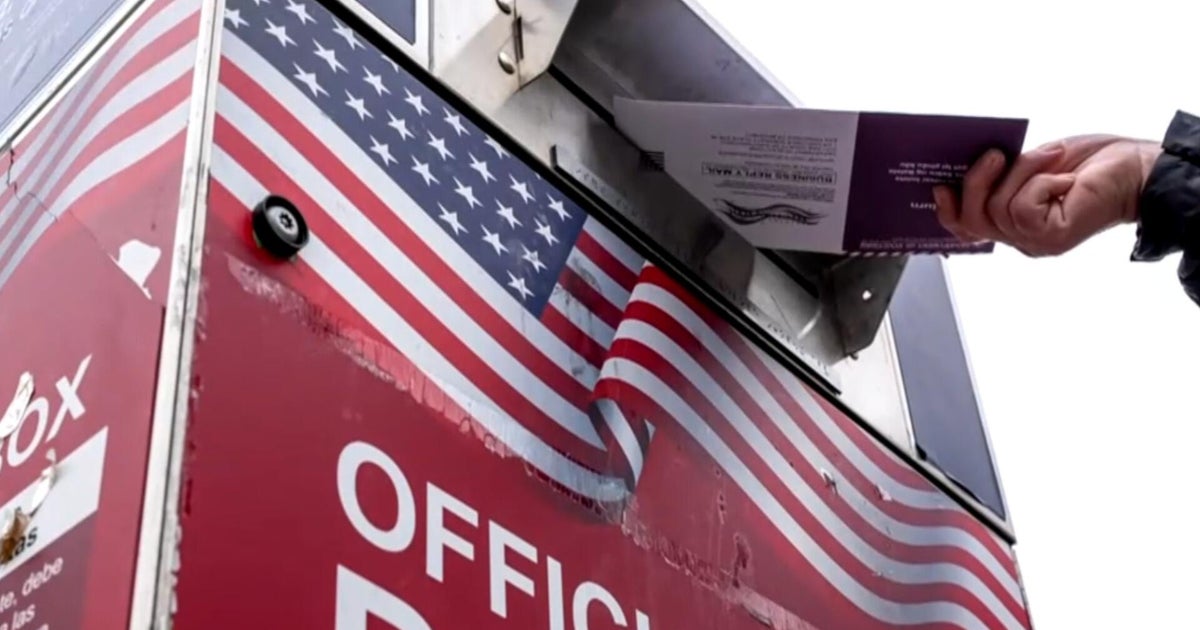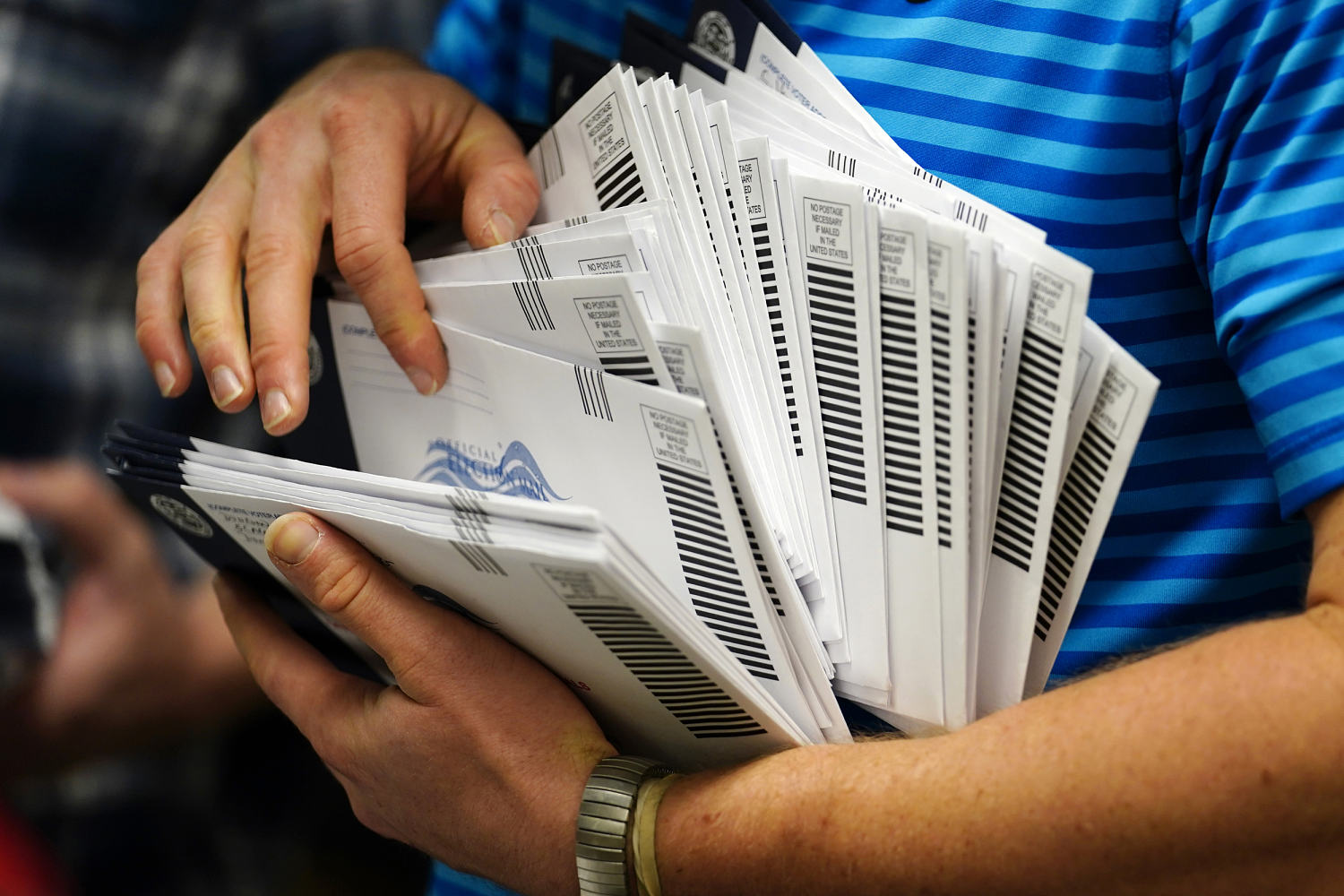
A federal judge on Friday temporarily blocked a bid by President Donald Trump for the U.S. Postal Service to exert control over mail-in voting ahead of the midterm elections as one state begins mailing out ballots.
Boston-based U.S. District Judge Indira Talwani, who previously blocked a related effort on mail voting, found the new Postal Service rule dictating how mail-in ballots can be sent is likely unlawful and unconstitutional, prompting her to issue a preliminary injunction.
The rushed time frame being pushed by the administration will make voter disenfranchisement “practically inevitable” if the rule is allowed to stay in place, the judge found.
The “court finds, on one side, that immediate implementation of the Final Rule issued less than seventy days before the November 2026 election threatens disenfranchisement of millions of United States citizens who seek to vote by mail,” while “on the other side, that the record includes no evidence relating to fraudulent mail voting to support the rushed implementation of the Final Rule,” Talwani wrote.
She rejected the Justice Department’s request that she pause her order while the administration appeals, and noted that her ruling does not bar states that want to follow the new rules from doing do.
The DOJ did not immediately respond to a request for comment on the judge’s order.
Talwani also said the ruling applies only to the midterms, since “the Final Rule imposes no irreparable harm as to later elections and judicial challenges may be addressed in the normal course.”
The action comes a day after the Trump administration asked the Supreme Court to override a temporary order issued by Talwani last week halting the rule.
In that ruling, the judge sided with states and voting rights groups that argued the Postal Service rule unlawfully usurped states’ power to regulate their own elections — and left them facing an “impossible” timeline to comply.
“Through the Final Rule, the USPS is refusing to send mail ballots to eligible voters unless States or local election officials submit their mail ballot envelopes and return envelopes and receive advance approval from the USPS without regard to impending deadlines for the November 3, 2026 election,” the judge wrote.
It also “requires elections officials to create accounts for a new electronic portal, certify that they have received approval regarding the mail ballot design, and thereafter upload to the USPS portal each voter’s information, including name, address, and a unique intelligent mail barcode,” she noted.
“Based on the record presently before the court, Plaintiff States face irreparable harm where they are required to comply with a likely unconstitutional regulation for which compliance is practically impossible as to the 2026 midterm elections, now little more than two months away,” Talwani wrote.
The states “have neither time nor funds to design new mail ballots, seek approval of the new designs, order production of mail ballots, update their own election management systems, train election officials to use the USPS portal, and upload citizen data to the portal, all before the midterms,” she wrote.
North Carolina began sending out ballots Friday, as required by state law. State Attorney General Jeff Jackson, a Democrat, said in a statement Thursday that if the Supreme Court sides with the administration, it would “throw our election into chaos.”
“The ballots are printed, the process is underway, and North Carolinians deserve a lawful and orderly election,” Jackson said.
In his filing to the Supreme Court, U.S. Solicitor General John Sauer argued it was Talwani and not the rush to implement the directive that’s causing “confusion.”
While her order allowed states that want to follow the new requirement to do so, that “risks sowing confusion and chaos because it makes those preparatory steps voluntary, and not mandatory,” Sauer wrote.
“Thus, if the order is eventually stayed and the rule takes effect for this year’s elections — as should occur, there is a grave risk that States may not have taken the necessary steps to comply due to the false latitude allowed by the court’s improper order, potentially depriving those States’ citizens of the ability to vote by mail,” Sauer added.
The rule change came about after an executive order issued by President Donald Trump on March 31 titled “Ensuring Citizenship Verification and Integrity in Federal Elections.”
Talwani issued an earlier order in a related case barring the rule from going into effect, but it was reversed last month by the Supreme Court, which found the rule had not yet been finalized.
“The court’s disposition of this application does not mean that any measure taken by the Government to implement the order will necessarily be lawful. On that score, time will tell,” the court said in an unsigned 6-3 ruling.
The rule was subsequently finalized late last month.
In his filing to the high court this week, Sauer argued the changes that are being implemented are “modest.”
NBC News Top Stories wp:paragraph
هلدینگ کاسپین استانبول | خرید ملک در ترکیه | صرافی معتبر ایرانی در ترکیه | خرید و فروش طلا در ترکیه | مهاجرت به ترکیه | واردات و صادرات در ترکیه | نیازمندیهای ترکیه | اخبار ترکیه | اخبار جهانی | توریست ایران | خدمات توریستی در ایران | تورهای گردشگری ایران | هلدینگ اول | خدمات کاریابی و فریلنسری و شغل | مرجع اطلاعات ایران (همه چیز در ایران) | کیف پول و خدمات مالی و پرداخت یار | اخبار ایران | تابلو زنده قیمت ارز در ترکیه و استانبول | صرافی آنلاین ترکیه | قیمت طلا و نقره در ترکیه | سرمایه گذاری در ترکیه | جواهرات در ترکیه | نرخ لحظه ای ارزها در استانبول | قیمت دلار امروز در ترکیه | قیمت دلار استانبول امروز | قیمت لحظه ای دلار | اخبار روز ترکیه استانبول | اپلیکیشن ISTEX | اپلیکیشن قیمت لحظه ای دلار و یورو و لیر و ارزها در ترکیه
About the Author