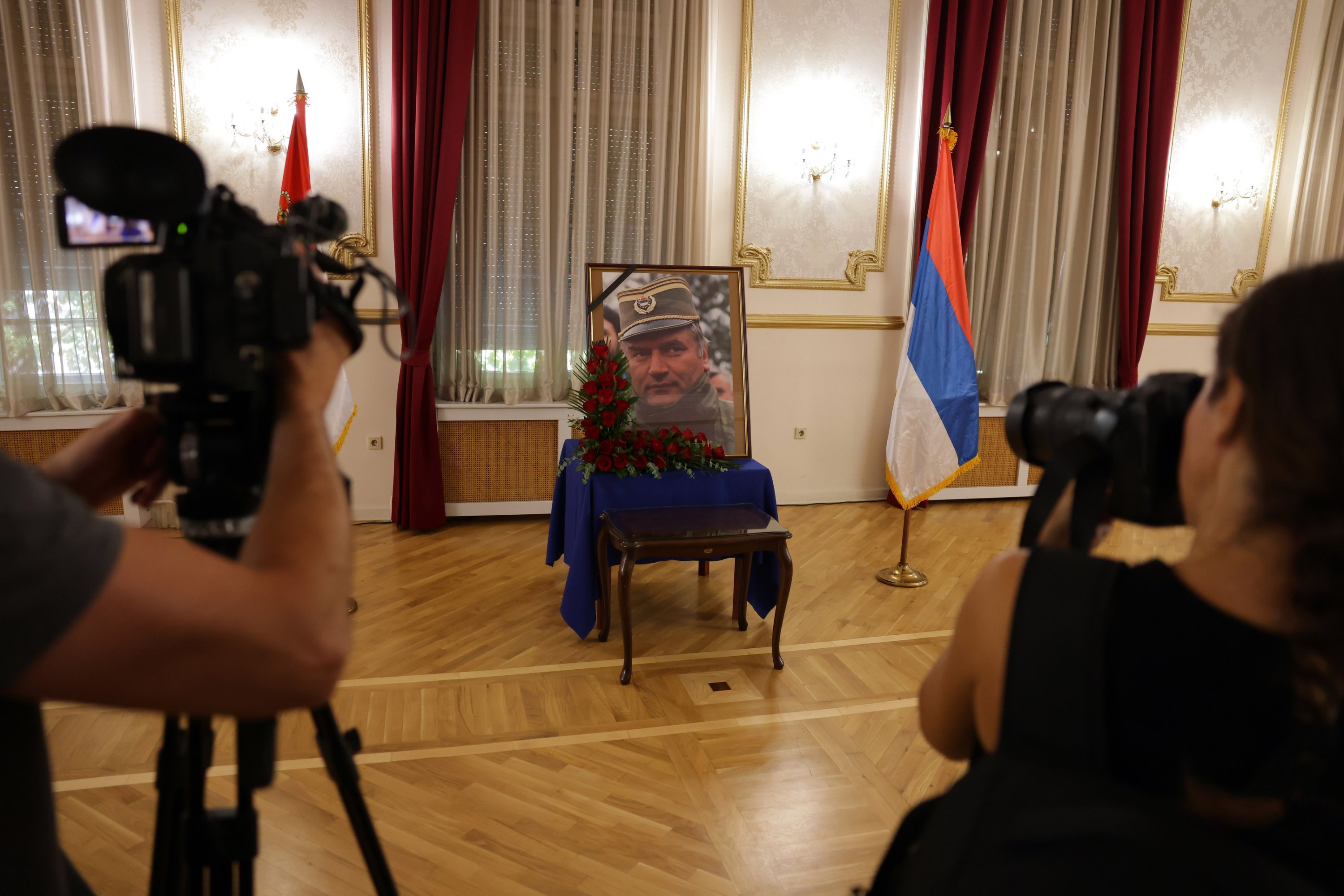
The return of the remains of convicted Bosnian Serb war criminal Ratko Mladic to Serbia has drawn condemnation across the Balkans, with officials accusing authorities of glorifying a man convicted of genocide and crimes against humanity.
Mladic, 84, died after suffering from health problems while serving a life sentence in a prison in The Hague, Netherlands. His remains were brought to Belgrade, where plans for a ceremonial reception and state funeral have sparked anger in Bosnia and Herzegovina, Slovenia and Croatia.
Mladic was convicted for his role in the 1992-95 Bosnian war, including the 1995 Srebrenica genocide in which more than 8,000 Bosniak men and boys were killed.
Denis Becirovic, chairman of Bosnia and Herzegovina’s tripartite presidency and its Bosniak member, said holding a state ceremony for Mladic amounted to glorifying one of the most brutal criminals in modern history.
“The glorification of Ratko Mladic, a war criminal convicted by a final court ruling, is a direct blow to the values of the United Nations,” Becirovic said in a statement posted on the presidency’s website.
He urged the European Union, the Council of Europe, the United Nations and other international organizations to condemn governments and institutions that honor convicted war criminals and to take concrete action against them.
Becirovic also warned that honoring Mladic could have unpredictable consequences for the future of the region.
“This attitude toward a war criminal responsible for the genocide against Bosniaks is one of the cruelest provocations and insults to the victims of the genocide,” he said.
Slovenia and Croatia condemn plans
Slovenian Foreign Minister Tone Kajzer criticized the decision to honor Mladic during a meeting in Ljubljana with Croatian Foreign Minister Gordan Grlic Radman.
Kajzer said Mladic was being “glorified” in Serbia and argued that such treatment would do nothing to improve relations in the region.
“Glorifying or promoting these individuals in any way will certainly not contribute to Serbia’s progress or to greater mutual understanding among neighbors and in the region,” Kajzer said.
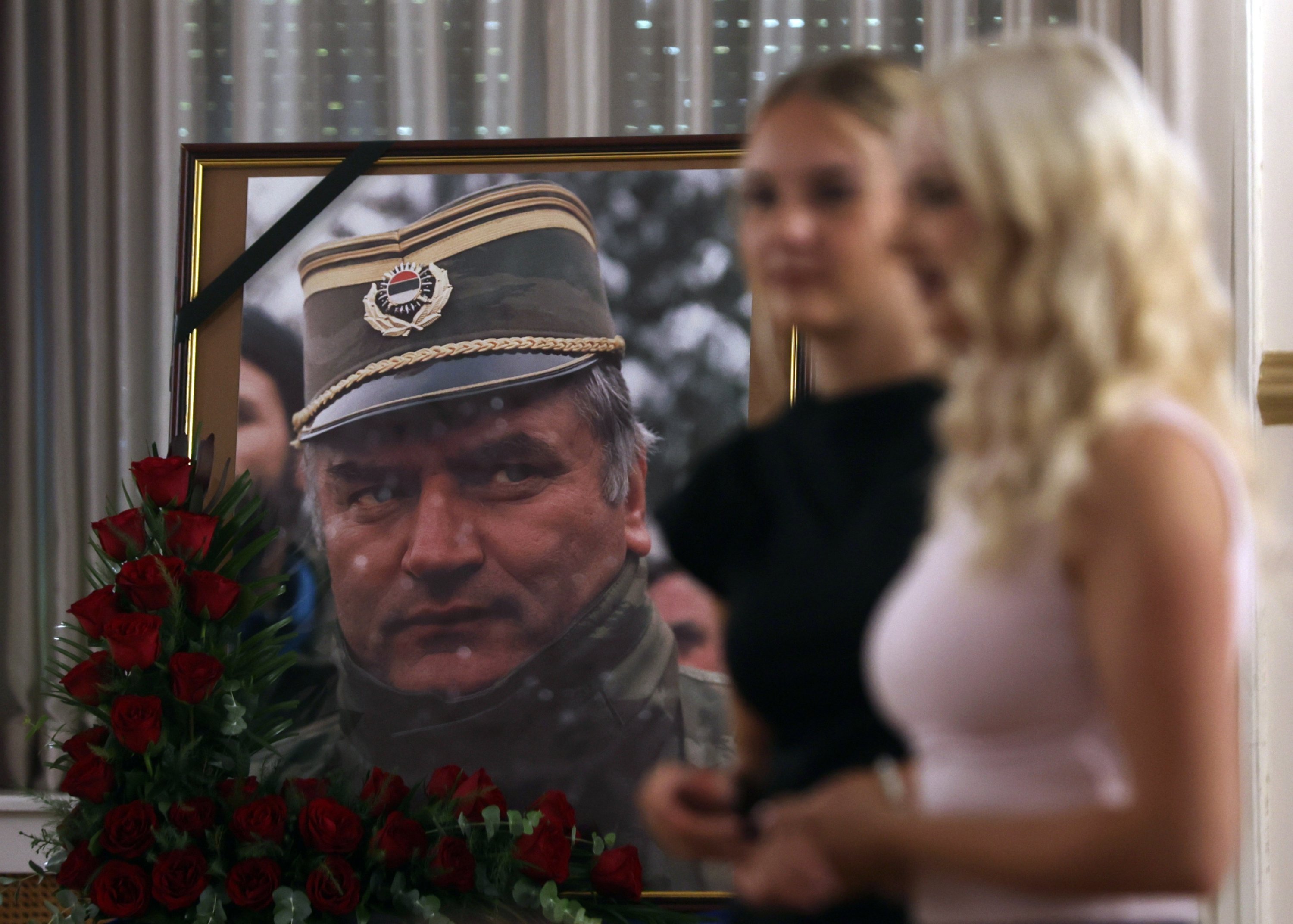
Radman said a state ceremony for Mladic would undermine efforts to strengthen stability and security in the Western Balkans while deepening existing divisions.
He also noted that Mladic had committed war crimes in Croatia and expressed regret that he had not been convicted for those crimes.
Serbian President Aleksandar Vucic said decisions about Mladic’s burial and funeral had been made by his family.
Vucic also said he would not attend the funeral because he had a previously scheduled visit to Uzbekistan.
A memorial ceremony for Mladic is scheduled for Sunday in Belgrade. His remains are expected to be placed on public display at a church Monday before being taken in a procession to Topcider Cemetery, where he will be buried.
Mladic spent 16 years in hiding
Mladic was born in 1942 near Kalinovik in eastern Bosnia and Herzegovina. He received his military training in Belgrade and served in the Yugoslav People’s Army.
In May 1992, he became chief of staff of the newly formed Army of Republika Srpska, a position he held until 1996.
The International Criminal Tribunal for the former Yugoslavia indicted Mladic on July 24, 1995, while the Bosnian war was still underway.
After the war, he fled to Serbia and remained at large for about 16 years. Serbian authorities repeatedly said they were unable to locate him, but allegations emerged that people within state institutions had helped protect him.
Television footage later showed Mladic appearing in public during his years on the run, including social gatherings where he was seen talking with people, enjoying himself and posing for photographs.
He was arrested May 26, 2011, in the village of Lazarevo near the northern Serbian city of Zrenjanin and transferred to The Hague five days later.
His trial began May 16, 2012. Mladic denied the charges against him.
He was ultimately convicted of genocide, crimes against humanity and war crimes, including his role in the Srebrenica massacre, in which 8,372 Bosniak civilians were killed in July 1995.
DAILYSABAH
هلدینگ کاسپین استانبول | خرید ملک در ترکیه | صرافی معتبر ایرانی در ترکیه | خرید و فروش طلا در ترکیه | مهاجرت به ترکیه | واردات و صادرات در ترکیه | نیازمندیهای ترکیه | اخبار ترکیه | اخبار جهانی | توریست ایران | خدمات توریستی در ایران | تورهای گردشگری ایران | هلدینگ اول | خدمات کاریابی و فریلنسری و شغل | مرجع اطلاعات ایران (همه چیز در ایران) | کیف پول و خدمات مالی و پرداخت یار | اخبار ایران | تابلو زنده قیمت ارز در ترکیه و استانبول | صرافی آنلاین ترکیه | قیمت طلا و نقره در ترکیه | سرمایه گذاری در ترکیه | جواهرات در ترکیه | نرخ لحظه ای ارزها در استانبول | قیمت دلار امروز در ترکیه | قیمت دلار استانبول امروز | قیمت لحظه ای دلار | اخبار روز ترکیه استانبول | اپلیکیشن ISTEX | اپلیکیشن قیمت لحظه ای دلار و یورو و لیر و ارزها در ترکیه
About the Author