Since the last century, Venezuelan politics has been closely linked to the management of the country’s oil industry.
The debate for policymakers has centred on whether to liberalise or nationalise the sector, with the latter being the preferred option for the past 27 years.
Over time, a kind of “resource nationalism” has been instilled in the national psyche by the current governing party to consolidate its power and advance the interests of a regime that has used oil revenues to expand its political influence across the region, particularly in the Caribbean.
This all came to an abrupt end on January 3, 2026, when United States special forces abducted President Nicolas Maduro in a lightning military operation in Caracas and whisked him back to the US to stand trial on guns-and-drugs charges.
Since then, Maduro’s deputy and now interim President Delcy Rodriguez has aimed for privatisation of the oil industry in favour of US government interests.
Milestones reached during the past eight months include reforming the General Hydrocarbons Law, liberalising energy power plants and granting permissions, with prior US authorisation, to US and foreign oil companies – excluding any from China, Russia, Iran or North Korea – to participate in tapping Venezuela’s vast oil wealth in oil fields across the country.
The most significant development happened last week, when the two countries announced they had reached a deal granting US companies access to 65 billion barrels of crude oil reserves over the next 100 years.
Advertisement
Described by President Trump as the “biggest oil deal in world history”, this agreement not only marks a turning point in the governing party’s resource nationalism policy but also represents the culmination of the US government’s efforts to reinforce its dominance strategy and seize control of Venezuela’s oil and gas resources.
Furthermore, this deal is set to play a pivotal role in the Venezuelan political transition.
The US has developed a three-phase plan to promote stabilisation, recovery, and political reform since it removed Maduro from power. Now, all the parties involved must establish a roadmap to implement the deal and, at the same time, ensure that presidential elections are held in the country.
The signing of this oil deal is the starting gun for this complex process.

A win for the US – not so much for Venezuela
The precise terms of this oil deal have been the subject of discussion in specialised media outlets across the Western Hemisphere and beyond this week. Due to conflicting and sometimes contradictory accounts by US and Venezuelan authorities, the final conditions of the oil deal remain uncertain.
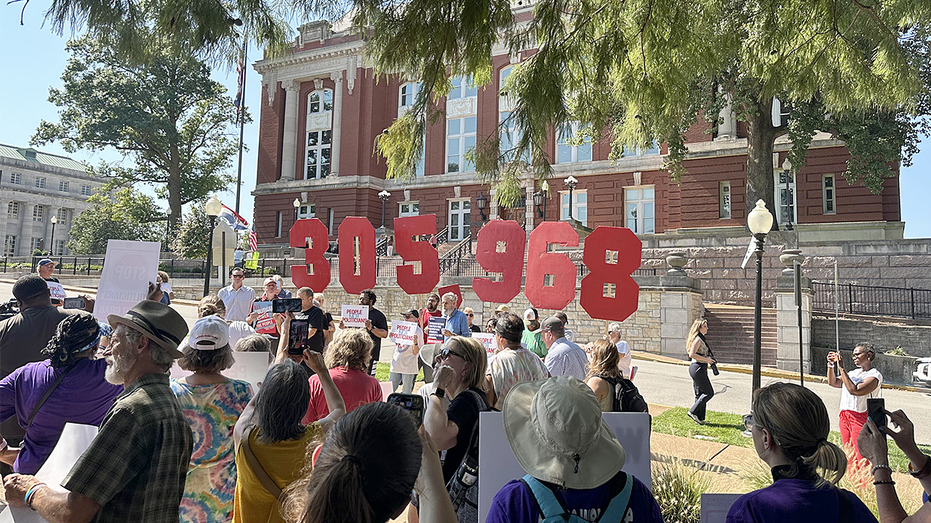
The Trump Administration has provided the most detailed information, confirming the transfer of 65 billion barrels of oil – 20 percent of Venezuela’s proven 303 billion barrels of oil – to US control for 100 years.
These reserves are distributed across 17 major oil fields, some of which had previously been granted to Chinese and Russian companies in concession. The fields will be operated by a private company called North American Blue Energy Partners (NABEP), in association with the US Department of Defense’s Office of Strategic Capital (OSC). This entity will acquire a 35 percent stake in NABEP free of charge. Trump has referred to the latter to argue that this association will not charge American taxpayers or use their money.
Additionally, information from the US government suggests that the US has also secured the right to buy 20 percent of the current and future crude oil production from NABEP-controlled fields at production cost. That means production will not be subject to Venezuelan taxation, reducing the amount of revenue Venezuela will receive.
Advertisement
The OSC has the right of first refusal to buy the remaining 80 percent of production, or veto power if this is deemed necessary for reasons of national security. These clauses prioritise ensuring the US has access to Venezuelan oil reserves and meeting the requirements of the Strategic Petroleum Reserve (SPR). These measures are undoubtedly intended to help the US achieve its national energy security goals.
The White House has also confirmed that NABEP is controlled by American citizens, which is a prerogative reserved by the US government to prevent foreign companies from managing it. In practice, this means that the US will control the operations, with NABEP merely acting as a vehicle for this control.
Another point relates to the royalties and taxes that NABEP must pay to the Venezuelan authorities. Top officials from both countries say the exploitation of the 17 oil fields will generate approximately $200bn dollars in tax payments following an expected $100bn investment. It is expected that this money will be managed by the current interim authorities to address the challenges of reconstruction after a long period of economic crisis.
However, there is uncertainty about the methodology used to determine this amount because the discretionary clauses granted to the US government make it impossible to calculate the exact amount of tax that will be paid.
Furthermore, the Venezuelan government has announced that the concession granted to NABEP will only be valid for 25 years – a figure far lower than the 100 years claimed by the US government. Notably, this type of contract has not featured in Venezuelan hydrocarbon legislation for half a century.
Too many obstacles?
Although the bilateral agreement could be a good way to attract investment to the Venezuelan oil sector, there remain multiple internal and external political, legal and economic obstacles to its successful implementation.
First, President Trump has so far failed to encourage major US oil companies, except Chevron, to enter the Venezuelan oil industry. This is because Venezuela lacks trustworthy and legitimate institutions, implying the absence of a stable legal framework for long-term production planning.
Setting aside the major oil companies such as Exxon Mobil, Chevron and ConocoPhillips, the only companies that appear as viable potential partners in the 17 oil fields seem to be small independent operators. This could lead to operational setbacks because the majors are the only ones with enough financial and technological clout to carry out long-term, large-scale investments in such ambitious projects.
The oil majors’ lack of confidence is also down to the absence of a legitimate government and the governing party’s continued dominance over the country’s main powers.
One of the biggest red flags surrounding the oil deal is the possibility that a government formed through free elections could in the future denounce or refuse to recognise its legitimacy, on the basis that these legal agreements are unconstitutional. Furthermore, the current governing party in Venezuela could potentially reject the terms of this deal if they feel they have sufficient strength to challenge US dominance again.
Advertisement
In addition to these concerns about the rule of law, it seems there is another relevant issue: The involvement of Alejandro Betancourt as president of NABEP’s operations.
Despite the Department of State’s attempts to clean up his past, Betancourt has an uncertain record due to multiple corruption cases brought against him in the past, including bribery, cost overruns and influence peddling in electricity projects overseen by the state-owned company PDVSA.
It is also important to note that a real, feasible increase in Venezuelan oil production will probably take several years, even in the best-case scenario. This contradicts the optimistic rhetoric used by senior Trump administration officials, who argue that this deal would increase local production almost immediately. Advancing at such a pace would require substantial investment, much of which is not currently guaranteed.

A ‘hemispheric’ strategy
Approval of the oil deal is part of a broader “hemispheric” strategy adopted by the US government, which wants to regain lost influence in the region. This was outlined in the Trump administration’s 2025 National Security Strategy and subsequent foreign policy documents, which designate the Western Hemisphere as a strategic zone of influence for the US. In this context, the US government views Venezuela as a strategic geopolitical pivot due to its energy resources – particularly its substantial proven oil reserves – and its proximity to its territory.
Based on this, the US government considers controlling the Venezuelan oil reserves to be a matter of national security that is closely linked to maintaining its SPR. This stance is particularly pertinent given that Washington is preventing countries it considers to be its enemies, such as China, Russia, Iran and North Korea, from participating in the Venezuelan oil industry.
It is also worth noting that the US government is not hesitating to use its existing national tools to secure its hegemony across the Americas. Indeed, the US is taking economic measures, as well as military action and exerting political influence, to discourage other countries from doing business with its declared enemies, including China, and even more so from allowing them to participate in critical infrastructure projects across the region.
Venezuela’s political transition
Since its removal of Maduro from power in January, the US government has begun a three-phase plan to promote stabilisation, economic recovery and political reform in Venezuela. The ultimate objective is to hold free and democratic elections, which would be the first step towards legitimising the country’s authorities and reintegrating it into the international arena.
Before this week’s oil deal was announced, various opposition leaders had been devising strategies to participate in the eventual presidential elections. These actors believed that the electoral process was the first step in recovering sovereignty and establishing a long-term partnership with the US based on oil business.
However, the plan of Trump’s administration has run in a different direction and at its own pace. For Washington, securing access to and control of the Venezuelan oil reservoirs was the top priority before promoting any democratic transition in the country.
Although top US officials, including Secretary of State Marco Rubio, have recently stated that the oil deal is limited to its own three-phase plan, the reality is that the US has made it clear that it will not allow any future government to change its terms and conditions.
Advertisement
Given the current situation, almost everyone involved in Venezuelan politics supports an oil deal that prioritises the participation of the US. However, opposition leaders such as Maria Corina Machado, currently the country’s most popular politician, are concerned about Delcy Rodriguez, an interim leader who lacks legitimacy, signing this deal.
Although Machado has not guaranteed that a future democratic government would refuse to recognise the deal’s terms, her position could spur the idea that Trump is motivated to keep Delcy Rodriguez in power rather than promote free elections to ensure the deal’s correct implementation.
These concerns have arisen in recent days after the US president publicly stated that Venezuela is not prepared for elections in the short term.
Ultimately, the effectiveness of the oil deal and its impact on the political transition in Venezuela will depend on the alignment of various internal and external political, legal, and economic factors.
For now, the US government holds the final say in determining the country’s future, to the detriment of its population, which has ultimately lost its right to self-determination.
Al Jazeera – Breaking News, World News and Video from Al Jazeera wp:paragraph
هلدینگ کاسپین استانبول | خرید ملک در ترکیه | صرافی معتبر ایرانی در ترکیه | خرید و فروش طلا در ترکیه | مهاجرت به ترکیه | واردات و صادرات در ترکیه | نیازمندیهای ترکیه | اخبار ترکیه | اخبار جهانی | توریست ایران | خدمات توریستی در ایران | تورهای گردشگری ایران | هلدینگ اول | خدمات کاریابی و فریلنسری و شغل | مرجع اطلاعات ایران (همه چیز در ایران) | کیف پول و خدمات مالی و پرداخت یار | اخبار ایران | تابلو زنده قیمت ارز در ترکیه و استانبول | صرافی آنلاین ترکیه | قیمت طلا و نقره در ترکیه | سرمایه گذاری در ترکیه | جواهرات در ترکیه | نرخ لحظه ای ارزها در استانبول | قیمت دلار امروز در ترکیه | قیمت دلار استانبول امروز | قیمت لحظه ای دلار | اخبار روز ترکیه استانبول | اپلیکیشن ISTEX | اپلیکیشن قیمت لحظه ای دلار و یورو و لیر و ارزها در ترکیه
About the Author