A dog is much more than just a pet. They’re like family, the most eager companions for your big adventures and then the best accompaniment for an evening of snuggling up on the couch and whittling away at your Netflix queue.
At least, that’s the ideal situation. In the real world, a dog who gets too little attention and exercise or, on the flip side, is over-stimulated or over-tired, can be a real problem. There are lots of warning signs, such as a dog that is overly antsy or destructive, but Suzanne Clothier, an expert dog trainer and author of numerous books on dog enrichment, sums it up in a very simple way: “Can you watch TV or read a book in peace? If not, the dog’s telling you something.”
The signs may be obvious, but the challenge is that there’s no one-size-fits-all solution for keeping dogs active, happy and healthy. While certain breeds have a reputation for bouncing off the wall, Clothier says that each dog is different. “It’s about the individual temperament. It’s not necessarily about the breed,” she said. “You know, everybody thinks about the high-powered border collie. I know border collies who had just magnificent on-off switches. They’re like, ‘Let me know if you need me to work; otherwise, I’m just going to amuse myself.’”
While there’s no one-button fix for a bored dog, advancements in enrichment toys and training are making it easier to give your little pal a fulfilled life. We spoke with five certified dog experts to get their favorite tips, tricks, toys and techniques to bolster your best buddy’s confidence and attitude.
At a glance:
-
Gobeigo 4 Cup Dog Treat Pouch
-
Honeycomb SodaPup Slow Feeder:
-
Redbarn Large Beef Cheek Rolls
-
Outward Hound Tail Teaser Flirt Pole
-
Chuckit! Sport Launcher Dog Toy
Training essentials
Like it or not, if you have a dog, you need to do some training. “Everything is training,” Miranda LaMorte said. She is the head trainer at Adventure Tails Training and is a Training Without Conflict certified dog trainer.
Training isn’t just the whole sit/stay/roll-over routine. Simply living with your dog means teaching them what is right and wrong. To be prepared, there are some key tools that should be a part of every dog owner’s kit.
Treats and leads
“Food drive is the most accessible drive in most dogs,” LaMorte said. That means working with some sort of treat is the easiest way to reinforce good behavior. But dogs are smart enough that you need to be careful with how you present it – you’ll need a good treat pouch.
“If you’re always laboriously working a treat out of your pocket, all of a sudden you reaching your hand and digging around in your pocket becomes the entire cue to the dog,” she said. “It kind of overshadows any learning. So, if you’re working with food, I do think an easy treat pouch that makes it easy for you to access your food is extremely helpful.”
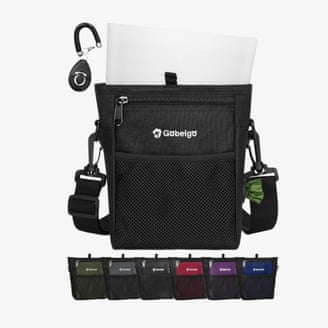
A great choice is the Gobeigo 4-Cup Dog Treat Pouch. It’s available in six colors, stays wide open so you can easily grab food, closes magnetically and has a removable silicone liner so you can not only store fresh food treats in the refrigerator between sessions, but keep everything clean too. There’s even a small pocket for poo bags. You can wear it around your waist or over your shoulder like a sling, and it comes with a clicker for marking good behavior.
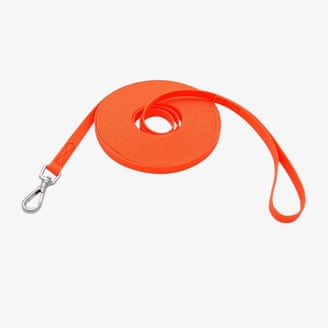
You probably already have a leash for your dog, but for training purposes, you’ll want another. LaMorte also recommends a long line, which is simply a lengthy lead upwards of 30ft long. Clip it on the back of your dog’s harness, and you can give them freedom to roam without worrying about them getting too far away.
These budget-friendly leashes from Nimble on Amazon are a great choice. They’re durable enough for rein in rambunctious pups, but the PVC coating means it’s easy to rinse off whatever they get dragged through. Just one tip: take a pair of scissors and snip off the loop handle so it doesn’t get tangled on something when your dog is running at full tilt. You may want to pick up different lengths: 30ft to start when you’re just beginning training, working down to 10 or even 5ft when your dog’s recall cue becomes a bit more reliable.
Mind and body
Fetch is a key game and can be rewarding both for the owner and the pooch, but it’s important that dog owners don’t just rely on burning energy.
“We want to be careful that we’re using their minds and not just their bodies,” Clothier said. “Sometimes people say, ‘I took them for an hour walk, and he still needs more. So now I’m doing an hour and a half.’ I remind clients that’s how you build a marathon runner.”
Clothier says it’s important to add some mental stimulation into the mix during physical exercise. Sometimes it’s just about where you throw the ball: “I do this with my own dog. I won’t just throw the ball. I will hold her back or ask her to stay, and I’ll throw the ball into some brush or into tall grass, and then tell her to just go find it. She’ll do this till hell freezes over.”
LaMorte has a specific ball she recommends for teaching fetch: “My tool kit for teaching fetch and getting a dog interested are those Hartz DuraPlay balls.” She said they’re not durable enough for unsupervised play, but their squeak makes them excellent for cooperative play and their smell (bacon!) gives your dog some extra incentive to find them.
A common adage in dog training is to “end on a high note” to make sure you do something successfully when you stop training. But LaMorte says there’s more to it than that. “A good time to end the session is when the dog has developed an understanding of what you were trying to tell them in that conversation … Don’t leave it at a confusing point,” she said. And be mindful of overstimulating your dog during training sessions. “If it’s a little puppy, stop before we fatigue so much that we become a demon,” LaMorte says. Don’t push your pup to the brink!
Meal-time enrichment and treats
Want to make your dog enjoy mealtime better? Make them work harder for their food. Rebecca Estel King, a certified dog behavior consultant and Fear Free certified professional at the Ohio State University Veterinary medical center, says that extra effort means more mental reward.
“When choosing between working for food or food that sits in a bowl, they prefer the food that requires effort,” she said. It’s a concept called contrafreeloading, which better replicates how a dog might eat in nature. It may feel counterintuitive to us in an era full of apps that make getting your curry and rice easier than ever. But for dogs, who do not have that luxury, mealtime becomes a great opportunity for you to make their day better with something tasty and give them some quality enrichment.
Bonus: that also could mean some quiet time for you.
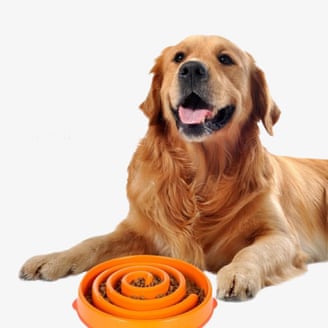
If that’s not enough, it’s simply a better way for them to eat. Slow-feeder bowls are designed to hold food like a regular bowl, but also feature ridges or grooves that your dog has to work around, ensuring they don’t inhale dinner in two bites. “There are health benefits for slow-feeder bowls. They can slow eating so that dogs are less likely to eat so quickly that they swallow air or regurgitate,” Estel King said. Just make sure you’re not causing frustration: “Look for dogs who ‘give up’ and walk away from their meal, or throw or break the feeder to access food.” Those are signs your slow-feeder isn’t working for your dog, meaning you should look for something different and perhaps easier.
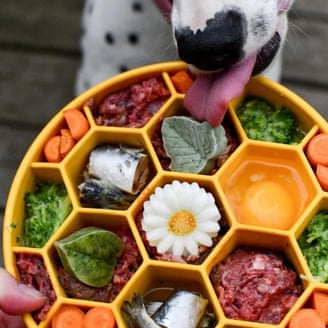
The Outward Hound Fun Feeder is a classic choice, a plastic bowl in a variety of shapes with a rubberized bottom to keep it from sliding around. SodaPup’s Honeycomb Slow Feeder is another great option, also made of plastic but slightly taller and deeper and featuring a charming honeycomb design. Both are dishwasher-safe and will encourage your dog to take a bit more time eating, but when it comes to doggie dinner time, there’s a whole industry out there.
Beyond the bowl
Emily Muench, a certified professional dog trainer at Barkology Dog Training in Michigan, has some favorites that break the bowl mold, such as the Toppl from West Paw, a rubberized food bowl that you can fill with treats and even freeze. “I love the Toppl because you can fit an entire meal inside, making it an easy way to turn mealtime into enrichment,” she said.
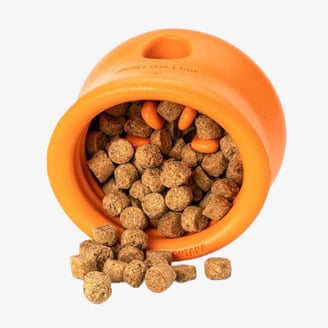
There’s also the Snoop from Outward Hound, a soft, rubberized container that you fill with kibble or other treats. “The Snoop is great for dogs who enjoy problem-solving because they have to figure out how to manipulate the toy to get the food out,” she said.
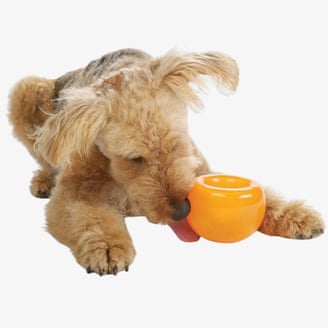
For between-meal treats, Muench recommends the Woof Pupsicle, a rubberized ball with two threaded halves that unscrew from each other, exposing a hollow center for treats. “It’s one of my favorites because it’s long-lasting, easy to prep and provides a great licking outlet that can help soothe dogs through repetitive licking behavior,” she said. The Pupsicle is available in two sizes and is designed to be filled with a frozen food puck. While you can order ready-made fillers, the Pupsicle comes with a silicone mold so that you can mix and freeze your own. (Our pup Koopa particularly loves canned pumpkin, oats and yogurt.)
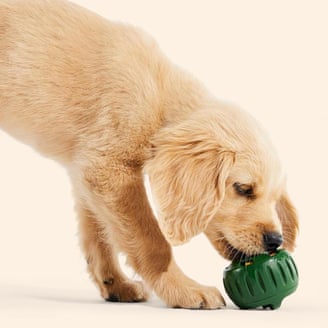
When your pup has finished licking the frozen core out of his Pupsicle, don’t forget to clean it. Dirty toys can harm your dog’s tummy. “Feeders should be washed daily with hot water and dish soap to prevent the buildup of biofilm that can cause gastrointestinal upset and contribute to dental disease,” Estel King said. “If toys are dishwasher-safe, it is fine to use the dishwasher as well. Fabric feeders can be washed in the washing machine, avoiding highly perfumed detergents and fabric softeners.”
Chew time
When it comes to chews, there is an endless list of options and opinions, but also a few to avoid. “Don’t use rawhide chews,” LaMorte said. Dogs tend to eat pieces of rawhide as it softens, which can cause intestinal blockage, especially in smaller breeds.
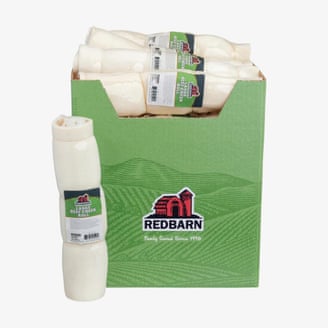
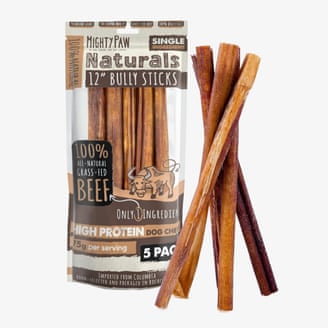
She instead recommends cheek rolls, such as these from Redbarn Pet Products, and so-called “bully sticks”, like these from Mighty Paw, as safer alternatives.
Lick mats are another great option for slowing things down, with SodaPup offering dozens of great options, including their Honeycomb Emat. Just smear in whatever your dog is into – pumpkin, peanut butter, berries, bananas – and watch them go crazy.
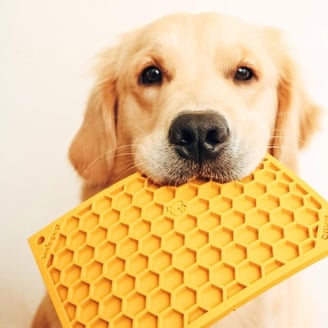
But with any of these chews or toys, exercise caution. “Safety comes first, always,” said Dr Christopher Pachel, a doctor of veterinary medicine and certified animal behavior consultant. “I recommend supervision any time you’re introducing something new, until you’ve confirmed a few things: that the toy isn’t a swallowing or choking hazard for that particular dog, that it isn’t creating any resource guarding concerns, and that your dog is able to engage and disengage from it appropriately without escalating or overdoing it.”
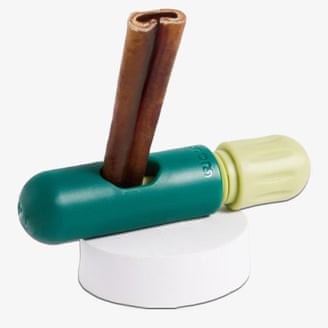
Tools and treat holders such as the Woof BullySafe can help reduce the choking risk of bully sticks, but if resource guarding is an issue, then it’s time to call in help. “If a dog finds the feeder, or anything else, to be of high enough value to guard, do not punish, scold or handle food or bowls to ‘fix’ this behavior. It is best practice to leave dogs alone while eating, resting or engaged with a chew or a toy,” King said. Trying to hand-feed dogs or forcibly removing toys and treats can just make things worse. “Seek assistance from a qualified science-based trainer who uses positive reinforcement to reduce your dog’s concern about food and toys,” she said.
Create indoor adventure
While dogs typically seem happiest when running free across a field or splashing through a pond, sometimes weather or other logistical challenges necessitate indoor playtime. The key to keeping your pup happy at home is finding great ways to keep them occupied.
“There isn’t a one-size-fits-all answer here, and I think that’s actually the most important starting point,” Pachel said. “Some dogs are chewers and will happily work through anything durable you put in front of them. Others are natural sniffers who light up when there’s a hidden treat or toy to search out. Some dogs would rather just lie in a patch of sun and watch the world go by, and that’s a legitimate form of enrichment too.”
Get flirty
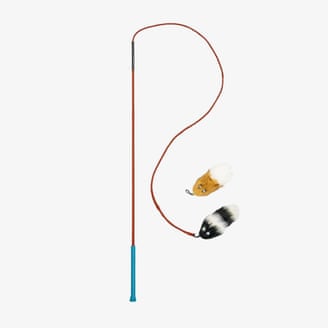
For LaMorte, a toy that’s familiar to many cat owners works well here. “A flirt pole is a crazy-good enrichment toy,” LaMorte said, who has a pair of Belgian Malinois to entertain. “I have a very small living room, and I play flirt pole in my living room.” LaMorte recommends the Outward Hound Tail Teaser flirt pole. “Your dog can chase it and pounce on it and bite it, get a little bit of tug and get a lot of chasing, which is a super great enrichment activity,” she said.
However, there’s another common cat toy that is absolutely no good for dogs: laser pointers. Where our experts on cat enrichment gave laser pointers mixed reviews, they’re a non-starter for dogs: “At worst, it can create some very challenging, maybe you never fix it type behaviors. It can create some weird, obsessive behavior with some dogs, especially herding breed dogs,” LaMorte said.
Nose-mode engaged
Scent work is something that many of our experts cited as a great way to exercise your dog’s brain even in a confined space. Clothier, who wrote the book on scent work (available for free on her training site), said it taps into the dog’s basic seeking instincts.
“When you’re in seeking mode, then the animal is actively pursuing something. They’re looking for something. They’re trying to solve something,” she said. This delivers the same as the satisfaction you or I might get in working through a puzzle. “The resolution of the puzzle is a big dopamine hit, but the anticipation, it turns out, has an even bigger dopamine hit than the actual solution,” she said.
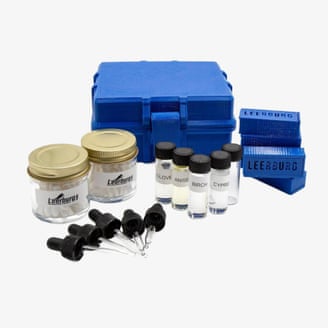
Kits like this one from Leerburg AKC includes four scent oils, applicators and even a case, making it easy to get into scent work at home, but Clothier says you can get crafty and make your own from leftover cardboard tubes. Just put a few treats in each tube, close the ends and hide them around your house.
Tug of war
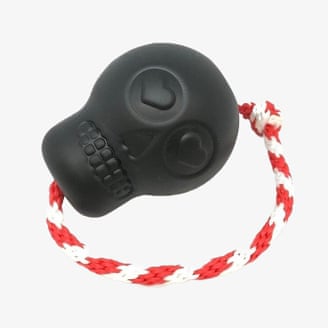
Playing tug of war is another great indoor form of play. Toys such as the USA-K9 from SodaPup combine a rope pull with a chewable toy that can be filled with food, and comes in different durabilities to suit your pup’s chewing intensity. But LaMorte says you don’t necessarily need to buy something new. “If the dog has a favorite squeaky stuffed animal toy, just tie a rope on it so that you can kind of create more of a tug game and a chasing game,” she said.
Just make sure that you’re not leaning exclusively on toys that physically tire out your dog. “Play and enrichment can absolutely be part of a comprehensive schedule that includes training and exercise, but I wouldn’t want them to be the only source of engagement a dog gets.” Pachel said. “One of my favorite ways to layer these together is to intersperse cues and rewards into an enrichment session, so the dog is getting physical and mental activity at the same time, in a way that feels novel and stimulating rather than repetitive.”
Take the hunt outside
While indoor play can be fulfilling, dogs do tend to be happiest when they’re outdoors. “It’s very hard to extricate the natural world from behavioral health with a dog,” LaMorte said. “You could argue that all dog breeds will benefit from being out in natural spaces.”
When you have a little more room to roam, you can take that scent work training you were doing inside to a whole new level by having your pup find toys, treats and even people.
Going the distance
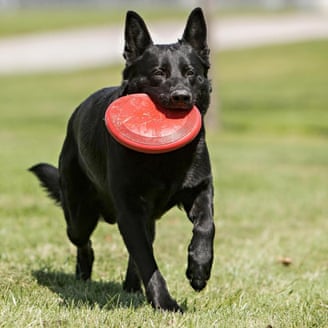
Open spaces also create opportunities for toys that focus on fetching. A good flying disc is something many dogs love to chase. The Kong Classic Flyer is durable, flies reasonably well and will stand up to some light chewing.
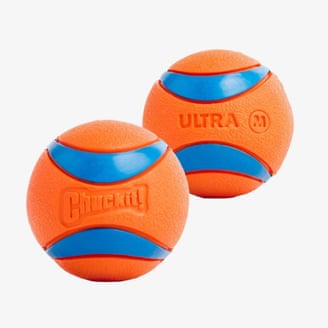
A ball chucker is also great to have. I’ve found the Chuckit! Sport Launcher to be very effective, which does an excellent job of throwing balls farther than you could by hand while also keeping your hands slobber-free. But if you use tennis balls, don’t let your dog chew on them. “The issue with a tennis ball is that it can collect grit like sand and dirt within the hairs of the felt, and almost make it a sandpapery kind of texture,” LaMorte said. Over time, that texture can damage teeth. Chuckit!’s soft rubber balls are a safer bet for heavy chewers who might be a little reluctant to “drop it”.
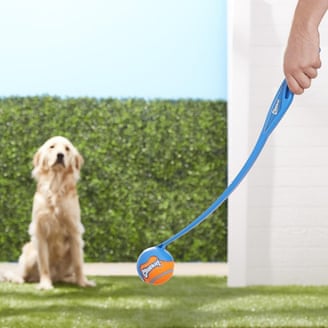
When you’re working on fetch, make sure you’re not just asking your dog to bring the ball back again and again. Clothier recommends you mix some training in the game: “I’m not just going to repetitively sit out there and throw it. I will have the ball and then I’ll ask him: ‘Can you sit? Can you down? Can you do some tricks?’ Now I’ll throw the ball.”
Warm up, cool down
Whatever form of outdoor training you choose, if you’re doing anything aerobic, remember that your dog needs the same kind of pre- and post-workout care that you might before and after a workout.
“You’re really going to make a big difference in the longevity of your dog if you’re thinking about doing a little warmup first,” LaMorte said. “I just have my dog do some position changes. We walk around a little bit. I have them do some circles, warm up their joints, warm up their bodies before I get them into really intense physical activity.”
And don’t forget the cool-down! “We like to walk it out a little bit. Make sure you cool down and make sure that your body readjusts because these short bursts of intense exercise can cause injury, just like it does for us,” she said.
Meet our experts
-
Suzanne Clothier – a dog trainer, author of Relationship Centered Training
-
Rebecca Estel King – a certified dog behavior consultant and Fear Free certified professional at the Ohio State University Veterinary medical center
-
Miranda LaMorte – a Training Without Conflict certified dog trainer and head trainer at Adventure Tails training in New York state
-
Emily Muench – a certified professional dog trainer at Barkology Dog Training in Michigan
-
Christopher Pachel – a doctor of veterinary medicine and certified animal behavior consultant at the Animal Behavior Clinic in Portland, Oregon

Other pieces you might enjoy from the Filter, the Guardian’s guide to buying fewer, better things:
-
Your indoor cat is bored. Here are the best toys and tools in the US to fix that
-
The best tools for removing cat hair from your clothing and home – from brushes to rollers
-
The best dog beds in the US: seven furry-friend tested and approved favorites for indoors and out
The Guardian wp:paragraph
هلدینگ کاسپین استانبول | خرید ملک در ترکیه | صرافی معتبر ایرانی در ترکیه | خرید و فروش طلا در ترکیه | مهاجرت به ترکیه | واردات و صادرات در ترکیه | نیازمندیهای ترکیه | اخبار ترکیه | اخبار جهانی | توریست ایران | خدمات توریستی در ایران | تورهای گردشگری ایران | هلدینگ اول | خدمات کاریابی و فریلنسری و شغل | مرجع اطلاعات ایران (همه چیز در ایران) | کیف پول و خدمات مالی و پرداخت یار | اخبار ایران | تابلو زنده قیمت ارز در ترکیه و استانبول | صرافی آنلاین ترکیه | قیمت طلا و نقره در ترکیه | سرمایه گذاری در ترکیه | جواهرات در ترکیه | نرخ لحظه ای ارزها در استانبول | قیمت دلار امروز در ترکیه | قیمت دلار استانبول امروز | قیمت لحظه ای دلار | اخبار روز ترکیه استانبول | اپلیکیشن ISTEX | اپلیکیشن قیمت لحظه ای دلار و یورو و لیر و ارزها در ترکیه
/wp:paragraph wp:paragraph /wp:paragraph
About the Author