
Silicosis is one of the oldest workplace hazards and public health experts have known for decades how to prevent it. Yet a new wave of workers, from Appalachian coalminers to Latino countertop fabrication workers, are developing and dying from the disease as industry fights new protections and regulators fail to defend the rules that could protect them.
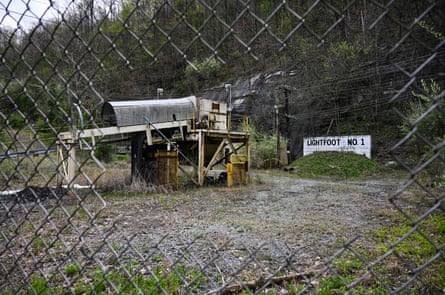
John Robinson’s grandfather developed black lung back when coalminers could spend decades in the mines before being diagnosed with the disease, often dying in their 60s, 70s and 80s. But Robinson, who mined for coal in south-west Virginia, was diagnosed when he was 47. He’s part of a trend that has grown over the past two decades in central Appalachia, where more coalminers are developing black lung disease at younger ages.
“Now, honey, how are these men getting sick? Something’s causing it,” Robinson said. “At one time, you didn’t say black lung around the coal site unless you wanted to lose a job. It’s such an outbreak right now they can’t hide it.”
Around 2018, doctors throughout the US started documenting outbreaks of lung disease among countertop fabrication workers too. There were seven workers diagnosed in Colorado and another 12 cases in Texas. That same year, a 38-year-old Hispanic man in California, whose work involved grinding stone edges at a countertop fabrication company, died of respiratory failure.
Public health experts say the cause of both outbreaks is inhalation of tiny crystalline silica dust on the job and prevention involves limiting workers’ exposure through sampling and tamping down the dust to stop particles from becoming airborne. This means different things depending on the occupation. For miners, the 2024 Mine Safety and Health Administration (Msha) rule years in the making and passed under the Biden administration was supposed to address the occupational hazard. But within months of the rule going into effect, industry groups petitioned to overturn it. When the Trump administration failed to defend the rule, the eighth circuit court of appeals stayed it and Msha notified the court that it will reconsider portions of the rule impacted by the industry challenge.
The National Stone, Sand & Gravel Association (NSSGA) led the legal challenge of Msha’s 2024 silica dust rule. The trade group represents sand, gravel and stone mining companies. NSSGA did not oppose the rule’s reduction of the permissible exposure limit from 100 micrograms per cubic meter to 50 micrograms per cubic meter per eight-hour shift, said Kerry Lynch, NSSGA’s senior director of communications. Lynch did not respond to questions about why it brought the legal challenge of the rule. But in a letter to Msha before the rule was finalized, NSSGA said it takes issue with the frequent air sampling and medical surveillance requirements.
The American Exploration & Mining Association (AEMA) is one of the industry groups that joined the petition to challenge Msha’s 2024 silica dust rule. In a written statement to the Guardian, AEMA’s executive director, Mark Compton said that the AEMA supports lowering the permissible exposure limit (PEL) of silica to better protect miners.
“We joined the petition challenging the 2024 silica rule because the rule would actually undermine miner safety and health due to the restrictions Msha imposed on its implementation,” Compton said. “The rule takes an inflexible, cookie-cutter approach that doesn’t account for the variability in locations and types of actions at different operations, engineering controls are not always technically or economically feasible, contrary to Msha’s assertion in the 2024 rule. Greater use of administrative controls such as job rotation and acceptance of personal protective equipment in the form of respirators should be allowed to achieve and comply with the reduced PEL.”
Countertop fabrication workers should be protected under a 2016 Occupational Safety and Health Administration (Osha) rule, which also faced industry pushback when it was implemented. Industry groups including NSSGA challenged the rule in court, arguing that Osha’s stricter exposure limit was “not based on sound science”. The appeal to “sound science” has long been a tactic used by industries seeking to cast doubt on research that could lead to stricter regulation, a strategy that David Michaels, an epidemiologist and professor at the Milken Institute School of Public Health of George Washington University, documented in his book Doubt Is Their Product. But the artificial stone slabs that fabrication workers cut to make countertops can contain up to 90% silica, meaning the Osha rule alone is not protective enough, said Michaels, who previously served as assistant secretary of labor for Osha from 2009 to 2017.
“It’s also often that many small employers are not in compliance. But even if they were in compliance I think we would still have a silicosis problem,” Michaels said. “This product cannot be made in a way that’s both economic and safe.”
In January, Michaels testified at a congressional subcommittee hearing about mounting lawsuits against manufacturers of stone slab products and the big box stores that sell them. The lawsuits were brought by people diagnosed with silicosis from working in fabrication shops where they cut, ground and polished countertops made from engineered stone, also known as quartz, which has grown in popularity over the past decade.
But instead of aiming to protect the sick workers, the subcommittee discussed how to protect the stone slab manufacturers and distributors from litigation. In his opening statement, the subcommittee chair, congressman Darrell Issa of California, said: “Our hearing this morning examines the troubling rise in abusive litigation against the US stone slab industry.” Issa is among 16 co-sponsors of a proposed bill that would ban lawsuits against manufacturers or sellers of certain stone slab products.
Michaels was the only witness to give testimony at the hearing who wasn’t representing industry. He suggested that instead of prohibiting lawsuits that the US should prohibit the sale of engineered stone products with high concentrations of silica. “There are substitute products that are comparable in use and cost, but which do not kill workers,” he said at the hearing.
In May, California’s Osha began a rule making to prohibit the fabrication and installation of artificial stone products containing more than 1% crystalline silica. In response, the stone distributor Consentino sent a letter to Cal/Osha stating that the proposed state rule “is premised on inaccurate information refuted by current scientific information, is unnecessary, is not feasible, and exceeds the Board’s authority”. Consentino declined to answer questions from the Guardian about what alternative regulatory approach the company would recommend to protect countertop fabrication workers.
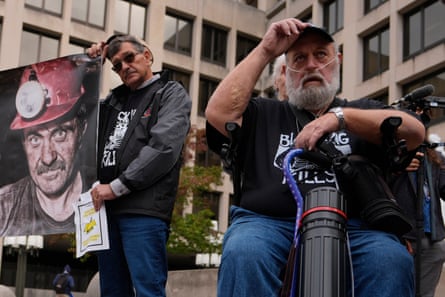
Meanwhile, two new studies show that an increasing number of coal and countertop workers are getting sick and dying from silica exposure. A National Institute for Occupational Safety and Health (Niosh) study published last month found that one in three coalminers in central Appalachia (Kentucky, Virginia and West Virginia) had black lung disease. And, a study published in the New England Journal of Medicine found that nearly 600 cases of silicosis have been identified among countertop fabrication workers in California, including 65 who had lung transplants and 31 who died. “Both are tragedies,” Michaels said.
Niosh recommended implementation of a silica dust exposure rule for coalminers in 1995, said Rebecca Shelton, with the Appalachian Citizens’ Law Center. “That recommendation has been in place for over 30 years,” she said. But the coal industry has long pushed back on the need for such regulations, arguing that the new cases of black lung disease are from past exposures, not reflective of today’s coal mining operations.
Shelton reviewed silica dust samples reported by Msha from January to June of this year. She found that 17% of the operations sampled had silica dust concentrations over the limit in the delayed 2024 silica dust rule and that most of the mines with the highest concentrations of silica were located in central Appalachia. “We show with our analysis that these exposures are happening now,” she said.
While silicosis cannot be cured, it is preventable. Dr James Brandon Crum, a radiologist in eastern Kentucky who helped identify the epidemic of black lung in central Appalachian coalminers, said the 2024 silica dust rule for miners could prevent cases of the disease. More than a decade ago, he drove three and a half hours to a Niosh meeting in West Virginia to tell researchers that he was seeing an alarming amount of complicated black lung cases at his clinic. Since then, he’s identified hundreds of more cases. “We continue to show every single year just how bad this is and nothing ever gets done about it,” he said. “The only thing higher than our black lung rates is the amount of excuses.”
The Guardian wp:paragraph
هلدینگ کاسپین استانبول | خرید ملک در ترکیه | صرافی معتبر ایرانی در ترکیه | خرید و فروش طلا در ترکیه | مهاجرت به ترکیه | واردات و صادرات در ترکیه | نیازمندیهای ترکیه | اخبار ترکیه | اخبار جهانی | توریست ایران | خدمات توریستی در ایران | تورهای گردشگری ایران | هلدینگ اول | خدمات کاریابی و فریلنسری و شغل | مرجع اطلاعات ایران (همه چیز در ایران) | کیف پول و خدمات مالی و پرداخت یار | اخبار ایران | تابلو زنده قیمت ارز در ترکیه و استانبول | صرافی آنلاین ترکیه | قیمت طلا و نقره در ترکیه | سرمایه گذاری در ترکیه | جواهرات در ترکیه | نرخ لحظه ای ارزها در استانبول | قیمت دلار امروز در ترکیه | قیمت دلار استانبول امروز | قیمت لحظه ای دلار | اخبار روز ترکیه استانبول | اپلیکیشن ISTEX | اپلیکیشن قیمت لحظه ای دلار و یورو و لیر و ارزها در ترکیه
/wp:paragraph wp:paragraph /wp:paragraph
About the Author