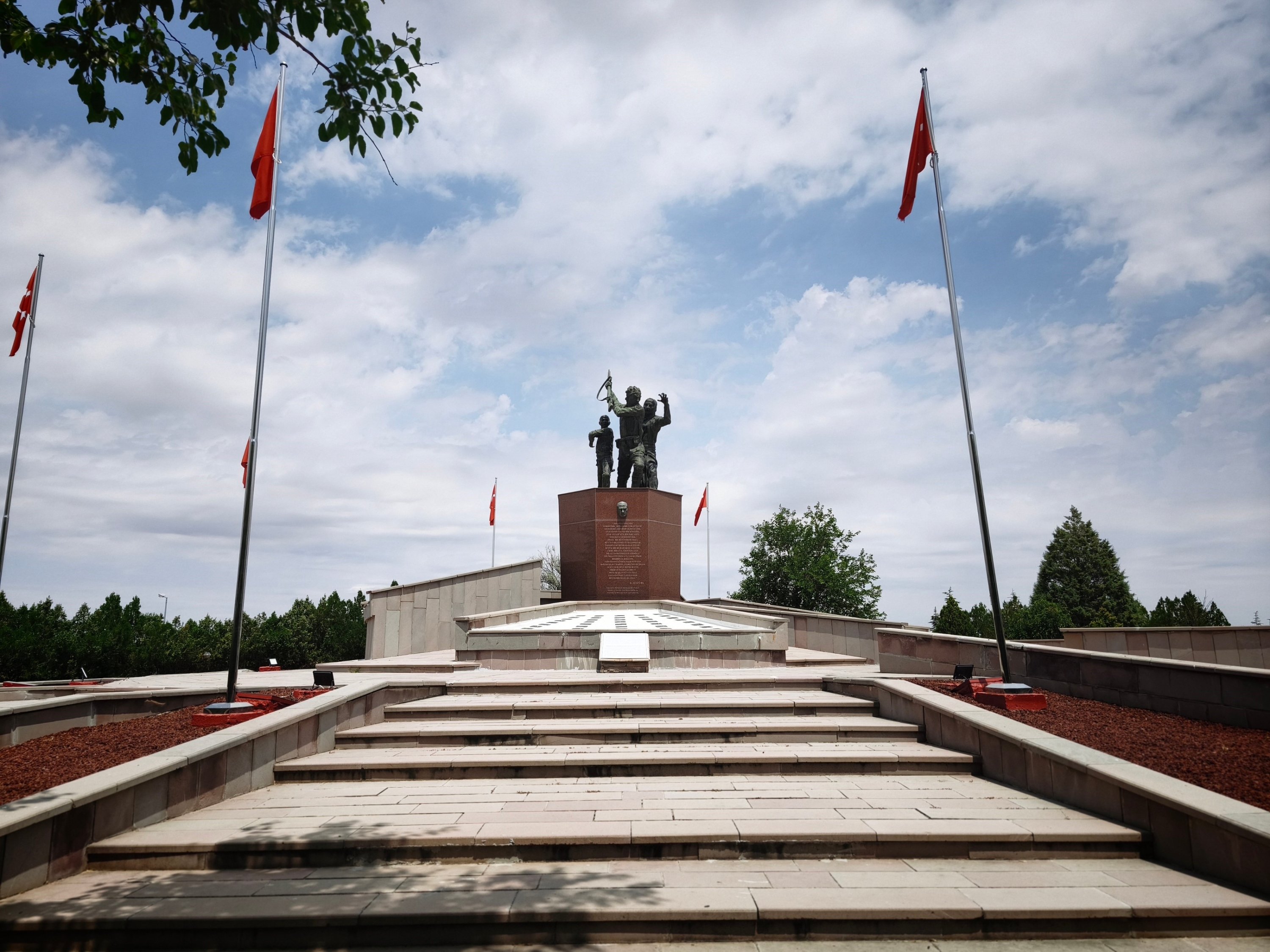
A saga of resilience of the Turkish nation, the Battle of Sakarya is vividly remembered 105 years later. The 1921 victory over occupying Greek forces was commemorated on Sunday with a message from President Recep Tayyip Erdoğan, who highlighted how Türkiye remained strong against its enemies.
The battle, which pitted Turkish forces under the command of the Republic’s founder, Mustafa Kemal Atatürk, against the Greek invaders, is hailed as the penultimate push to drive out occupying forces from post-World War I Türkiye. It put an end to Greece’s ambition to capture Ankara, the future capital of the country, and forced Türkiye’s western neighbor to accelerate its retreat to the west.
Fought mainly in Polatlı, now a district of Ankara, the battle drew its name from the Sakarya River, which stretches from the northwest to the capital’s borders. “There is no line of defense, there is a field of defense, and this field is the entire homeland,” Atatürk had famously told the army before the battle, ordering troops to fight to the death, “even if you see other units falling next to you.”
The Battle of Sakarya began Aug. 23 on the banks of the Sakarya River and concluded Sept. 13, 1921, stopping the Greek advance. It was preceded by another battle in the west that had forced Turkish troops to retreat. The Turkish retreat to the east of the Sakarya River had fueled a debate in the fledgling Parliament of post-Ottoman Türkiye and dampened public morale. Seeking a firm response against the Greeks, Parliament appointed Atatürk as the commander of the army that would counter the Greek advance. Atatürk mobilized the public by issuing a series of orders calling on the nation to donate whatever they had to the army, from guns to food.
The strengthened Turkish side confronted the Greek forces south of the Sakarya front on Aug. 23, and the battle line sprawled across an area about 100 kilometers long (62 miles). Though exact figures are not known, some 14,000 soldiers died on the Turkish side, while Greek forces suffered similar losses. The battle was one of the bloodiest in the war, and Turkish forces rarely gave up the fight apart from brief retreats, despite the nation’s exhaustion from World War I. The battlefield moved to Ankara’s Haymana district in September, but the Greek offensive failed once again. Turkish forces drove the Greeks back to their defensive lines, and on Sept. 13, the entire Greek army was compelled to withdraw. One year later, again in August, Turkish forces won the last battle, the Battle of Dumlupınar, against the Greek invaders.
The victory brought Mustafa Kemal, who then held the title of Pasha, the rank of Field Marshal and the title of Ghazi, awarded by Parliament.
In his message marking the anniversary, President Erdoğan said the Battle of Sakarya, one of the greatest victories in the Turkish nation’s centuries-long struggle for independence, demonstrated the extent of the sacrifices and efforts the nation was prepared to make for its freedom and independence. Erdoğan emphasized that the Turkish nation, which showed the entire world that it could remain united even amid scarcity and under the most difficult conditions, achieved a victory at the Battle of Sakarya that would go down in the history of warfare.
“The Victory of Sakarya, which gave the nation great self-confidence on the road to the establishment of the Republic of Türkiye, once again impressed upon the minds of enemy nations that Anatolia is the Turkish homeland. Drawing strength and determination from the glorious victories of our past and the rich civilization bequeathed to us by our ancestors, we will preserve our state forever and protect every inch of our homeland, whatever the cost may be. Without compromising the bloodshed of our martyrs who fell in making Anatolia our homeland, from Malazgirt to Sakarya, we will defend the rights of our beloved nation and work with all our strength to achieve our goals.
“On this occasion, I once again pray for Allah’s mercy upon all our martyrs who did not hesitate to sacrifice their lives to protect our freedom and independence and our sacred homeland. On the anniversary of the Victory of Sakarya, I commemorate with mercy and gratitude all the heroes of the War of Independence, particularly Gazi Mustafa Kemal, and extend my heartfelt greetings to all our citizens,” Erdoğan said in a written statement.
For Greece, it was part of a sequence of incidents and defeats that effectively ended its Megali Idea, a Greek nationalist concept of annexing lands where ancient Greeks lived to 20th-century Greece. Encouraged by the Ottoman Empire’s defeat in World War I and spurred by the Entente Powers’ greenlighting of a campaign into Anatolia, Greek forces managed to capture several locations in western Türkiye, most significantly Izmir on the Aegean coast.
The 1920 Treaty of Sevres, which was not recognized by the nationalist forces led by Atatürk, further paved the way for Greek advances into central Türkiye, with the ultimate purpose of capturing Ankara, the capital of Atatürk-led forces.
Today, the Battle of Sakarya is remembered in Greece as part of the “Asia Minor Catastrophe,” a series of developments that eventually forced Greece to sign the Armistice of Mudanya in 1922, which ended the Turkish-Greek conflict in the wake of World War I.
DAILYSABAH
هلدینگ کاسپین استانبول | خرید ملک در ترکیه | صرافی معتبر ایرانی در ترکیه | خرید و فروش طلا در ترکیه | مهاجرت به ترکیه | واردات و صادرات در ترکیه | نیازمندیهای ترکیه | اخبار ترکیه | اخبار جهانی | توریست ایران | خدمات توریستی در ایران | تورهای گردشگری ایران | هلدینگ اول | خدمات کاریابی و فریلنسری و شغل | مرجع اطلاعات ایران (همه چیز در ایران) | کیف پول و خدمات مالی و پرداخت یار | اخبار ایران | تابلو زنده قیمت ارز در ترکیه و استانبول | صرافی آنلاین ترکیه | قیمت طلا و نقره در ترکیه | سرمایه گذاری در ترکیه | جواهرات در ترکیه | نرخ لحظه ای ارزها در استانبول | قیمت دلار امروز در ترکیه | قیمت دلار استانبول امروز | قیمت لحظه ای دلار | اخبار روز ترکیه استانبول | اپلیکیشن ISTEX | اپلیکیشن قیمت لحظه ای دلار و یورو و لیر و ارزها در ترکیه
About the Author