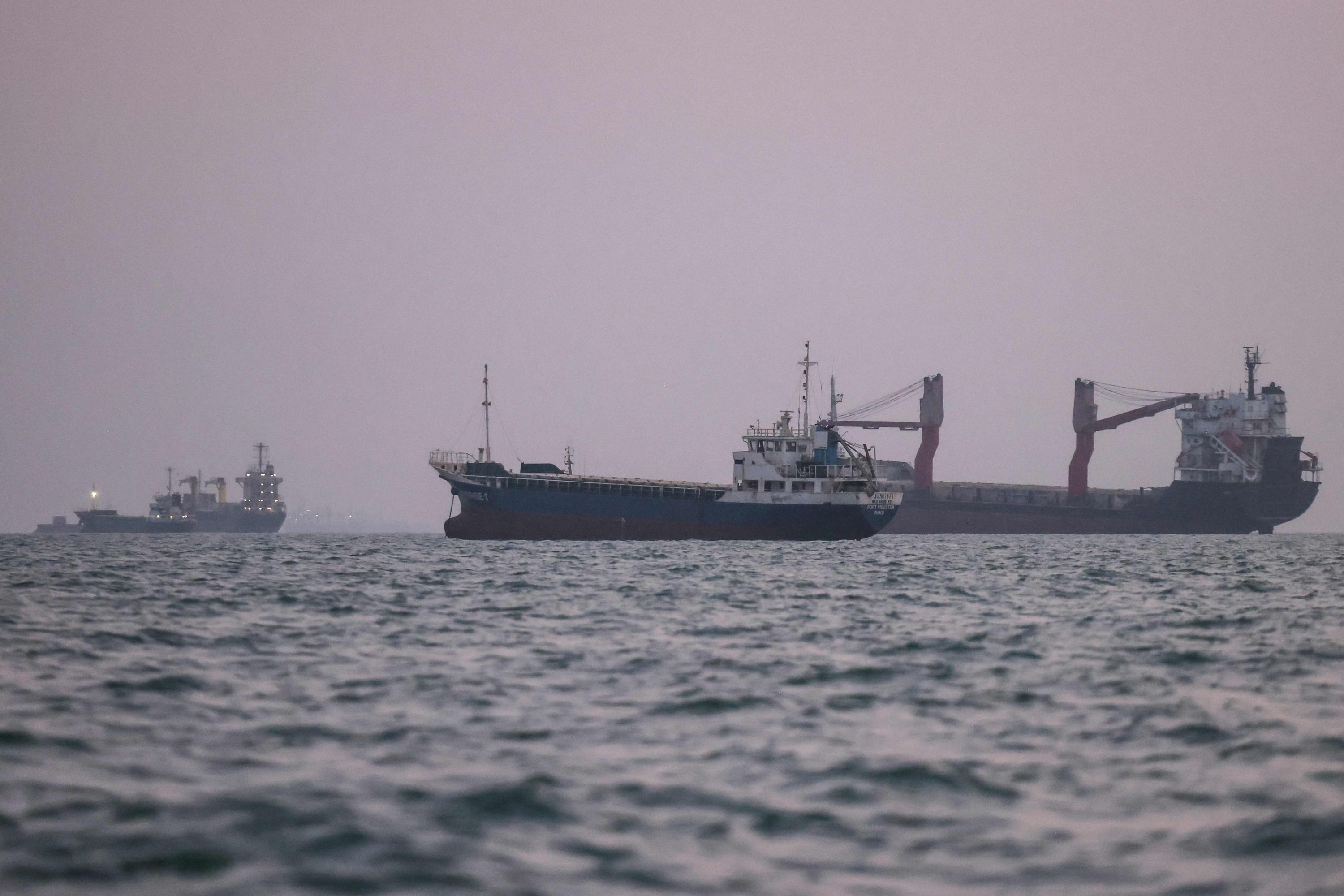
On Sept. 5, 2026, U.S. aircraft and drones struck three tankers involved in Iran’s oil trade, according to U.S. Central Command. Downy was disabled off Kharg Island, Stark 1 near Jask, and the unladen Kylo was destroyed in the Gulf of Oman and subsequently sank. Defense Secretary Pete Hegseth stated the logic in plain terms. If Iran fired on American ships, Washington would destroy its tankers. CENTCOM commander Adm. Brad Cooper put a price on that warning, saying that firing at two American warships would cost Iran three vessels. The American ships had evaded the attacks.
This looks like a confrontation between the U.S. military and Iran’s Revolutionary Guards. But the commercial system behind it extends far beyond Iran. Iranian oil travels aboard both Iran’s own tankers, including the National Iranian Tanker Company’s Downy and Stark 1, and a wider international fleet.
In February 2026, maritime intelligence company Windward identified roughly 430 tankers active in the Iranian trade, of which 62% were falsely flagged and 87% sanctioned. A February 2025 investigation by Follow the Money and the Organized Crime and Corruption Reporting Project (OCCRP) described a Russian shadow fleet of around 600 vessels. The underlying Kyiv School of Economics research estimated that shadow tankers carried about 70% of Russia’s seaborne oil exports in June 2024. These are overlapping markets for aging ships, opaque ownership and obscure insurance arrangements. The vessels include Aframax and Suezmax tankers and very large crude carriers, often operating through offshore companies and frequently changing flags. European and American vessel sales are particularly well documented in the Russian case.
The Union of Greek Shipowners’ May 2026 report puts the Greek-controlled fleet at 5,798 vessels, controlling 19.1% of global carrying capacity, 26% of oil-tanker capacity and 61% of EU-controlled fleet capacity. A separate Greek Shipping Co-operation Committee (GSCC) survey, covering 4,388 vessels, found fewer than a third flew EU flags. The capital is European even when the flag is not.
The secondhand market is the critical mechanism. Follow the Money and OCCRP traced around 230 tankers sold by European and American owners between 2022 and 2024 that subsequently entered Russia’s shadow fleet. Together, they represented nearly 40% of the fleet examined. Their estimated combined sale value exceeded $6.3 billion. Greek interests accounted for 127 ships, roughly 55% of the total, sold by 54 companies for an estimated $3.7 billion or more. No other national group came close. European and American shipowners thus supplied a substantial share of Russia’s shadow fleet.
Fleet renewal has another side. The separate GSCC survey recorded an average age of 14.3 years for Greek-controlled ships, against 18.8 worldwide. Selling older vessels can improve an owner’s fleet profile while supplying the market from which shadow operators acquire ships. A vessel sold out of compliant trade can pass through successive companies before reappearing under a new name and flag. Routine transactions can cumulatively reshape the market available to countries under sanctions.
EU restrictions on Iranian oil trade were restored in September 2025; U.S. sanctions operate under a separate legal regime. U.S. enforcement has reached Greek addresses. On Aug. 21, 2025, the U.S. Treasury sanctioned Greek shipping veteran Antonios Margaritis, Athens-based Marant Shipping and Trading, and associated companies registered in the Marshall Islands. Seven weeks earlier, it targeted British Iraqi businessman Salim Ahmed Said’s network. According to the Treasury, that network blended Iranian and Iraqi oil at a terminal in Khor al-Zubair and used allegedly false documentation to sell it to Western buyers as Iraqi crude. Greek reporting linked two unsanctioned Greek companies commercially to the network; Treasury did not name them.
Greece’s Iranian oil relationship also included legitimate trade. Hellenic Petroleum agreed to resume long-term Iranian crude purchases in January 2016. It stopped buying in mid-2018, months before U.S. oil sanctions returned. Reuters reported that the Swiss bank handling payments had stopped processing Iranian transfers. The EU opposed Washington’s withdrawal from the nuclear deal and sought to shield European firms from renewed U.S. sanctions. Greece later received one of Washington’s eight import waivers but did not use it. Lost banking access had already disrupted trade before renewed U.S. oil restrictions took effect.
The 2022 tanker crisis exposed another vulnerability. In April, Greek authorities detained the Russian-flagged Lana, formerly Pegas, off Karystos. Its name had changed on March 1; it switched to Iran’s flag on May 1. The initial detention concerned EU sanctions on Russia. After that restriction was lifted, a separate effort to seize its Iranian cargo under U.S. sanctions proceeded. Oil transfer began on May 23. Four days later, Iran seized two Greek tankers carrying Iraqi oil cargoes, Delta Poseidon and Prudent Warrior, and detained roughly 50 sailors, including nine Greeks and a Cypriot.
A Greek appeals court reversed the cargo seizure on June 8. On July 26, the Supreme Court rejected a challenge on procedural grounds. The oil was returned to Lana in August and never reached the United States. The two Greek tankers left Iran on Nov. 16; Lana departed its anchorage off Piraeus the same day. Athens resisted describing the process as a trade-off, but its maritime ministry publicly confirmed a final agreement in Tehran.
Iran used commercial assets to exert pressure on Greece. The lesson was hardly new. Iran had seized Stena Impero in 2019. Nor are merchant ships beyond naval protection. Yet, holding an owner’s vessel creates a different political calculation from attacking a warship. Governments must weigh escalation against negotiations for crews, cargoes and ships. Private owners become pressure points in disputes between states. Sanctions and banking restrictions can deter those owners, but military deterrence does not transfer neatly to a commercial network spread across jurisdictions.
The industry’s defense deserves a hearing. Owners argue that a lawful sale should not make them responsible for a vessel’s use years later. They also object to rising compliance costs when legal obligations remain difficult to interpret. Some ships change hands repeatedly before entering sanctioned trades. That objection has force. Washington also has reason to target brokers and operators who enable those trades. However, neither position resolves the structural problem, which is that much of the burden of enforcement falls on private actors whose assets and crews can be held hostage.
Iranian oil supplies to China have fallen amid the war and U.S. blockade. Reuters reported on Aug. 21 that provisional Kpler data put China’s Iranian crude imports at 534,000 barrels a day so far that month, against an estimated 823,000 in July and a 2025 average of 1.4 million. The August figure covered only part of the month, but pointed to a substantial contraction.
Hormuz is harder to read. Goldman Sachs estimated in late August that total regional oil exports had recovered to roughly two-thirds of prewar levels. Its estimate for Hormuz itself was 8 to 10 million barrels a day. Regional totals include exports taking other routes, while tankers sailing with their transponders off complicate estimates of traffic through the strait. Sanctions and wartime controls can encourage greater concealment, making observed traffic an imperfect measure of actual flows. Such uncertainty complicates assessments of how much oil is reaching buyers and how effectively restrictions are working.
The war will eventually end but the two-tier shipping system may outlast it. Vessels drawn into opaque ownership networks will not necessarily return to transparent trade when fighting stops. European ship sales helped supply networks now targeted by Western sanctions, although individual transactions were not necessarily unlawful. The next test will be who that infrastructure serves after the war.
DAILYSABAH
هلدینگ کاسپین استانبول | خرید ملک در ترکیه | صرافی معتبر ایرانی در ترکیه | خرید و فروش طلا در ترکیه | مهاجرت به ترکیه | واردات و صادرات در ترکیه | نیازمندیهای ترکیه | اخبار ترکیه | اخبار جهانی | توریست ایران | خدمات توریستی در ایران | تورهای گردشگری ایران | هلدینگ اول | خدمات کاریابی و فریلنسری و شغل | مرجع اطلاعات ایران (همه چیز در ایران) | کیف پول و خدمات مالی و پرداخت یار | اخبار ایران | تابلو زنده قیمت ارز در ترکیه و استانبول | صرافی آنلاین ترکیه | قیمت طلا و نقره در ترکیه | سرمایه گذاری در ترکیه | جواهرات در ترکیه | نرخ لحظه ای ارزها در استانبول | قیمت دلار امروز در ترکیه | قیمت دلار استانبول امروز | قیمت لحظه ای دلار | اخبار روز ترکیه استانبول | اپلیکیشن ISTEX | اپلیکیشن قیمت لحظه ای دلار و یورو و لیر و ارزها در ترکیه
About the Author