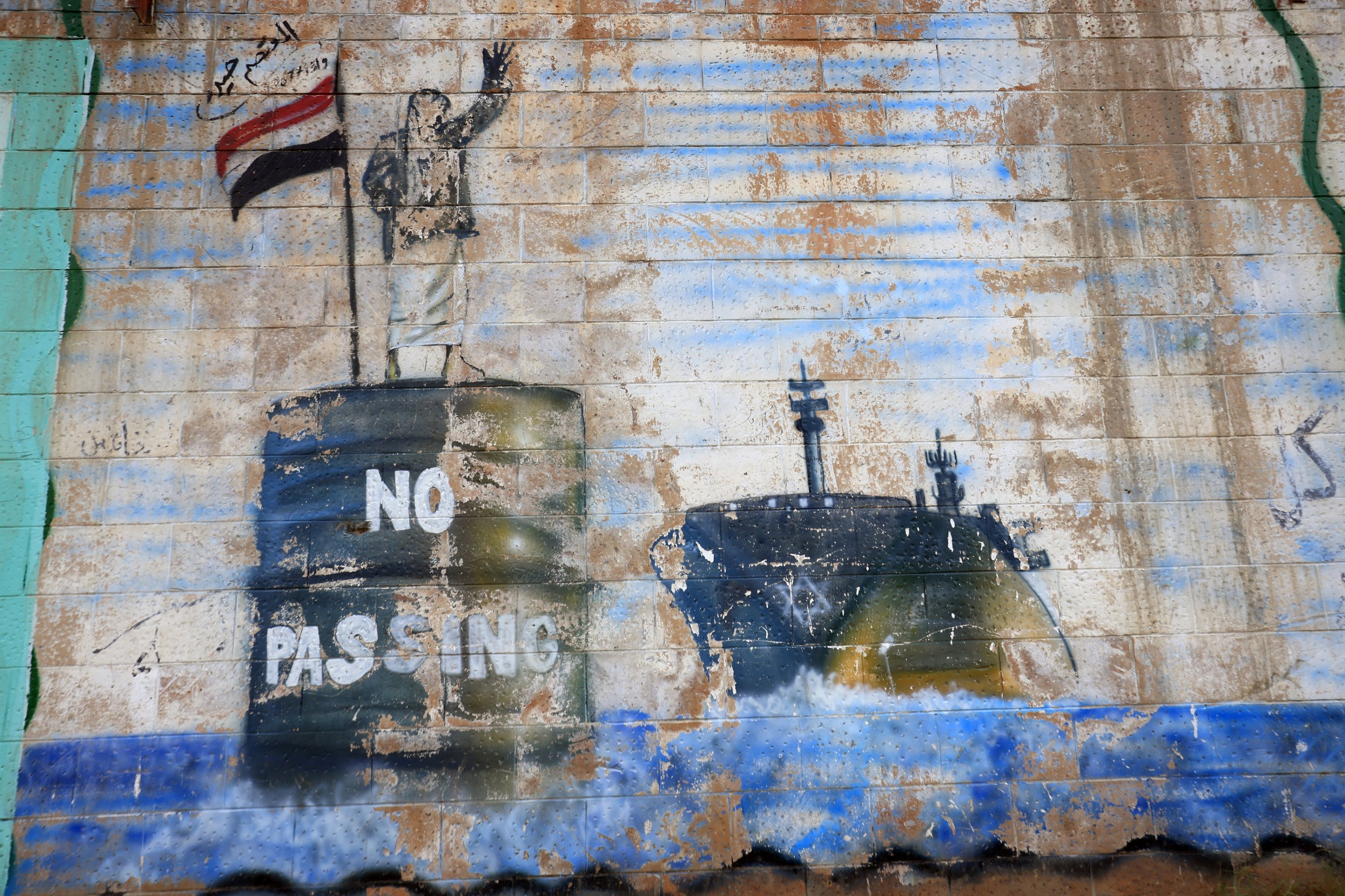
The Iran-backed Houthis are seeking to take control of Yemen’s entire Red Sea coastline in a move aimed at further consolidating their influence over the Bab al-Mandeb Strait, one of the world’s busiest and most contested maritime chokepoints.
The Houthis have already declared a naval blockade against Saudi Arabia, the world’s largest oil exporter. Houthi control over the Bab al-Mandeb waterway would further isolate Gulf oil producers from their main shipping routes.
In recent months, the Houthis have once again begun targeting Riyadh as part of the Saudi-Iranian rivalry that has played out across the region for years. Following the normalization of Saudi-Iranian relations in recent years, the Houthis scaled back their operations and shifted their focus to a completely different front. They had previously concentrated all their attacks on Israel before adopting a new strategy aimed at striking Saudi Arabia’s infrastructure, energy facilities and export routes.
Viewed through the lens of Yemen’s internal dynamics, the cycle of escalation, withdrawal, silence and sudden redeployment makes little sense. But viewed as an extension of Iran’s regional proxy network, the pieces appear to fall into place.
Missiles, drones and guided munitions have given the Houthis an operational reach far greater than that of a conventional army of their size. This allows them to strike Saudi energy facilities, southern cities and maritime traffic at very low cost, while giving their targets almost no time to respond. Control of the coastline and Perim Island now adds weapons systems that are much more difficult to defend against to the equation.
The consequences of the Houthi move are already being felt on the ground. Riyadh shut down the East-West pipeline following a series of drone attacks. Jizan, Abha and Najran remain on constant alert. From Tehran’s perspective, however, the move appears to serve three main purposes.
First, it gives Iran a second lever over energy flows without having to deploy its own forces to a new front. Houthi gains on the ground are narrowing Saudi Arabia’s export alternatives, increasing the political cost of U.S. operations against Iran and demonstrating that Tehran still has cards to play even while under pressure. This also suggests that Iran may be returning to its initial plan of pushing oil prices to levels the global economy cannot withstand and forcing Trump to end the war under pressure from both the U.S. public and major importing and exporting countries.
Second, it undermines Saudi Arabia’s regional weight and deepens existing divisions within the Gulf Cooperation Council (GCC) over Yemen, the Strait of Hormuz and the war itself. Since the beginning of the war, Iran has been distributing the financial, humanitarian and infrastructure costs of the conflict among the Gulf states. At one point, the United Arab Emirates bore the heaviest burden, followed by Kuwait. Now, the greatest cost is falling on Saudi Arabia.
The UAE side has already begun indirectly blaming Riyadh for the Houthi advances in areas that were previously controlled by forces it supported. All of this is taking place at a time when, according to statements by the Iranian president himself, Tehran and Abu Dhabi have agreed to repair their strained relations and open a new chapter.
Third, and most importantly, this move by the Houthis and by Iran is testing the resilience of the Mecca Defense Alliance. In fact, the alliance’s first serious test came not from Israel, but from the Iranian side.
Saudi Arabia now has to deal with three fronts simultaneously: the Houthis to the south, Iraqi militias to the north, and Iran to the east. Iran’s deployment of the Houthis against Riyadh could serve as a catalyst for Pakistan and Türkiye to strengthen their commitments to the alliance. Tehran is seeking to create an illusion among smaller states that the pact has no practical power on the ground and to establish the perception that appeasing Iran is a much safer alternative.
Throughout the war, Saudi Arabia has sought to reduce tensions, while both sides of the conflict have preferred the opposite. By using the Houthis as an offensive tool, Iran is taking the risk of turning all of its neighbors against it.
The real paradox is that although Israel started the war, the one state Tehran has avoided targeting is also Israel. Israel’s defense minister recently said Tehran knows that American jets have taken off from Israeli territory to bomb Iran, but nevertheless claimed that Iran has not dared to retaliate. He presented this as evidence that Israel’s deterrence remains intact.
U.S. officials met with Houthi representatives in Oman last weekend. The meeting, which was not publicly announced, took place at the U.S. Embassy in Muscat, according to unnamed sources. Two sources said the Omani government, which has long played a mediating role in the region, helped arrange the meeting.
The Trump administration designated the Houthis as a “foreign terrorist organization” in March 2025, making support for the group a criminal offense. However, Washington has continued negotiations with the group since then. After bombing the Houthis for two months in an effort to halt their campaign of attacks against maritime traffic in the Red Sea, the United States reached a cease-fire agreement with the group in May last year.
President Donald Trump said on Saturday that the Houthis had contacted his administration and asked the U.S. to stay out of the war in Yemen. Vice President JD Vance told reporters that the U.S. was in direct contact with the group but did not provide further details.
The Houthis, who rapidly seized Mocha and Dhubab in Yemen, have also taken control of Perim, or Mayyun, Island, which divides the Bab al-Mandeb Strait. They now control both Yemen’s Red Sea coastline and the gateway into these waters.
Why is this strait, located at the southern end of the Red Sea and also known as the “Gate of Tears” because of its dangerous navigation conditions, so important?
The closure of the Strait of Hormuz severely disrupted the global economy. If Bab al-Mandeb were also closed, the world could face a new crisis.
Located between Yemen on the Arabian Peninsula and Djibouti and Eritrea on the African coast, the strait is effectively the counterpart on the other side of the peninsula to the Strait of Hormuz, a major focal point in U.S.-Iran tensions.
Whoever controls Perim and the Hanish Islands gains a strategic vantage point and greater control over approaching vessels. The Houthis control the port city of Hodeidah, which they have used as a base for their extensive campaign of attacks against maritime traffic in the Red Sea.
The Bab al-Mandeb Strait is one of the world’s most important maritime routes, particularly for the global shipment of commodities and goods from Asia to Europe through the Suez Canal. It is also vital for traffic from Egypt’s Suez-Mediterranean pipeline on the Red Sea coast, as well as commodities heading to Asia, including Russian oil.
The strait serves as the southern gateway to the Suez Canal, meaning ships must pass through it to reach the canal from the south. Disruption to maritime traffic in the strait would force ships to reroute around the Cape of Good Hope in southern Africa, adding weeks and high costs to what would otherwise be a relatively straightforward journey.
Full control of this waterway by the Houthis could provide their backer, Iran, with a critical advantage in its confrontation with the U.S., as energy shipments through the Strait of Hormuz have already fallen sharply, contributing to a major rise in oil prices.
According to Kpler data, the total volume of oil passing through the Bab al-Mandeb Strait in June accounted for approximately 7% of global oil production.
The key question now is whether the Houthis can hold on to the territories they have captured, or whether their newly established positions could leave them highly vulnerable if Saudi Arabia and its allies launch a determined campaign to push them back.
The views and opinions expressed in this article are solely those of the author. They do not necessarily reflect the editorial stance, values or position of Daily Sabah. The newspaper provides space for diverse perspectives as part of its commitment to open and informed public discussion.
DAILYSABAH
هلدینگ کاسپین استانبول | خرید ملک در ترکیه | صرافی معتبر ایرانی در ترکیه | خرید و فروش طلا در ترکیه | مهاجرت به ترکیه | واردات و صادرات در ترکیه | نیازمندیهای ترکیه | اخبار ترکیه | اخبار جهانی | توریست ایران | خدمات توریستی در ایران | تورهای گردشگری ایران | هلدینگ اول | خدمات کاریابی و فریلنسری و شغل | مرجع اطلاعات ایران (همه چیز در ایران) | کیف پول و خدمات مالی و پرداخت یار | اخبار ایران | تابلو زنده قیمت ارز در ترکیه و استانبول | صرافی آنلاین ترکیه | قیمت طلا و نقره در ترکیه | سرمایه گذاری در ترکیه | جواهرات در ترکیه | نرخ لحظه ای ارزها در استانبول | قیمت دلار امروز در ترکیه | قیمت دلار استانبول امروز | قیمت لحظه ای دلار | اخبار روز ترکیه استانبول | اپلیکیشن ISTEX | اپلیکیشن قیمت لحظه ای دلار و یورو و لیر و ارزها در ترکیه
About the Author