In a new legal filing in the case over a trio of new outlets barred entry to the White House, Trump administration lawyers repeatedly defended the president’s ban by saying journalists were not entitled to access to the building.
“Access to the White House is a privilege, not a right,” the filing stated.
The filing went on to assert that the three outlets – by publishing sensitive or classified information obtained through its reporting – constituted a national security threat, giving the president the right to ax their credentials.
Trump banned the three outlets – CNN, MS Now, and Politico – last Friday in a snap decision announced via social media. He branded the three outlets “fake news” and threatened future bans against other outlets could follow.
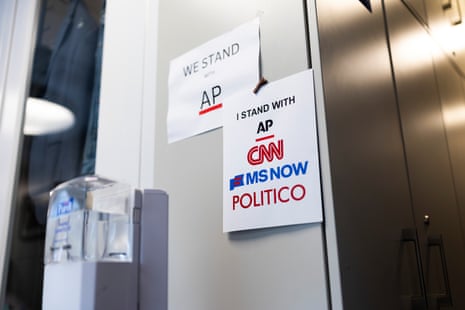
Early the following week, the three publications filed a joint lawsuit asking a federal judge to restore their access, alleging that the action was an illegal act of retaliation that violated their First Amendment rights. A president, they argued in their complaint, can’t bar access to journalists based on reporting he doesn’t like.
Since then, Trump has found himself in an escalating tit-for-tat with the press, which has responded to the ban with measures of solidarity. Several outlets have declined to publish any images or video of the president so long as the three outlets are denied access to the White House. And the members of Trump’s standard TV pool – five channels, including CNN, who take turns traveling with the president, filming his daily activities, and distributing that footage – have ceased their duties.
Bernie Sanders, the left-wing independent Senator from Vermont who has quickly become one of the loudest AI-skeptical voices in US politics, announced on Wednesday new legislation that would, in his words, “ban artificial superintelligence.”
“The leading experts are clear: AI is rapidly escaping our control,” Sanders wrote in a post to social media announcing the bill. “Congress must act NOW. Today I’m introducing legislation to permanently ban artificial superintelligence and pause advanced AI until clear safety rules are in place.”
The Associated Press reported that the legislation – backed in the House of Representatives by Texas Democrat Greg Cesar – would pause the development of frontier AI until a new “Department of Artificial Intelligence” could establish guardrails around the industry.
It would also ban, in perpetuity, “artificial superintelligence,” a category that includes AI systems that exceed the limits of human intelligence or have “sufficient capabilities to plan and execute the destruction or disempowerment of humanity,” per AP.
The allegations, first reported in a ProPublica story yesterday, were the latest development in an already chaotic Maine Senate race: that Maine GOP senator Susan Collins’ campaign had accepted large donations from a defense contractor in return for Collins steering government funds to the company.
A day later, Maine Democrats are centering those allegations as they seek to win Collins’ seat in the November midterm elections.
“I cannot stress enough today the seriousness of these allegations,” Devon Murphy-Anderson, executive director of the Maine Democratic Party, said at a party press conference called to highlight the investigation.
Collins, Murphy-Anderson said, had “sold us out yet again, and gotten bailed out of trouble by the President of the United States. It is not the first time she has betrayed us. However, this November we have the opportunity to ensure it is one of the last.”
Collins’s team has fiercly denied the allegations, which emerged from an FBI investigation into Martin Kao, former executive of the defense contractor Navakek. Kao, who detailed the alleged scheme to the FBI, has since been convicted and sentenced to prison on unrelated charges.
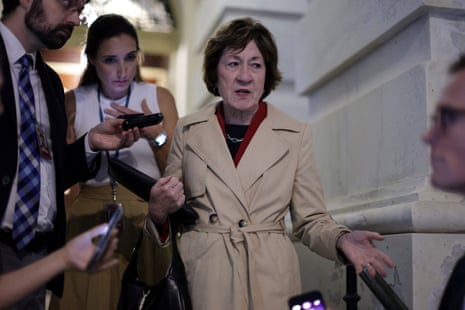
ProPublica reports that the FBI has been investigating Collins as part of a wide-ranging probe into members of Congress, but that the inquiry died as part of the Trump administration’s restructuring of the FBI.
Troy Jackson, Collins’ opponent for her Maine Senate seat in November, has also seized on the corruption allegations, implying that Collins has been deferential to Trump because his FBI helped kill the probe into her conduct. (Jackson was chosen by the Maine Democrats to replace their previous nominee, one-time progressive darling Graham Platner, after allegations of sexual assault led him to terminate his campaign.)
“This is corruption of the highest order,” Jackson wrote in a post to social media. “Susan Collins delivered millions in taxpayer dollars for a corrupt donor bankrolling her campaign, and then Donald Trump helped her cover it up.”
“The jig is up,” he added in another post today.
The Trump administration is readying to launch a 90-day ban on diesel fuel exports from the United States, following mounting calls from his party to take action to bring down the fuel’s price ahead of the midterm elections, POLITICO reported Wednesday.
Several people with inside knowledge of the conversations told POLITICO (currently one of three outlets banned from the White House by Trump) that the plan has created a schism within pro- and anti-embargo camps in the administration. It’s also prompted furor from the oil and gas industry that has broadly supported the president.
One oil industry executive privy to the conversations told the outlet that Trump seemed intent on announcing a ban by the end of the week.
The price of fuel has weighed heavily on Republicans in the lead-up to the midterms, which will determine whether Trump’s party retains control of Congress for the second half of his term. Trump ran in 2024 in part on bringing down the price of gas, but the war he helped kick off between the US and Iran, and the closure of vital oil shipping arteries it prompted, has sent the cost of fuel skyrocketing.
Diesel, in particular, has become a sore spot. The fuel for everything from semi-trucks to tractors to heavy machinery, it has surged in price even more than standard gasoline, to more than $6.50 per gallon.
That’s prompted some Republicans, especially those representing farming-heavy states, to publicly call on the president to take drastic action to lower the price of diesel.
The pushback, POLITICO reports, is coming from oil and gas executives and administration officials who warn that the embargo could raise fuel prices in the long run.
Yesterday, Britain’s new prime minister Andy Burnham navigated his way through a first high-stakes meeting with Donald Trump at the UN general assembly in New York. His aides were delighted with how the meeting went, as Trump praised the US-UK relationship and described Burnham as a “natural businessman”.
The anticipated sticking points – the Chagos Islands, West Bank settlement sanctions and Ireland – appear not to have derailed the talks nor cast a shadow over the future relationship.
In today’s edition of The Latest podcast, Lucy Hough speaks to the our policy editor in London, Kiran Stacey. You can also watch on YouTube.
The Washington Post (paywall) reports today that James McCrery II, the first architect on Donald Trump’s controversial $400m White House ballroom project, resigned after repeatedly clashing with the president, who dismissed his warnings that design features Trump was insisting on violated building safety codes.
McCrery withdrew from the project last October after warning Trump that a preliminary design he wanted “did not provide adequate emergency exit routes or fire-containment measures”, according to the Post’s report, which cites two people with knowledge of the discussions and corroborating documents reviewed by the paper.
The sources said Trump brushed off the architect’s concerns, and argued that no building codes apply to White House construction. “I am the code,” Trump reportedly said.
The Post previously reported that they had also clashed over the size of the ballroom. One document obtained by the paper features an image of a planned data center overlaid on a map of Manhattan, with a note that appears to be poking fun at McCrery’s concerns. “James,” it reads. “And you think we are big.”
Another note made in Sharpie makes clear Trump’s preference for Corinthian-style columns.
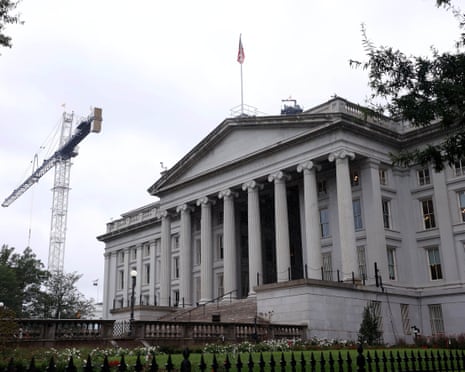
When approached by the Post, McCrery didn’t say why he stepped down. A White House official said it was “factually false and totally inaccurate” to suggest he left the project over issues with the code, and said he was a “valued member of the initial design team.”
Discussions about the safety issues continued for months after McCrery’s departure, according to White House records reviewed by the Post.
It is not clear from those records whether the safety issues he identified have been resolved in more recent designs by Shalom Baranes Associates, the architecture firm that took over McCrery’s firm’s role in the project late last year.
The ballroom project is – unusually – being overseen by the Executive Residence, rather than the General Services Administration or National Park Service. The small office is exempt from rules that require federal agencies to solicit competitive bids and disclose details to the public, the Post previously reported. Typically, it’s responsible for routine repairs, entertainment expenses, and the purchase of furniture, art and other items for the executive mansion.
Rubio, in his press conference, also touched on the war in Iran at several points, including on the surprise negotiations that took place yesterday between Trump administration envoys and the Iran delegation.
“I don’t want to mischaracterize this as a major breakthrough,” Rubio said. “But at the same time I think it was significant that at least there was a conversation.”
Little detail has been shared about what was discussed at that meetings, though Rubio framed the conversation as a continuation of the earlier back-and-forth between the two sides.
Rubio also notably insisted that Trump would be able to see through his campaign in Iran acting on his authority alone, even if Republicans lose control of Congress in November and if Democrats were to oppose the continuation of US operations against the country.
Rubio also briefly addressed Trump’s meeting with Delcy Rodriguez, the interim Venezuelan president, who last night posed for a friendly photo with Trump at a Manhattan hotel only miles from where her predecessor, Nicolás Maduro, was incarcerated.
“It was a short meeting, but it was a very important meeting,” Rubio said.
Rodriguez took the reins in Venezuela after the US raided her country’s capital of Caracas and seized Maduro, the toppled autocrat, in the dead of night. Since then, she’s been pliant to US interests and brokered a deal that would see a vast share of her country’s oil wealth into US coffers.
During remarks to reporters, Rubio said that the US was working to “create the groundwork and rebuild the institutions necessary to have free and fair elections in Venezuela.”
But he caveated that free and fair elections would have to wait until Venezuela was in the shape to support an “enduring Republic,” and that its first elected leader could not inherit “a complete catastrophe, economic and social.”
The conditions for such a democratic transition, per Rubio, include rebuilding Venezuela’s independent media, creating the infrastructure for a trustworthy electoral process, and bringing back opposition political parties exiled abroad. Here Rubio name dropped María Corina Machado, the Venezuelan opposition leader who had maintained close tied with Trump before the administration ultimately backed Rodriguez.
Addressing reporters at the United Nations, Marco Rubio reiterated, in so many words, that the Trump administration is seeking to replace the current Cuban leadership, and did not rule out the use of force to achieve that goal.
“The Cuban Revolution has failed. It has failed for sixty-something years, it’s a failure now,” Rubio said. “The question is what replaces it.”
He continued: “We’re open to measures moving forward that begin that process of change.”
Pressed on whether the Trump administration would try to repeat its tactics in Venezuela – where it raided the country in the dead of night, arrested former autocrat Nicolas Maduro, and ushered in a more US-friendly leader to replace him – Rubio equivocated, but did not rule out the possibility.
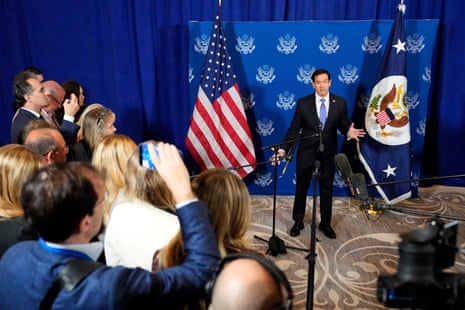
“If there is a threat to the national security of the United States, the president has both the power and the obligation to address it,” Rubio said. “That said, our preference always is to deal with these things – I don’t want to call it diplomatic – but in a negotiating way.”
He also said he believed that American business could play “a positive role in a future Cuba,” and that any new government would have to be friendlier to business interests. That comes in light of reporting by the Guardian that shows businesses close to the administration have been buying up assets in Cuba in light of chaos wrought by the US’s latest efforts to cripple the island’s economy.
In a speech to the United Nations following on the heels of President Trump’s threats to “annihilate” his country, Iran’s president, Masoud Pezeshkian, struck a defiant tone.
“He must know that the resistance of the Iranian people will only increase in the face of sanctions, increased pressure, increased bullying,” Pezeshkian said, referring to Trump. “We will never bow our head or bend at the knee.”
He continued: “It must be understood by Mr Trump and those who seek to bully us that we are ready for dialogue and diplomacy and negotiations – without accepting the language of force.”
Trump, in his speech the day earlier, said Iran faced a choice between “greatness” and annihilation, warning Iran that he would its people “into hell” if they didn’t make a deal. It was latest of several apocalyptic-sounding threats from Trump toward Iran since the beginning of the conflict.
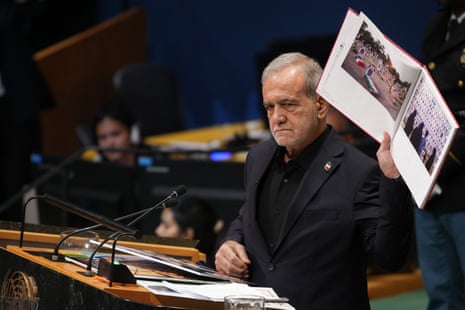
Earler in his address, during which the US delegation walked out of the room, Masoud also decried the US and Israel’s campaign against his country as “terrorism.”
“The US president described us as terrorists. We have been the victims of terrorism,” he said.
He said that while Iran has avoided attacking civilian populations, the US “bombed a school” and “children perished under bombs with weapons used by the US and Israel.”
“They impose the war on us but we have proven that we’re not afraid of fighting, of war, that is defensive in nature, and we will stand in defence of our beloved Iran, our homeland, until our last breath.”
Melania Trump told Fox & Friends this morning that she will be releasing a two-part docuseries following her life as First Lady.
“There’s some private questions that I will answer that people never heard before,” Melania Trump told the show’s hosts.
It hasn’t yet been a year since a previous documentary about Melania Trump, titled “Melania,” was released.
Donald Trump has a habit of discomfiting delegates to the United Nations general assembly. But this year, he may have upstaged the ghost of Nikita Khrushchev by openly contemplating the annihilation of a fellow UN member state.
Eleven minutes into a 40-minute address, the US president announced he had “a big decision to make” over Iran, which has staged a much more determined resistance than Trump anticipated when he decided to go to war against the country in February.
“Will a deal be made with Iran that lets them rebuild, and create a far greater country than it ever was before?” he asked. “Or do I annihilate the Islamic Republic and do it quickly, never giving them a chance to kill and destroy people and countries again? Do I drive them into hell with no chance of survival and no hope of future greatness or generations?”
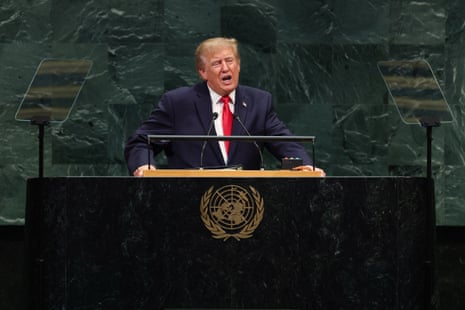
Possibly not since Khrushchev, the late Soviet leader, brandished his shoe and allegedly banged it on a desk in 1960 in protest at a fellow delegate’s speech has the annual gathering witnessed such a display of bellicosity from a superpower leader.
But this seemed more shocking.
The world may have become inured to Trump’s dire threats to send Iran “to the stone age” or end its civilization – so often have they been issued, only to sometimes be followed by a ceasefire or negotiations. But hearing them voiced in a forum created in the aftermath of the second world war, with the explicit aim of preventing future conflicts, was disconcerting.
Iran was the focal point of much of Trump’s speech, which began with a catalogue of familiar boasts of his supposed achievements that seemed better fitted to a domestic audience.
Whether or not the latest threat should be taken literally, little of what he said about Iran seemed reassuring. He appeared to play fast and loose with the facts, consciously or otherwise.
Trump administration lawyers will face the three new outlets banned from the White House by the president – Politico, CNN, and MS Now – in court today, as the organizations ask a federal judge to restore their access.
Trump banned the three outlets late last week via a post to Truth Social, sparking a scuffle with the Washington press. The three banned outlets swiftly sued, and other news organizations have halted some coverage of the president in solidarity, including the other rotating members of the president’s standard TV pool (which take turns filming the president’s press-open events and distributing the footage to others).
The three barred news organizations have accused the president of violating their First Amendment rights by retaliating against them over coverage he disliked. The Trump administration, in a new filing, countered by saying that White House access is a “privilege,” not a right, and that the three outlets’ reporting of information the administration deems sensitive constitutes a national security threat.
Trump himself has said he’ll “probably lose” the lawsuit, which has landed in the courtroom of a judge he appointed.
Trump won’t be back at the United Nations today, but world leaders speaking after him on day two of the General Assembly’s gathering will be reckoning with the international order he’s shaped.
In particular, the leaders of both Iran, the nation Trump started a war with, and Ukraine, whose war with Russia Trump staked his 2024 campaign on ending, will feature in Wednesday’s lineup of speakers.
The President of Iran, Masoud Pezeshkian, is slated to speak first, a day after Trump used his address to the body to threaten to “annihilate” his country and drive its people “into Hell” if Iranian leadership refused to strike a deal to end the war.
Around the same time Trump delivered those remarks, members of Trump’s team, including Middle East envoys Steve Witkoff and Jared Kushner, held a snap meeting with the Iranian delegation, Trump later said. The President reported that the meeting went “very well,” though Iran has since pushed back on claims that it dropped some preconditions for reopening the Strait of Hormuz during those talks.
Volodymyr Zelenskyy, president of Ukraine, will also take the podium, a day after he also met with President Trump. His address will follow a UN Security Council meeting on Ukraine. Both will give Zelenskyy a platform to rally international support for the defense of his country from a Russian invasion that has endured for well over 4 years.
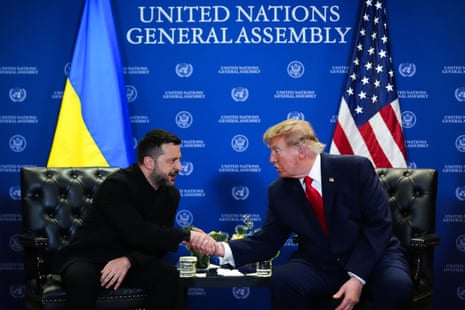
In remarks to reporters before his meeting with Trump, Zelenskyy said he wanted to see the war ended before winter.
“I hope we will end this war, and President Trump will help us end this war. We need to do it as quickly as possible, before winter,” he said.
In a new legal filing in the case over a trio of new outlets barred entry to the White House, Trump administration lawyers repeatedly defended the president’s ban by saying journalists were not entitled to access to the building.
“Access to the White House is a privilege, not a right,” the filing stated.
The filing went on to assert that the three outlets – by publishing sensitive or classified information obtained through its reporting – constituted a national security threat, giving the president the right to ax their credentials.
Trump banned the three outlets – CNN, MS Now, and Politico – last Friday in a snap decision announced via social media. He branded the three outlets “fake news” and threatened future bans against other outlets could follow.
Early the following week, the three publications filed a joint lawsuit asking a federal judge to restore their access, alleging that the action was an illegal act of retaliation that violated their First Amendment rights. A president, they argued in their complaint, can’t bar access to journalists based on reporting he doesn’t like.
Since then, Trump has found himself in an escalating tit-for-tat with the press, which has responded to the ban with measures of solidarity. Several outlets have declined to publish any images or video of the president so long as the three outlets are denied access to the White House. And the members of Trump’s standard TV pool – five channels, including CNN, who take turns traveling with the president, filming his daily activities, and distributing that footage – have ceased their duties.
The Trump administration is refusing to work with the newly appointed deputy head of the United Nations refugee agency, Reuters reported.
Tressa Rae Finerty, an American who took up the role of deputy high commissioner at UNHCR earlier this month, has taken leave as she seeks a waiver from the US government that would allow her to carry out aspects of her duties, according to seven diplomatic sources.
Her treatment by Washington, which previously considered cutting ties with the agency, is seen by several of the diplomats as a retaliatory response after UNHCR opted against Washington’s preferred candidate, Simon Hankinson.
A State Department spokesperson said it could not comment on pending legal issues. “We work with and through UNHCR when doing so advances US foreign policy interests,” the spokesperson said.
Hello and welcome to the US politics live blog.
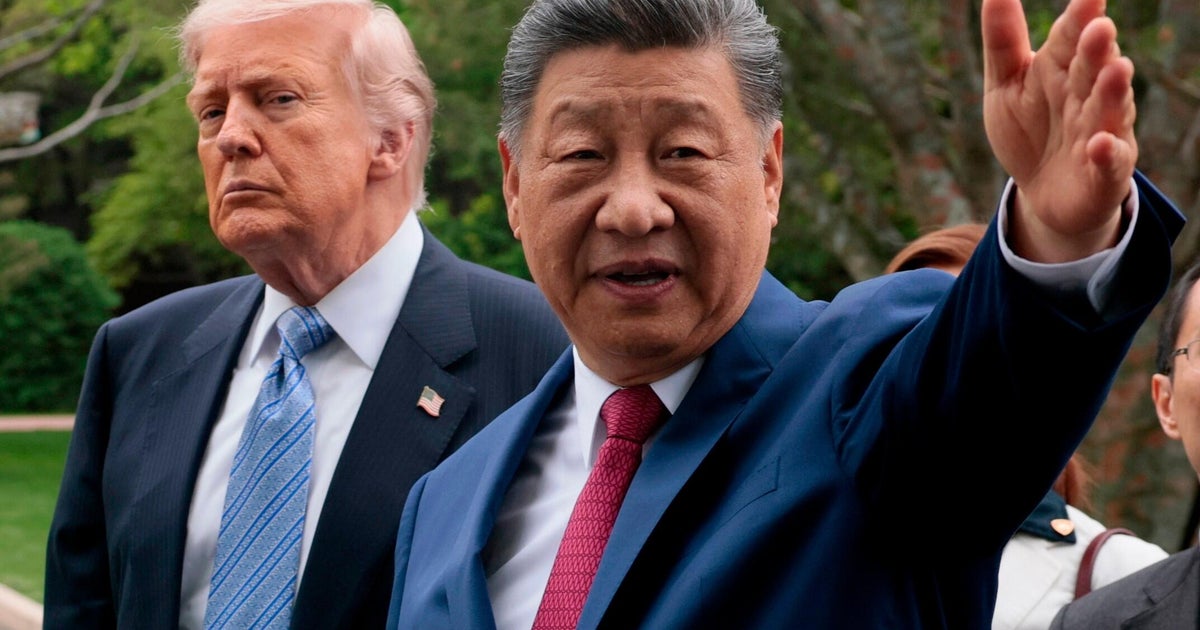
Donald Trump will meet with the Chinese president Xi Jinping later today, ahead of a three-day visit that will undoubtedly see artificial intelligence (AI) high on the agenda.
António Guterres, the UN secretary general, has called on the two countries to establish a dialogue on AI similar to the communication between the US and the Soviet Union during the cold war.
“Governments with the greatest AI capabilities have the greatest responsibilities to humanity, to establish channels for dialogue, transparency, trust and cooperation,” Guterres said.
Tech executives including Jeff Bezos of Amazon, Sundar Pichai of Alphabet, Sam Altman of OpenAI, Tim Cook of Apple, Elon Musk of Tesla, Mark Zuckerberg of Meta and Jensen Huang of Nvidia will reportedly attend a state dinner at the White House on Thursday evening.
It comes as two leading progressive US lawmakers, senator Bernie Sanders and representative Greg Casar, were due to unveil legislation later today that would ban artificial superintelligence and create a federal agency to oversee advanced AI.
The bill, provided first to the Associated Press, would also pause advanced AI development until guidelines are implemented while creating the Department of Artificial Intelligence. Multiple employees at leading AI companies are endorsing the bill.
“It doesn’t take a genius to say, ‘slow it down,’” Sanders said in an interview with AP. “Do we really want to develop a super intelligence that when it becomes smarter than human beings could act independently of human control? I don’t think we do.”
Congress has so far done little to rein in the AI industry even as some of its most prominent leaders warn about potentially catastrophic risks.
Xi departed Beijing on Wednesday, state media said, heading to Joint Base Andrews, Maryland, where he will be met by Trump on the tarmac.
“President Xi Jinping left Beijing by special plane for a state visit to the United States” accompanied by his wife Peng Liyuan, his right-hand man Cai Qi, and foreign minister Wang Yi, among others, state broadcaster CCTV said.
In other developments:
-
Speaking at the UN general assembly, Donald Trump re-issued his threat to “annihilate” Iran and “drive them into Hell” if the regime didn’t capitulate and make a deal.” He also said he was “working closely with the leaders of Russia and Ukraine” to end the disastrous war, defended his administration’s actions in Latin America – including the midnight raid to arrest former Venezuelan president Nicólas Maduro, defended his drone strikes on boats in the Caribbean and the Pacific, accused Mexico of being effectively controlled by the cartels, and said it was “unacceptable” for the US to share a border with a nation under such conditions, pointed to regime change in Cuba and said he would reject any calls for a “globalist scheme” to control artificial intelligence.
-
Shortly after his UN address, Trump signed a Greenland deal, which Greenland’s prime minister Jens-Frederick Nielsen said “underlines the importance of the Nato alliance.” In tricky, carefully worded paragraphs, she said the agreement “recognises the US defining historical and ongoing contributions to the security and defence of Greenland,” but it also “respects the sovereignty and the territorial integrity of the Kingdom of Denmark, as well as Greenland’s right to self-determination.”
-
Trump told a CNN reporter at the UN general assembly on Tuesday that he was “surprised” the outlet was covering him, saying it ‘shouldn’t be here’ after he banned the network alongside Politico and MS Now from the White House on Friday.
-
At a joint press conference on Tuesday, vice-president JD Vance and Mehmet Oz, administrator of the Centers for Medicare and Medicaid Services, announced that the federal government was removing 760,000 enrollees from Affordable Care Act insurance marketplaces.
The Guardian wp:paragraph
هلدینگ کاسپین استانبول | خرید ملک در ترکیه | صرافی معتبر ایرانی در ترکیه | خرید و فروش طلا در ترکیه | مهاجرت به ترکیه | واردات و صادرات در ترکیه | نیازمندیهای ترکیه | اخبار ترکیه | اخبار جهانی | توریست ایران | خدمات توریستی در ایران | تورهای گردشگری ایران | هلدینگ اول | خدمات کاریابی و فریلنسری و شغل | مرجع اطلاعات ایران (همه چیز در ایران) | کیف پول و خدمات مالی و پرداخت یار | اخبار ایران | تابلو زنده قیمت ارز در ترکیه و استانبول | صرافی آنلاین ترکیه | قیمت طلا و نقره در ترکیه | سرمایه گذاری در ترکیه | جواهرات در ترکیه | نرخ لحظه ای ارزها در استانبول | قیمت دلار امروز در ترکیه | قیمت دلار استانبول امروز | قیمت لحظه ای دلار | اخبار روز ترکیه استانبول | اپلیکیشن ISTEX | اپلیکیشن قیمت لحظه ای دلار و یورو و لیر و ارزها در ترکیه
/wp:paragraph wp:paragraph /wp:paragraph
About the Author