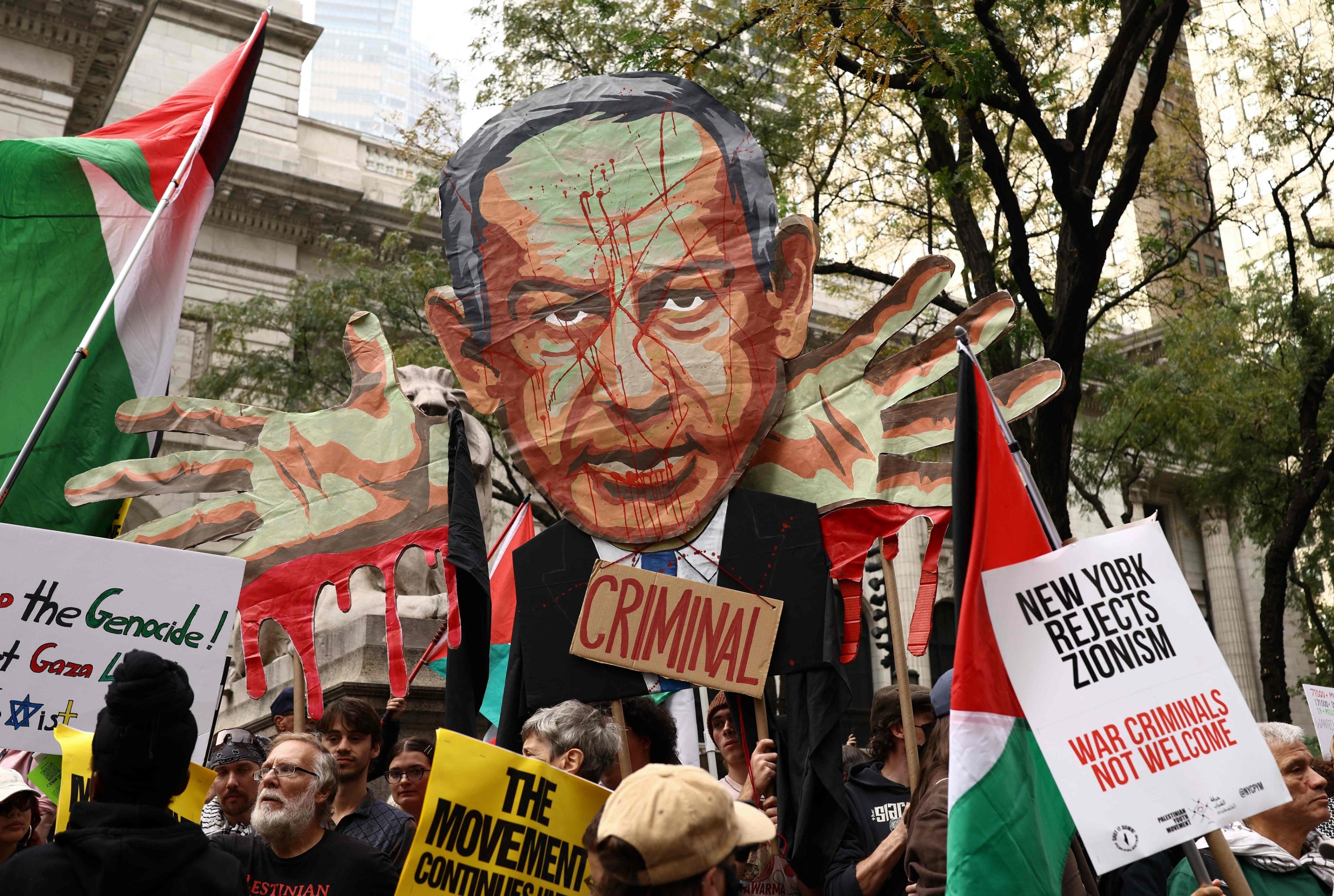
The brutal genocide in Gaza, now in its third year, has significantly altered the international landscape facing Israel. Many countries that, following the Oct. 7 attacks, strongly emphasized Israel’s so-called right to self-defense and extended broad political support to Tel Aviv are now openly criticizing Israel. Developments ranging from the recognition of the Palestinian state and arms restrictions to economic measures and international legal proceedings demonstrate that the pressure on Israel has spread across a much wider spectrum.
The growing backlash against the genocide in Gaza is no longer confined to just a few countries. Political, diplomatic, economic or legal measures are being taken against Israel across diverse regions of the world, from Türkiye to South Africa, Malaysia to Nicaragua, and Chile to European nations. While the methods employed and the severity of the policies vary, international pressure on Israel is spreading across an increasingly broad front.
One of the most visible indicators of this is the increase in the number of countries recognizing Palestine. Before Oct. 7, 138 states recognized Palestine; today, that figure is approaching 160. The nature of these new recognitions is just as significant as the numerical increase. The fact that Western nations with long-standing close ties to Israel, such as the United Kingdom, France, Canada, and Australia, are also recognizing Palestine signals a shift in traditional diplomatic balances.
This shift is also evident in military relations. Spain formalized the arms embargo it had been applying to Israel since October 2023 by enacting it into law in September 2025, thereby banning the export of defense materials as well as dual-use products and technologies to Israel. Canada ceased issuing new military export permits for Israel starting in 2024. Meanwhile, the U.K. suspended 29 export licenses in September 2024 covering military products at risk of being used in Gaza.
A similar trend is evident in economic relations as well. For instance, in August 2025, Slovenia banned the import of goods originating from illegal Israeli settlements in the occupied Palestinian territories. In September 2026, Canada, Denmark, Finland, France, Iceland, Ireland, Norway, Poland, Portugal, Spain, Sweden, and the UK announced, via a joint statement, their intention to implement or support restrictions on trade in goods with illegal settlements, or to consider measures to that effect.
The economic consequences of these developments are significant. According to World Trade Organization data, Israel’s goods exports fell from $63.3 billion in 2023 to $60.3 billion in 2024 and $59 billion in 2025. Meanwhile, the Bank of Israel reported that the cumulative loss in economic output from the start of the war through the end of 2025 reached 8.6% of the gross domestic product (GDP), approximately 177 billion shekels ($58.07 billion). The bank also estimated the total financial burden of the war for the 2023-2026 period at around 350 billion shekels. Additionally, the ratio of public debt to GDP rose from 60.5% at the beginning of 2023 to 68.5% by the end of 2025. These figures illustrate the scale of the costs the economy has faced amidst the war and mounting international pressure on Israel.
Legal pressure is mounting
Another dimension of the pressure facing Israel involves international judicial proceedings. The case brought by the Republic of South Africa against Israel under the Genocide Convention is currently before the International Court of Justice (ICJ). The Court has not yet issued a final ruling on the merits regarding whether Israel has committed genocide in Gaza. Nevertheless, the provisional measures it has ordered keep Israel’s actions in Gaza on the agenda of international justice in terms of state responsibility.
On Nov. 21, 2024, the International Criminal Court issued arrest warrants for Prime Minister Benjamin Netanyahu and the then-Defense Minister Yoav Gallant regarding allegations of war crimes and crimes against humanity. Thus, while Israel faces a case at the ICJ, the country’s top officials have also become subjects of international criminal justice proceedings.
Alongside legal pressure, the language employed by Western governments is also shifting. For instance, earlier this month in the House of Commons, U.K. Foreign Secretary Ed Miliband described the events unfolding in Gaza as a stain on the conscience of both the world and the U.K. Declaring that the British government regards Israel’s ongoing occupation of Palestinian territories as unlawful, Miliband sharply criticized settler violence in the West Bank and the forced displacement of Palestinians. He further stated the British government’s view that “ethnic cleansing” of Palestinians by settlers is taking place in certain parts of the West Bank. What is particularly noteworthy here is that these remarks were made by the foreign secretary of the U.K., one of Israel’s traditional allies.
This shift in politics also rests on a strong societal foundation. According to a study published by the Pew Research Center in June 2026, conducted among 44,657 people across 36 countries, the proportion of those holding negative views of Israel stands at 78% in Sweden and Spain, 76% in the Netherlands, 75% in Italy, 73% in Germany, and 69% in the U.K. Naturally, it is impossible to view the changes in Western governments’ policies toward Israel as entirely independent of this transformation in public opinion.
Meanwhile, for Israel, opening new avenues for normalization with the Middle Eastern states became far more difficult. Indeed, numerous regional countries, including the United Arab Emirates, Qatar, Egypt, Saudi Arabia and Jordan, continue to emphasize the establishment of a Palestinian state as a fundamental prerequisite for a just and comprehensive peace.
In short, each of the developments over the past three years demonstrates that Israel is becoming isolated on the international stage. This isolation will only deepen as the bloody attacks in Gaza and the occupations in the West Bank continue.
The views and opinions expressed in this article are solely those of the author. They do not necessarily reflect the editorial stance, values or position of Daily Sabah. The newspaper provides space for diverse perspectives as part of its commitment to open and informed public discussion.
DAILYSABAH
هلدینگ کاسپین استانبول | خرید ملک در ترکیه | صرافی معتبر ایرانی در ترکیه | خرید و فروش طلا در ترکیه | مهاجرت به ترکیه | واردات و صادرات در ترکیه | نیازمندیهای ترکیه | اخبار ترکیه | اخبار جهانی | توریست ایران | خدمات توریستی در ایران | تورهای گردشگری ایران | هلدینگ اول | خدمات کاریابی و فریلنسری و شغل | مرجع اطلاعات ایران (همه چیز در ایران) | کیف پول و خدمات مالی و پرداخت یار | اخبار ایران | تابلو زنده قیمت ارز در ترکیه و استانبول | صرافی آنلاین ترکیه | قیمت طلا و نقره در ترکیه | سرمایه گذاری در ترکیه | جواهرات در ترکیه | نرخ لحظه ای ارزها در استانبول | قیمت دلار امروز در ترکیه | قیمت دلار استانبول امروز | قیمت لحظه ای دلار | اخبار روز ترکیه استانبول | اپلیکیشن ISTEX | اپلیکیشن قیمت لحظه ای دلار و یورو و لیر و ارزها در ترکیه
About the Author