Home – CBSNews.com
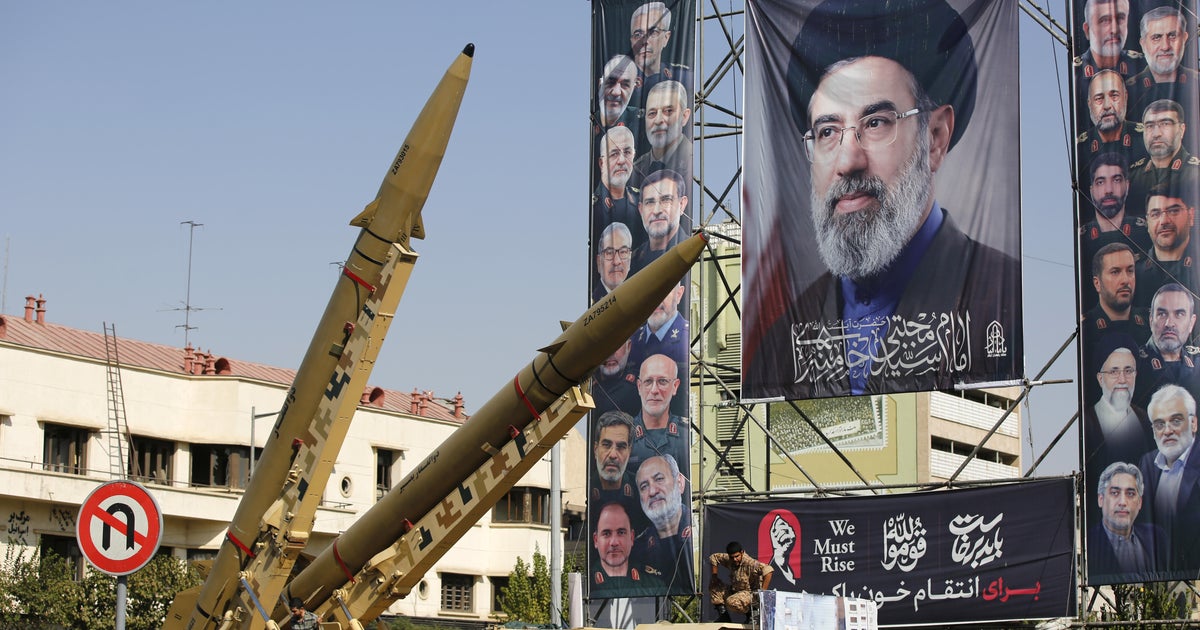
Iran’s Islamic Revolutionary Guard Corps (IRGC) has welcomed the departure of U.S. forces from Iraq, calling it a “historic victory” and a result of the Iraqi people’s resistance and determination to preserve their independence.
The IRGC “congratulates the proud people of Iraq, the united Islamic Resistance Front and the revolutionary fighters of the Islamic world on this historic victory,” the IRGC said in a statement.
The U.S. Department of Defense announced the end of its two-decade deployment in Iraq on Wednesday, declaring “the successful conclusion” of its 12-year Operation Inherent Resolve mission against the ISIS terror group in the country.
The withdrawal was agreed to by U.S. and Iraqi authorities in 2024, and both governments voiced confidence Wednesday in the Iraqi security forces’ ability to maintain security and control over extremist groups on their own going forward.
The IRGC, however, framed it as the result of Iraqi resistance and accused Washington of causing insecurity, terrorism and instability across the region during two decades of military intervention. It said the Iraq withdrawal should be followed by an end to all U.S. and Israeli military involvement in the region.
“America must leave the region and leave the management of security to the peoples themselves,” the IRGC said.
The U.S. says Iran is desperate and continued to show it with what Iran’s military called a “letter to the American people.“
A spokesperson for Iran’s powerful Revolutionary Guard Corps, Gen. Hossein Mohebbi, read from the letter at a news conference Tuesday, saying the only way for the war with Iran to end is for Washington to admit defeat and for U.S. forces to leave the region.
But a State Department spokesperson said in a statement to CBS News Wednesday night that “the IRGC’s desperate effort to lie to the American people does not change the hard facts about the Iranian regime’s record of maliciousness both in Iran and abroad.
“Iran, the leading state sponsor of terrorism, continues to choose terror over prosperity, and ordinary Iranians pay the price.”
The spokesperson said that, “Despite these latest lies coming from the regime, the facts remain: U.S. operations have significantly destroyed the regime’s defense industrial base, navy, and air force and shattered Iran’s missiles, missile launchers, everyday vessels from around the world transit through the Strait of Hormuz under the guard of American forces, bringing energy to the world despite Iran’s reckless disregard for freedom of navigation and international commerce.
“This false letter, the Iranian regime’s latest act of desperation, is nothing more than a smoke screen, and the world sees it for what it is.”
Olivia Gazis contributed to this report.
Secretary of State Marco Rubio told an Iranian delegation to depart the U.S. a day earlier than planned, a U.S. official and diplomatic source told CBS News.
The U.S. order to leave was given Monday following technical talks between U.S. and Iranian officials, the sources said.
The delegation, led by Iranian Foreign Minister Abbas Araghchi, came to New York last week for the United Nations General Assembly and held indirect talks with the U.S. to reopen the Strait of Hormuz.
Araghchi had previously told CBS News he was already scheduled to depart on Tuesday.
The U.S. has not expelled all Iranian diplomats who are assigned to the U.N. and are based on U.S. soil.
Asked by reporters Wednesday how he plans to deal with Iranian officials he has repeatedly described as “crazy,” President Trump offered: “Maybe you blow them up.”
“We have to make that decision: We blow them up or make a deal,” the president said. “But the time is coming. It’s going to end very soon, one way or another.”
Mr. Trump’s plans for Iran remain unclear. He has said repeatedly in recent weeks that he is weighing whether to escalate the war or cut a deal with Iran.
A music festival in Saudi Arabia announced in an email to ticket holders Wednesday it was being postponed, becoming the latest entertainment event to be nixed amid the ongoing Middle East war.
“We know we said we’d see you at Soundstorm this year, so this isn’t the update we wanted to share. With regret, Soundstorm ’26 will be postponed,” read the email from the organizers of MDLBEAST Soundstorm festival.
The announcement to cancel the December festival comes a month after an upcoming UAE concert by singer Christina Aguilera and a separate Abu Dhabi festival featuring Shakira were both canceled.
Bruno Mars, DJ Khaled and Cardi B are among the most popular international artists to have performed during past iterations of the Soundstorm festival in the Saudi capital. The lineup for this year’s festival had not yet been announced.
Bahrain, a regular target of attacks by Iran in the wake of the Israeli- and U.S.-launched war, has joined the U.S.-led multinational drone task force, U.S. Central Command said Wednesday.
“We’re excited to welcome Bahrain to Task Force Falcon Strike after the kingdom affirmed its commitment to join CENTCOM in building the world’s first multinational attack drone unit,” Central Command Cmdr. Adam Cooper said in a statement. “Bahrain is a steadfast partner in strengthening regional security and stability.”
Task Force Falcon Strike was launched in August to advance one-way drone development in the Middle East. At the time of the launch, the U.S. said it and other regional partners would “employ one-way attack drones consisting of unmanned systems from above, on, and below the sea.”
It is unclear whether other countries have joined the unit prior to Bahrain.
Bahrain has come under fire from Iran regularly since the war began. On the first day of the war, Iran targeted the headquarters for the U.S. Navy’s Fifth Fleet. While no one was killed, the base suffered severe damage.
Iran also targeted Bahrain’s Sheikh Isa Air Base, which houses U.S. troops, and several civilian buildings throughout March and April. The attacks have gradually declined in recent months.
Egyptian President Abdel-Fattah el-Sissi says the Suez Canal has lost a cumulative $20 billion in revenue since the Hamas-led attack on Israel unleashed the war in Gaza on Oct. 7, 2023, and because of maritime navigation disruptions from the Middle East conflict.
During a televised meeting on Tuesday with Cabinet members, top military leaders and local governors, el-Sissi blamed the government’s tight budget and little spending on education and health on the volatile geopolitical situation that led to increases in food and energy prices.
“Does that affect us? Of course it does affect us severely,” el-Sissi said.
Traffic was significantly disrupted after Yemen’s Iran-backed Houthi rebels began targeting vessels heading to Israel through the Suez Canal after the start of the war in Gaza. Since then, traffic has remained between 60% and 70% below prewar levels, according to a July report by the Oxford Economics research firm.
Alternate export routes and a U.S.-protected route through the Strait of Hormuz have helped restore oil and fuel exports from the Gulf to near prewar levels, according to figures from data firm Kpler.
Exports through the Red Sea and the Suez Canal — along with a pipeline to Fujairah on the Gulf of Oman and a U.S.-protected route that guides tankers at night — have been a key workaround after the threat of Iranian attacks disrupted shipping through the Strait of Hormuz, Kpler said during a Tuesday podcast.
About 21.8 million barrels per day of crude and fuel products made from crude are being shipped weekly, on average, compared to the prewar baseline of 23.3 million barrels per day, Kpler said.
“We are getting closer to the norm, we are not at pre-conflict levels, but we are getting close to there,” said Matt Smith, Kpler’s director of commodity research.
Still, the workarounds are time consuming and expensive.
The British government believes Iran “played a part” in the incident over the weekend at the RAF Fairford air base in England, which has been used by U.S. warplanes carrying out strikes on Iran, U.K. Prime Minister Andy Burnham said Wednesday.
Burnham’s remarks to the BBC were the first confirmation by the British government of its assessment of the incident, which saw five men — all British nationals in their mid-20s — arrested near RAF Fairford early Sunday morning on suspicion of preparing a terrorist act. They were all released on bail the following day, however, even though the police had the right to hold them for up to 14 days under U.K. counterterrorism laws.
Their quick release drew criticism from President Trump and U.S. Secretary of State Marco Rubio. But it also prompted questions in the U.K. as to whether the authorities had overreacted.
Top Lebanese officials, including President Nawaf Salam and Foreign Minister Youssef Raggi, met with the Senate Foreign Relations Committee on Wednesday to discuss reclaiming land from the Iran-backed Hezbollah militia.
“The discussion focused on the government’s efforts to restore Lebanon’s sovereignty and extend state authority across its entire territory, as well as progress on reforms and economic recovery,” Raggi said in a statement.
Sens. Jim Risch, Jeanne Shaheen, Chris Coons and Tim Kaine met with the Lebanese leaders.
Hezbollah has grown in power and political influence in Lebanon since the 1990s and consistently launched operations against Israel. The group launched strikes into Israel in March in the wake of Israeli and U.S. attacks on Iran.
As part of a trilateral agreement signed between the U.S., Israel and Lebanon in late June, official Lebanese forces were supposed to progressively take over security from Israel, which invaded southern Lebanon in response to the strikes from Hezbollah. Israel, however, has resisted, saying it needs Hezbollah to completely disarm beforehand.
Iraqi armed factions backed by Tehran said Wednesday they were “not bound by any timeline or agreement” to surrender their weapons to the state, as the government seeks to disarm them under mounting U.S. pressure.
A military spokesman for Kataeb Hezbollah, Jaafar al-Husseini, said at an event to celebrate the withdrawal of U.S.-led coalition forces that the factions had been in talks on “regulating” their weapons but “have not yet received a response from the Iraqi government.”
“Based on this, the Islamic Resistance declares that it is not bound by any timetable or agreement that any governmental or political party has spoken of or may speak of,” al-Husseini said.
The U.S. military announced on Wednesday it had officially pulled out of Iraq after 12 years fighting the Islamic State. The U.S. and Iraqi government had agreed to a pullout by Sept. 30 and began the process over recent months.
The militias in Iraq have launched attacks on other Gulf countries in the wake of the U.S. and Israeli launching war on Iran in February. The U.S. and Saudi Arabia launched joint strikes on those militias in late July.
AFP/CBS
A British maritime agency said Wednesday that unknown projectiles struck three ships in the Strait of Hormuz the previous day. A crude oil tanker and two other vessels had each “been struck by an unknown projectile,” the U.K. navy’s Maritime Trade Operations center (UKMTO) said.
It had earlier described one of the vessels as an LNG tanker, before later describing it as a tanker.
The Strait of Hormuz is at the center of the war between Iran and the United States.
Around a fifth of the world’s oil and liquefied natural gas passed through the strategic shipping lane before the war. But since the conflict broke out, Tehran has been attempting to block the passage of commercial ships, firing on vessels it accuses of unauthorized crossings.
Washington has responded with a counterblockade of Iranian ports in an effort to prevent Tehran from exporting its oil.
An Iranian woman sentenced to death over protests earlier this year has begged the international community to save her life and those of others facing the death penalty, according to an audio message she sent from prison that was shared Wednesday by rights groups.
The plea by Mahboubeh Shahbani, 33, from a prison in the eastern Iranian city of Mashhad, came after authorities executed two more men on charges linked to the major anti-regime protests in January.
Rights groups accuse Iran of ramping up executions of high-profile prisoners in a bid to intimidate the population and ensure there is no repeat of the protests, which preceded the U.S. and Israel launching their joint war against the Islamic republic on Feb. 28.
Iran more than doubled its use of executions in 2025, Amnesty International said earlier this year.
“The sentence handed down to me shows that many others are in danger of execution,” Shahbani said in a telephone call from the phone for prisoners in Mashhad’s Vakilabad prison.
“I am not worried about myself. I am worried for the others whose sentences have been upheld,” she said in the call, an audio recording of which was shared by Norway-based Iran Human Rights (IHR) and the U.S.-based Center for Human Rights in Iran (CHRI).
It was not immediately possible to verify the authenticity of the message.
“I call on everyone – the public, the U.N., human rights organizations. Not just for me but for all the others whose sentences have been upheld and who have spent months sleeping in fear and stress at night,” she said. “I call on them to do something.”
According to the U.S.-based Human Rights Activists News Agency (HRANA), Shahbani was convicted of carrying out actions “to strengthen Israel, the U.S., and individuals affiliated with opposition groups” in the protests.
IHR said she had merely used her motorcycle to transport injured protesters.
CBS/AFP
Iranian President Masoud Pezeshkian said lasting security in the Persian Gulf and its waterways depends primarily on cooperation among, and is the responsibility of regional countries, in a message marking World Maritime Day.
“The Strait of Hormuz, as one of the most important maritime passages, has a special position in the security and economy of the region and the world,” Pezeshkian said, according to Iranian state news agency IRNA.
“Our approach to this strategic waterway is responsible and based on maintaining the security, stability and interests of the countries of the region,” he said. “We believe that lasting security in the Persian Gulf and its waterways depends, more than anything else, on the cooperation, responsibility and role of the countries of the region.”
Iran has repeatedly targeted U.S. regional allies around the Gulf since the war began in late February, as well as commercial vessels it accuses of attempting to navigate the Strait of Hormuz without its permission.
Iran’s semi-official Fars news agency claimed Wednesday that Iranian security agencies had received intelligence suggesting Israeli plans to orchestrate a false-flag “mass-casualty incident” to blame on the Islamic Republic.
Fars, which is linked to Iran’s Islamic Revolutionary Guard Corps, said intelligence obtained by an Iranian security agency pointed to a scenario it said had been proposed by the Israeli intelligence agency Mossad to the prime minister’s office involving an operation against aircraft or airports in the region.
The report claimed the plan was to “create a mass-casualty incident and provide the grounds for attributing responsibility for it to Iran.”
Fars reported separately on the FlyDubai incident Wednesday that saw a flight from Dubai to Tel Aviv diverted for an emergency landing in Saudi Arabia after a violent cockpit altercation, which some reports suggested could have started as an attempted hijacking by one crewmember. The Iranian news agency did not link the FlyDubai incident to the purported intelligence about a possible Israeli false-flag operation.
The U.S. military announced on Wednesday that it has completed the withdrawal of all American troops from Iraq, ending a 12-year mission to fight the Islamic State group.
The withdrawal, agreed on two years ago, comes against the backdrop of the ongoing war between the United States and Iran that has also sometimes spilled over into Iraq, with Iran-backed militias firing on U.S. troops and the U.S. striking the groups’ strongholds.
The withdrawal was celebrated by Iran-backed groups but raised concerns among some other Iraqis, particularly in the Kurdish region.
“The expulsion of the occupation forces, defeated, from the land of Iraq is the beginning of full sovereignty,” Abu Mujahid al-Assaf, a security official with the powerful Kataib Hezbollah militia, said in a statement.
U.S. troops pulled out of bases in most areas of Iraq last year but maintained a small presence of hundreds of troops in the semiautonomous northern Kurdish region. Bases there have regularly come under attack since the U.S. and Israel launched their war against Iran on Feb. 28. Iran-backed Iraqi militias also have coordinated with Yemen’s Houthi rebels to attack Saudi Arabia.
CBS/AP
Iranian authorities said on Wednesday they received the formal U.S. response to their proposal to end the Middle East war, state media reported, days after President Trump publicly rejected the plan.
“At today’s cabinet meeting, the American side’s proposal was presented to President Masoud Pezeshkian by Foreign Minister Abbas Araghchi,” government spokeswoman Fatemeh Mohajerani told the official IRNA news agency.
Pakistan will use “whatever means are available” to defend Saudi Arabia against Iran-backed Houthi rebels, the country’s defense minister said Tuesday, offering one of Islamabad’s clearest indications yet that it could become directly involved in the widening regional conflict.
Defense Minister Khawaja Muhammad Asif declined to say whether Pakistani forces had already participated in airstrikes. He said, however, that Pakistan’s military capabilities would be available to Saudi Arabia under a new mutual defense pact with Saudi Arabia and Turkey.
“I’m not going into detail, but obviously when I say that we are bound by this arrangement to defend Saudi Arabia, that means whatever means are available at our disposal, they’ll be available to Saudi Arabia also. I think that’s a categoric statement,” Asif told reporters during a visit to Rome when asked whether Pakistan had been involved in airstrikes against Iranian operators in Yemen.
Iran’s Foreign Minister Abbas Araghchi received feedback from the U.S. on the proposed plan for a seven-day ceasefire, which would be aimed at building trust between the two sides, according to an official quoted by the Reuters news agency.
Iran proposed a seven-day plan for a ceasefire and the phased reopening of the Strait of Hormuz last week, contingent on the U.S. meeting conditions laid out in the mid-June memorandum of understanding that fell apart after several weeks. Mr. Trump has publicly rejected the Iranian proposal.
According to the Reuters report, the disagreement between the two sides is currently over the sequencing of the plan, and Araghchi will discuss it in Tehran on Wednesday.
President Trump is stuck when it comes to deciding between further war and negotiations, according to Maj. Gen. Mohsen Rezaei, the head of Iran’s influential Supreme National Security Council.
“We stated our conditions, but Trump is incapable of decision-making,” Rezaei said Tuesday during a meeting with Azerbaijan’s deputy prime minister, Shahin Mustafayev. “Trump is trapped in a quagmire where he can neither negotiate nor fight.”
Multiple Iranian officials have said they are waiting for a response on the proposal made during last week’s U.N. General Assembly, however, Mr. Trump already dismissed the plan on Saturday.
“Our plan, which became known as the seven-point plan, was conveyed to the Americans through the Qatari intermediary,” Foreign Minister Abbas Araghchi told reporters in New York on Monday. “Despite the things that the American president and others said, I said that we are waiting for an official response from America through the intermediary.”
Rezaei singled out the strict sanctions on airlines that went into place last week, calling them an “air blockade,” as a sign of “desperation.”
The U.S. Treasury Department imposed sanctions Tuesday on 10 individuals and companies accused of helping Iran’s military logistics agency acquire weapons and electronics.
The targets include people based in Iran, Beijing, Hong Kong and Pakistan.
The sanctions are part of a Trump administration initiative called Operation Economic Outcast, aimed at pressuring Iran by isolating its government and economy.
“Treasury will not tolerate any support to the regime and will continue to identify, expose, and isolate Iran’s enablers,” Treasury Secretary Scott Bessent said in a statement.
Iran’s powerful Revolutionary Guard Corps said that the only way for the war in Iran to end is for Washington to admit defeat and leave.
IRGC spokesperson Gen. Hossein Mohebbi delivered the message at a news conference Tuesday in Tehran, reading from what he called a “letter to the American people.”
The message was apparently meant for the U.S. public just weeks ahead of the Nov. 3 midterm elections for the U.S. Senate and Congress – a vote in which Mr. Trump’s Republican Party faces fierce headwinds as it looks to maintain control of Congress.
Later, in remarks to The Associated Press, Mohebbi urged Americans to reconsider their leadership and take to the streets and protest the president’s policies to denounce what he called the U.S. government’s warmongering policies.
He accused the United States of using Iran’s nuclear program as a ruse to “plunder Iran’s wealth” and to turn the country “back into a colony.”
wp:paragraph
هلدینگ کاسپین استانبول | خرید ملک در ترکیه | صرافی معتبر ایرانی در ترکیه | خرید و فروش طلا در ترکیه | مهاجرت به ترکیه | واردات و صادرات در ترکیه | نیازمندیهای ترکیه | اخبار ترکیه | اخبار جهانی | توریست ایران | خدمات توریستی در ایران | تورهای گردشگری ایران | هلدینگ اول | خدمات کاریابی و فریلنسری و شغل | مرجع اطلاعات ایران (همه چیز در ایران) | کیف پول و خدمات مالی و پرداخت یار | اخبار ایران | تابلو زنده قیمت ارز در ترکیه و استانبول | صرافی آنلاین ترکیه | قیمت طلا و نقره در ترکیه | سرمایه گذاری در ترکیه | جواهرات در ترکیه | نرخ لحظه ای ارزها در استانبول | قیمت دلار امروز در ترکیه | قیمت دلار استانبول امروز | قیمت لحظه ای دلار | اخبار روز ترکیه استانبول | اپلیکیشن ISTEX | اپلیکیشن قیمت لحظه ای دلار و یورو و لیر و ارزها در ترکیه
/wp:paragraph wp:paragraph /wp:paragraph
About the Author