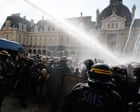
The organisers say some 100,000 people are taking part in the Paris demonstration, bringing up the national total to 450,000.
The French interior ministry’s figure is much lower: they say some 250,000 joined the protests, with 56,000 people reported in Paris.
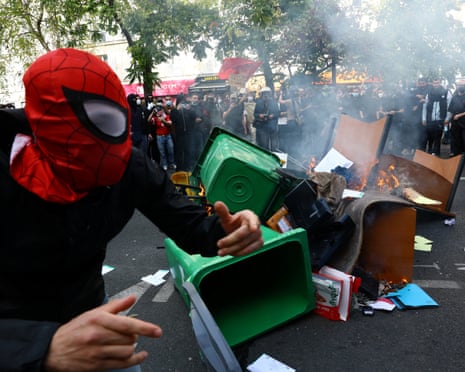
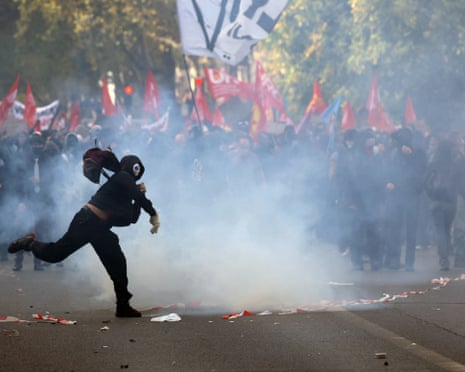
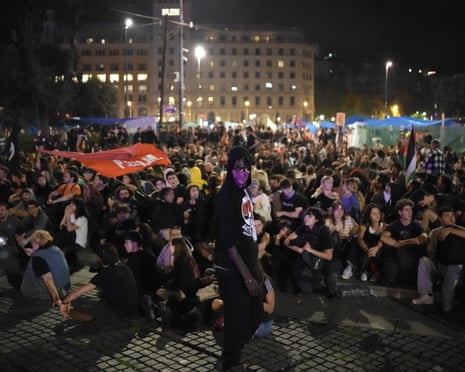
In the last half hour the protests in Paris turned violent in parts of it as an estimated group of 300 people repeatedly clashed with the police.
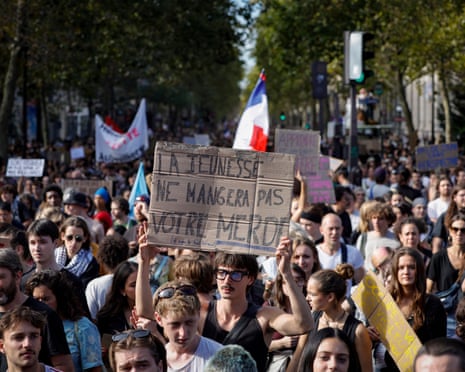
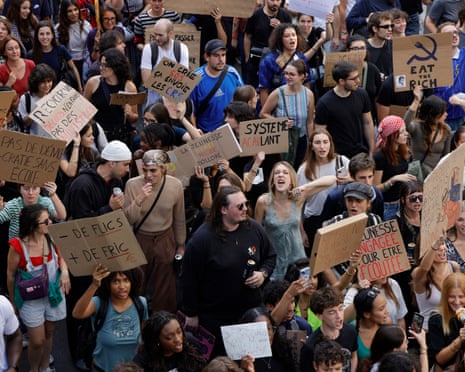
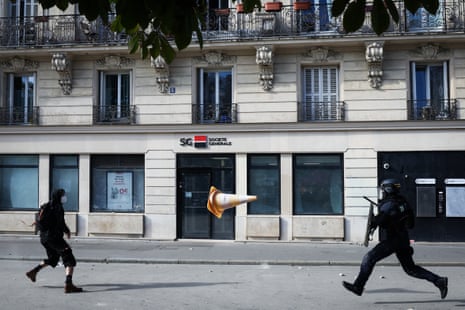
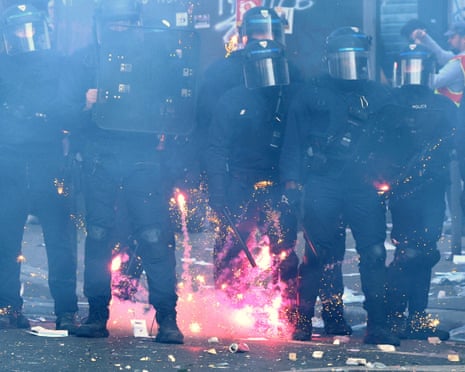
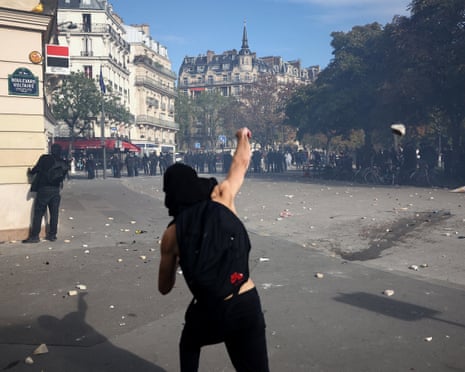
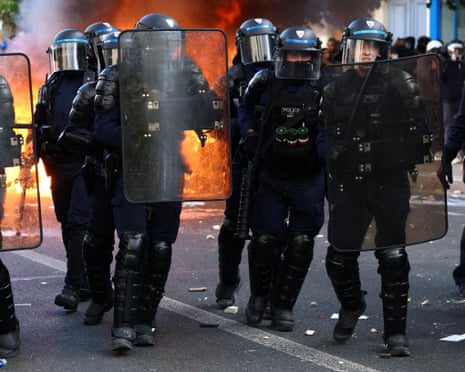
Live footage from Place de la Nation in Paris shows growing tensions between a group of protesters and the police at the end of today’s manifestation, with officers firing tear gas to control the crowds.
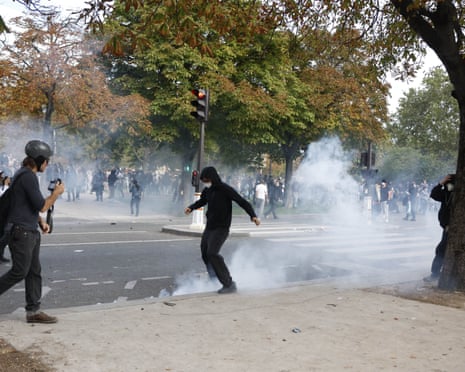
I will keep an eye on that.
As if tensions were not high enough, US president Donald Trump has decided to wade in with his trademark mastery of nuance and deep understanding of French society.
Writing on Truth Social, he blamed the high school protests on “out of control mass migration” and “Islam wanting to take over a once great country.”
(Well, that’s not true.)
Here is his post in full:
“What’s happening in France is nothing less than out of control mass migration. This isn’t about schools, this is about Islam wanting to take over a once great Country! President DJT”
Paris correspondent
School students say the education system is riven with inequality, that many buildings are in disrepair, class sizes are too big, and there are not enough teachers or funding.
The French prime minister has promised to address what he called “legitimate” complaints, including on class sizes, long hours, dilapidated buildings and teacher provisions.
So how bad are French high schools and what are the main problems?
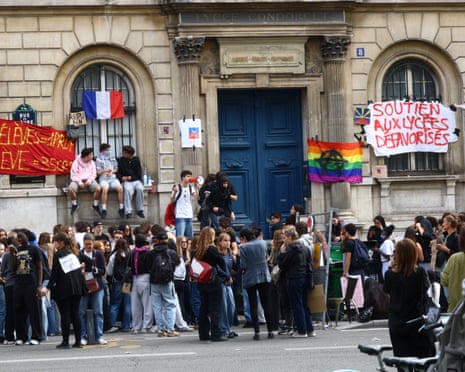
Is the French education system blighted by social inequality?
Yes. A child born and schooled in a deprived neighbourhood in France has less chance of escaping their socioeconomic background than in most other developed nations, according to the Organisation for Economic Co-operation and Development.
Éric Charbonnier, a French education analyst at the OECD, said there was a marked gap between the performance of the most advantaged and disadvantaged school students in France. “And often disadvantaged students are in disadvantaged schools,” he said. This has raised issues of the quality of learning being delivered and higher absenteeism of teachers.
Teachers’ unions and sociologists have said children in France are often segregated by their background, postcode and income, with a direct impact on education outcomes.
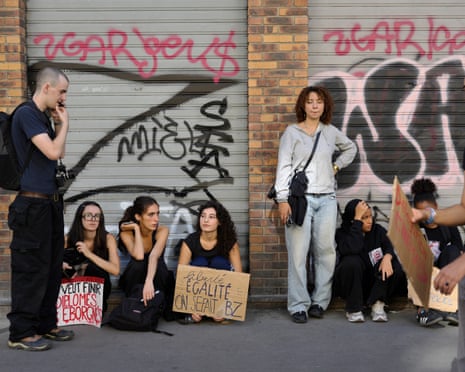
Are French high school buildings dilapidated and rat-infested with collapsing ceilings?
Some are, namely in certain cities and low-income suburbs. Videos filmed by students and teachers have shown leaks, scurrying rats, holes in walls and ceilings, broken toilets and not enough chairs or tables, meaning teachers have to carry them from classroom to classroom. Some children said they had to learn in class while leaks were pouring into buckets, or move desks to avoid getting wet. Many school classrooms experienced temperatures over 35C (95F) in the heatwaves of last May and June.
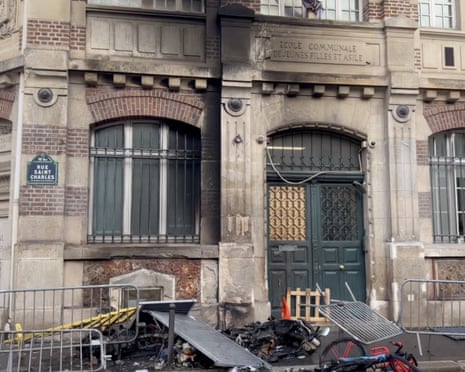
Estimates in recent years have pointed to thousands of French schools at all levels, both primary and secondary, in need of repair. These include many 1960s school buildings. French regions are responsible for upkeep of high school buildings, but have asked for higher budgets from the government. A senate report has advised that billions need to be spent in the coming years to renovate and repair schools, as well as to address the impact of the climate crisis.
Are class sizes bigger than other comparable countries?
Yes, and often in urban areas. Charbonnier said: “There are an average of 29 students in French language lessons, compared with 26 across the OECD. However, this average masks substantial differences – particularly between large cities and rural areas.”
Teachers and school students in Paris and its suburbs this week described many high school classes of 36 pupils or more, but in some rural areas it can be fewer. Figures from the French education ministry show class sizes have increased in recent years.
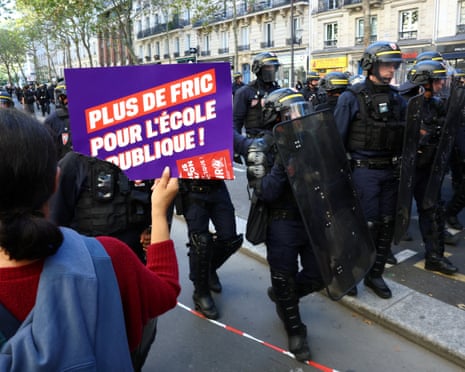
Does France spend less money on secondary education than its European neighbours?
No, France actually spends more than many other countries on high schools for children aged 15 and 18, but analysts question how the French government is spending its money and for what outcomes. For example, teachers’ middle and end-career salaries are comparatively low.
These and all other questions are answered here:
French president Emmanuel Macron is expected to hold political meetings with key several ministers, including education minister Édouard Geffray and interior minister Laurent Nuñez, this evening in response to today’s large-scale protests by high school students, BFMTV and Le Parisien reported.
The organisers say some 100,000 people are taking part in the Paris demonstration, bringing up the national total to 450,000.
The French interior ministry’s figure is much lower: they say some 250,000 joined the protests, with 56,000 people reported in Paris.
In the last half hour the protests in Paris turned violent in parts of it as an estimated group of 300 people repeatedly clashed with the police.
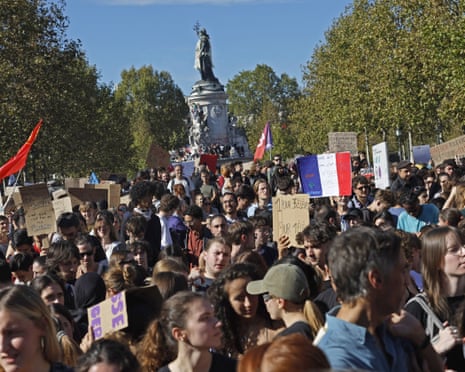
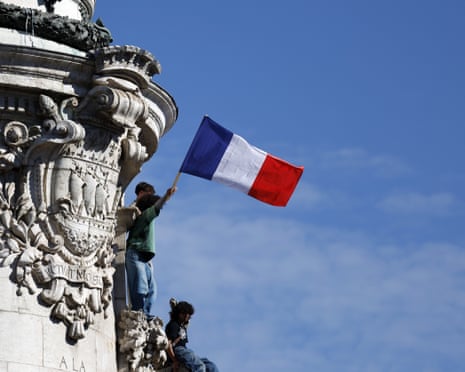
Thousands of people are taking part in the main demonstration in Paris.
“Gen Z has risen up and wants to be heard,” 19-year-old Lilia told AFP at a massive march in central Paris, adding she hoped the president would listen.
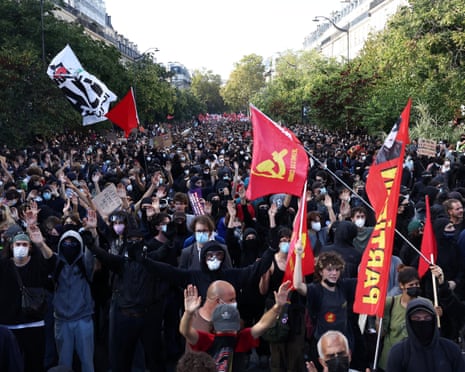
But there are also reports of some clashes with the police on the margins of the main march.
Let’s go back to France for the latest on the school protests.
Czech public broadcaster Česká televize said it would skip next year’s Eurovision song contest over spending cuts forced by a planned switch to financing from the state budget, AFP reported.

The nationalist government of billionaire prime minister Andrej Babis wants to switch from licence fees paid by viewers to direct government financing, to make Česká televize and Český rozhlas save money.
Critics, including the Reporters Without Borders (RSF) press watchdog, say the move jeopardises the independence of public media, and the media staged a token strike over the plan in June.
Sweden announced it was sending some 100 troops and its Patriot air defence system to defend a key logistics base serving Ukraine in Rzeszów, south-eastern Poland.
“Sweden is deploying the Patriot air defence system to Poland to strengthen the protection of Nato’s eastern flank. The Swedish forces will protect the logistics hub in south-eastern Poland that plays a key role in providing military and civilian support to Ukraine,” the Swedish armed forces said.
The operation will begin on 1 December and could last up to seven months, amid growing concerns about Russia’s plans for hybrid attacks that could affect the alliance’s eastern flank and deliveries to Ukraine.
Poland’s prime minister Donald Tusk repeatedly warned against potential Russian security incidents in the next months.
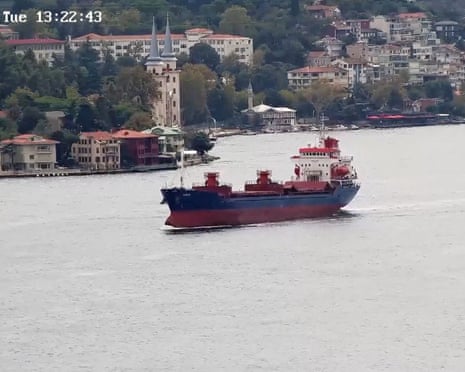
Meanwhile, European Commission president Ursula von der Leyen condemned the overnight drone attacks on civilian shipping near Bulgaria, saying they were unacceptable.
“Commercial ships – and innocent crews – are being targeted, with lives already lost at sea,” she said, adding that the situation in the Black Sea was “increasingly concerning.”
“While exact circumstances of these incidents are still being established, the developments are very concerning. Attacks on civilian shipping are unacceptable. We stand in full solidarity with our Member States on the Eastern flank.”
The crew of one of the two vessels is still missing.
The attack was not attributed to anyone, but Bulgaria’s caretaker PM Radev made a reference to Russia’s war on Ukraine in his comments earlier today (10:57).
Madrid correspondent
Two Spanish courts have cleared the way for the former Catalan president Carles Puigdemont to return to Spain nine years after he fled to Belgium to avoid arrest over his role in masterminding the failed and illegal push for independence.
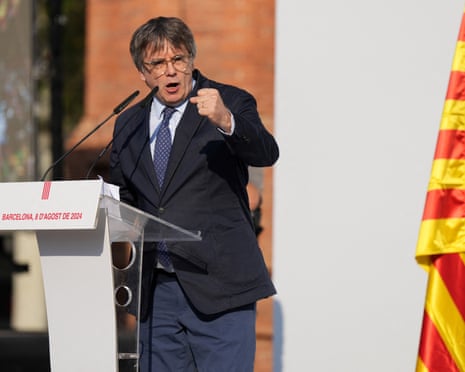
On Tuesday, Spain’s constitutional court ruled that the 2024 amnesty law introduced by the socialist-led coalition government should also cover the offence of misuse of public funds.
That means that Puigdemont – who, like other beneficiaries of the law, had been eligible for amnesty for other offences committed during the independence push – can no longer be tried for using public money to further the secessionist cause.
Shortly after the constitutional court announced its decision, Spain’s supreme court said it was lifting the arrest warrant it had issued for Puigdemont.
The two decisions mean that one of the most controversial figures in contemporary Spanish politics is now free to return from almost a decade of self-exile.
Puigdemont’s decision to stage a unilateral and illegal independence referendum in October 2017 – and to follow it with a unilateral independence declaration – prompted the government of conservative prime minister Mariano Rajoy to fire Puigdemont’s administration and assume direct control of the region.
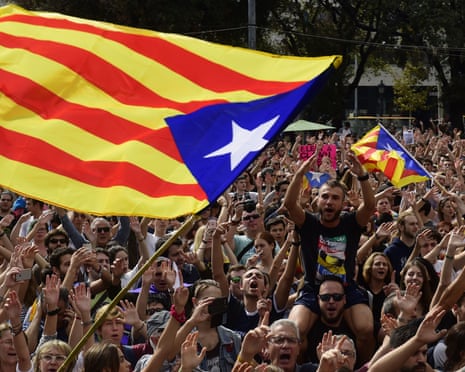
While nine of Puigdemont’s fellow independence leaders were jailed – and subsequently pardoned for their roles in the independence push – he chose to flee to avoid arrest and has lived in Belgium since 2017.
Spain’s socialist prime minister, Pedro Sánchez, introduced the controversial amnesty law in return for the support of Puigdemont’s rightwing Junts party and the Catalan Republican Left party, both of which helped him back into office after the inconclusive general election in July 2023.
But Junts has proved to be a demanding and unreliable ally. At the end of last week, it joined the conservative People’s party (PP) and the far-right Vox party in torpedoing two decrees that contained emergency measures that Sánchez’s government had proposed in response to growing protests over Spain’s housing crisis.
Sánchez responded to the rejection yesterday by announcing a snap general election that will be held on 29 November.
The prime minister announced on Tuesday that his cabinet had approved two new housing decrees “that maintain the spirit” of the two defeated decrees.
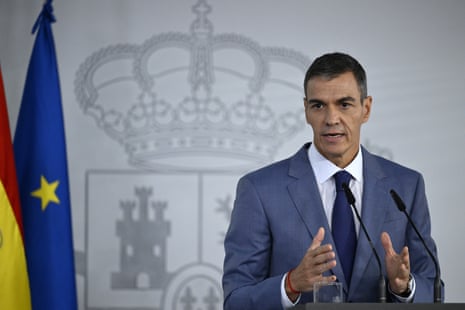
“These are measures that, if I may say so, are a matter of simple common sense; a matter of humanity,” he said. “They unite small property owners and tenants while standing up to vulture funds, precisely because they target only those who view housing merely as a commodity for speculation.”
Sánchez said those who had voted down last week’s decrees had done so despite studies showing that the measures enjoyed “cross-cutting support that transcends ideology”, adding that the public was in favour of regulating “a dysfunctional market”.
With the lower and upper houses of parliament dissolved following the calling of the snap election, the decrees will be voted on by the Permanent Council of congress, a special council that operates when congress is not in session.
The body’s 69 members are distributed proportionally among the various parliamentary groups to reflect the composition of the lower chamber. The council’s arithmetic should allow Sánchez to get at least one of the decrees passed.
Senior correspondent
Germany’s Friederich Merz has initiated an “historic U-turn” by siding with Emmanuel Macron and giving EU leaders effective permission to approve a “kill switch” to stop China further harming its economy, the country’s leading financial newspaper has said.
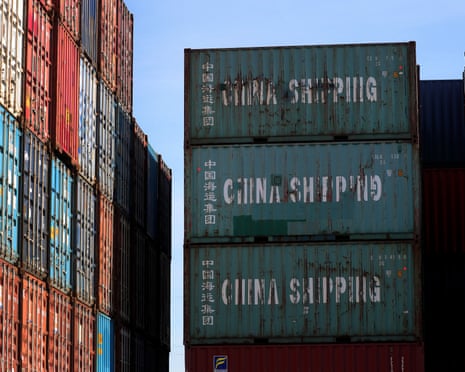
Columnist Martin Greive in Handelsblatt says the new position would have been unthinkable three years ago yet has got “surprisingly little recognition”.
“The German government initiated nothing less than an economic turning point on Monday. The coalition is realigning its China policy, putting an end to years of naiveté towards Beijing that cost German industry 15,000 industrial jobs every month,” he wrote on Tuesday.
“Merz has recognised in recent months that Germany is the epicenter of the China shock 2.0. That there might not be much left of German industry if Germany continues to stand by and watch as China gains enormous export advantages through trillions in subsidies, the unilateral siphoning off of know-how, and a, to put it mildly, questionable monetary policy,” he wrote.
Merz and Macron submitted proposals on Monday for new rapid-action measures to strike back against countries that harm it including powers to cut off access to the EU single market if China or others destabilise trade relations.
The letter comes 10 days before EU leaders meet in Brussels to discuss safeguards to curb the now £1bn a day surplus in trade with China, manifested in soaring sales of everything from hybrid car sales to chemicals and components in manufacturing made in China.
As we wait for more updates from France, let’s quickly take a look at other stories in Europe today.
Europe correspondent
in Paris
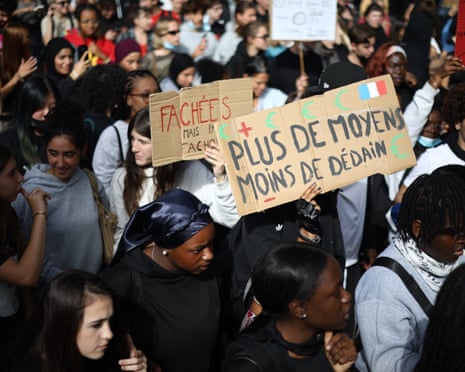
Students on the marches held aloft smoke flares and placards with slogans including “Under our text books, anger” – a reference to a celebrated slogan from the May 1968 student riots, “Under the paving stones, the beach” – and “Schools with no money = country with no future”.
Océanne, 18, was among the marchers in Marseille. “We just want to save our education and be educated,” she said, adding that she had suffered from absent teachers who were replaced either by “pointless substitutes” or not all.
Many teachers were also demonstrating. In the western city of Rennes, Romain Dubourg said he and “about 30 colleagues” had “talked about the police brutality that we’ve witnessed, and decided to be there for our students if they need us”.
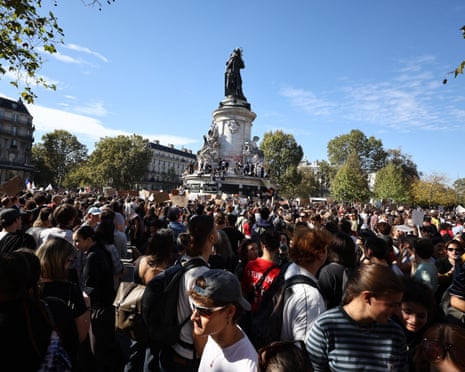
Meanwhile, French prime minister Sébastien Lecornu told the National Assembly that “we cannot allow any space for tolerance for violence,” as he condemned violent incidents on the margins of the main protest.
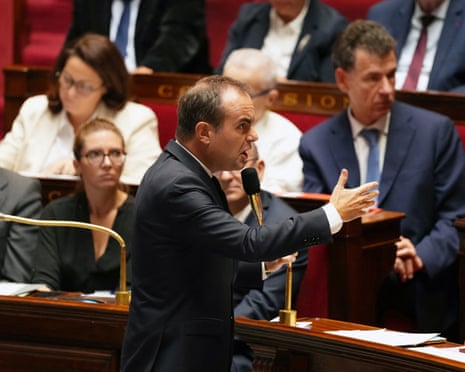
“Burning down a high school does not improve the state of high school buildings,” and “lynching a teacher does not help replace teachers,” he said quoted by Le Figaro.
In a heated exchange with lawmakers, he said 85 staff members and 215 students have been injured so far. 715 police officers were also hurt in clashes, he said.
Hard-left presidential candidate Jean-Luc Mélenchon, the leader of La France Insoumise (LFI), is taking part in the main Paris demonstration, warmly welcomed by the demonstrators who at one point erupt into a spontaneous rendition of “La Marseillaise,” the French national anthem.
“It’s an incredible thing you’re doing and you don’t realise it, it’s the most powerful youth movement we’ve seen in 50 years and nobody can say you’re wrong because you’re right,” he tells the crowds, quoted by BFMTV.
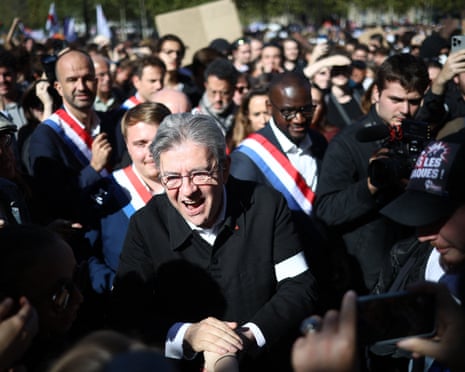
The government has previously criticised LFI politicians, including Mélenchon and Saint-Denis mayor Bally Bagayoko, for supporting the protests, framing it as merely a part of their strategy for next year’s presidential elections.
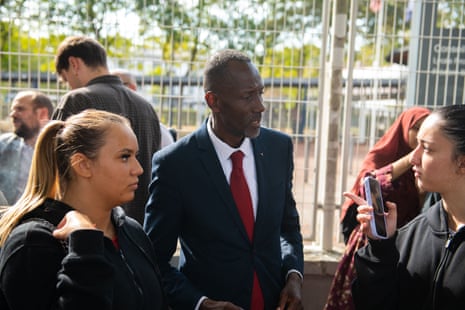
In Rennes, in western France, teacher Romain Dubourg said he and other teachers were present outside the Chateaubriand high school to show support.
“With about thirty colleagues, we talked about the police brutality we’ve witnessed and decided to be there for our students if they need us,” he told AFP.
The Guardian wp:paragraph
هلدینگ کاسپین استانبول | خرید ملک در ترکیه | صرافی معتبر ایرانی در ترکیه | خرید و فروش طلا در ترکیه | مهاجرت به ترکیه | واردات و صادرات در ترکیه | نیازمندیهای ترکیه | اخبار ترکیه | اخبار جهانی | توریست ایران | خدمات توریستی در ایران | تورهای گردشگری ایران | هلدینگ اول | خدمات کاریابی و فریلنسری و شغل | مرجع اطلاعات ایران (همه چیز در ایران) | کیف پول و خدمات مالی و پرداخت یار | اخبار ایران | تابلو زنده قیمت ارز در ترکیه و استانبول | صرافی آنلاین ترکیه | قیمت طلا و نقره در ترکیه | سرمایه گذاری در ترکیه | جواهرات در ترکیه | نرخ لحظه ای ارزها در استانبول | قیمت دلار امروز در ترکیه | قیمت دلار استانبول امروز | قیمت لحظه ای دلار | اخبار روز ترکیه استانبول | اپلیکیشن ISTEX | اپلیکیشن قیمت لحظه ای دلار و یورو و لیر و ارزها در ترکیه
/wp:paragraph wp:paragraph /wp:paragraph
About the Author