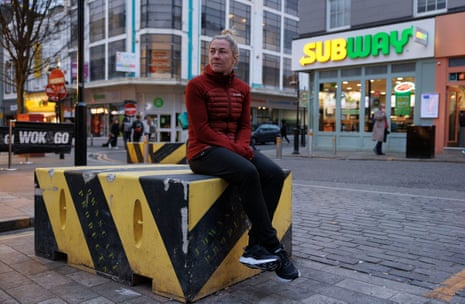
Tracy Gehlan, the president of Subway’s European business, said Subway had enjoyed “the best year we’ve had” with sales up 4.5% at established stores compared to the previous year.
She said growth had been underpinned by investment in a new app and broadening of the product range and Subway now wanted to ensure its fans, most of whom buy their lunch at Subway, did not have to go elsewhere to get breakfast or dinner.
Subway is also testing a new format at one store in London and two in the Netherlands, which will include at least four self-service kiosks, ready-made sandwiches and other ways to pay using a phone. This will go into the 80 new stores expected to open in the UK next year and some existing outlets.
It comes amid heavy competition in the UK on coffee and takeaway food with new competition from Subway’s major US rival Jersey Mike’s, which opens its first UK outlet next month.
Costa, the coffee shop, is expanding its food ranges and Greggs snatched McDonald’s position as the UK’s biggest takeaway breakfast provider in 2024.
Away from the markets, Subway is going into battle with Greggs and McDonald’s on breakfast and dinner in the UK as it equips all its franchise partners with coffee machines and aims to launch hot evening food by the end of the year.
The chain, which has about 2,000 outlets in the UK and is best known for its made-to order baguette-style rolls, is launching bacon sandwiches in a newly developed crunchy roll especially for the UK to be sold alongside its new own-label coffee, pastries such as a cinnamon swirl and a relaxing morning playlist laid down for all franchisees.
Subway, which has about 20,000 stores operated by franchisees in its home market of the US, began testing a new evening menu, including foot-long pizza, loaded fries and baked potato, in the Netherlands and is aiming to bring the concept to the UK before the end of 2026.
The new menu and coffee range – which replaces a hotch potch of different coffee options previously dependent on the franchisee, will go into all UK outlets between now and the end of November.
Tracy Gehlan, the president of Subway’s European business, said the breakfast range was “a first for Subway” globally but locally relevant versions were set to go into other markets. She said the chain was “testing different breakfast offerings across different markets” as “the great British bacon roll doesn’t resonate everywhere.”
Subway had decided to offer its own 100% Arabica bean roast as coffee is “one of the fastest growing drinks” and an improved breakfast range was “what our customers have been asking for”.
She said breakfast currently made up just 2% of Subway sales and it wanted to get that up to between 8% and 10% while about a fifth of sales were via delivery apps, mostly in the evening, which is lower than some rivals where they contribute up to 40% of sales. She added:
We want to offer our customers the opportunity to come to us in all day parts.
In UK government bond markets, long-dated gilt yields have topped 6% again, increasing pressure on chancellor John Healey before his first budget in about three weeks’ time.
The yield, or interest rate, on the 30-year government bond has risen 3 basis points to 6.0117%, after touching 6.036% on Wednesday, the highest since January 1998.
The 10-year gilt yield meanwhile has risen 5bps to 5.48%, approaching the 5.5% mark, returning to levels not seen since July 2007.
Andrew Wishart, senior UK economist at Berenberg Bank, reckons that gilt yields will drop back next year.
Most of the increase in gilt yields since the pandemic is justified by the return of interest rates to normal levels as policymakers no longer need to set them close to zero to generate sufficient demand. However, the extra increase in yields this year is predicated on four Bank of England interest rate hikes, which we do not think are necessary to prevent another bout of persistent high inflation.
If these lofty expectations are not met, the 10-year gilt yield will probably reverse much of its 2026 surge in 2027. We expect the 10-year yield to drop to 4.7% by end-2027.
Here’s our wrap of the moves in markets:
The sell-off in bond markets has put the euro under pressure, pushing to close to a 17-month low.
The European single currency dipped slightly to $1.1191 against the dollar.
Gilt yields have also risen. The 30-year yield edged nearly 2bps higher to 5.99% this morning, after jumping 13 basis points on Wednesday to peak at 6.036%, their highest level since January 1998.
This adds to pressure on the chancellor, John Healey, who is preparing to present his first budget on 28 October.
The equivalent 10-year US Treasury bond yield rose by a similar amount, to 5.33%.
European gas prices have risen to their highest levels in more than two weeks, as attacks on tankers around the strait of Hormuz crushed hopes of more liquefied natural gas (LNG) shipments.
The benchmark Dutch contract rose nearly 3% to €80.39 per megawatt hour, the first time it has been above €80 since 21 September.
The British front-month contract climbed 3.1% to 199.69p per therm, and briefly went above 200p per therm for the first time since 21 September.
Attacks on tankers attempting the passage through the strait hit their highest weekly total last week since the US and Israel started their war on Iran on 28 February. On Wednesday, a tanker was hit multiple times near Qatar, with reports of casualties.
Arne Lohman Rasmussen, chief analyst at Global Risk Management, told Reuters:
It was the first attack inside the Gulf for some time and marks a new escalation. For the LNG market, the attack’s proximity to Qatar is particularly concerning.
Cooler weather in northern Europe will also lead to more demand for gas.
Brent crude has now topped $104 a barrel, rising $4 on the day, reigniting inflation fears and sending government bond yields higher and stock markets lower.
The Atlantic reported that the White House has asked the Pentagon to draw up options on strikes against Iran before the US midterm elections. A “limited operation” could be followed up by more substantial action after the midterms, according to two unnamed sources.
Another wave of strikes against Iran would be a further threat to oil supplies from the Middle East, with the US-Israeli war against Tehran now in its eighth month.
US oil producers have started halting output and evacuating workers in the Gulf of Mexico, as tropical Storm Isaias approached and is expected to strengthen into the first hurricane of the belated Atlantic season. Shell and Chevron both said they were shutting down production.
Maersk, the Danish shipping giant, added to worries as it announced that it is increasing its emergency fuel surcharge on all of its export collections and import deliveries in response to the Middle East war. It will raise the surcharge to 20% as of next Monday, and said it will continue to review the surcharge regularly.
Eurozone bond yields have jumped again as higher oil prices sparked inflation fears.
This increases the cost of borrowing for governments, with France hardest hit in recent days, as it grapples with its budget deficit while the country faces widespread street protests from teachers and students over teacher shortages, big class sizes and mould- and rat-infested school buildings, and wider educational inequalities.
The yield, or interest rate, on France’s benchmark-10-year bond increased 6 basis points to 4.931% this morning, not far from the 24-year high of 4.994% hit last Friday. Yields move in opposite direction to bond prices.
The spread between French and German 10-year yields – which measures the risk premium attached to France – rose 4bps to 142bps, after hitting almost 160bps last week, the highest since 2012.
Germany’s 10-year bond yield, the benchmark for the eurozone, is up 2bps to 3.504%. German bonds are considered safer than other eurozone debt, and yields fell last week when those on French and Italian debt soared.
Yields are heading higher because investors worry about government debt positions, but also because of fears of higher inflation.
The yield on the 10-year US Treasury bond, considered the highest-quality debt globally because it is backed by the US government, is also up again, by 5bps to 5.331%.
The Brent crude oil price, the global benchmark, is close to $104 barrel this morning, up 3.6%, its highest level in a week.
European shares are sliding, with the pan-European Stoxx 600 index falling almost 1% to its lowest level in almost four months.
Minutes from the US Federal Reserve’s latest policy meeting showed officials were divided over the need for further interest rate hikes. Attention now turns to Europe, where several Bank of England policymakers including governor Andrew Bailey are due to speak, as well as the European Central Bank’s chief economist Philip Lane.
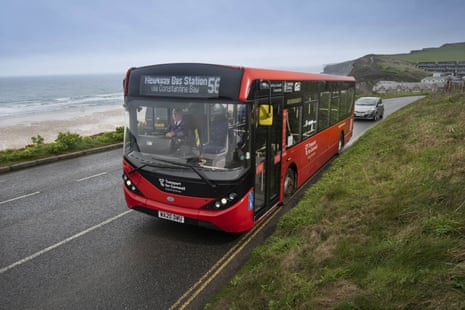
Deloitte has been fined £6.05m in the UK over its audit of the bus and rail operator Go-Ahead Group between 2016 and 2020.
The Financial Reporting Council (FRC), the UK’s accounting watchdog, said it reduced the penalty from £11m because of Deloitte’s “exceptional cooperation” and admissions. Deloitte has also paid the costs of the executive counsel’s investigation.
Go-Ahead runs bus and rail services in the UK and other countries.
The breaches related to three of its subsidiaries which operated passenger rail services: London & South Eastern Railway (LSER), London & Birmingham Railway (LM) and Go-Ahead Bayern in Germany (GABY). (The latter was sold to the Austrian national rail operator ÖBB two years ago.)
The first subsidiary, LSER, had received erroneous over-payments from the Department for Transport (DfT) under a rail franchise agreement before Deloitte became Go-Ahead’s auditor. Although obliged to repay the overpayments to the DfT, LSER retained the money.
The transport department decided not to renew LSER’s franchise when it expired, took action to recover the overpayments and imposed a financial penalty of £23.5m on LSER.
The FRC said:
Deloitte, as auditor, failed to enquire sufficiently into the actions of LSER and LM, failed to apply sufficient professional scepticism, and failed to evaluate the evidence indicating the existence of fraud risk factors. Deloitte failed to appreciate that the company was under a contractual obligation to act in good faith and therefore in relation to LSER to bring the overpayments to the DfT’s attention.
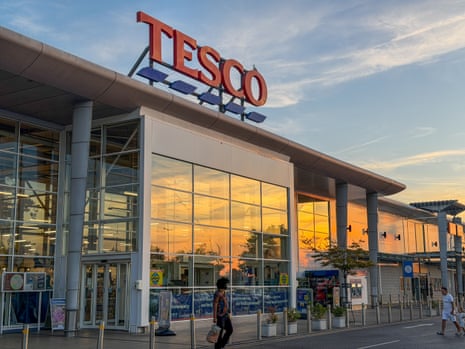
Tesco shares have gained 2.5% in early London trading, making it one of the top risers on the FTSE 100 index.
The wider index is down 0.7%, or 76 points, at 10,381.
The solid Tesco results show why its future looks less like a supermarket chain and more like a consumer data platform, says Nick Sherrard, managing director of the consultancy Label Sessions.
He explains:
Tesco has turned in another solid set of results, showing it can keep growing even when the wider economy feels uncertain. Sales, profits, and cash generation are all moving in the right direction, and record customer satisfaction suggests shoppers are responding to its mix of low prices, better quality, and easier ways to shop.
Bigger picture, the company’s growth has quietly become a technology story. Clubcard is one of the richest customer datasets in the UK and its retail media business is now using that to sell very effectively to suppliers. On the consumer side, more personalised offers, wider rewards, and tools like the new AI meal planner seem to be landing well with shoppers, helping Tesco deepen relationships and keep customers choosing it over rivals.
With solid online growth, new delivery partnerships, and continued investment in new products, Tesco is in a strong position. But its future looks less like a supermarket chain and more like a consumer data platform. A lot of other retailers will be looking to Tesco’s success as a case study in how technology can transform their own fortunes in a highly competitive UK grocery sector.
Tesco has raised its annual profit forecast and said consumer confidence has remained relatively resilient this year despite ongoing geopolitical tensions “creating uncertainty”.
The UK’s biggest grocer said sales rose just 2% to £33.8bn in the first six months of its financial year but underlying profit was up 6.5% to £1.8bn.
Ken Murphy, the chief executive of Tesco, said growth had been helped by strong online sales, which were up 8%, and a 9% jump in revenues from its premium own-label Finest range.
The company added:
While consumer confidence has remained relatively resilient in the first half of the year, ongoing geopolitical tensions continue to create uncertainty and we remain focused on helping customers get the best possible value from their weekly shop.
The company said it now expects to make underlying annual profits of between £3.15bn and £3.3bn. That represents an upgrade from its previous expectation of at least £3bn in profits but the bottom end of the range would still mark a fall from a year earlier.
Sales at established UK Tesco stores were up 1.5% as food sales motored, but the group’s Booker wholesale arm continued to have difficulties, with sales falling 2.6%.
The supermarket flagged that it was increasingly using artificial intelligence to help out across the business, including a meal planning assistant which was tested from April with 280,000 staff before being launched for customers in September.
Good morning, and welcome to our rolling coverage of business, the financial markets and the world economy.
Oil prices have risen towards $103 a barrel on worries about crude supplies from the Middle East amid growing attacks on shipping in the Gulf and the strait of Hormuz, while the US has reduced its output as a hurricane threatened offshore production.
Brent crude, the global benchmark, advanced $2.62 a barrel to $102.8 a barrel, up 2.6%.
Attacks on tankers sailing through the strait were at a weekly high last week since the US and Israel unleashed the Iran war on 28 February, Reuters reported, citing maritime security sources.
There were at least 12 attacks on oil, liquefied natural gas and liquefied petroleum gas tankers around the strait in the week to 5 October. At the same time, Gulf producers have stepped up oil exports.
Asian shares fell again amid the strain in government bond markets and reports that some big tech companies are seeking to raise billions of dollars in debt.
Japan’s Nikkei lost 1.4% while the South Korean Kospi tumbled 2.6%, even though Samsung Electronics, the world’s largest memory chipmaker, projected a nearly ninefold jump in third-quarter operating profit, to 107.4tn won (£61bn), compared with the same period last year.
The prospect of higher interest rates is weighing on Britain’s housing market, the Royal Institution of Chartered Surveyors said this morning.
Rics said its house price balance fell to -32 last month, from a five-month high of -28 in August, a bigger decline than expected, while the number of new properties coming onto the market rose for the first time since the middle of last year. The balance deducts those who say prices fell from surveyors and estate agents who reported rising prices.
Rics head of market research Tarrant Parsons said:
A renewed rise in interest rate expectations has created a fresh headwind for the housing market, with buyers becoming a little more cautious and sales activity losing some momentum.
Surveyors and estate agents expect property prices to fall further over the next three months but to be stable over the coming year. London had the most negative price balance while Scotland and Northern Ireland reported rising prices.
Financial markets expect the Bank of England to raise interest rates from 3.75% to 4% in November, followed by three more quarter-point rises next year. Unlike the US Federal Reserve, European Central Bank and Bank of Japan, the UK’s central bank has kept borrowing costs unchanged so far, despite a pick-up in inflation since the Iran war started.
New buyer enquiries weakened for the first time since March, though the level remains well above the low hit just after the outbreak of the US-Iran war.
The Rics survey also points to rising rents. Growing demand from tenants and fewer properties from landlords has pushed the net balance for rents above its average in the first half of the year, though it is lower than in August.
The report comes after the mortgage lender Lloyds reported unchanged house prices in September while Nationwide building society reported a small drop.
Andrew Bailey, the Bank of England governor, chief economist Huw Pill, the deputy governor for monetary policy, Clare Lombardelli, and Megan Greene, who also sits on the rate-setting committee, are giving speeches today.
The Agenda
-
9.30am BST: Bank of England credit conditions survey
-
10.15am BST: Megan Greene speech in Cape Town
-
1.15pm BST: Andrew Bailey speaks at the Istanbul Economic Forum
The Guardian wp:paragraph
هلدینگ کاسپین استانبول | خرید ملک در ترکیه | صرافی معتبر ایرانی در ترکیه | خرید و فروش طلا در ترکیه | مهاجرت به ترکیه | واردات و صادرات در ترکیه | نیازمندیهای ترکیه | اخبار ترکیه | اخبار جهانی | توریست ایران | خدمات توریستی در ایران | تورهای گردشگری ایران | هلدینگ اول | خدمات کاریابی و فریلنسری و شغل | مرجع اطلاعات ایران (همه چیز در ایران) | کیف پول و خدمات مالی و پرداخت یار | اخبار ایران | تابلو زنده قیمت ارز در ترکیه و استانبول | صرافی آنلاین ترکیه | قیمت طلا و نقره در ترکیه | سرمایه گذاری در ترکیه | جواهرات در ترکیه | نرخ لحظه ای ارزها در استانبول | قیمت دلار امروز در ترکیه | قیمت دلار استانبول امروز | قیمت لحظه ای دلار | اخبار روز ترکیه استانبول | اپلیکیشن ISTEX | اپلیکیشن قیمت لحظه ای دلار و یورو و لیر و ارزها در ترکیه
/wp:paragraph wp:paragraph /wp:paragraph
About the Author