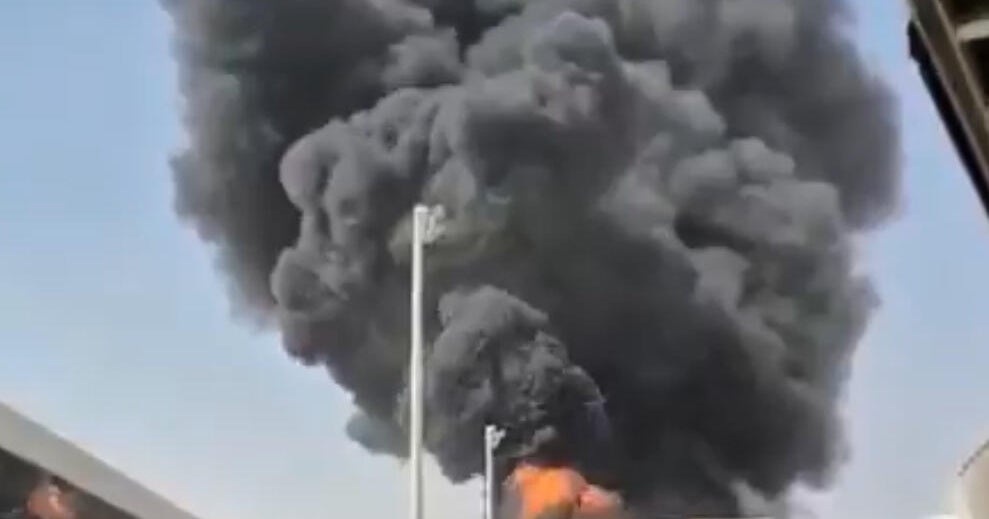
Home – CBSNews.com
The Saudi-led international coalition fighting Yemen’s Houthis said Saturday a “projectile” fell near Dammam’s international airport, hours after officials acknowledged an attack on Riyadh’s airport.
“A projectile landed near King Fahd International Airport in Dammam,” wrote the coalition spokesman on X.
The U.S. State Department on Saturday condemned what it called “Houthi terrorist attacks against civilian infrastructure and airports” in Saudi Arabia.
A State Department spokesperson told CBS News it is in close contact with its “Saudi partners.”
The Houthis have not claimed responsibility for Saturday’s strike on Riyadh’s King Khalid International Airport,in which there were multiple injuries and fatalities, according to the State Department. The airport’s operations have been shut down, according to Saudi Arabia’s aviation authority.
“The United States stands firmly with the Kingdom of Saudi Arabia against Houthi terrorism,” the spokesperson said.
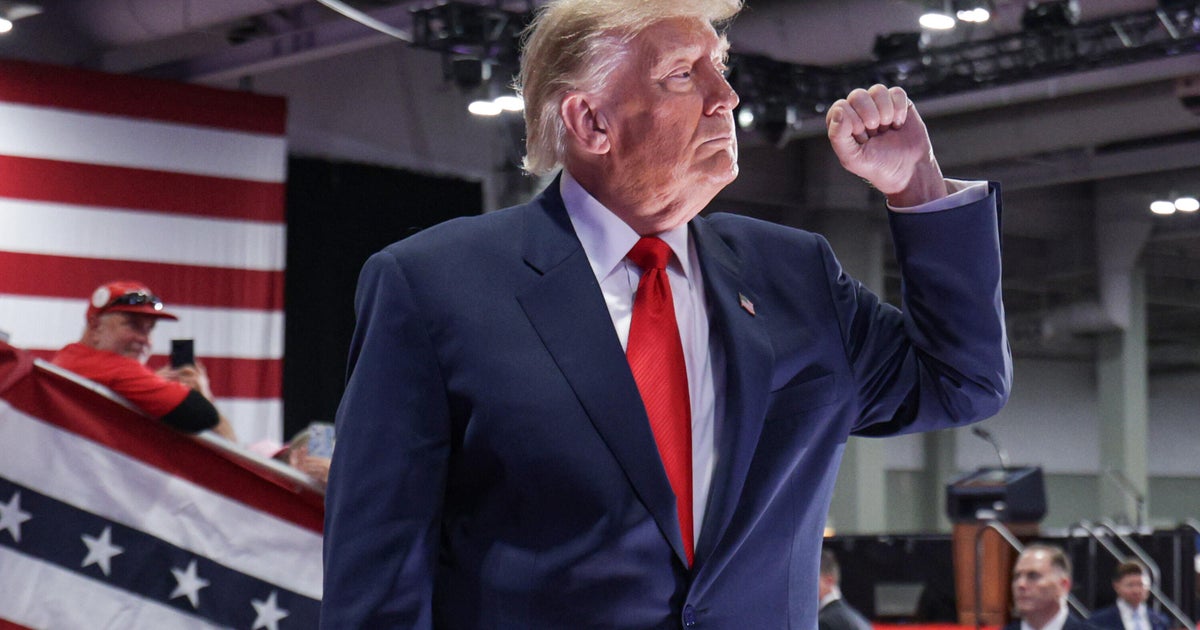
President Trump left open the possibility the U.S. will join Saudi Arabia’s battle against the Iran-backed Houthis on Saturday.
“We may. We’re gonna look at it,” Mr. Trump said when asked about the possibility as he left the White House for a campaign rally in Tennessee. “We just found out about the recent attack [on the airport]. So we’ll make a decision– we move very quickly.”
Mr. Trump was also asked about whether the Houthi strike on Riyadh’s airport would change his previously announced decision not to launch any potential strikes on Iran until after the midterms.
“Well, we’re gonna take a look,” he responded.
Multiple people were injured in a strike on Riyadh’s King Khalid International Airport on Saturday. The Houthis have not claimed responsibility for the attack, but Saudi Arabia’s aviation authority said the strike was part of “continued attacks targeting civil aviation facilities in the Kingdom.”
There have been multiple injuries at Riyadh’s King Khalid International Airport, which has now shut down operations as officials assess the damage, according to the country’s aviation authority.
“The attack resulted in a number of injuries, which are being dealt with,” the General Authority of Civil Aviation said in a statement, the first official confirmation of an attack. “The authority explained that airport operations have been temporarily suspended to allow for the completion of damage assessments and verification of the safety of the facilities, in coordination with the relevant authorities.”
There have been 324 flights into or out of King Khalid International Airport canceled on Saturday, according to FlightAware. Saudia airline, a pilot for which was killed in a Houthi strike on Thursday, has canceled the most flights (182) on Saturday.
The Iran-backed Houthis have gotten more bold in striking the airport, which is a major travel hub and hundreds of miles from where their power is located in Yemen. The militant organization has targeted the Riyadh airport several times this week, killing four people and injuring several more. Multiple people were also injured in a strike on Abha International Airport, in the southern part of Saudi Arabia.
The U.S. is warning all citizens to avoid King Khalid International Airport in Riyadh in the wake of new attacks on the location Saturday, the embassy said.
“The U.S. Mission is aware of attacks on King Khalid International Airport in Riyadh on October 10 and strongly recommends all U.S. citizens avoid this airport and surrounding areas,” the U.S. Embassy in Saudi Arabia said on X. “U.S. government employees working in Saudi Arabia require special authorization to use the King Khalid International Airport in Riyadh. U.S. citizens should be aware of potential flight cancellations, airspace closures, and travel disruptions.”
While the airport nor the Iran-backed Houthis have confirmed an attack, there were widespread reports of an explosion at the main airport in Saudi’s capital and reports of injuries.
The Houthis have attacked the airport, which is hundreds of miles north of the Yemen border, several times this week. Four people have been killed in Houthi attacks on the airport, including three people on Thursday. One of those killed was a pilot for Saudia airline.
The Canadian, German and Spanish embassies in Saudi Arabia on Saturday warned their citizens to avoid Riyadh’s international airport after reports it was attacked.
Spain’s embassy, in a message on X, alerted nationals to a “new attack” by Yemen’s Iran-backed Houthis on the airport, where witnesses earlier told AFP an evacuation was ordered.
A diplomatic source separately told AFP that the Houthis had hit the airport with a missile around 3 p.m. local time.
Canada’s embassy said only that unspecified “ongoing military activity” was affecting Riyadh’s international airport, while Germany’s mission alluded only to “the current situation.”
France’s embassy on Friday urged French nationals to take “utmost care” in Saudi Arabia because of “strikes in recent days by the Houthis.” It also warned French citizens not to record images of zones that were hit, nor share any online.
Saudi Arabia has been tightly controlling public information about Houthi attacks on its soil in recent weeks, leaving media and residents unclear as to the danger.
The airport in the Saudi capital was attacked again Saturday and was evacuated, two regional officials said, two days after three Saudi citizens including a pilot were killed there as the kingdom faces an extraordinary series of assaults in the new front in the Iran war.
One official said air traffic to the Riyadh airport had stopped. The officials spoke on condition of anonymity because they weren’t authorized to speak to the media.
King Khalid International Airport has been targeted multiple times in the week since a Saudi-led coalition launched a major military offensive against Iran-backed Houthi rebels in neighboring Yemen. The Houthis claimed responsibility for the earlier attacks, including one Wednesday that killed a Sudanese national.
There was no immediate Houthi statement Saturday. The Saudi government-run Center for International Communication, which oversees foreign media in the kingdom, didn’t immediately respond to a request for comment.
A Riyadh resident, Ahmed Sayed, told The Associated Press he heard at least two loud explosions that rocked the capital.
The airport issued a terse alert telling passengers to check their flight status with airlines before heading to the airport.
People were being evacuated from Riyadh’s international airport on Saturday, witnesses told AFP, raising fears of a fresh attack after strikes claimed by Yemen’s Houthis killed three people there this week.
Saudi authorities did not confirm any new attack or evacuation, but one witness reported hearing an explosion while waiting to board a flight, and at least one person was injured in an unspecified incident at the airport, a relative told AFP.
The relative said the person suffered injuries to their shoulders and arms from shattered glass and was being taken to hospital.
Two other witnesses confirmed people were being evacuated, but did not know what triggered it.
The airport was hit by deadly attacks claimed by Yemen’s Houthis on Thursday, though the Iran-backed group did not announce any fresh strikes on the facility on Saturday.
Yemeni military sources told AFP on Saturday their forces were advancing against the Iran-backed Houthis in areas around the Bab el-Mandeb Strait but have not yet secured control of the waterway, after the government launched an operation to capture lost territory.
The Saudi-backed government last week announced a counteroffensive aimed at retaking all areas held by the Houthis, after the pro-Iran group seized Yemen’s entire western coastline in a lightning offensive.
The Houthis confirmed government forces attacked in the Bab el-Mandeb area but they claimed to have repelled the assault.
“Saudi-led forces attempted to advance from the Ras al-Ara area in Lahj governorate towards the area south of Bab al-Mandab,” Hizam al-Asad, a member of the Houthis’ political bureau, told AFP.
“However, our forces repelled them outside the Bab el-Mandeb zone, inflicting heavy losses in personnel and equipment and forcing the survivors to retreat.
“Our forces maintain control over Bab el-Mandeb, Mayun Island, and the remaining areas along the country’s western coast,” he said.
Sources from the military of Yemen’s internationally recognised government also said Mayun Island — located in the heart of the strait — remained in Houthi hands as fighting continued.
Russian President Vladimir Putin has told Donald Trump about Iran’s position on a possible Mideast peace deal, the Kremlin said Saturday.
The Kremlin said Tehran’s stance was relayed in a phone call held between the two leaders on Friday. It did not say how Trump responded, nor elaborate on Iran’s position.
Diplomatic efforts to end the Iran conflict, which began with U.S.-Israeli strikes on Iran in February, have been at an impasse since the summer.
Putin met Iranian President Masoud Pezeshkian on the sidelines of a summit in Turkmenistan earlier this week, where the Russian leader expressed an interest in helping broker peace.
“In coordination with the Iranian president, Putin conveyed the Iranian side’s views on a possible resolution to the conflict to Trump,” Kremlin spokesman Dmitry Peskov said Saturday, according to Russia’s state RIA news agency.
During a rally in upstate New York, President Trump said, “Iran will be very quick, one way or the other. Either they give us everything, or they don’t exist any longer. They know that”
The president made the comments while criticizing the Nobel Peace Prize committee for not awarding him the prize — a frequent complaint by Mr. Trump. Calling the body “crooked,” Mr. Trump attacked it for giving the prize to former International Criminal Court Judge Navanethem Pillay, whom the president called a “mystery person.”
“This is an indelible stain on the country of Norway and those people that made such a disgraceful and embarrassing decision,” he said. “The Nobel Peace Prize has been forever discredited by a handful of radical ideologues who are anti-democracy and really enemies of civilization.”
The Saudi-led coalition fighting Yemen’s Houthis said Saturday it destroyed more than 100 military targets in a “large-scale operation” against the Iran-backed group.
“We are carrying out a large-scale operation targeting the personnel and capabilities of the Houthi terrorist militia,” Turki al-Maliki, spokesperson for the Saudi coalition, wrote on X.
“We destroyed 136 military targets in areas controlled by the Houthi terrorist militia,” he said in a separate post.
The Houthi’s Almasirah TV channel reported that Saudi missiles targeted areas in the northwestern Yemeni governorate of Saada.
The conflict between the Houthis and Yemen’s internationally recognized government — which Saudi Arabia supports — reignited in July, and has since spilled over into the neighboring kingdom.
In addition to seizing territory along the Red Sea coast in Yemen, the Houthis have attacked transport hubs, oil facilities and other civilian targets in the world’s largest crude exporter with drones and missiles.
President Trump said Russia has agreed to provide the world with millions of tons of diesel fuel over the next several months in a bid to decrease skyrocketing global prices.
In a Truth Social post, the president said he had just gotten off the phone with Russian President Vladimir Putin, who had agreed to release 300,000 tons of diesel immediately. He said another 500,000 tons of diesel would be released in November, followed by 1 million tons in December.
“Additionally, based on the condition of their Diesel Refineries, Russia will then deliver, within a short period of time, 3,000,000 Tons of Diesel Fuel,” Mr. Trump continued.
The Treasury Department also announced Friday that it would temporarily waive sanctions on Russia’s energy sector to “allow the supply of Russian diesel to the global market.”
Mr. Trump had earlier Friday teased a “big announcement coming up on diesel” during remarks at a Columbus Day celebration.
Diesel prices have skyrocketed in recent months amid the war with Iran. The average price of a gallon of diesel is $6.28, according to AAA, which is up from $5.94 a month ago and $3.68 a year ago.
President Trump teased a “big announcement coming up on diesel” during remarks Friday at a Columbus Day celebration, but offered little information to speculate on what the announcement would be about.
Mr. Trump pointed out Energy Secretary Chris Wright and said he was “doing a great job.”
“We have, I think, some big news on that diesel situation,” the president said. “It’s gonna — we’re gonna be knocking the hell out of it. And remember, what have we done? We stopped Iran from having a nuclear weapon. That’s big time. And the prices — the prices will come tumbling.”
Diesel prices have skyrocketed in recent months amid the war with Iran. The average price of a gallon of diesel is $6.28, according to AAA, which is up from $5.94 a month ago and $3.68 a year ago.
Diesel had never previously crossed $6 a gallon until just before Labor Day weekend. The record, hit on Sept. 22, was $6.53 per gallon. Diesel is widely used in the trucking, agriculture and construction sectors, so it’s a factor for nearly every type of good, including groceries.
The Trump administration has looked into several ways to lower diesel prices, most recently signing an executive order this week allowing the use of red-dyed diesel on highways. Red-dyed diesel is exempt from the federal tax of 24.4 cents a gallon that applies to regular diesel.
Sri Lanka’s government says it has no immediate plans to help 19 Iranian ships that have been anchored in the international waters near the island nation facing food, water and fuel shortages.
Foreign Ministry spokesman Thushara Rodrigo said Sri Lanka will put its national interest first before considering any help, and the companies that supply ships are aware of possible secondary sanctions from the United States.
He said, however, there hasn’t been any communication from the U.S. warning of repercussions should Sri Lanka decide to help.
Rodrigo said the ships are stationed 24 nautical miles from Sri Lanka’s coast and have reported shortages of food, water and fuel.
Sri Lankan Foreign Minister Vijitha Herath told local Sunday Times newspaper the ships are Iranian oil tankers and they have been anchored off Sri Lanka for the past several months after the U.S. resumed its naval blockade of the Strait of Hormuz, leaving dozens of Iranian vessels stranded and unable to return home.
The U.K., France, Germany, Australia and Canada have advised their citizens against travel to parts of Saudi Arabia following a wave of Houthi attacks, including one that killed three civilians at Riyadh’s King Khalid International Airport on Thursday.
The U.K. Foreign Office now advises against all but essential travel to the Riyadh region, Najran, Jizan and Aseer provinces, Taif city and Taif International Airport, and against all travel within six miles of the Yemeni border.
France says travel to Najran, Abha, Khamis Muhsait and Djizan in the south of the kingdom “remains strongly discouraged,” and Germany, Australia and Canada have all advised against all travel to the country.
The U.S. has also tightened restrictions, requiring government employees to obtain special authorization to use Riyadh airport, and barring them from all travel within 20 miles of the Yemen border. U.S. government employees also require “special authorization for travel to the provinces of Jizan, Asir, Najran, and the cities of Qatif, Yanbu, and Taif.”
There is currently no warning for U.S. nationals more broadly to avoid Saudi Arabia, but the U.S. embassy in Riyadh urged Americans across the Middle East to “exercise heightened vigilance due to the complex security environment.”
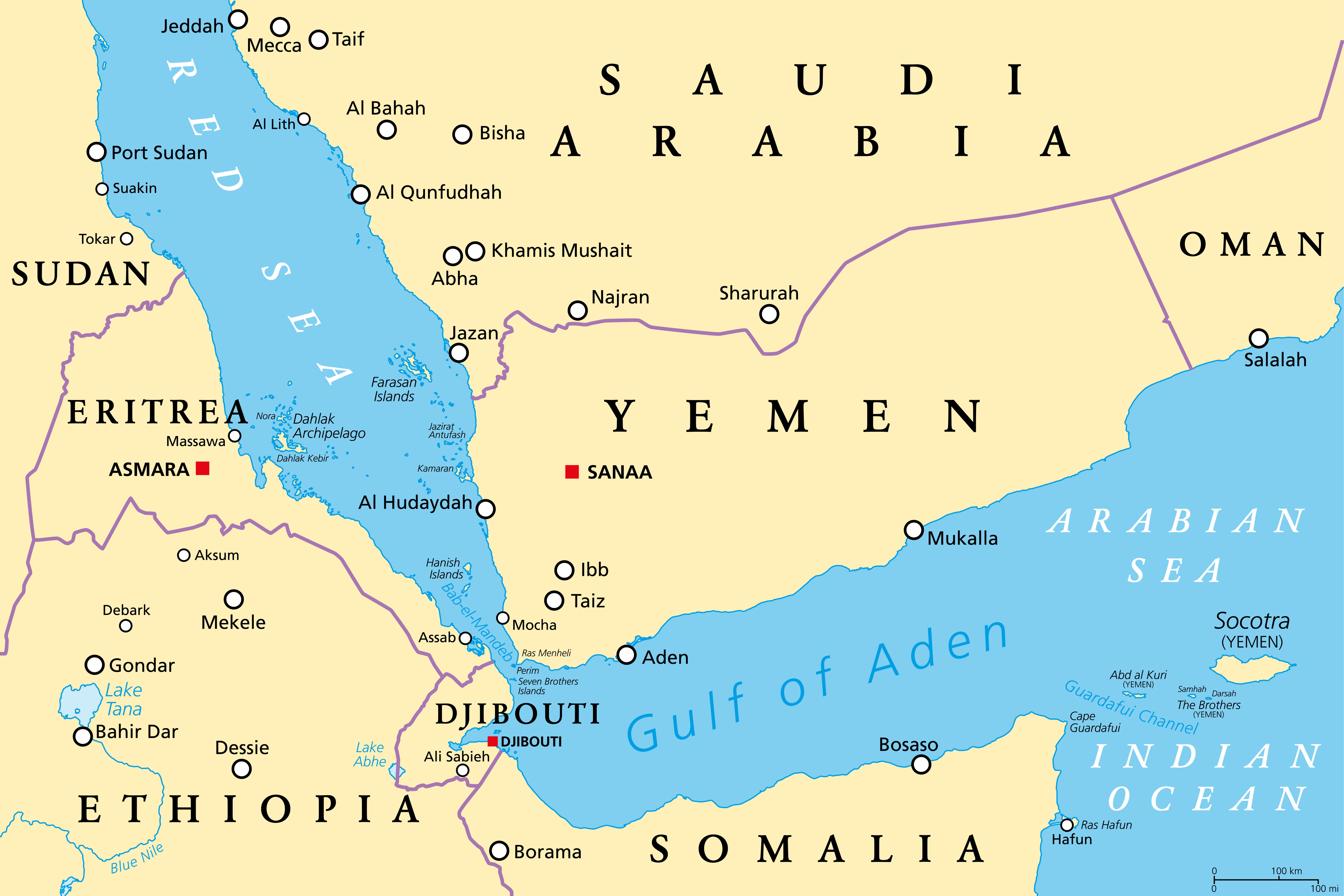
Yemeni government forces, backed by air support from the Saudi-led coalition, have taken control of the strategic Bab el-Mandeb Strait and Mayyun Island from the Iran-backed Houthi rebels, a Saudi diplomat said Friday.
Saudi Arabian Ambassador to Yemen, Mohammed Al Jaber, said in a post on X that the strait had been “cleansed” of remaining Houthi forces.
Fighting escalated dramatically this week after the Saudi-backed Yemeni government launched an offensive to retake territory held by Houthis, including some coastline around the Bab el-Mandeb Strait that was seized by the rebels only weeks ago. The Houthis have held a vast portion of Yemen, including its capital Sanaa, for over a decade.
Getty/iStockphoto
Yemeni forces claimed earlier this week to have retaken other key territory along the Red Sea coast, north of the strait, but the Houthis insisted Tuesday that their fighters still had “full control over all their gains on the ground.”
The Iran-backed Houthis appeared to taunt Saudi Arabia on Friday, as the group’s spokesman Brig. Gen. Yahya Saree declared that humanitarian flights to and from Riyadh’s airport would be allowed only with authorization from the Yemeni rebel group.
“Humanitarian flights to and from Riyadh airport will be allowed for all flights that have obtained a permit from the Humanitarian Operations Coordination Center in the capital, Sanaa,” Saree said in a post on X.
The statement was a challenge to Saudi Arabia’s control of its own airspace. It came just a day after a Houthi attack killed three people at Riyadh’s King Khaled International Airport, including a Saudia Airlines captain.
The Houthis warned international airlines on Monday that “operating in the skies of Saudi Arabia” would be “unsafe as long as the Saudi aggression against our country continues.”
The statement from the Houthis’ Humanitarian Operations Coordination Center (NOCC) said “the skies of Saudi Arabia will be a theater for operations by our armed forces,” declaring that the rebel group would accept “no responsibility after this announcement” for anything that happens to aircraft.
Iran’s Islamic Revolutionary Guard Corps said Friday that its navy had struck a liquefied petroleum gas (LPG) tanker after it allegedly attempted to cross the Strait of Hormuz via what it considers an illegal route through the waterway.
In a statement, the IRGC Navy said the vessel, identified as NV Sunshine, was struck “a few hours ago” as it “intended to cross via the illegal route,” referring to a U.S.-backed lane that skirts close to the Omani coast.
On Wednesday, a senior IRGC advisor said Iran would soon block what it considers “illegal routes” through the Strait of Hormuz.
Brig. Gen. Mohammad Reza Naqdi, a senior adviser to the IRGC commander-in-chief, reiterated Iran’s stance that the strait is closed and that Iranian armed forces have “full control” over it, adding that the situation would continue until Iran’s “legitimate demands” are met.
The Trump administration insists the strait is open and that the southern route is safe for commercial vessels. The U.S. military has escorted some ships through that route for weeks, helping energy shipments from the Persian Gulf, which have been severely impeded by the ongoing war with Iran, rebound.
Germany is going to release up to 15 million barrels of diesel, crude and heating oil, the country’s economy minister said Friday.
“Diesel and heating oil will be the first, with crude oil to follow,” Katherina Reiche told the Reuters news agency, adding that Germany would implement an agreement reached by the G7 last week to release 100 million barrels of diesel oil.
“We must always have the entire supply chain in mind. Available crude oil alone is not enough,” she said.
The Trump administration has pressured Europe to draw on its emergency reserves.
Mr. Trump had threatened to ban U.S. diesel exports, a move that would push global diesel prices even higher, saying in late September that he had “called for” such a ban. But after the G7 announcement last week the president said “we were never going to do” it.
The president of the European Union’s governing commission, Ursula von der Leyen, condemned on Friday the deadly Houthi missile attack on Saudi Arabia’s main international airport the previous day, calling on Iran’s proxy groups to “stop their reckless and violent acts.”
The attack Thursday on King Khalid International Airport in Riyadh killed three Saudi civilians. The Houthis, a rebel group based in Yemen, said they targeted the airport several times this week, including on Thursday.
“Houthis have once again struck Riyadh’s airport, taking three innocent lives,” von der Leyen said in a post on X. “We stand in full solidarity with the people of Saudi Arabia and all our Gulf partners.”
“Attacks on civilian infrastructure are unacceptable,” the EU leader said. “Iran’s proxies must stop their reckless and violent acts.”
Multiple airlines have suspended flights to Saudi Arabia’s capital after strikes claimed by the Iran-backed Houthis hit Riyadh’s main airport this week, including a missile attack that killed three civilians Thursday.
Lufthansa, Air India, Pakistan International Airlines, FlyDubai, Etihad Airways, Emirates and Air Arabia are among the airlines that have suspended flights to Riyadh.
The European Union Aviation Safety Agency on Friday advised against airlines operating in some parts of Saudi airspace, saying in an updated bulletin that “recent attacks have demonstrated the ability and intent of the Houthis to strike targets deeper inside Saudi territory.”
Tehran’s ambassador to the Vatican, Mohammad Hossein Mokhtari, urged Pope Leo XIV to use his moral and diplomatic influence to oppose U.S. sanctions and air restrictions on Iran that he says threaten ordinary people’s access to medical treatment, education, family and religious pilgrimage.
In a letter addressed to the leader of the Catholic Church on Thursday, Mokhtari called for a public defence of humanitarian air routes and urged the Pontiff to press Washington to assess the human consequences of its policies.
The letter comes amid renewed U.S. sanctions against Iran and restrictions targeting Iranian airlines. Washington imposed new sanctions on 27 Iranian airlines in September, threatening measures against airports and companies worldwide that provide services to them. Tehran has condemned the measures as “economic terrorism.”
“When decisions by the unwise and inhumane U.S. president lead to sweeping air restrictions and make people’s travel more difficult, the issue is no longer merely about flight routes or political relations,” Mokhtari wrote.
Saudi national carrier Saudia Airlines announced the death of aircraft captain Hamoud bin Ali Al-Kalthami Friday following a strike on the King Khalid International Airport in Riyadh the previous day.
Saudi authorities have not said who carried out the Thursday attack on the airport, which killed two other civilians in addition to Al-Kalthami, but the Iran-backed Houthis claimed they targeted the airport on the same day, as they have previously this week.
In a statement, the airline paid tribute to the slain captain’s professional service, saying it remembered “with appreciation and pride what the deceased contributed throughout his professional career in serving the national carrier, and the good reputation he left among his colleagues.”
The airline extended its condolences to his family, relatives and colleagues.
Pakistan has a “substantial number of forces” deployed in Saudi Arabia in a defensive capacity, Pakistan’s foreign ministry spokesman said Friday.
“From Pakistan already we have substantial number of forces as well as resources in town, in Riyadh,” spokesman Sajjad Haider Khan told journalists, according to the French news agency AFP, without specifying whether the deployment had grown under a major defense pact that Pakistan signed this year with Turkey and Saudi Arabia.
He added that Pakistani military personnel in the kingdom “would not be crossing the borders of the other side for an attack on the Houthis, but of course [they are acting] in the defense of the territory.”
Yemen’s Iran-backed Houthis have launched barrages of missiles and drones at Saudi Arabia this week, including attacks on Riyadh’s international airport Thursday that killed three people.
Pakistan signed the defense agreement with Saudi Arabia and Turkey in August, committing the three countries to come to each other’s aid in the event one is attacked.
Khan declined to say whether additional Pakistani forces had arrived in Saudi Arabia since the kingdom’s fight with the Houthis intensified in recent weeks, saying that “how much and when and where” forces would be deployed would be up to the trilateral alliance, which is headquartered in Riyadh with a retired Pakistani general as its secretary general.
Khan noted that Pakistan’s forces had been deployed in Saudi Arabia regularly since the 1980s, including after the signing of a bilateral agreement between Islamabad and Riyadh in 2025.
CBS/AP
Three Saudi citizens were killed and several other people “of different nationalities” were wounded in attacks targeting Riyadh’s King Khalid International Airport and a Saudia Airlines aircraft, the kingdom’s civil aviation authority said Friday.
Thursday’s attack was the deadliest in Saudi Arabia since the kingdom and allied forces in neighboring Yemen launched a major military offensive last weekend aimed at retaking territory seized by Yemen’s Iran-backed Houthi rebels.
It was a significant escalation in what appears to be the new epicenter of the wider war in the Middle East sparked by the joint U.S.-Israeli assault on Iran in late February.
The first attack Thursday afternoon targeted airport facilities, while the second struck the aircraft, which was empty at the time, the Saudi statement said. It did not identify those responsible, though the Houthis have claimed to target the airport repeatedly this week with ballistic missiles, including on Thursday.
Among the dead was Capt. Hamoud Ali Alkalthami, the Saudia Group said in a statement seen by the Associated Press. It appeared to be the first confirmed attack on the Saudi national carrier since the new offensive against the Houthis began.
The Saudi aviation agency, GACA, said in its statement that injuries to citizens and people of other nationalities “ranged from minor to serious.”
The Houthis this week warned global airlines “for the last time” about the potential consequences of operating in Saudi airspace, which they have declared a theater for military operations.
On Wednesday, Saudi officials said attacks on the Riyadh and Abha airports claimed by the Houthis had killed three people.
CBS/AP
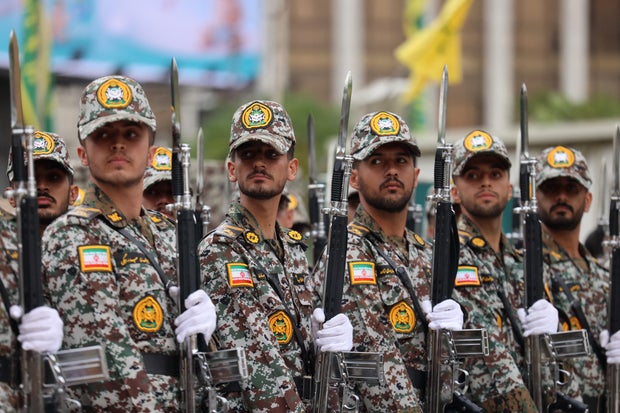
Iranian President Masoud Pezeshkian said Thursday that Iran had revised its proposals for negotiations with the United States and was ready to finalize them through intermediaries.
“We have made our revisions to these proposals. Once they are finalized, we are supposed to sit down through the mediators and consolidate them,” Pezeshkian said during a meeting with Russian President Vladimir Putin.
He said Iran had put forward proposals, and the U.S. had also presented new ones, but he accused Washington of repeatedly scuppering diplomatic efforts.
“Every time we hold talks with the U.S., they attack again,” Pezeshkian said.
ATTA KENARE/AFP/Getty
Addressing Putin, Pezeshkian thanked Russia for its positions on regional issues, including at the United Nations.
“Our efforts are aimed at ending the war and ensuring that the rights of the Iranian people are respected within the framework of international law,” Pezeshkian said. “But if the United States seeks to proceed through unilateralism, it will not be possible.”
The USS Abraham Lincoln and its more than 4,500 sailors returned home to San Diego on Thursday for the first time in 321 days, a jubilant homecoming after a long deployment that included months in the Middle East.
Braving the heat, hundreds of family members and friends waited for hours in the sun to greet their loved ones. As the ship pulled into the harbor, a roar of cheers erupted from a pier. Sailors stood at attention on the deck for the aircraft carrier’s long approach, and after they were released, smiles and waves broke out as sailors took out their phones to call people on the pier.
In one such reunion, McKenzie Adkins held her 10-week-old son Declan as she waved to her husband, Alexander, on the ship’s deck, before the new father met his son for the first time.
The Lincoln carrier strike group had been deployed for more than 10 months, including more than 250 uninterrupted days at sea this year. Much of that time was spent in the Middle East, where the aircraft carrier and its escort ships supported the U.S. war against Iran. It left the region in late August.
Read more here.
The U.S. Embassy in Saudi Arabia is warning Americans to “exercise heightened vigilance” if they are traveling through King Khalid International Airport in Riyadh due to attacks by the Iran-backed Houthi militant group.
“The Houthis have engaged in hostilities against Saudi Arabia, including against civilian airports, and the military conflict has the potential to escalate,” the embassy wrote on X. “U.S. citizens should be aware of potential flight cancellations, airspace closures, and travel disruptions.”
The Houthis have launched attacks on the airport, hundreds of miles into interior Saudi Arabia, four times this week. Three people were killed at airports on Oct. 6 and 7 in Saudi Arabia, including one at King Khalid International Airport, according to the country’s aviation authority.
The embassy had already warned citizens not to travel near the Yemeni border. U.S. government employees are banned from traveling within 20 miles of the border. On Thursday, the embassy also said government officials now require special authorization to travel through King Khalid International Airport.
President Trump has promised the U.S. would not attack Iran before the midterm elections, which take place on Nov. 3. He also touted “productive conversations” with Iran, though he did not provide specifics.
“I want to make it clear to everybody that, while Iran is in very bad condition, both Economically and Militarily, and while the Blockade will remain in full force and effect, with Oil flowing in Record Numbers of Barrels through the Hormuz Strait (22 Million Barrels, last night alone, with not one barrel coming from, or going to, Iran!), we will not be attacking Iran at any time prior to the Midterm Elections to be held in the United States on November 3rd,” he wrote on Truth Social.
Several outlets reported on Thursday that Mr. Trump was considering new strikes on Iran before the midterms.
The Trump administration has consistently provided numbers for the millions of barrels being escorted out of the Strait of Hormuz under U.S. military protection. Moving out 22 million barrels of oil in one night would mark a total similar to prewar levels.
Brent crude, the international standard, was up to $105 a barrel, about a 4% increase from close Wednesday, before Mr. Trump’s post on social media. After the post, it dropped to $103 a barrel.
wp:paragraph
هلدینگ کاسپین استانبول | خرید ملک در ترکیه | صرافی معتبر ایرانی در ترکیه | خرید و فروش طلا در ترکیه | مهاجرت به ترکیه | واردات و صادرات در ترکیه | نیازمندیهای ترکیه | اخبار ترکیه | اخبار جهانی | توریست ایران | خدمات توریستی در ایران | تورهای گردشگری ایران | هلدینگ اول | خدمات کاریابی و فریلنسری و شغل | مرجع اطلاعات ایران (همه چیز در ایران) | کیف پول و خدمات مالی و پرداخت یار | اخبار ایران | تابلو زنده قیمت ارز در ترکیه و استانبول | صرافی آنلاین ترکیه | قیمت طلا و نقره در ترکیه | سرمایه گذاری در ترکیه | جواهرات در ترکیه | نرخ لحظه ای ارزها در استانبول | قیمت دلار امروز در ترکیه | قیمت دلار استانبول امروز | قیمت لحظه ای دلار | اخبار روز ترکیه استانبول | اپلیکیشن ISTEX | اپلیکیشن قیمت لحظه ای دلار و یورو و لیر و ارزها در ترکیه
/wp:paragraph wp:paragraph /wp:paragraph
About the Author