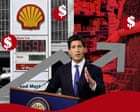
Katie from Connecticut asks in a callout question: Will the active collapse of the healthcare system happening right now finally force single payer healthcare as an “on the table” subject?
Heather: Absolutely. Washington’s progressive economic think tanks are already busy drawing up proposals for what a plan would look like, and the more “centrist” Dems are stockpiling arguments about why it is a bad idea. Expect universal healthcare to be one of the big ideological battles inside the Democratic Party if they regain power in both houses of Congress, as leaders also debate swinging for the fences on economic ideas vs. investigating the Trump administration.
The Guardian US’s Health reporter Jessica Glenza did a great breakdown on the Democratic divide on single payer this month. If Democrats retake the House but not the Senate, the idea is probably shelved for two more years. Republican candidates are also talking about healthcare costs, and the White House has issued a one page pledge to negotiate drug prices and limit payments to insurers but the details remain unclear.
Instead of single payer, Republican candidates are talking about things like curbing Medicare fraud and making hospital billing more transparent.
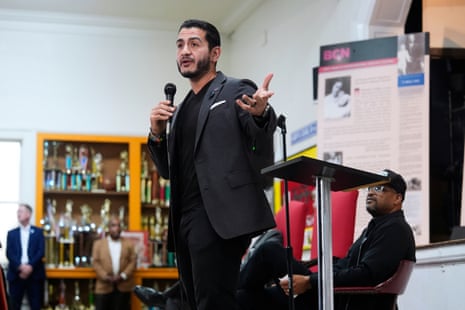
Tom in the UK asks in a callout question: How much is Trump himself and the Republicans more widely being seen as responsible for the economy woes amongst Republicans? What are the messages on spurring the economy that the Democrats are making?
Lauren Aratani: In the results from the Guardian’s newest poll with Harris Poll, it’s clear that many Republicans are unhappy about the economy, but they seem conflicted on who is responsible. When asked who or what is most responsible for today’s gas prices – the US federal government, oil companies, the Iranian government or natural economic fluctuations – over half of Democrats and Independents said it is the federal government, while just 28% of Republicans said the same.
One interesting thing that stuck out in the poll is that Democrats were slightly more enthusiastic about their party’s ability to have a solution for the affordability than Republicans: 71% of Democrats said that their party has the solution, compared to 59% of Republicans. But that, of course, still means that many Republicans still back their party.
When it comes to how the midterms are likely to turn out, these party loyalists won’t be the deciding factor in key races. It’ll be independents, along with disenchanted voters who showed up in 2024 but are staying home on election day. Our poll, along with the many others that have asked Americans how they feel about the economy, really show widespread frustration that will likely show up in some way or form come November 3.
Heather: The Democrats’ key message has been: Trump’s war in Iran and tariffs are hurting the economy, and if you elect us we have a plan to stop both. They have also been stressing another issue recently that they’re tying to Trump and Republicans – corruption. We saw Texas Senate candidate James Talarico end a long town hall last night that spent a lot of time on Christianity with a message about his opponent Ken Paxton’s jump in net worth in office and ethical scandals, saying the election was “about whether we will have a senator who puts money in your pocket, or a senator who puts money in their own.”
semitone asks: What do we make of an electorate that will twice elect a known sex pest and adjudged sex abuser, a proud racist and inveterate liar who has fawned over despots and tyrants, made the world less safe, caused or contributed to millions of avoidable deaths, launched at least one illegal war etc, but begins to change its mind about him when diesel hits $6 a gallon? Do we congratulate Americans voting against Trump for the first time, or is this just a continuation of their self-interest?
Heather: This question is one that plenty of Americans are asking too, and one that’s fueled debates at dinner tables, on Facebook pages and at high school reunions. There are a lot of messy, angry conversations and plenty of bitterly divided families, offices and even churches – and the whole situation is exacerbated by the fact that we’re swimming in a sea of misinformation and biased alogrithms that colors what people believe about those things. But the bottom line is, people vote on pocketbook issues (even over democracy issues, as this Northwestern University survey found). If you can’t afford to get to work or feed your family or pay your rent, that’s an undeniable reality, not an Instagram meme, and that is usually going to be more important than what that guy in the White House is doing or what’s happening in another country.
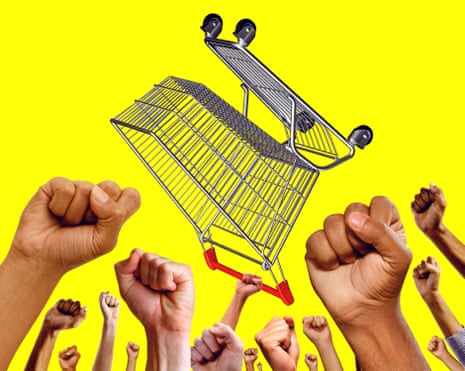
NambuccaBarry says: So good that Trump has discovered the word ‘affordability’, just as his cuts to Medicaid, SNAP and ACA subsidies are starting to hurt struggling Americans.
Michael: Trump has continued denying inflation and affordability concerns. During two campaign rallies in Arizona and Montana attended by Trump yesterday, Trump blamed inflation on Joe Biden.
“He gave us the highest inflation in history,” Trump said, who also claimed prices are declining.
When Trump took office, inflation was at 3.0% in January 2025 for the preceding 12 months. In September 2026, inflation was at 3.7%. Trump also said “we have very little inflation” and denied tariffs contributing to inflation. Consumer sentiment dropped to 46.3 in October 2026, according to the University of Michigan’s preliminary Index of Consumer Sentiment, the second lowest rating on record, with 70% of Americans saying they will either cut back (54%) or stop (16%) spending in response to inflation.
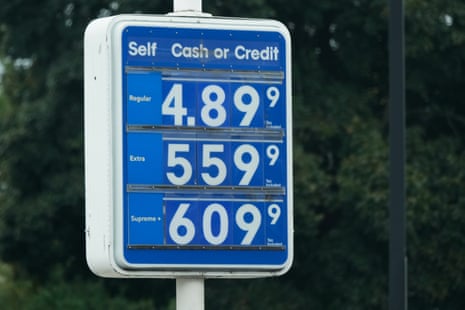
Ashleigh Ewald from Georgia asks in a callout question: President Trump made a lot of promises about lowering costs for Americans, especially energy prices. But how much have things actually changed since he took office? Are people really saving money, or are they still feeling the same financial pressures? And when gas or oil prices go up, how much of that is actually because of the president’s policies versus things happening around the world?
Gaya Gupta: These are great questions. Let’s start with your point about energy prices.
On the campaign trail, Trump vowed to lower gas prices to below $2 and slash the country’s energy bills by half. However, as a direct result of the US-Israel war with Iran, energy prices have shot up significantly this year. The US and Iran have been battling for control of the Strait of Hormuz, a crucial waterway near Iran through which about a fifth of the world’s oil supply passes through. With the Strait largely closed since war broke out in February, oil prices have skyrocketed — brent crude, the global benchmark for oil prices, was below $68 a month before the war started, and now, it’s above $100. Though Trump has said several times this year that a peace deal with Iran has been near, their peace agreements have ultimately collapsed, as Trump has refused deals that don’t involve Iran dismantling its nuclear program. So, the war continues.
All of this has significantly impacted the price Americans see at the gas pump (I’ve certainly noticed a difference when filling up my car!). The national average gas of price is more thna a dollar more expensive than a year ago. These prices have directly fluctated alongside negotiations between the US and Iran for a peace deal. Overall, researchers at Brown University estimate that American households have had to spend over $1k more so far this year on gas and diesel, as a direct result of the war.
Michael Sainato: Cumulative inflation since December 2024 is 5.9%. Inflation has largely been driven by a surge in gas and oil prices this year. Gas prices have set a record for the highest number of days in a calendar year with the average price for a gallon above $4.
Trump began conducting military strikes in Iran on 28 February, 2026. Gas prices surged as a result, due to the disruption to production and supplies. Some analysts warned if flows through the Strait of Hormuz weren’t restored, oil prices would jump to over $100 a barrel. According to the Energy Information Administration, oil prices averaged $114 per barrel in September 2026.
“The disruption creates a dual supply shock: not only are current exports through the strait halted, but Opec+ additional volumes and ultimately most of Opec’s spare capacity – typically a key lever for balancing the global oil market – are inaccessible while the waterway remains closed,” analysts at the energy consultancy Wood Mackenzie said in a note in early March 2026.
By the end of March 2026, average gas prices jumped $1 a gallon to $3.98. Today, the current US average for a gallon of gas is $4.33 as the military conflict in Iran has continued. Trump’s tariffs have also contributed to inflation and increased costs for the typical US household, with the non partisan Yale Budget Lab estimating US household costs annually at about $1,100 due to tariffs.
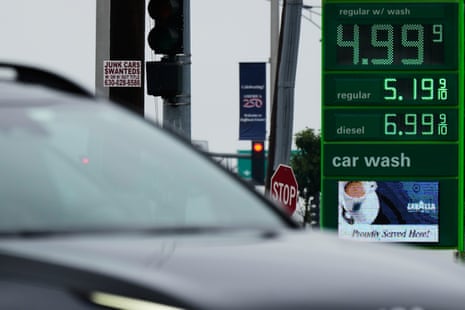
Heather Timmons: Americans are also feeling increasingly sqeezed and frustrated by the extreme “financialization” rampant in the US economy right now. Companies have been using tech tools and making up new fees to maximize the amount they can charge customers and tenants; private equity companies are taking over vets and dentists and fast food and yanking prices sky high while cutting quality. And wages aren’t keeping up with that or inflation. So there’s a lot of anger and frustration out there in general — some of this helped Trump get reelected in 2024, and the question many Democrats are asking on the campaign trail is ‘Do you feel better off than you did two years ago?” We are exploring this growing frustration here at the Guardian, would love to hear from you at consumed@theguardian.com
Welcome to our latest US midterms live Q&A.
With just over two weeks to election day on 3 November, the US economy is top of voters’ minds. Food and gas prices remain high, the job market is unstable, consumers are angrier than ever, and a new Fed chair, Kevin Warsh, took over this year.
A team of business, labor and consumer rights reporters are here to answer your questions about the economy and how it could shape the midterm results. They’ve covered inflation, cost of living increases, tariffs, labor, policy proposals and more.
Joining us on Thursday at 12pm ET on the Guardian US site: business reporter Lauren Aratani,labor reporter Michael Sainato, consumer and corporate rights reporter Heather Timmons,and business reporter Gaya Gupta.
Sign in or sign up to join the conversation.
The US politics team is hosting a series of reader Q&As leading up to the November US midterm elections. See our first three conversations, here:
Looking for more coverage ahead of the midterms? Sign up to The Stakes newsletter: your weekly guide to the US midterms
The Guardian wp:paragraph
هلدینگ کاسپین استانبول | خرید ملک در ترکیه | صرافی معتبر ایرانی در ترکیه | خرید و فروش طلا در ترکیه | مهاجرت به ترکیه | واردات و صادرات در ترکیه | نیازمندیهای ترکیه | اخبار ترکیه | اخبار جهانی | توریست ایران | خدمات توریستی در ایران | تورهای گردشگری ایران | هلدینگ اول | خدمات کاریابی و فریلنسری و شغل | مرجع اطلاعات ایران (همه چیز در ایران) | کیف پول و خدمات مالی و پرداخت یار | اخبار ایران | تابلو زنده قیمت ارز در ترکیه و استانبول | صرافی آنلاین ترکیه | قیمت طلا و نقره در ترکیه | سرمایه گذاری در ترکیه | جواهرات در ترکیه | نرخ لحظه ای ارزها در استانبول | قیمت دلار امروز در ترکیه | قیمت دلار استانبول امروز | قیمت لحظه ای دلار | اخبار روز ترکیه استانبول | اپلیکیشن ISTEX | اپلیکیشن قیمت لحظه ای دلار و یورو و لیر و ارزها در ترکیه
/wp:paragraph wp:paragraph /wp:paragraph
About the Author