Home – CBSNews.com
Add CBS News on Google
Washington — The Trump administration on Wednesday asked the Supreme Court to allow it to resume for now construction of a border wall and other infrastructure through a remote area of West Texas that includes Big Bend National Park.
The Justice Department urged the high court to lift a lower court injunction that temporarily bars the Department of Homeland Security from building the barrier or related infrastructure in the Big Bend Sector, which covers more than 500 miles of the U.S.-Mexico border and 77 counties in Texas.
“The district court’s injunction significantly frustrates the government’s ability to stop the flow of illegal aliens and drugs across the southern border,” Solicitor General D. John Sauer wrote in the request for emergency relief. “The Secretary identified the Big Bend project areas at issue because of the high rates of illegal-alien crossings and drug smuggling in the region over the past several years.”
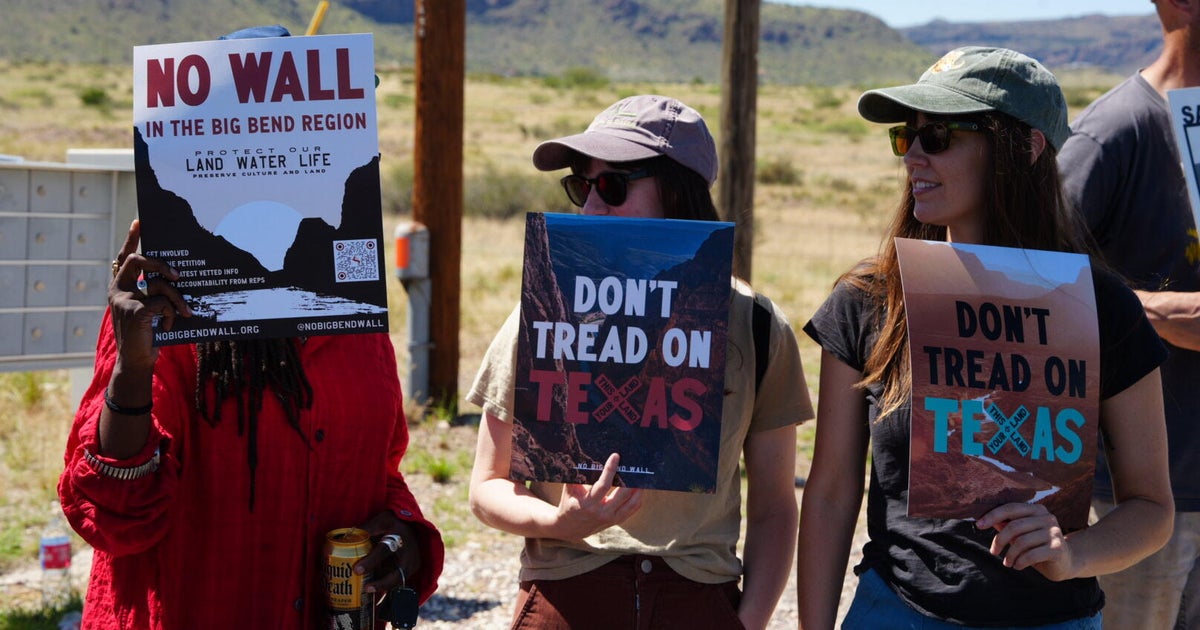
President Trump’s promise to build a wall along the southern border has been a hallmark of his immigration agenda for the last decade. But earlier this year, the president’s plans were met with significant pushback from lawmakers in both parties, cattle ranchers and local law enforcement officials in Texas when photos and videos shared to social media showed bulldozers arriving at Big Bend National Park.
In response to the backlash, Customs and Border Protection Commissioner Rodney Scott paused construction inside the park until the end of September. The agency has said that the proposed border wall will not cut through Big Bend National Park, but other infrastructure would, including patrol roads, detection technology and roughly 17 miles of vehicle barriers.
Construction of a 47-mile-long stretch of wall in the Big Bend region began last month, according to CBP. The government has awarded contracts for five border-barrier projects in that area along the U.S.-Mexico border, the Justice Department said.
The Trump administration announced in February that the Department of Homeland Security would build barriers and roads in the Big Bend Sector. The project includes the construction of 30-foot-tall bollard walls stretching from Fort Quitman, Texas, to Closed Canyon, which is located in Big Bend Ranch State Park. Border walls and roads would span more than 300 miles, according to the government.
Because of the project’s impact on cultural, recreational, wildlife and environmental resources, the federal government would typically have to ensure compliance with federal environmental protection and historical preservation laws before moving forward.
But when then-Secretary of Homeland Security Kristi Noem announced the project earlier this year, she invoked a 1996 federal immigration law that gives the secretary the authority to waive all legal requirements deemed necessary to ensure quick construction of physical barriers and roads in the vicinity of the southern border to “deter illegal crossings in areas of high illegal entry.” Secretary Markwayne Mullin, who succeeded Noem after her firing, issued two more waivers allowing CBP to construct barrier systems.
In response to the move, an environmental nonprofit, a professional riverboat guide and a religious organization dedicated to preserving the Sacred Heart of the Church of Jesus along the Rio Grande filed a lawsuit in April seeking to stop the Trump administration from implementing the project.
The Trump administration argued that the stretch of land at issue in the case is an area of “high illegal entry” given the rates of illegal crossings and drug smuggling. The government said more than 89,000 people were apprehended trying to cross into the U.S. illegally in the Big Bend Sector between 2021 and 2025.
But the plaintiffs said that the Big Bend Sector ranks last for apprehensions compared to the other six sectors along the southern border. While the area covers more than 25% of the U.S.-Mexico border, annual apprehensions in the Big Bend Sector ranged between 0.3% and 2.2% of total border-wide apprehensions, according to court filings.
Earlier this month, U.S. District Judge Kathleen Cardone granted the challengers’ request for a preliminary injunction and barred the Department of Homeland Security from building border barriers or related infrastructure, or engaging in “any construction or ground disturbing activities” in the Big Bend Sector.
Cardone found that Noem and Mullin exceeded their authorities when issuing the waivers between February and July that allowed construction to proceed.
Just before the Justice Department sought the Supreme Court’s intervention, Cardone rejected the Trump administration’s request to pause her decision.
wp:paragraph
هلدینگ کاسپین استانبول | خرید ملک در ترکیه | صرافی معتبر ایرانی در ترکیه | خرید و فروش طلا در ترکیه | مهاجرت به ترکیه | واردات و صادرات در ترکیه | نیازمندیهای ترکیه | اخبار ترکیه | اخبار جهانی | توریست ایران | خدمات توریستی در ایران | تورهای گردشگری ایران | هلدینگ اول | خدمات کاریابی و فریلنسری و شغل | مرجع اطلاعات ایران (همه چیز در ایران) | کیف پول و خدمات مالی و پرداخت یار | اخبار ایران | تابلو زنده قیمت ارز در ترکیه و استانبول | صرافی آنلاین ترکیه | قیمت طلا و نقره در ترکیه | سرمایه گذاری در ترکیه | جواهرات در ترکیه | نرخ لحظه ای ارزها در استانبول | قیمت دلار امروز در ترکیه | قیمت دلار استانبول امروز | قیمت لحظه ای دلار | اخبار روز ترکیه استانبول | اپلیکیشن ISTEX | اپلیکیشن قیمت لحظه ای دلار و یورو و لیر و ارزها در ترکیه
/wp:paragraph wp:paragraph /wp:paragraph
About the Author