Home – CBSNews.com
A U.S. official and a senior U.S. military official told CBS News on Wednesday the military has been quietly reducing its footprint at posts in the Middle East due to ongoing regional threats from the Houthis and direct threats from Iran.
NBC News was first to report on the drawdowns.
Asked about the reports, U.S. Central Command spokesperson Capt. Tim Hawkins told CBS News: “We regularly move U.S. service members and assets to optimize mission readiness. We do not discuss related movements for operational security reasons. U.S. forces remain vigilant and ready to protect American personnel and interests across the region.”
The U.S. State Department has also ordered non-essential U.S. embassy personnel and their families to depart Saudi Arabia, citing threats posed by the Iran-backed Houthis.
CBS News has learned several U.S. embassies in the Middle East have adjusted their staffing under “restricted operations” status.
The restricted operations status, which the department introduced in August amid flare-ups in the war with Iran, allows embassies to reduce staffing and services without fully suspending operations.
The Saudi energy ministry said that falling debris from the interception of a drone targeting an oil facility killed two people and injured two others on Wednesday.
“The attempted attack resulted in the deaths of two individuals, a Filipino and a Nepali, and injuries to two others,” the ministry said in a statement. It did not say who launched the drone aimed at the Shaybah oil field near the UAE border.
The U.S. has ordered all non-emergency government employees and their families to leave Saudi Arabia as the kingdom faces escalating attacks by Houthi militants.
“Iranian-supported Houthis have increasingly engaged in hostilities against Saudi Arabia, including attacks on civilian airports and other critical infrastructure resulting in civilian casualties and severe travel disruptions,” State Department spokesperson Tommy Pigott said in a social media post Wednesday.
The order came a few days after the U.S. embassies in Saudi Arabia, Bahrain, Qatar, the United Arab Emirates and several other countries warned that hostilities could rapidly and without warning spread beyond areas already affected by the fighting.
“The safety and security of Department personnel and their families remain our highest priority, and we will continue to take all necessary steps to protect and support them,” Pigott added.
Iranian Foreign Minister Abbas Araghchi issued a warning to the U.S. on Wednesday afternoon, saying it should choose diplomacy over returning to war.
“Iran is prepared to give diplomacy another chance if we see strong evidence of a sincere desire by US to build trust & reach a just solution,” he wrote on X, sharing a link to an opinion piece in the Financial Times. “But if US chooses war over diplomacy, it’ll certainly result in an even greater strategic failure.”
Araghchi said earlier in the day that Iran and the U.S. were still involved in indirect negotiations via mediators over the seven-day ceasefire proposal from September. The proposal was outright rejected by President Trump, but Araghchi said the U.S. was trying to add further clauses to the agreement.
The U.S. Treasury announced new sanctions on the Panamanian-Greek law firm Karnakis and Karnakis for involvement in Iran’s “shadow fleet” as part of its Operation Economic Outcast.
The U.S. accuses Karnakis and Karnakis of being indirectly involved in Iran’s illicit shipping operations for years. A “shadow fleet” refers to oil tankers that hide their true ownership in order to evade sanctions.
“Whether you are conducting illegal oil transfers at sea or sitting in the corner office of a law firm, if you are supporting the Iranian regime, we will find you and sanction you,” Treasury Secretary Scott Bessent said in a statement. “Iran’s facilitators must make a choice: Either you are with us or against us. We know who you are, we know what you’re doing, and we will continue to take action.”
The Treasury also said it sanctioned Singapore- and UAE-based shipping agents, including a fleet of cargo vessels that has directly taken part in Iran’s “shadow fleet” and “helped generate substantial revenue for the Iranian regime.”
A limited number of Saudi airlines took off and landed at the country’s main airport on Wednesday, two days after authorities notified airlines that they could resume operations with prior permission.
Saudia and FlyNas were operating flights Wednesday, according to flight-tracking data published by FlightAware. Major carriers, including Lufthansa and Air France, have canceled flights through mid-November.
Riyadh’s King Khalid International Airport has been hit multiple times this month by Yemen’s Houthi rebels and shut down on Oct. 10. A strike two weeks ago killed 13 people and injured hundreds more.
The Houthis have acknowledged attacking the airport, claiming without evidence that Saudi Arabia provided military equipment to government forces through the facility.
Iranian Foreign Minister Abbas Araghchi said any interference in the Yemen war by Egypt or any other country would make the situation “more difficult.”
“Egypt has sufficient experience to avoid entangling itself in such a highly complex conflict,” said Iran’s top diplomat in an interview with Iraqi state broadcaster Al-Iraqiya aired on Tuesday.
“We believe that any foreign presence or interference will only make resolving this issue more difficult,” Araghchi noted.
Egyptian President Abdel Fattah al-Sisi said on Wednesday that Cairo’s proposed military support for Riyadh was to “defend Saudi territory, and does not include an attack on Yemen,” according to a statement from his office.
At a government event titled Egypt Forum 2026, Sisi said the “objective is to defend the kingdom’s lands and borders, as well as those of any other Arab state, should it be requested of Egypt,” his spokesman said in a statement.
Sisi on Saturday had asked parliament to authorize support for Saudi Arabia in its war with the Houthis, “if requested.”
The parliament, which is stacked with supporters of the president, has since held two rare secret sessions, before postponing deliberations until next week.
Iran’s newly appointed defense minister, Mehrdad Akhlaghi, said Wednesday his first hours in office were devoted to meeting the requirements of the Islamic Revolutionary Guard Corps’ Aerospace Force and the army’s air defense units.
“We are not in a war of rhetoric in response to repeated threats; we are turning threats into greater readiness and more effective defensive power,” he wrote in his first post on X since taking office.
Akhlaghi added Iran was concentrating on its objectives through the use of new technologies.
“We may eat dirt, but we will not give up our soil,” he concluded.
President Trump blocked a planned Israeli multiday operation that would have resumed strikes against Iran on the weekend of Oct. 10, according to the Financial Times.
The plan was designed to exceed the intensity of the joint U.S.-Israeli military offensive launched in February, three people familiar with the matter told the paper, and would have struck Iranian nuclear sites, regime targets and civilian infrastructure such as power plants.
The president blocked the strike to avoid escalating conflict before the U.S. midterm elections, according to the report.
Israeli Prime Minister Benjamin Netanyahu said Wednesday he had directed the Israeli army and intelligence services to topple the Iranian regime.
“The regime in Iran has still not learned the lesson,” Netanyahu told a graduation ceremony at an officer training school in the country’s southern Negev desert.
“Mojtaba Khamenei, the current tyrant, has decided to follow in his father’s footsteps,” he said, referring to the country’s supreme leader, who replaced his father Ali Khamenei after he was killed in a U.S.-Israeli airstrike on Feb. 28.
“He has taken the safety off, and Iran is once again attempting to develop ‘death bombs,'” he added, without giving details on what exactly he was referring to.
“There is only one way to remove this threat once and for all,” Netanyahu said, “by toppling the regime in Iran. And that is my directive to the [Israel Defense Forces], the Mossad, and the security services.”
He did not expand on how he expected the military or intelligence services to carry out the directive.
Saudi Arabia has held talks with a senior Syrian military delegation on arrangements to transfer up to 10,000 Syrian fighters to take part in the war against Yemen’s Houthi movement, according to a report by the Lebanese Hezbollah-owned Al-Akhbar newspaper, citing Yemeni intelligence sources.
The report claims Syrian military officials visited Saudi Arabia’s southern regions of Najran and Asir to inspect sites prepared to receive the fighters, while discussions in Riyadh covered transport logistics, financing and military assignments.
The Syrian delegation included Brig. Gen. Khaled Khattab, former commander of the Ansar al-Tawhid faction and current commander of the 82nd Division in the new Syrian army; and Brig. Gen.Haitham al-Ali, also known as Abu Muslim, commander of the army’s Third Corps and a former leader in Hayat Tahrir al-Sham.
Khattab reportedly spent four days in southern Saudi Arabia, accompanied by Saudi officers, visiting sites in the regions of Asir and Najran being prepared to receive Syrian fighters. Meanwhile, al-Ali held several meetings with Saudi officers at the Defense Ministry in Riyadh to discuss the costs of transferring around 10,000 fighters, financial arrangements, additional benefits and their intended military tasks. The delegation reportedly finalized logistical arrangements for the transfer.
The report also raises the possibility that foreign fighters currently in Syria, including Uyghurs, Uzbeks, Tajiks and other nationalities, could be transferred to Yemen.
A missile industry veteran has been tapped as Iran’s new defense minister, replacing the previous minister who was killed on Feb. 28, the first day of U.S. and Israeli strikes on Iran.
Iranian parliamentarians overwhelmingly approved the appointment of Mehrdad Akhlaghi Ketabchi, 68, as the country’s new defense chief on Sunday.
Akhlaghi studied chemical engineering at Amirkabir University of Technology and then spent more than four decades working in Iran’s military industries, holding senior positions in the Shahid Bagheri Industrial Group, the Aerospace Industries Organization – which has worked on missile development in cooperation with Russia, China and North Korea – and the Defense Industries Organization.
He worked with Hassan Tehrani Moghaddam, a senior Islamic Revolutionary Guard Corps commander widely regarded as the father of Iran’s missile industry.
Akhlaghi has been under international sanctions since 2007 because of his involvement in Iran’s missile programs.
His appointment comes as Iran works to rebuild its military facilities and replenish weapons lost during the war. He has pledged to strengthen domestic arms production, and his background suggests rebuilding Iran’s missile programs will be a priority for the ministry.
Iranian army spokesman Mohammad Akraminia has claimed repeatedly since late August that Iran has rebuilt its weapons manufacturing capacity, including last week, when it said the country was now able to make more arms than “even before it [the war] began.”
Early in the war, the U.S. military said it had destroyed more than 85% of Iran’s “defense industrial base,” and President Trump had previously claimed Iran’s military capabilities were destroyed by U.S. strikes, but experts have questioned that assessment, and Iran has demonstrated an ongoing capacity to launch attacks on ships in the region.
A Qatari aircraft arrived in Tehran Tuesday just minutes after a plane carrying Pakistan’s army chief, Field Marshal Asim Munir, departed. The Qatari plane left the Iranian capital approximately 30 minutes later, according to aviation tracking data cited by Iran’s semi-official Fars News agency.
The aircraft’s short stay raised questions about whether it might have been carrying a diplomatic message amid ongoing indirect negotiations between the U.S. and Iran. Qatar is among the nations that have acted as mediators between the two sides for months.
No information about the aircraft’s passengers or why it was in Tehran for only half an hour was provided in the Fars report.
Yemen’s Iran-backed Houthi rebels said they had targeted a Saudi military operations room at Badr Camp in Aden, in southwest Yemen, with a ballistic missile on Wednesday.
Houthi military spokesman Brig. Gen. Yahya Saree, in a post on X, called the strike a direct hit.
“Our armed forces successfully targeted the enemy Saudi operations room at Badr Camp in Aden with a ballistic missile. The strike was accurate and direct,” he said.
Aden is the de facto seat of power of Yemen’s Saudi-backed government, which was forced to decamp after the Houthis occupied the national capital Sanaa more than a decade ago.
The attack claimed by the Houthis Wednesday was the third in a week on Aden.
A police official in Aden told the French news agency AFP earlier that there had been a blast “caused by a Houthi missile.” Two other security sources told AFP the strike targeted a site near the city’s airport.
A senior official from Iran’s Revolutionary Guard threatened to target undersea internet cables in the Strait of Hormuz if Iranian infrastructure comes under attack.
Brig. Gen. Yadollah Javani, the IRGC’s deputy for political affairs, warned Iran would use its full capabilities to retaliate if the U.S. and its allies launch new attacks against Iranian infrastructure. He said various investments and assets, including undersea cables carrying internet data in the strategic waterway, could be among the targets of Iranian retaliation if hostilities resume.
“The Americans and their allies have significant investments, and if they want to damage our infrastructure, it is natural that the Islamic Republic will use all its capabilities and easily destroy their investments and assets, including the internet cables that pass beneath the waters of the Strait of Hormuz,” he said.
Analysts say cutting the cables in the waterway would most likely affect internet connectivity in Persian Gulf countries.
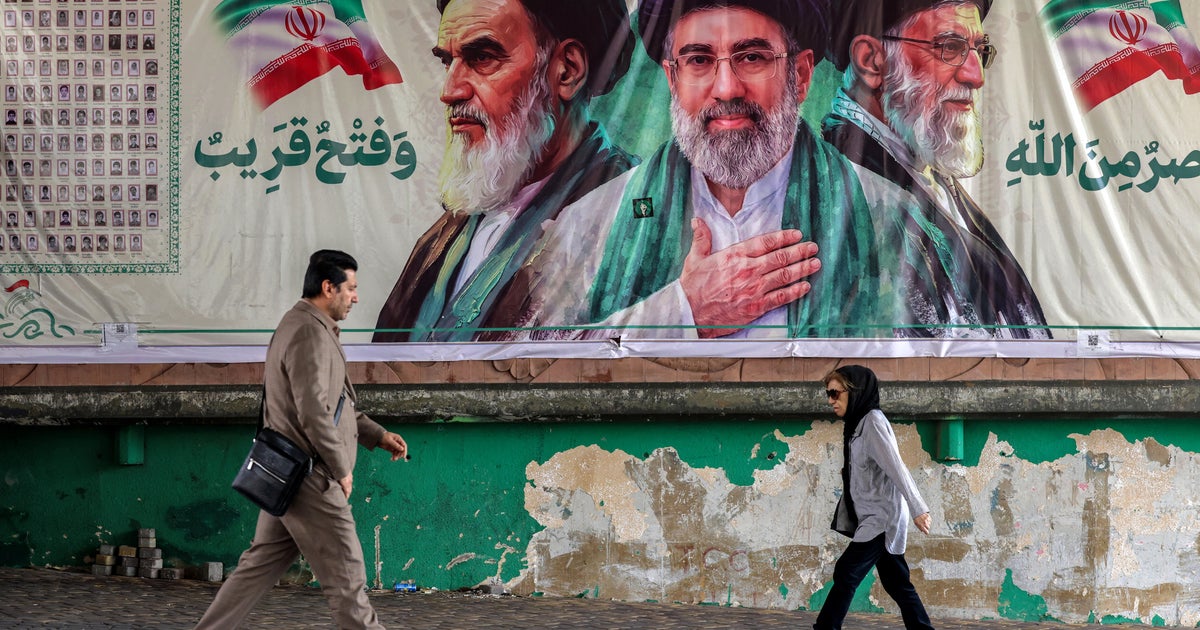
Iranian Foreign Minister Abbas Araghchi said Wednesday that Tehran and Washington were still engaged in indirect negotiations via mediators over the seven-day ceasefire proposal presented by Iran in September.
Araghchi said the U.S. was seeking to add further clauses to the Iranian proposal, which Mr. Trump rejected last month.
ATTA KENARE /AFP via Getty Images
The proposal called for the end of the U.S. naval blockade of Iranian ports and vessels, the lifting of sanctions on Iranian oil sales, the reopening of the Strait of Hormuz and the release of frozen Iranian assets.
He said Pakistan and Qatar were among the nations facilitating the indirect talks between Iran and the U.S., as they have been for months.
“The negotiating table remains in place,” Araghchi said. “It is the American side that is closing the path, not Iran.”
U.S. diplomatic missions across the Middle East have issued a new round of security warnings to Americans amid escalating attacks by Iran-backed Houthi militants against Saudi Arabia, including an Oct. 10 strike on Riyadh’s international airport that killed an American citizen.
The alerts, issued Sunday by U.S. embassies in Saudi Arabia, Bahrain, Qatar, the United Arab Emirates and several other countries, warned that hostilities could rapidly and without warning spread beyond areas already affected by the fighting. The advisories urged Americans to exercise vigilance and prepare for possible flight cancellations, airspace closures and other travel disruptions.
“We are actively warning U.S. citizens about the very real threat the Houthis pose and urging them to heed official guidance,” Edgar Vasquez, the State Department’s deputy assistant secretary for press, told CBS News.
“These alerts are part of a proactive effort by the Trump administration to ensure Americans are aware of potential risks,” Vasquez said, adding that the safety and security of American citizens remain the department’s “top priority.”
President Trump said the U.S. is “doing very well with Iran” and he’s just deciding how he wants to win the war.
“As you know, we’re doing very well with Iran,” Mr. Trump said as he took questions from reporters in the Oval Office at an unrelated executive order signing. “We just have to make a final decision of which way do we want to win? Do we want to win the nice way or the not nice way? But we’re doing very well.”
The war, which Mr. Trump said would take only a few weeks in March, has now dragged on for almost eight months with no apparent end in sight. Iran said on Tuesday it would not return to the negotiating table unless the U.S. drops its sanctions, threats and pressure campaign — an unlikely demand.
The president also discussed Europe not helping the U.S. with the war with Iran, saying, “We don’t need any help. But I was testing them.”
“I just called individual presidents and prime ministers to ask, would they like to help us? And they said, ‘No,'” Mr. Trump said. “I said, ‘Well, that’s not nice.’ You know, we spend hundreds of billions a year on NATO. And they said no.”
wp:paragraph
هلدینگ کاسپین استانبول | خرید ملک در ترکیه | صرافی معتبر ایرانی در ترکیه | خرید و فروش طلا در ترکیه | مهاجرت به ترکیه | واردات و صادرات در ترکیه | نیازمندیهای ترکیه | اخبار ترکیه | اخبار جهانی | توریست ایران | خدمات توریستی در ایران | تورهای گردشگری ایران | هلدینگ اول | خدمات کاریابی و فریلنسری و شغل | مرجع اطلاعات ایران (همه چیز در ایران) | کیف پول و خدمات مالی و پرداخت یار | اخبار ایران | تابلو زنده قیمت ارز در ترکیه و استانبول | صرافی آنلاین ترکیه | قیمت طلا و نقره در ترکیه | سرمایه گذاری در ترکیه | جواهرات در ترکیه | نرخ لحظه ای ارزها در استانبول | قیمت دلار امروز در ترکیه | قیمت دلار استانبول امروز | قیمت لحظه ای دلار | اخبار روز ترکیه استانبول | اپلیکیشن ISTEX | اپلیکیشن قیمت لحظه ای دلار و یورو و لیر و ارزها در ترکیه
/wp:paragraph wp:paragraph /wp:paragraph
About the Author