This year, Oct. 27, marks the 80th year of India’s illegal occupation of Kashmir. On Oct. 27, 1947, the Indian occupying forces first landed in Srinagar, beginning the illegal occupation of Jammu and Kashmir. The arrival of the Indian occupying forces led to the first full-scale war between India and Pakistan, ultimately leading to action by the United Nations Security Council, which, under its resolutions, endorsed the right of self-determination of the Kashmiris through a U.N.-mandated free and fair plebiscite.
For Kashmiris, that day consequently brought with it years of unfulfilled promises and repressive developments that ultimately led to the decision of Aug. 5, 2019, when India took unilateral measures to eliminate Jammu and Kashmir’s “special status,” separate Jammu and Kashmir and Ladakh into two “Union Territories” and impose what Indian leaders have ominously called a “Final Solution” for Jammu and Kashmir. These unilateral and illegal measures were in blatant violation of the U.N. Charter, relevant UNSC resolutions, and the Fourth Geneva Convention.
The Indian occupying state has, under the decision of Aug. 5, 2019, intensified a systematic effort to alter the demography of Jammu and Kashmir by awarding domiciles to non-Kashmiri Indians, changes to land regulations and electoral boundaries, and overall granting greater administrative powers to the so-called Lieutenant Governor appointed by New Delhi.
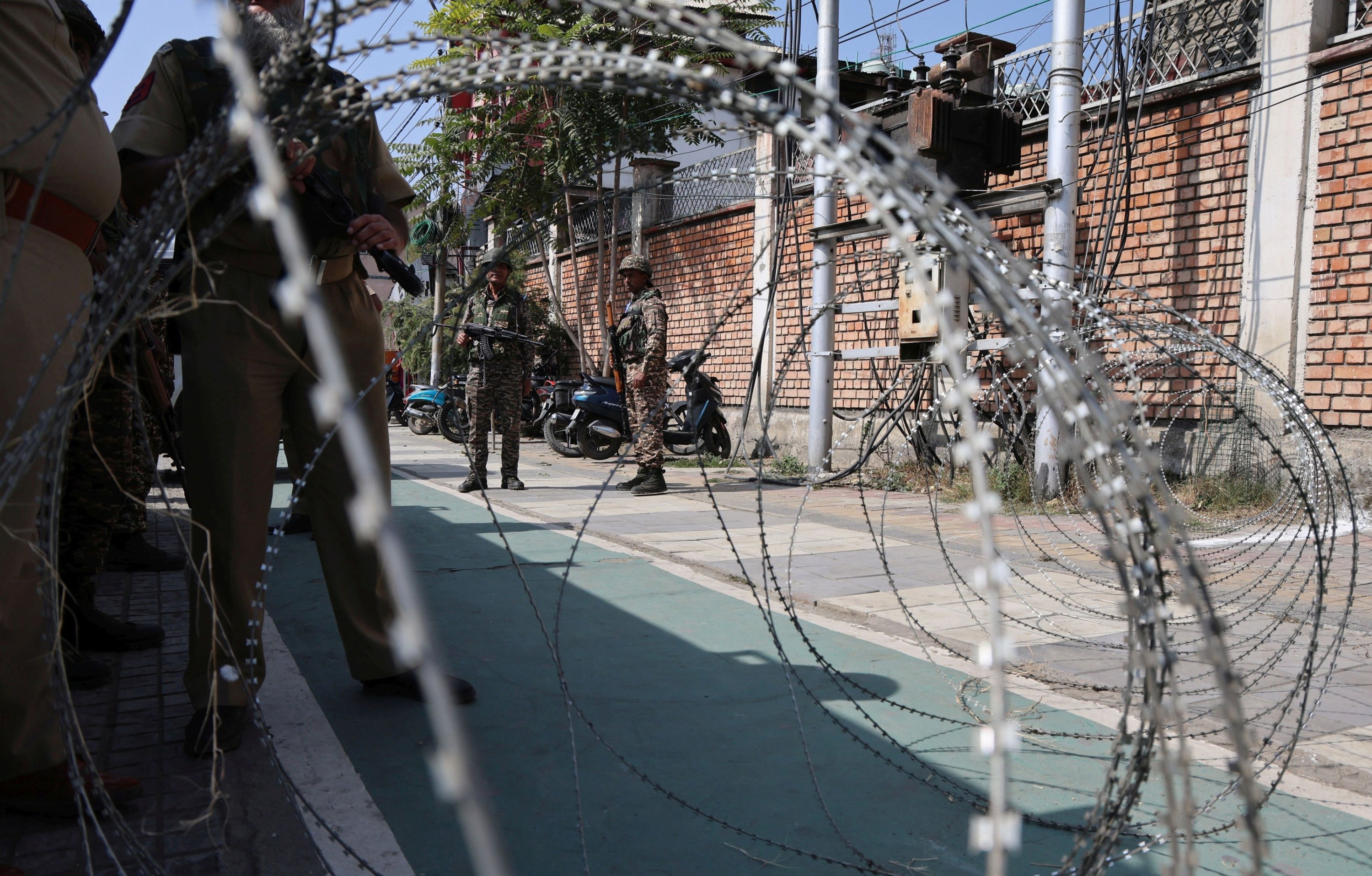
Kashmir today is the most densely occupied place in the world, with over 900,000 Indian occupying troops stationed to repress and surveil the Indigenous Kashmiris. Their basic human rights such as freedom of movement, freedom to practice religion and freedom of expression quelled ruthlessly by the occupying state over the last eight decades. The entire Kashmiri leadership has been imprisoned; thousands of Kashmiri youth, including women and children, detained; protests put down violently, with neighborhoods and villages destroyed as collective punishment.
In the last eight decades, the occupier – India has only strengthened its illegal control over Jammu and Kashmir with draconian domestic laws, state-led repression and persecution of the Indigenous Kashmiris, orchestrated terrorist attacks in the occupied Jammu and Kashmir, and disregarding international obligations. Religious freedom of the majority population is under strict constraint. A ban on congregational prayers at the historic Jamia Masjid Srinagar, closure of religious seminaries, and restrictions on religious gatherings are imposed from time to time.
In April 2025, following the state-orchestrated Pahalgam incident, which led to the death of Indian civilians in the occupied Jammu and Kashmir, the Indian state’s repression further intensified. India blamed the incident on Pakistan despite having repressive control over the occupied valley for the last eight decades.
In occupied Jammu and Kashmir, nearly 4,500 individuals, including journalists, students, academics and human rights defenders, were detained under the draconian Unlawful Activities Prevention Act, which permits prolonged detention without charge or trial.
The state-orchestrated Pahalgam terrorist attack was followed by Indian aggression against Pakistan, attacking several civilian infrastructures in Pakistan. The response by Pakistan once again reminded India that Pakistan had the capability to defend its borders. It also once again demonstrated to the world the fragility of the region and reminded the world that durable peace was only possible by granting the right of self-determination to the Kashmiri people.
The hostilities between nuclear-armed India and Pakistan have therefore highlighted the urgent need for a peaceful settlement of the Jammu and Kashmir dispute, in accordance with the relevant U.N. resolutions and wishes of the Kashmiri people.
Reacting to its humiliating defeat in the May 2025 conflict with Pakistan, India announced its unilateral decision to hold the Indus Waters Treaty in abeyance. This landmark agreement, brokered in 1960 and upheld even during wars, has long been a pillar of regional stability. Its unilateral suspension constitutes a grave violation of international law, with serious humanitarian, environmental, and peace and security implications.
Pakistan categorically rejects this declaration as null, void and without legal effect. The Indus Waters Treaty remains fully operational and binding on both parties. Any physical interference with the flow of Pakistan’s rivers would threaten our economic lifeline and the survival of millions.
In this context of India’s disregard for international law, Pakistan calls upon the international community to uphold the integrity of binding international agreements. The protection of shared resources and respect for treaty obligations are collective global responsibilities, indispensable for peace and stability. We urge states, international organizations, media and civil society to speak clearly and unequivocally in defense of the Indus Waters Treaty.
Every year on Oct. 27, Kashmiris across the world observe the Kashmir Black Day and remind the international community of its commitments made to the people of Jammu and Kashmir. The basic human rights of Kashmiris are self-determination and an end to the illegal occupation of India in Jammu and Kashmir.
On this Kashmir Black Day, Pakistan reiterates its diplomatic and political commitment to the just and peaceful resolution of the Kashmir issue as enshrined in the UNSC resolutions. On this day, we remind the world that the issue of Jammu and Kashmir remains the unfinished agenda of the partition of the Indian subcontinent and the eradication of colonialism.
The views and opinions expressed in this article are solely those of the author. They do not necessarily reflect the editorial stance, values or position of Daily Sabah. The newspaper provides space for diverse perspectives as part of its commitment to open and informed public discussion.
DAILYSABAH
هلدینگ کاسپین استانبول | خرید ملک در ترکیه | صرافی معتبر ایرانی در ترکیه | خرید و فروش طلا در ترکیه | مهاجرت به ترکیه | واردات و صادرات در ترکیه | نیازمندیهای ترکیه | اخبار ترکیه | اخبار جهانی | توریست ایران | خدمات توریستی در ایران | تورهای گردشگری ایران | هلدینگ اول | خدمات کاریابی و فریلنسری و شغل | مرجع اطلاعات ایران (همه چیز در ایران) | کیف پول و خدمات مالی و پرداخت یار | اخبار ایران | تابلو زنده قیمت ارز در ترکیه و استانبول | صرافی آنلاین ترکیه | قیمت طلا و نقره در ترکیه | سرمایه گذاری در ترکیه | جواهرات در ترکیه | نرخ لحظه ای ارزها در استانبول | قیمت دلار امروز در ترکیه | قیمت دلار استانبول امروز | قیمت لحظه ای دلار | اخبار روز ترکیه استانبول | اپلیکیشن ISTEX | اپلیکیشن قیمت لحظه ای دلار و یورو و لیر و ارزها در ترکیه
About the Author