At a time when the likelihood of the war in the Middle East escalating again is increasing, and the Trump administration is keeping the option of a new military intervention against Iran on the table, significant developments are unfolding in Türkiye’s foreign policy. Libya’s recent decision on a maritime jurisdiction agreement with Türkiye, the Istanbul meeting between the R4 countries and European countries, defense cooperation initiatives centered in Mecca and Doha, and the visit by members of the Mecca Alliance to Tehran all indicate that regional security relations are being reshaped.
These developments matter not only because Türkiye is expanding its diplomatic and military ties across regions, but also because they are creating new mechanisms for managing regional security issues. While consolidating its gains in the Eastern Mediterranean, Ankara is strengthening diplomatic coordination with Europe and regional actors. At the same time, it is expanding its defense partnerships and taking steps to prevent a new conflict with Iran. A common thread running through these policies is the assessment that security issues cannot be resolved through military capabilities alone and that greater coordination among regional actors is necessary.
Libya and Istanbul
The Libyan House of Representatives’ ratification of the maritime jurisdiction agreement signed with Türkiye in 2019 marks a significant development in Ankara’s Eastern Mediterranean policy. The shift in stance by the political authority in the east, which had previously opposed the agreement, opens new opportunities for Türkiye to expand its relations in Libya to the country’s various political centers.
However, Libya’s institutional fragmentation persists. Greece’s objections to the agreement and Egypt’s interests in the Eastern Mediterranean also remain significant. Therefore, the value of this decision for Türkiye will depend not only on its ability to strengthen its current position on maritime jurisdiction but also on its capacity to build a broader network of diplomatic relations for Libya’s future.
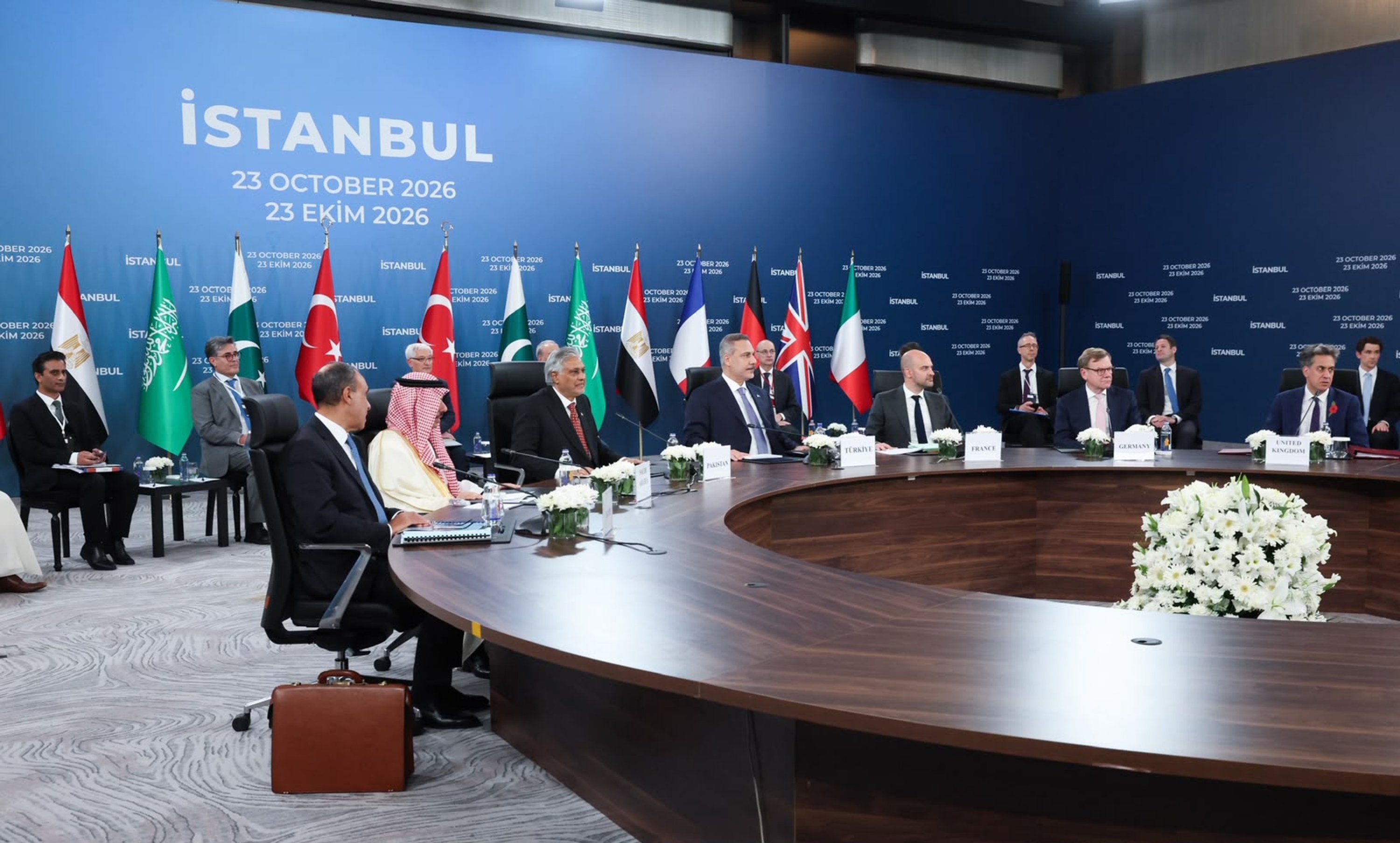
Meanwhile, the R4 and R4+E3 foreign ministers’ meetings held in Istanbul on Oct. 23 represent a distinct development in Türkiye’s regional diplomacy. The R4 group, comprising Türkiye, Egypt, Pakistan and Saudi Arabia, met with the E3 countries, France, Germany and the United Kingdom. With Italy also participating, foreign ministers from eight countries met on the same diplomatic platform.
The talks’ agenda underscores the meeting’s political significance. The conflict between the U.S. and Israel and Iran, the Palestinian issue, the war in Yemen, security concerns in the Strait of Hormuz and the Bab el-Mandeb Strait, and developments in the Black Sea were all addressed together. The parties agreed to resolve regional conflicts through diplomacy and to continue the talks.
This meeting underscores that European security and Middle Eastern security cannot be assessed separately. Tensions in the Strait of Hormuz affect energy markets; attacks in the Strait of Bab el-Mandeb impact global trade; and developments in the Black Sea affect Europe’s security and supply chains. The economic and military consequences of regional conflicts are prompting European countries to become more involved in Middle East diplomacy.
From Türkiye’s perspective, the Istanbul meeting matters because it could catalyze a new consultation mechanism between Europe and regional actors. However, the mechanism’s effectiveness will depend not only on regular meetings but also on joint diplomatic initiatives for crisis management.
Mecca and Doha
The Mecca Defense Alliance, formed between Türkiye, Saudi Arabia and Pakistan, stands out as a notable development in regional security relations. The alliance is founded on mutual security commitments and highlights the need for closer military coordination among the parties. Meanwhile, the Badr defense cooperation framework developed in Doha among Türkiye, Qatar, Pakistan and Indonesia offers new opportunities in the defense industry, technology and joint capacity building.
Although these two initiatives have different objectives and scopes, they share characteristics that could complement one another. While the Mecca arrangement focuses on military deterrence and mutual security expectations, the Doha initiative emphasizes long-term defense industry cooperation.
Türkiye’s defense-technology expertise, Pakistan’s military capabilities, Qatar’s financial resources, and Indonesia’s industrial infrastructure create significant opportunities for joint projects. However, these countries do not share the same threat perceptions or regional priorities. Therefore, expanding defense cooperation does not mean all parties have adopted a common military strategy.
From the Mecca Alliance’s perspective, a more critical issue is how it will implement mutual defense commitments during regional crises. Houthi attacks targeting Saudi Arabia, tensions with Iran, and U.S. military policies in the region constitute the security challenges the alliance may face in the future. Members must strengthen military deterrence in response to these developments as much as they develop diplomatic initiatives to prevent conflict escalation.
Visit to Tehran
The meeting in Tehran between high-level security officials from Türkiye, Saudi Arabia and Pakistan and the Iranian government is particularly important for assessing the role the Mecca Alliance could play in regional security. Meetings between Saudi Defense Minister Khalid bin Salman, Pakistani Chief of General Staff Asim Munir, and National Intelligence Organization (MIT) Director Ibrahim Kalın show the alliance members’ willingness to engage in direct security dialogue with Iran.
The timing of the visit is also noteworthy. Ahead of the elections in Israel and the U.S. midterm elections on Nov. 3, the possibility of a new military operation against Iran is being discussed. The Trump administration’s insistence on keeping the military option on the table, coupled with Israel’s security approach toward Iran, is increasing the risk of a new conflict in the region.
In this context, the joint visit of the Mecca Alliance members to Tehran can be seen as an important diplomatic signal indicating that the alliance is not acting solely to counterbalance Iran militarily. Türkiye, Saudi Arabia and Pakistan are working to strengthen their own security capabilities while also seeking to develop direct channels of negotiation with Iran.
The second dimension of the visit concerns the regional consequences of a potential U.S. or Israeli intervention. A new military operation against Iran could increase security risks across a broad geographic area, from the Strait of Hormuz to Yemen, and from Iraq to military installations in the Gulf. The fact that Saudi Arabia is facing Houthi attacks demonstrates that these risks could have direct consequences for alliance members.
The third dimension is linked to the future of the regional security order. While Iran advocates reducing external powers’ influence on regional security, Türkiye and other partners want regional countries to take greater responsibility for managing security threats. However, Iran’s policies on regional influence, its ties with the Houthis in Yemen, and its stance on the Strait of Hormuz indicate that differences of opinion between the parties persist.
When the R4 meeting in Istanbul and the visit to Tehran are considered together, it becomes clear that the same countries are trying to build coordination across different diplomatic platforms. While Istanbul is establishing a joint diplomatic agenda with European countries, Tehran is making direct contact with Iran. The Mecca Alliance, meanwhile, provides the military-security dimension of these initiatives.
These developments do not yet indicate the emergence of an institutionalized regional security architecture. However, they show that regional actors are pursuing defense cooperation and diplomatic negotiations simultaneously. Türkiye’s role in this process is significant in expanding opportunities for communication and coordination among countries with different security priorities.
In the coming period, the outcomes of the Tehran talks, the continuity of the diplomatic mechanism launched in Istanbul, and the Mecca Alliance’s response to crises will reveal the extent to which these initiatives can contribute to regional security.
The views and opinions expressed in this article are solely those of the author. They do not necessarily reflect the editorial stance, values or position of Daily Sabah. The newspaper provides space for diverse perspectives as part of its commitment to open and informed public discussion.
DAILYSABAH
هلدینگ کاسپین استانبول | خرید ملک در ترکیه | صرافی معتبر ایرانی در ترکیه | خرید و فروش طلا در ترکیه | مهاجرت به ترکیه | واردات و صادرات در ترکیه | نیازمندیهای ترکیه | اخبار ترکیه | اخبار جهانی | توریست ایران | خدمات توریستی در ایران | تورهای گردشگری ایران | هلدینگ اول | خدمات کاریابی و فریلنسری و شغل | مرجع اطلاعات ایران (همه چیز در ایران) | کیف پول و خدمات مالی و پرداخت یار | اخبار ایران | تابلو زنده قیمت ارز در ترکیه و استانبول | صرافی آنلاین ترکیه | قیمت طلا و نقره در ترکیه | سرمایه گذاری در ترکیه | جواهرات در ترکیه | نرخ لحظه ای ارزها در استانبول | قیمت دلار امروز در ترکیه | قیمت دلار استانبول امروز | قیمت لحظه ای دلار | اخبار روز ترکیه استانبول | اپلیکیشن ISTEX | اپلیکیشن قیمت لحظه ای دلار و یورو و لیر و ارزها در ترکیه
About the Author