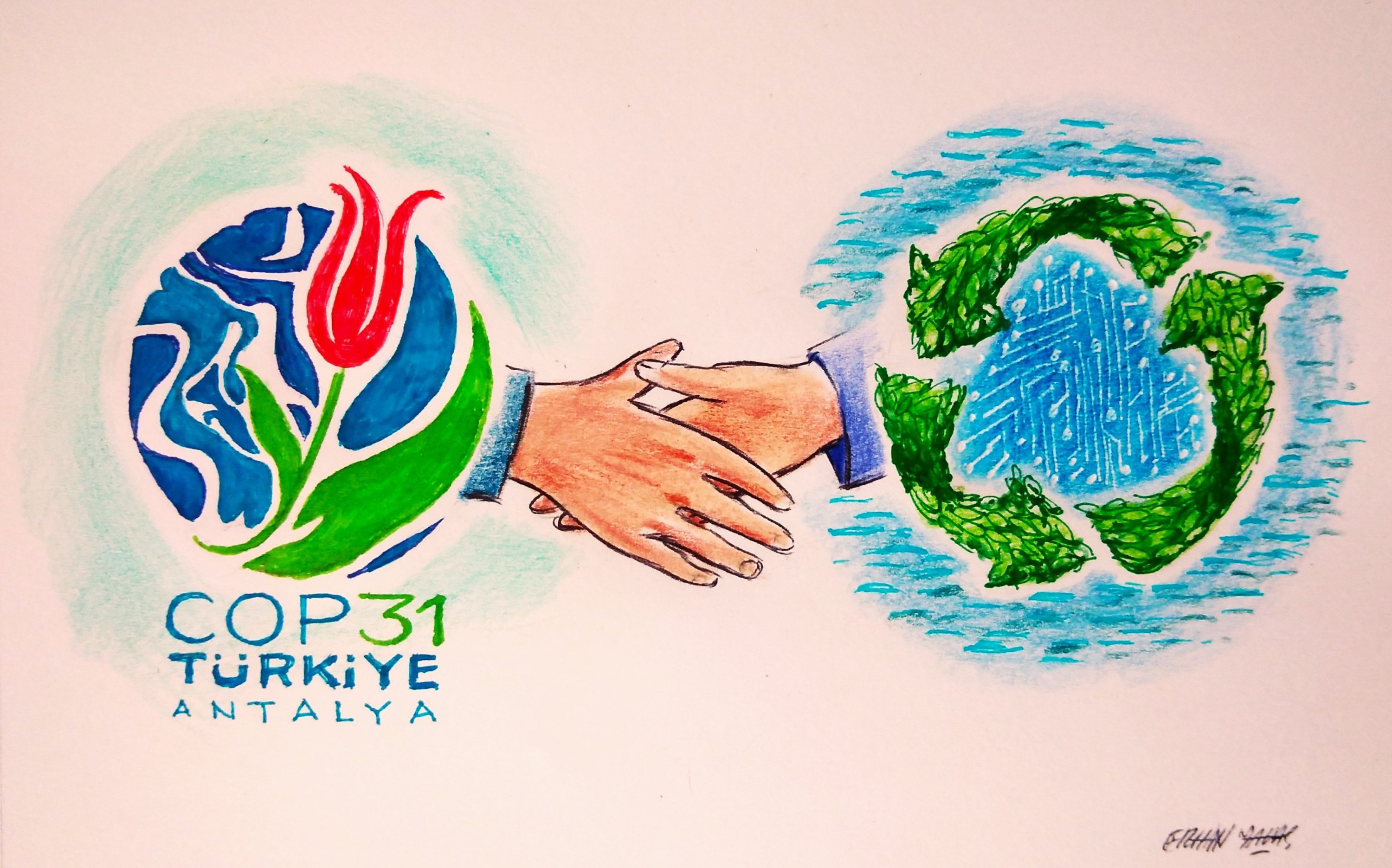
The global climate crisis is no longer a distant theoretical challenge; it is an unfolding reality demanding immediate, systemic execution. Across the world, escalating heat waves, agricultural droughts and volatile weather patterns are unmistakable reminders that the window for hesitation has closed. For decades, international climate governance has been characterized by diplomatic communiques, non-binding resolutions and aspirational pledges. Yet, as the pragmatic ethos guiding the preparations for the 31st Conference of the Parties (COP31) reminds us: Commitments are declarations of intent, but implementation represents trust.
Effective climate diplomacy requires comprehensive strategies: formulating robust solutions, consulting widely with diverse stakeholder nations and communities, and pursuing concrete transition pathways. However, real solutions ultimately rely on actionable, tangible, and impactful measures taken and implemented through strong public-private partnerships. The international community cannot remain frozen in a state of wishful thinking or perpetual conditional phrasing. Action should be taken right now.
As Türkiye prepares to host COP31, it steps into the center of the global green transition. Leading this multilateral effort is both a historic privilege and an urgent responsibility. To translate global ambition into ground-level adaptation, every capable and willing partner must be engaged. In this vital mission, Taiwan – a major manufacturing power, technological hub, and pioneer of the circular economy – offers a battle-tested blueprint that can serve as the missing puzzle piece for international climate adaptation and support Türkiye’s COP31 leadership.
Championing zero waste
Türkiye’s presidency of COP31 brings indispensable leadership to international climate governance. Through Türkiye’s pioneering “Zero Waste” initiative, circularity has evolved from an environmental aspiration into a recognized global governance model. This leadership has yielded a milestone breakthrough: for the first time, zero waste has been formally embedded as a core pillar of the COP agenda. The summit has established concrete global benchmarks for 2035 – halving municipal solid waste generation and raising the industrial circular material use rate to %15. The world has finally acknowledged what Türkiye has long championed: reaching net-zero is unattainable without fundamentally overhauling resource consumption and industrial loops.
Yet, leading this global transition also means confronting practical industrial realities. As an essential manufacturing power connecting Europe, Asia, and the Middle East, Türkiye’s economic backbone relies on energy-intensive sectors such as steel, automotive, textiles, and machinery. Concurrently, the European Union’s Carbon Border Adjustment Mechanism (CBAM) is entering full enforcement, requiring export-driven economies to accelerate decarbonization.
Furthermore, the Anatolian peninsula and the Mediterranean basin are climate hot spots, grappling with escalating seasonal heat, water stress, and wild weather events. For Türkiye, adaptation is not merely environmental policy – it is a critical imperative for economic stability, food security and urban well-being.
Taiwan’s empirical blueprint
Navigating this dual challenge – reducing emissions while maintaining robust industrial competitiveness – is precisely where Taiwan’s experience offers immediate value. As a fellow manufacturing nation, Taiwan has voluntarily aligned its legal frameworks with the Paris Agreement, turning international standards into transparent, verifiable outcomes.
First, Taiwan has demonstrated that industrial manufacturing can progressively decouple from carbon emissions. According to its latest national greenhouse gas inventory compiled strictly under IPCC guidelines and the Paris Agreement’s Enhanced Transparency Framework, Taiwan’s net emissions in 2024 fell by 6.59% compared to 2005 levels, marking a third consecutive year of decline. More notably, carbon dioxide emission intensity dropped by 48.59% over the same period. Taiwan has proven that economic expansion and emissions reduction can move forward hand in hand.
Second, Taiwan has transformed zero waste from civic duty into a high-value industrial powerhouse. Following comprehensive statutory revisions to its Resource Circulation Promotion Act and Waste Disposal Act, Taiwan adopted a full life-cycle approach to resource management, prioritizing source prevention, eco-design, product longevity, and recycling. Today, Taiwan boasts 69 publicly listed circular economy enterprises generating an annual turnover exceeding NT$1 trillion ($31 billion). From converting recycled PET bottles into high-performance functional textiles to recovering precious metals from industrial electronic waste, Taiwan exemplifies how circularity fosters green competitiveness and supply chain resilience, directly advancing the COP31 industrial target of a 15% circular material use rate.
Third, industrial transformation requires viable economic mechanisms. In 2026, Taiwan launched its carbon fee system, already raising NT$4.97 billion. Instead of being absorbed into general revenue, these funds are directed into the Greenhouse Gas Management Fund, providing financing credit guarantees and interest subsidies to guide private investment into clean technologies. With Taiwan advancing toward a cap-and-trade emissions trading system (TW-ETS) and its carbon fee mechanism already recognized under the United Kingdom’s CBAM list, Taiwan offers practical insights for nations navigating cross-border carbon pricing.
Resilient cities
Climate adaptation must also protect citizens on the ground. To counter intensifying heat waves, Taiwan launched the “National Green Canopy Program,” proactively preparing for a 40 degree Celsius (104 degree Fahrenheit) extreme-temperature scenario. By integrating LiDAR remote sensing, 3D digital twin models, and urban microclimate sensors, the program maps urban heat islands with surgical precision, establishing interconnected green corridors to cool metropolitan centers. This smart-infrastructure model offers practical applications for growing Turkish metropolises such as Istanbul, Ankara, and Izmir as they adapt to longer, hotter summers.
Equally vital is ensuring that climate action preserves social equity. In line with UNFCCC principles, Taiwan has embedded a “Just Transition” into its statutory framework. Drawing from the Greenhouse Gas Management Fund, Taiwan delivers targeted financial assistance, retraining, and innovation subsidies to small and medium-sized enterprises (SMEs) and front-line industrial workforces, ensuring no community is left behind as industries transition.
Public-private partnerships
A core pillar of Taiwan’s progress is the conviction that governments cannot achieve resilience in isolation. While policymakers establish regulatory certainty and performance targets, the private sector supplies the engineering agility, capital, and speed needed for scale.
Taiwan’s mitigation programs for six major sectors – featuring 20 flagship action plans and 63 performance indicators – were co-developed with industry leaders. Through risk-sharing instruments, public-private partnerships bridge the gap between intent and implementation, turning conditional phrasing into operational realities: electric bus networks, industrial smart microgrids and digitized energy efficiency retrofits.
Bilateral climate partnership
The international community warmly congratulates Türkiye on hosting COP31 and looks forward to a historic and transformative summit. Successfully presiding over this global gathering will highlight Türkiye’s diplomatic stature and project its visionary Zero Waste philosophy worldwide. It also represents an opportunity to demonstrate how major manufacturing nations can lead the green transition without sacrificing industrial vitality.
Taiwan stands ready to contribute as a steadfast, pragmatic partner. As major manufacturing powers, Taiwan and Türkiye share common goals: decarbonizing strategic industries, safeguarding export competitiveness, and building climate-resilient cities. Taiwan continues to advance environmental governance and sustainable development through concrete international projects under Article 6 of the Paris Agreement, ranging from circular economy exchanges to renewable demonstration facilities.
Climate change respects no borders, ideologies, or political boundaries. No capable partner should be excluded from international climate governance for political reasons. Taiwan has proven its readiness to share its net-zero transition experience and support global climate action.
Guided by the principles of participating in dialogue, building consensus, and taking action, we wish Türkiye every success in hosting COP31. By integrating Taiwan’s actionable industrial experience into the global adaptation framework, we can supply the missing puzzle piece – moving beyond conditional rhetoric and building a resilient, sustainable future for all.
The views and opinions expressed in this article are solely those of the author. They do not necessarily reflect the editorial stance, values or position of Daily Sabah. The newspaper provides space for diverse perspectives as part of its commitment to open and informed public discussion.
DAILYSABAH
هلدینگ کاسپین استانبول | خرید ملک در ترکیه | صرافی معتبر ایرانی در ترکیه | خرید و فروش طلا در ترکیه | مهاجرت به ترکیه | واردات و صادرات در ترکیه | نیازمندیهای ترکیه | اخبار ترکیه | اخبار جهانی | توریست ایران | خدمات توریستی در ایران | تورهای گردشگری ایران | هلدینگ اول | خدمات کاریابی و فریلنسری و شغل | مرجع اطلاعات ایران (همه چیز در ایران) | کیف پول و خدمات مالی و پرداخت یار | اخبار ایران | تابلو زنده قیمت ارز در ترکیه و استانبول | صرافی آنلاین ترکیه | قیمت طلا و نقره در ترکیه | سرمایه گذاری در ترکیه | جواهرات در ترکیه | نرخ لحظه ای ارزها در استانبول | قیمت دلار امروز در ترکیه | قیمت دلار استانبول امروز | قیمت لحظه ای دلار | اخبار روز ترکیه استانبول | اپلیکیشن ISTEX | اپلیکیشن قیمت لحظه ای دلار و یورو و لیر و ارزها در ترکیه
About the Author