Home – CBSNews.com
Iran’s top diplomat on Saturday said there were no plans to hold talks with the United States despite growing concerns over a return to war.
“Currently, there are no plans for meetings with American officials, and any speculation to the contrary is merely media assumption,” Foreign Minister Abbas Araghchi said in an interview with Al Jazeera, according to the state news agency IRNA.
“We see no need to meet with the Americans at present, our conditions are clear, and the mediators continue their consultations regarding them,” Araghchi told Al Jazeera.
Qatari and Pakistani mediators met in Doha, Qatar, on Saturday, where an Iranian delegation was present. Iranian officials, through the Qatari mediators, received an outline for a peace deal from the U.S. last weekend, spearheaded by Vice President JD Vance.
“The American side’s attempt to open the door to broader dialogue and understanding is considered a positive step, and if Washington’s goal from Vance’s message is to stir up differences, it will be a new mistake added to its previous errors,” Araghchi told Al Jazeera on Saturday.
Saudi Arabia’s vice minister of foreign affairs said on Saturday the message from the region is that it wants a return to peace. Speaking at a security forum in Bahrain, Waleed ElKhereiji told the audience that efforts were being made to prevent a military escalation and reach an agreement to end the crisis with Iran.
“If you look at … the efforts that everybody is trying to do, the message is very clear. People in this part of the world want to bring peace back to the region,” he said. But he said no one can predict the outcome of the efforts.
Concerns are rising about a return to all-out war, especially after Tuesday’s midterm elections in the U.S. President Trump has opined during recent rallies that he could quickly bring the war to an end through military action.
Speaking at the same event, Egyptian Foreign Minister Badr Abdelatty said an escalation in the region would be extremely destructive.
“We are very confident that … the second round will be more dangerous, more destructive, and it will lead to nowhere,” he said.
AP/CBS
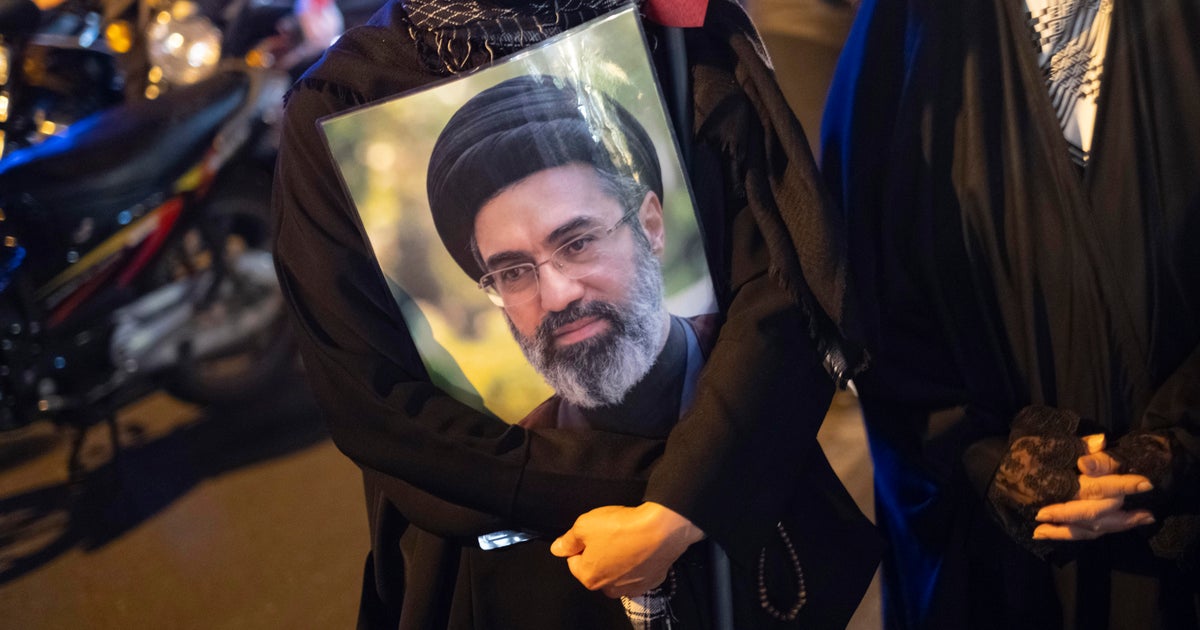
Iran’s supreme leader, Mojtaba Khamenei, on Saturday warned the United States against launching fresh attacks, amid weeks of heightened tensions and repeated threats.
“If the enemies once again launch military or terrorist attacks, it is the armed forces of the Islamic Republic and the Iranian nation that will determine the time and conditions for ending them,” said a statement attributed to Khamenei posted on his Telegram channel.
The remarks came during a reported meeting between Khamenei and senior military commanders, including armed forces chief of staff Ali Abdollahi, army chief Amir Hatami and Revolutionary Guards commander Ahmad Vahidi. It was the first reported meeting between them.
Khamenei has not been seen publicly since he became supreme leader, following his father Ayatollah Ali Khamenei’s killing in U.S.-Israeli strikes at the start of the war in February.
According to the statement, Khamenei ordered the commanders to ensure that “any level or type of threat must be met with an immediate, impactful and geographically unrestricted response.”
CBS/AFP
Saudi air defences intercepted a drone in the Riyadh region on Saturday, according to the spokesman for the Saudi-led military coalition fighting Yemen’s Houthis.
“Air defences intercepted and destroyed a hostile drone in the Riyadh region,” Turki al-Malki wrote on X, adding that “debris from the interception fell without causing injuries.” Malki did not say who launched the drone.
In recent weeks, Yemen’s Iran-backed Houthis have ramped up attacks on Saudi Arabia, including by launching deadly strikes on Riyadh airport that forced its closure for two weeks and the cancellation of flagship events.
On Friday, Malki said the Houthis had targeted the Medina region, home to Islam’s second holiest city, but the group later denied the claim.
The Houthi attacks on Saudi oil infrastructure, airports and ships come after hostilities resumed in Yemen over the summer between the Houthis and the country’s internationally recognised government, which is backed by Riyadh.
More than 1,600 people have been killed and over 275,000 displaced since the fighting reignited, according to United Nations figures.
CBS/AFP
Iran’s Revolutionary Guards said Friday that a supertanker carrying more than 2 million barrels of oil struck a naval mine and caught fire while using an unauthorized route in the Strait of Hormuz, Iranian state media reported. The Guard said it was the fourth oil tanker to suffer an explosion Friday after attempting to use unauthorized routes through the strait.
Iran has repeatedly warned vessels against passing through the strait without Tehran’s permission. It has claimed responsibility for attacks on ships and said last month that vessels attempting to pass through the strait without authorization would face “destruction.” Tehran has asserted control over much of the waterway since the U.S. and Israel launched the war on Feb. 28.
Earlier on Friday, the Guard’s navy said three other tankers caught fire after striking mines in the strait, Iranian state TV reported. It claimed the vessels had switched off their navigation and positioning systems and ignored repeated radio warnings. Iran’s report did not identify the vessels or provide details about the crews. The Associated Press could not verify those claims.
Meanwhile, Oman said it had evacuated 25 crew members from a Panama-flagged tanker that was attacked in the Strait of Hormuz, 1.6 nautical miles off the coast of Musandam Governorate, catching fire. It is unclear whether that incident is related to the fires described by Iran.
The United Kingdom Maritime Trade Operations center also reported Friday that a vessel was struck by an “unknown projectile” south of Lavan, an island just off mainland Iran near Shidvar. The organization, part of the British military that monitors maritime safety, said the crew was safe.
Yemen’s Houthis targeted the presidential palace in Aden on Friday with two missiles, a police official told AFP, hours after Saudi forces said they had intercepted an attack by the group on the Gulf kingdom.
Aden, the seat of Yemen’s Saudi-backed and internationally recognized government, has been targeted repeatedly since Yemen’s dormant civil war reignited in July.
Two eyewitnesses told AFP they saw ambulances entering the palace in Aden, a large compound made up of several buildings including facilities used by government and Saudi-led coalition forces, after the incident.
Shortly before, residents and an AFP journalist said they heard two blasts in the city.
The Houthis, who control the capital Sanaa to the north, most recently struck the perimeter of Aden’s airport on Wednesday after saying they had targeted a naval base and a military camp last week.
There were more strikes reported in and around the Strait of Hormuz than any other month during the Iran-U.S. war, according to the U.K. Marine Trade Operations Centre, which is supported by the Royal Navy.
There were just over 30 attacks in the Strait of Hormuz, Gulf of Oman or Persian Gulf reported in October, with only March, the first month of the war, reporting even 30 attacks, according to the UKMTO. There were twice as many attacks in October as there were in September. While there were likely more attacks in the month, the UKMTO only counts attacks reported by verified vessels in the region.
The war also crossed the eight-month mark this week as it started on Feb. 28. Since the war started, there have been 145 reported incidents, the UKMTO said. While the UKMTO does not track who fired the projectiles that hit vessels, the vast majority of strikes came via Iran. Iran’s Revolutionary Guard Corps often claims responsibility for the attacks.
Iran has started to claim a large number of ships hitting mines in the region as well, though they largely do not appear on the list of incidents from the UKMTO.
Since July 6, 59 of the 81 projectile strikes on vessels in the Strait of Hormuz region came along the southern route, the UKMTO said. The U.S. has championed the southern route, and used it to escort oil tankers out of the Persian Gulf, while Iran calls the route illegal and says ships need to travel north, along the Iranian coast.
Secretary of State Marco Rubio opened talks Friday with G20 counterparts including Russia’s Sergei Lavrov, in meetings set to be fractious as wars in Ukraine and Iran, alongside surging energy costs, fan discord.
The foreign ministers’ meeting in Atlanta takes place just days before crucial midterm elections, setting the stage for a December G20 leaders’ summit in Miami at President Trump’s Doral resort.
But ongoing conflicts have deepened rifts even as the United States seeks to focus on economic growth, trade imbalances and supply chain challenges in areas like energy and critical minerals.
Rubio warned at an opening plenary session that the world faces “interconnected economic and geopolitical crises, many of which pose severe threats” to the global economy.
He urged the G20 to work together against threats including strains to global energy and food supply chains, and on freedom of navigation.
Still, few breakthroughs are expected this week from the Group of 20 economies — which include China, India, Russia, Japan, Germany and France — as officials face divisions over Moscow’s war on Ukraine and fallout from the conflict with Iran.
Global energy prices have rocketed since U.S.-Israel strikes on Iran from late February triggered Tehran’s blockade of the Strait of Hormuz.
“This is the last test case the G20 has, at least under the US G20 presidency, until Miami,” Alisha Chhangani of the Atlantic Council told AFP. Its outcomes will affect how the December summit shapes up.
No new oil leakage has been detected from the tanker GEM NO. 2 following an oil spill from the vessel in the United Arab Emirates’ territorial waters, as cleanup operations continue along the UAE coastline, the Persian Gulf nation’s official WAM news agency reported.
WAM quoted the Ministry of Energy and Infrastructure as saying Friday that technical teams had repaired damaged parts of the vessel, restored some operating systems and assessed the ship’s structural integrity. Authorities said the source of the spill had been stopped.
According to the Ministry of Climate Change and Environment, the oil slick is concentrated off Umm Al-Quwain, extending toward coastal areas of Ras Al Khaimah, Ajman and Sharjah.
Pollution levels have declined, while monitoring and cleanup operations continue.
The British maritime security agency UKMTO reported on Oct. 9 that a vessel had been hit by a projectile off the UAE coast, causing a fire that was later brought under control. It did not assign blame, but Iran has repeatedly targeted commercial ships in and around the southern Strait of Hormuz, which includes the UAE coastline.
The Saudis intercepted a drone near the capital of Riyadh on Friday afternoon as well as a ballistic missile in southern Saudi Arabia, according to the country’s Coalition Joint Forces Command.
The coalition said both were fired by the Houthis. It’s unclear exactly where the missile was intercepted in southern Saudi Arabia.
The Houthis have regularly targeted locations in Saudi Arabia, everywhere from just over the border from Yemen to hundreds of miles into the interior, including Riyadh. Airports have been a consistent target of Houthi attacks.
The Saudi coalition had earlier announced it intercepted a drone near the holy city of Mecca, which the Houthis denied was fired by their forces.
A Lebanese military court on Friday charged 13 people for their alleged involvement in shipping explosives to Hezbollah, a judicial source told the AFP news agency, after authorities seized the roughly 1,100-pound cargo earlier this month.
The charges come as pressure mounts on Hezbollah, long a major political and paramilitary force in Lebanon that the U.S. and Israel consider an Iran-backed terrorist organization. The group has been weakened by back-to-back wars with Israel and is now facing a concerted push from authorities in Beirut, with backing from the Trump administration, to disarm its military wing.
Only two of the 13 people charged over the explosives shipment have been detained, and only eight have been identified, with the remaining five known only by noms de guerre.
Proceedings have been opened “against 12 members of Hezbollah, and one of their spouses,” a judicial official told AFP. They were charged with “violating government decisions, possession of arms and explosives, and criminal conspiracy to undermine the authority of the state,” the source said.
In a rare admission, Hezbollah acknowledged ownership of the vehicle and its cargo, and even demanded the shipment be returned.
Lebanese Prime Minister Nawaf Salam has vowed that authorities “will deal with weapons outside the legal framework with the required firmness.”
In June, Lebanon and Israel signed a framework peace agreement that included the disarmament of Hezbollah and a gradual Israeli withdrawal from occupied territory in southern Lebanon, with the Lebanese army stepping in to secure the area.
So far, Hezbollah has flatly refused to disarm or acknowledge the ceasefire, and very little of what Israel calls its occupied “security zone” in southern Lebanon has been handed over to Lebanese forces.
CBS/AFP
Oman’s navy has evacuated 25 crew members from a Panama-flagged commercial vessel after it was targeted and a fire broke out on board, the Omani Maritime Security Center said in a statement Friday.
The evacuation was carried out in coordination with the Maritime Security Center approximately 1.6 nautical miles off the coast of Musandam Governorate, the northern tip of Oman that juts out into the center of the Strait of Hormuz.
Crew members were “provided with the necessary medical care,” the navy said in a statement.
Earlier Friday, Iran’s navy and Islamic Revolutionary Guard Corps said two ships were on fire after striking sea mines in the Strait of Hormuz after attempting to use shipping lanes close to Oman’s coast that the U.S. military insists are safe and open, but Tehran considers illegal.
Major U.S. oil and gas giant ExxonMobil reported Friday that its third-quarter profits had more than doubled to $15.4 billion, as it benefited from higher oil prices and refining margins due to the U.S.-Iran war.
Profits in the period were slightly more than double the $7.5 billion in the year-ago period.
Oil prices have been high since the start of the war. As of Friday, the two main benchmark products, Brent crude and U.S. West Texas Intermediate, remained up about 70% compared to a year ago.
CBS/AFP
The Iranian navy said Friday that an enemy drone was “struck and destroyed” east of the Strait of Hormuz.
In a statement, the navy also said two oil tankers “were damaged and caught fire after striking naval mines,” accusing the vessels of ignoring warnings and navigating in prohibited and unsafe waters with their tracking systems switched off.
It was not immediately clear if the two vessels referred to by the Iranian navy were the same tankers that Iran’s Revolutionary Guard Corps reported earlier Friday to have hit mines in the strait.
President Donald Trump said Friday that the war with Iran is “going to get wrapped up soon.”
Speaking to Kansas City radio station KCMO ahead of the Nov. 3 midterm elections, the president said “it’s going to get wrapped up soon,” without specifying how.
“We need a guarantee there’ll never be a nuclear weapon,” he added.
The commander of the U.S. military’s Central Command, Adm. Brad Cooper, reiterated his longstanding assertions on Friday that Iran’s navy is “at the bottom of the sea” and that southern commercial shipping lanes through the Strait of Hormuz are clear of Iranian mines and safe to navigate.
In a video posted on social media, Cooper said the U.S. had helped Gulf partners export more than 1.5 billion barrels of crude oil since the summer, while the U.S. naval blockade had prevented Iran from exporting any oil through the strait.
Cooper said he had recently flown over the strait and seen U.S. military “assets in the air and on the water.”
“What I didn’t see,” said Cooper, was Iran’s Islamic Revolutionary Guard Corps “out there at all. They patrolled the Strait of Hormuz and surrounding waters for decades, harassing and threatening and seizing commercial vessels at will, but they were not out there because Iran’s navy is all at the bottom of the sea.”
Cooper renewed the claim made by President Trump and the Pentagon since late August that “we also successfully cleared the strait’s internationally recognized primary transit routes of Iranian sea mines. And today, U.S. forces remain highly vigilant and present to ensure that all primary transit routes in the Strait of Hormuz remain free and clear.”
His comments came a day after Iran’s navy claimed four vessels had struck sea mines and been disabled as the attempted to transit the strait via the U.S.-backed southern route. The U.K. navy’s Maritime Trade Operations center said Thursday evening, meanwhile, that a tanker was struck by a projectile in the strait.
It was unclear if the ship reported by UKMTO to have been hit was one of the four Iran said had hit mines.
A source familiar with the ongoing diplomacy confirmed to CBS News that Qatari mediators were in Tehran on Friday to convey the latest edits to a draft proposal to end the U.S. war with Iran.
The source said there were indications of progress being made.
A draft was presented by Qatari mediators last Sunday, and a response from Iran is expected by the weekend. The aim of the proposal is to avert a return to U.S. military action against Iran, which President Trump has threatened multiple times in recent weeks.
Iran’s Islamic Revolutionary Guard Corps said Friday that two oil tankers had been halted after unspecified “incidents” as they attempted to transit what Tehran considers an unauthorized route through the Strait of Hormuz.
“Two offending oil tankers, one in the eastern part and the other in the western part of the Strait of Hormuz, which were attempting to pass through the unauthorized route, encountered incidents and were brought to a halt in the waters south of the strait,” the IRGC said in a statement.
Iran has repeatedly warned shippers that using the southern route through the waterway, which has been promoted by the U.S., puts them at risk as the regime deems it an illegal passage.
The tankers had “switched off all their navigation and positioning systems and, with the support of the terrorist U.S. military, were attempting to exit through the unauthorized route,” the IRGC statement said.
The IRGC did not specify the nature of the incidents, which came a day after Iran’s armed forces said at least four tankers had been forced to stop in the area after hitting sea mines.
The U.K. navy’s Maritime Trade Operations center said Thursday evening that a tanker was struck by a projectile in the Strait of Hormuz. It was unclear if the ship reported by UKMTO to have been hit was one of the four Iran said had hit mines, but the timing of the report suggested it could have been a separate incident.
CBS/AFP
Qatari officials returned to Iran on Friday to push for a peace deal between Tehran and Washington, Iran’s state-run IRNA news agency, along with Reuters and AFP, reported.
The talks have been coordinated with the U.S., an official told Reuters.
The delegation is led by a senior adviser to Qatar’s prime minister and foreign minister and is scheduled to meet with senior Iranian officials, IRNA said, adding that the discussions would focus on bilateral relations between Iran and Qatar, as well as developments in the region.
An official briefed on the latest diplomacy confirmed to CBS News Wednesday that Qatari mediators had presented Iran with a new draft deal to end the war. A senior Iranian official told Reuters that Qatar had only come with “unacceptable” ideas, and that Tehran would not change its stance on the nuclear issue, something Washington wants included in negotiations from the start.
Tehran wants the U.S. to first lift its blockade of Iranian ports and to drop sanctions limiting the country’s gas and oil sales.
U.S. Central Command
Iranian Foreign Minister Abbas Araghchi said Wednesday in a post on X that Tehran “continues to give diplomacy a chance to succeed” and is working with mediators to review ideas that Tehran included in a proposal floated last month, which was summarily rejected by President Trump but which Iran still wants to see used as the basis for a new ceasefire agreement.
On Thursday, Mr. Trump said a letter from Vice President JD Vance to Iranian security chief Mohsen Rezaei — which was reported by multiple outlets as an attempt to restart peace negotiations — was an outreach intended only to help get medical supplies into Iran.
Iran has yet to reply to the letter, according to the semi-official Tasnim news agency.
The U.S. Department of Defense has added two more service member deaths to its official account of casualties since the war with Iran started more than eight months ago, bringing the overall death toll to 23.
Both of the newly noted deaths on the Defense Casualty Analysis System portal were noncombat related. In total the DCAS portal says 11 service members have been killed by enemy fire during the war, and 12 others have died under circumstances deemed nonhostile, which includes accidents and sickness.
Both of the service members recently added as nonhostile deaths were airmen, including one who died of an illness and another from unspecified causes that remain under investigation, The Washington Post quoted the Air Force as saying.
The two deaths added to the DCAS system are listed under Overseas Operations, which includes deaths recorded by the Pentagon after it stopped using the name Operation Epic Fury for the offensive against Iran in May, after Secretary of State Marco Rubio declared the operation over.
The Saudi-led coalition said Friday that it had intercepted and destroyed a drone in the Mecca region fired by Yemen’s Iran-backed Houthi rebels.
“A drone launched by the terrorist Houthi militia has been intercepted and destroyed in the Mecca region,” the coalition wrote in a post on X.
The Houthis denied any attempt to strike Saudi Arabia on Friday, the Reuters news agency reported.
Houthi military spokesperson Yahya Saree said on social media that the group hadn’t conducted any operations aimed at Saudi territory, adding that the Houthis only target Saudi oil facilities and military bases.
CBS/AFP
A tanker was struck Thursday evening by a projectile in the Strait of Hormuz, the U.K. navy’s Maritime Trade Operations center reported, after Iran’s navy claimed four ships had struck sea mines in the area.
UKMTO said the ship hit by a projectile was exiting the strait along the southern route, which the U.S. has encouraged international shipping companies to use, when it came under fire.
“There are no reported injuries to the crew or environmental impact … at this time,” UKMTO said.
Iran’s Islamic Revolutionary Guard Corps and its military claimed in two separate announcements earlier Thursday that four tankers had struck sea mines in the Strait of Hormuz, causing fires.
It was unclear if the ship reported by UKMTO to have been struck by a projectile was one of the four Iran said had hit mines, but the timing of the report from the maritime monitor suggested it could have been a separate incident.
Iran has not yet responded to a letter sent by Vice President JD Vance to the secretary of the Iranian Supreme National Security Council, Mohsen Rezaei, according to the semi-official Tasnim News agency, which is closely affiliated with Iran’s Islamic Revolutionary Guard Corps.
Tasnim said in a Thursday post on its official Telegram social media account that Tehran was not prepared to drop any of its core conditions for a ceasefire, which include lifting the American blockade of Iran’s ports, easing sanctions and giving Iran access to its frozen financial assets held abroad, among other things.
Multiple news outlets have reported that Vance’s letter to Rezaei was an attempt to restart peace negotiations, but President Trump said Wednesday that it was a focused outreach intended only to help get medical supplies into Iran.
wp:paragraph
هلدینگ کاسپین استانبول | خرید ملک در ترکیه | صرافی معتبر ایرانی در ترکیه | خرید و فروش طلا در ترکیه | مهاجرت به ترکیه | واردات و صادرات در ترکیه | نیازمندیهای ترکیه | اخبار ترکیه | اخبار جهانی | توریست ایران | خدمات توریستی در ایران | تورهای گردشگری ایران | هلدینگ اول | خدمات کاریابی و فریلنسری و شغل | مرجع اطلاعات ایران (همه چیز در ایران) | کیف پول و خدمات مالی و پرداخت یار | اخبار ایران | تابلو زنده قیمت ارز در ترکیه و استانبول | صرافی آنلاین ترکیه | قیمت طلا و نقره در ترکیه | سرمایه گذاری در ترکیه | جواهرات در ترکیه | نرخ لحظه ای ارزها در استانبول | قیمت دلار امروز در ترکیه | قیمت دلار استانبول امروز | قیمت لحظه ای دلار | اخبار روز ترکیه استانبول | اپلیکیشن ISTEX | اپلیکیشن قیمت لحظه ای دلار و یورو و لیر و ارزها در ترکیه
/wp:paragraph wp:paragraph /wp:paragraph
About the Author