Home – CBSNews.com
The Iranian military claimed it shot down a U.S. MQ-1 “Predator” drone near Kuhestak, a city on the coast of the Strait of Hormuz, according to the semi-official ISNA news agency.
The Iranian news outlet shared photos of the supposed downed drone. The U.S. military did not immediately comment on whether one of its drones was shot down.
The Iranian army said its new air defense system was responsible for shooting it down. There have been several confirmed and more claimed shoot-downs of Predator drones in Iran throughout the war.
“We will not hesitate for a moment in safeguarding and defending the territorial integrity, maritime borders and interests of the Islamic Republic of Iran,” the Army Public Relations Office said in a statement.
There was good news in the International Energy Agency’s monthly oil report for the first time in awhile: Oil supplies are surpassing demand.
“The oil market is showing tentative signs of rebalancing, with global oil supplies surpassing demand for the first time since the outbreak of the war in Iran,” the IEA said in its November report. “Observed oil inventories rose by 52 (million barrels), or 1.7 (million barrels per day), in October as Gulf exports recovered much faster than global oil demand.”
The war is still having its effects on the oil market, but the report noted positive movement there as well.
“Despite continued attacks on tankers, Gulf oil exports, excluding Oman, reached 18.4 mb/d last month, 26% below pre-war levels,” it said. “The recent increase was led by crude, with flows rising to 15 mb/d, equivalent to 82% of pre-war levels in October.”
The good news should continue, the report said.
“Our November supply and demand balances suggest that the global oil market will return to a surplus in 4Q26, with a more substantial build in 2027,” it said, before adding the caveat, “As always, downside risks to the forecast persist, as attacks on shipping undermine maritime security, which is pivotal to a sustained recovery.”
Much of the increased oil coming out of the Gulf is doing so under U.S. military protection, even as Iran has increased its attacks on oil tankers exiting through the Strait of Hormuz. The U.S. is facilitating ship-to-ship transfers in the Gulf of Oman, but it is a costly, and for now indefinite, process.
Treasury Secretary Scott Bessent came out swinging against Iran in the wake of death threats that have caused him to move to a military base for added security.
“F the Iranian leadership,” Bessent told CNBC on Friday. “I’m not going to be cowered that they have initiated death threats against me. The other members of the Cabinet are not going to be cowered. And it means what we are doing with Operation Economic Outcast is working.”
“The IRGC, they’re like a dangerous, cornered animal,” he added.
Bessent has come under added threats since the start of a ramped-up sanctions campaign called Operation Economic Outcast in late August, dubbed at the time as “economic D-Day.”
Bessent also said the military action undertaken by President Trump was “100% … worth it.”
“President Trump took action that had been needed for 47 years, and we’ll get on the other side of this,” Bessent told CNBC. “Now, President Trump doesn’t think we need a deal, and we’re just going to keep squeezing them.”
Earlier this week, Secretary of State Marco Rubio said there was no need to restart military operations in Iran since the economic sanctions were working so well.
The U.S. military on Friday denied a claim by Iranian forces to have destroyed a U.S. early-warning radar installation in Bahrain, acknowledging that Iran had launched two attack drones at the small Persian Gulf nation, but saying “both were shot down by U.S. forces.”
The claim, attributed to Iran’sIslamic Revolutionary Guard Corps (IRGC), was published earlier Friday by various Iranian state media outlets, along with an image said to show the damaged radar station.
In its “Fact Check” post on social media, the U.S. Central Command said there were no injuries or damage caused by the interception of the Iranian drones.
Iran had peppered Bahrain and most other U.S. Gulf allies with daily rocket and drone strikes earlier in the war, but far fewer attacks have been reported since the summer, when major hostilities ended.
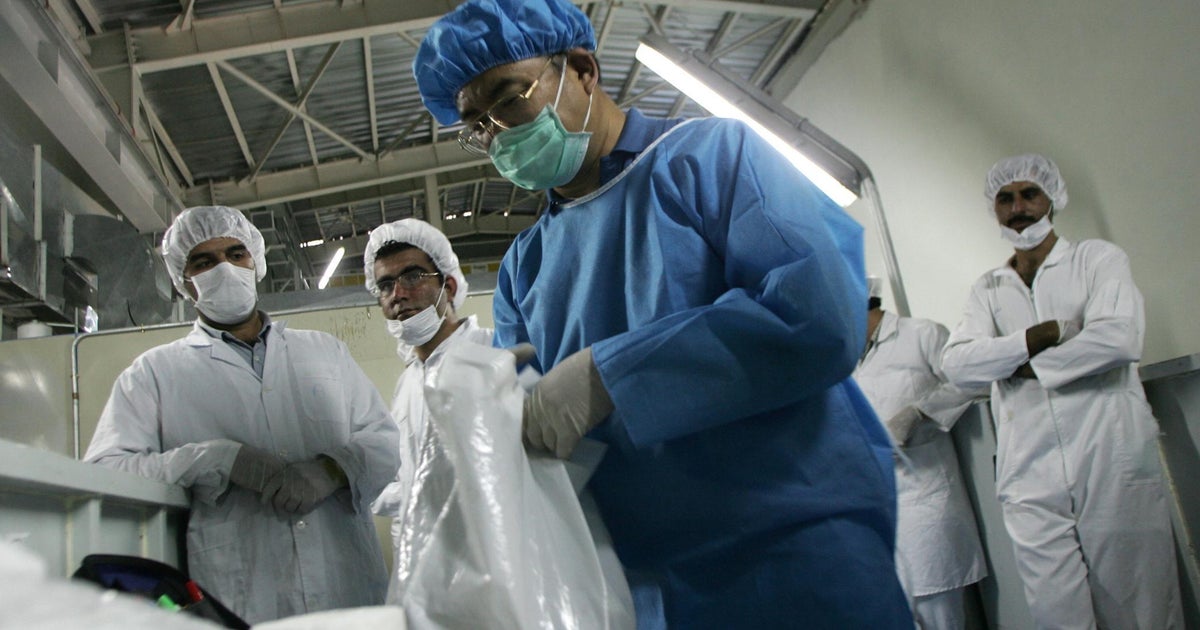
The United Nations nuclear watchdog agency is “increasingly concerned” about its lack of access to an underground Iranian uranium enrichment facility that Tehran has acknowledged exists, but refused to allow inspectors to visit, according to Reuters.
“The Agency does not know IFEP’s exact location, status for safeguards purposes or whether it contains nuclear material,” Reuters quoted the International Atomic Energy Agency as saying in a quarterly report to member states, referring to the Isfahan Fuel Enrichment Plant (IFEP).
The IAEA asked Iran to allow inspectors to visit the IFEP in February, but Tehran refused, telling the U.N. agency that “conditions resulting from acts of aggression and the continuation of threats have created a situation in which the normal implementation of safeguards is legally untenable and materially impracticable.”
The refusal came after the U.S. and Israel pummeled Iranian nuclear sites, including Isfahan, with a wave of missile strikes in June 2025.
The IAEA said in a September report that, since then, it had observed, in satellite imagery, “regular vehicular activity around the entrance to the tunnel complex at Isfahan,” where the agency believes some of the Iran’s roughly 900-pound highly-enriched uranium stockpile is believed to have been buried by the June 2025 missile strikes.
“In light of this activity,” the IAEA said it requested in February that Iran give inspectors access “as soon as possible,” but Tehran has continued to refuse, the nuclear watchdog agency says, citing the attacks on its territory.
BEHROUZ MEHRI/AFP/Getty
The Trump administration has framed Iran’s controversial nuclear program as the primary justification for the war, but it has vacillated during the conflict between suggesting Iran would give up its remaining stockpile voluntarily, to declaring the issue largely resolved.
“More than 80 percent of their nuclear industrial base — gone,” Defense Secretary Pete Hegseth declared earlier this week,” adding: “CRAZY ISLAMISTS IN TEHRAN WILL NEVER EVER HAVE A NUCLEAR WEAPON.”
But Iran has agreed to nothing so far regarding its uranium stockpiles or its enrichment program, including renewed IAEA inspections. It has refused to negotiate with the U.S. on the topic until a formal ceasefire is implemented.
On Wednesday, a top Iranian security official insisted Tehran would “not remove even a single particle of enriched nuclear material from the country.”
President Trump said Thursday that, “we don’t need a deal with Iran,” suggesting he may be willing to leave the matter unresolved.
Iran’s Revolutionary Guard says it destroyed a U.S. early warning radar in Bahrain, the first such claim in months.
It couldn’t be independently verified.
A report by Iran’s official IRNA news agency on Friday quoted a statement by the Guard as saying the attack on the U.S. radar system followed a U.S. strike on a telecommunications pole in the southern Iranian port of Sirik.
Bahrain has been one of the strongest critics of Iran and is home to the U.S. Navy’s 5th Fleet.
The statement said the attack on the radar was a serious warning to the U.S. to cease its strikes. It was the first report by Iran of targeting a facility in Bahrain since September.
During an air war that began in February, Iran targeted U.S. bases in neighboring Arab nations including Bahrain in retaliation for U.S. strikes. Since then, Iran routinely targets oil tankers in the Strait of Hormuz, the critical waterway for international oil shipments.
Iran continues to warn ships not to pass through the strategic shipping lane without its approval.
Iran’s Revolutionary Guard said Friday that there was an explosion on a ship that struck a mine in the Strait of Hormuz, where Tehran has sought to restrict navigation.
Since the outbreak of the Middle East war in late February, Tehran has insisted that vessels obtain its authorization to traverse the strait and has attacked vessels that don’t comply.
In response, the United States imposed a naval blockade on Iranian ports and began providing military support to tankers using the vital trade route.
“A few hours ago, a ship carrying liquefied natural gas east of the Strait of Hormuz tried to cross an unauthorized passageway south of the strait, but was hit by a naval mine and exploded violently,” the IRGC said on Friday, without giving the name or origin of the vessel.
In recent weeks, Iran’s armed forces have repeatedly reported fires or explosions on ships in the strait, often saying they’d hit mines.
The U.S. military, however, claims to have cleared the waterway’s routes of mines.
Mohammad Bagher Qalibaf, Iran’s chief negotiator, told Al Jazeera that U.S. officials requested that Russian President Vladimir Putin facilitate negotiations between Washington and Tehran.
“It was the Americans who, during a visit to Moscow, spoke with Mr. Putin and asked him to speak with Iran so that, in any case, Iran would agree to speak directly with them,” Qalibaf said.
The White House did not directly respond to the Associated Press’ query about whether the U.S. had asked Putin to facilitate talks with Iran.
President Trump’s senior envoys Steve Witkoff and Jared Kushner were in Russia Thursday, where they met Putin to discuss the ongoing war in Ukraine. In their remarks after the meeting, neither Putin nor Mr. Trump’s envoys mentioned any discussion about Iran.
-CBS/AP
President Trump told Vice President JD Vance on Thursday to shift his focus away from the Iran war and instead devote himself to fighting what the president claims is corruption and crime in Democratic-controlled cities and states.
Vance, who served as the lead negotiator for a short-lived truce in the eight-month war, has been blunt in blaming the conflict — and the economic reverberations it has caused — for Republicans’ sweeping losses in last week’s midterm elections in the United States.
But Mr. Trump brusquely told Vance, in a social media post, to shift his energies away from the Iran war to what he argues is a more pressing – and perhaps more politically salient – issue after Republicans were trounced at the polls.
“We don’t need a deal with Iran,” Mr. Trump said in the post. “Those days have long since passed. We’ve got their money, Hundreds of Billions of Dollars, and we’ve got their Strait!”
Mr. Trump earlier this week said he believed the war “militarily is effectively over,” and appeared to double down on that message by pointedly directing Vance “to focus his complete and total attention” on his anti-fraud campaign.
His directive came after The Wall Street Journal reported Wednesday evening that Vance was weighing engaging in a new round of direct talks with a senior Iranian official. The vice president’s office did not respond to a request for comment.
–CBS/AP
About the Author