The exclusionary, hierarchical and hegemonic political discourses that are becoming increasingly visible in today’s Western world may, at first glance, appear to be the product of current political developments, but they are in fact rooted in a deep historical background. In particular, the reproduction of discourses that define the “other” as a threat, a risk or an element to be excluded across different political contexts indicates that this approach has become a persistent mindset.
Indeed, this language, which is increasingly becoming normalized in Western politics today, points to the continuity of a mindset that defines the “other” as a threat and legitimizes its exclusion.
This situation necessitates examining these discourses not only as current political reflexes but also as contemporary manifestations of historically constructed intellectual patterns. Precisely for this reason, this article aims to trace the historical and theological roots of the exclusionary discourses emerging in the Western Christian world, thereby demonstrating that the language encountered today is not accidental but the product of a long-term continuity.
Christians as the ‘other’
In its early period, Christianity occupied the position of the “other” within the Roman Empire. Within the polytheistic religious order, Christians were a community that did not participate in the imperial cult and was therefore viewed as politically unreliable. The environment of intense persecution and oppression that intensified in the second century led to the shaping of Christian identity largely around experiences of exclusion, martyrdom and resistance. Furthermore, the physical persecution and oppression they endured caused wavering in the faith of those who had embraced Christianity, and this situation resulted in some returning to pagan beliefs.
It was precisely at this point that the doctrine “There is no salvation outside the Church” (“Extra Ecclesiam Nulla Salus”), developed by the Church Fathers, emerged as a theological intervention aimed at preserving internal unity within the Church. This doctrine sought to prevent believers from reverting to pagan beliefs and to clearly define the boundaries of the Christian community. Thus, in its initial phase, this approach served a protective rather than an exclusionary function.
However, the fundamental transformation in Christianity’s position within the empire beginning in the fourth century radically altered the meaning of this theological framework. Having gained the status of a legitimate religion with the Edict of Milan in 313, Christianity quickly transformed into an institutional and political power with imperial support. This process elevated the Church from merely a faith community striving to survive into a decisive authority that defined and guided the social order. Indeed, this transformation reached its peak during the reign of Theodosius I, when Christianity was declared the empire’s official religion.
From this point onward, backed by the empire’s political and military power, Christianity not only expanded but also acted as a hegemonic force that reshaped the public sphere. Developments such as the prohibition of pagan worship, the destruction of pagan temples, the demolition of the Serapeum, and the murder of Hypatia demonstrate that the Church had moved beyond a defensive posture to become an exclusionary actor capable of employing violent means when necessary.
During this process, pressures on non-Christian beliefs intensified, and efforts at conversion became more concentrated. Indeed, as historian Ramsey MacMullen notes in his work “Christianity and Paganism in the Fourth to Eighth Centuries,” Christians who had expected tolerance from pagans in the pre-Constantine era found themselves in a new position where power dynamics had reversed following imperial support.
‘Other’ according to Christians
The transformation led to a restructuring of the Church’s relationship with the “other.” Christians, who had previously been an excluded community, began to place pagans, Jews, and those with different theological interpretations into the “other” category. Thus, the “other” became not merely a person of a different faith but a figure positioned as a threat in terms of unity, order and the claim to truth.
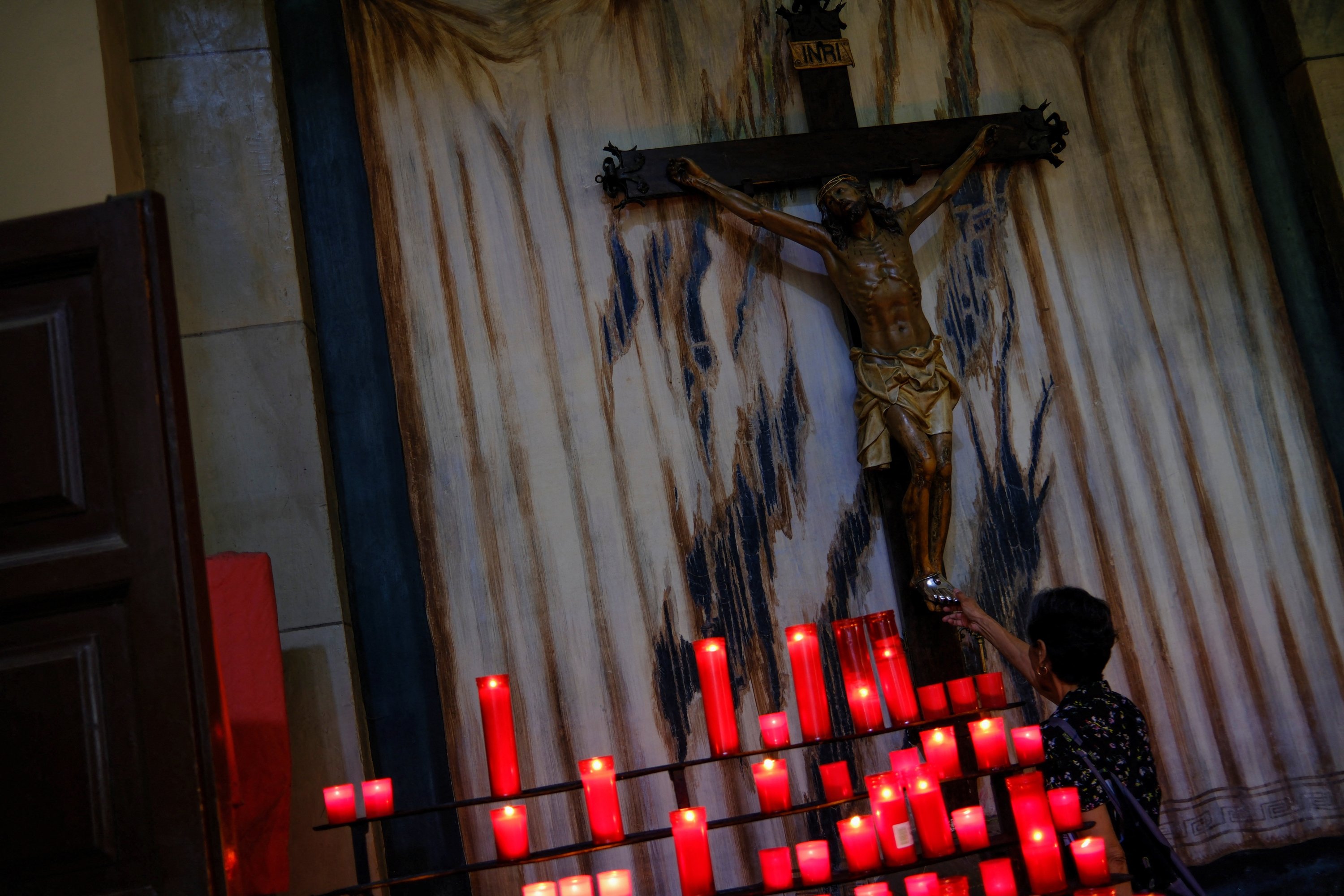
As these developments unfolded, the doctrine that “there is no salvation outside the Church” also underwent an expansion in scope. Initially serving as a warning against internal divisions within the Church, this understanding was eventually interpreted to encompass all faith groups outside the Church. This expansion enabled the Church to position itself as the sole bearer of truth and salvation. Consequently, the “other” was defined not merely as someone who is different, but also as one who remains outside of salvation, and thus, in a sense, as someone who must be eliminated.
During this process, the relationship between theological discourse and political power became increasingly tight. The Church’s imperialization proceeded through three fundamental practices: exclusion, conversion, and control. The first stage, exclusion, involved the removal of non-Christian beliefs from the public sphere. The prohibition of pagan worship, the closure of temples, and the suppression of traditional rituals were the primary tools of this process. These measures emerged not only as religious choices but also as political interventions aimed at reorganizing the public sphere.
The second stage, transformation, refers to the reinterpretation of existing religious and cultural structures within a Christian framework. The conversion of pagan temples into churches and the adornment of former sacred spaces with Christian symbols highlight the symbolic dimension of this transformation. This goes far beyond the physical alteration of spaces; it also signifies the complete reconstruction of the world of meaning.
Institutionalization of alienation
The third stage, control, involves bringing differences under control through institutional mechanisms. The institutionalization of the concept of “heresy” is one of the most significant indicators of this process. The series of ecumenical councils beginning with the Council of Nicaea demonstrates that theological differences became a subject of political intervention. In this context, thinking differently was regarded not only as a theological schism but also as an element threatening social order.
The most distinct phase of this transformation was the proclamation of Christianity as the empire’s official religion following the accession of Theodosius I. This development led to the institutionalization of a structure in which beliefs viewed as “the other” were systematically excluded. The prohibition of pagan worship and the suppression of different religious groups served as clear indicators of this process.
Consequently, the Church’s process of imperialization cannot be viewed merely as the rise to power of a religious institution. This process also signifies the systematic reconstruction of the “other” on both theological and political planes. Christianity, which began as an excluded community, transformed into an authority that excluded, defined, and drew boundaries with the support of the empire. In this transformation, the “other” ceased to be a category denoting the different; it was instead positioned as a figure situated outside the realm of truth, salvation, and legitimate existence.
Xenophobia has its roots
This historical analysis clearly validates the central claim presented in the introduction: The exclusionary and hierarchical discourses increasingly visible in contemporary Western political language, while appearing modern and secular on the surface, are fundamentally a continuation of a historically constructed mindset.
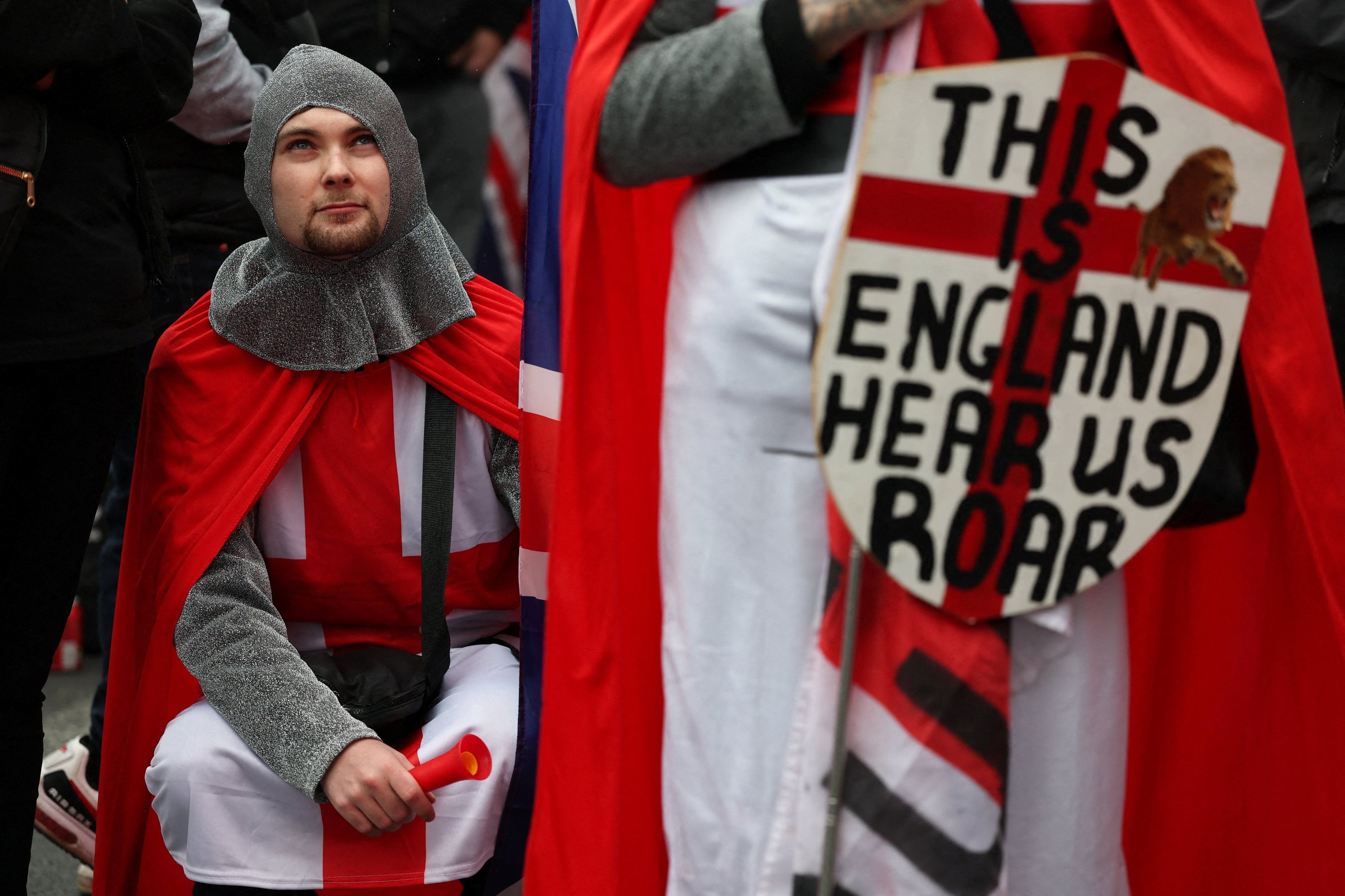
Indeed, U.S. President Donald Trump’s rhetoric positioning immigrants as sources of crime and threat, the European far-right’s production of exclusionary policies through an emphasis on a “Christian European identity,” Marine Le Pen’s rhetoric of protecting national identity, and Geert Wilders’ anti-Islam and anti-immigrant rhetoric, which positions immigrants as a cultural threat, can be regarded as contemporary manifestations of this approach.
This approach, which defines the “other” as a threat and turns it into an element to be excluded, draws its origins from the practices of exclusion, conversion, and control developed by the Church during its process of imperialization. The exclusionary discourses we face today are the most recent manifestation of a mindset that has been reproduced throughout history by constantly changing form.
Indeed, this language, which is increasingly becoming normalized in Western politics, points to the continuity of a mindset that codes the “other” not merely as different but also as a threat, thereby legitimizing its exclusion. This situation demonstrates that exclusion has ceased to be an exceptional reflex and has instead transformed into a political behavior pattern that has been legitimized and normalized within the historical process. Thus, this language that excludes “the other” is not merely a contemporary discourse; it stands before us as a clear reflection of a mindset that has been historically constructed and continues to exert its influence today.
The views and opinions expressed in this article are solely those of the author. They do not necessarily reflect the editorial stance, values or position of Daily Sabah. The newspaper provides space for diverse perspectives as part of its commitment to open and informed public discussion.
DAILYSABAH
هلدینگ کاسپین استانبول | خرید ملک در ترکیه | صرافی معتبر ایرانی در ترکیه | خرید و فروش طلا در ترکیه | مهاجرت به ترکیه | واردات و صادرات در ترکیه | نیازمندیهای ترکیه | اخبار ترکیه | اخبار جهانی | توریست ایران | خدمات توریستی در ایران | تورهای گردشگری ایران | هلدینگ اول | خدمات کاریابی و فریلنسری و شغل | مرجع اطلاعات ایران (همه چیز در ایران) | کیف پول و خدمات مالی و پرداخت یار | اخبار ایران | تابلو زنده قیمت ارز در ترکیه و استانبول | صرافی آنلاین ترکیه | قیمت طلا و نقره در ترکیه | سرمایه گذاری در ترکیه | جواهرات در ترکیه | نرخ لحظه ای ارزها در استانبول | قیمت دلار امروز در ترکیه | قیمت دلار استانبول امروز | قیمت لحظه ای دلار | اخبار روز ترکیه استانبول | اپلیکیشن ISTEX | اپلیکیشن قیمت لحظه ای دلار و یورو و لیر و ارزها در ترکیه
About the Author