While the whole world eagerly awaits an agreement between the U.S. and Iran, U.S. President Donald Trump posted on his TruthSocial account on May 25, demanding that Saudi Arabia, Qatar, Pakistan, Egypt, Jordan and Türkiye, as well as Iran, join the Abraham Accords. He stated that this was not a request but rather a necessity, and that if these countries did not join the agreement, negotiations with Iran would not proceed to the next phase.
While these remarks, which dropped like a bombshell, caused widespread outrage and astonishment in regional countries, they were met with satisfaction in Israel. This is because it had been deeply disappointed that, since the Abraham Accords were implemented in 2020, no other regional country besides the United Arab Emirates and Bahrain had joined the process. Following Trump’s latest statement, Israel has begun to anticipate the possibility of new participants joining the Abraham Accords process.
However, despite Trump’s threatening remarks, none of the countries mentioned has expressed a willingness to join the Abraham Accords, which require normalization with Israel under the current conditions. On the contrary, it has become clear that Trump is desperately trying to use the Abraham Accords as a tool to end the war with Iran, and this demand has been flatly rejected.
Therefore, there has been curiosity about the reasoning behind his strategy, which has no connection to the war with Iran.
Onset of the Abraham Accords
During his first term, Trump promised to implement a major agreement that would end the long-standing conflict between Israel and Palestine, and in this context, he announced the so-called “Deal of the Century” on Jan. 27, 2020. However, because the agreement’s terms were entirely tailored to Israel’s demands and disregarded the rights of Palestinians, the plan was rejected by the Palestinians and has since become obsolete.
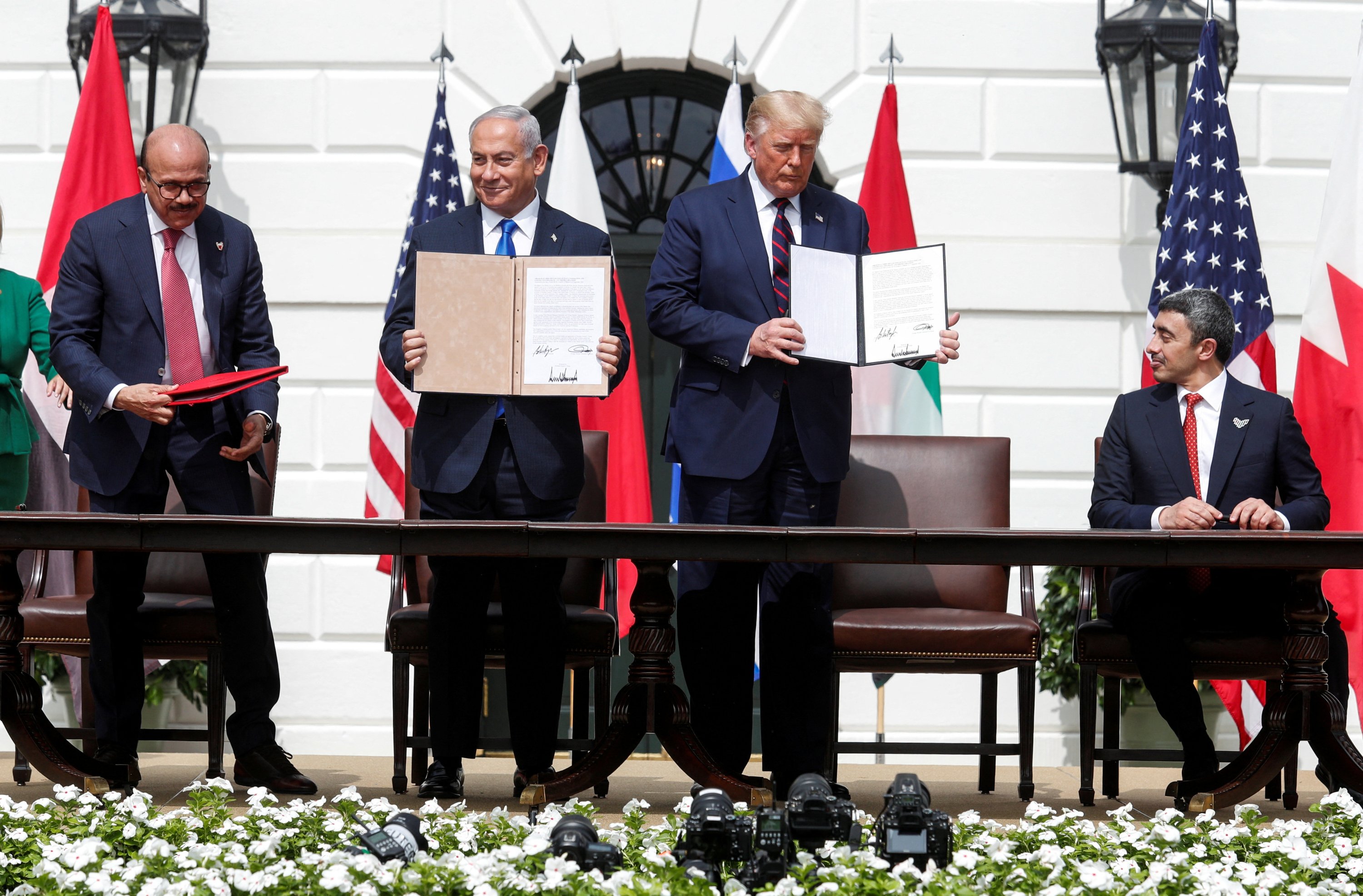
Then, Trump announced the Abraham Accords on Aug. 13, 2020, in an effort to both appease Israel and gain an advantage by securing the support of the Jewish lobby in the upcoming elections. Subsequently, on Sept.15, 2020, during a grand ceremony at the White House, the Abraham Accords, which provide recognition of Israel and establishment of trade relations, were signed by Israeli Prime Minister Netanyahu and the foreign ministers of the UAE and Bahrain. Shortly thereafter, Morocco was included in the Abraham Accords after being promised recognition of its sovereignty over Western Sahara, and Sudan was subsequently included after being promised removal from the U.S. list of state sponsors of terrorism.
Trump’s loss in the November 2020 election and the new administration’s statement that, while they do not oppose the Abraham Accords, they will not be as eager as the Trump administration to expand the number of countries participating in the process have effectively, if not officially, put the Abraham Accords on hold.
During this period, Israel’s escalation of attacks on Gaza, its intensification of violations and land seizures in the occupied West Bank, its approval of new settlement areas in violation of international law, and, perhaps most importantly, its increasing actions aimed at altering the status of the Al-Aqsa Mosque have made it impossible for Muslim countries to even establish communication with Israel, let alone normalize relations. Then, the “Al-Aqsa Flood” attack carried out on Oct.7 and the genocidal policies Israel has implemented against Palestinians in its attacks on Gaza have left no room for normalization with Israel, neither for Saudi Arabia nor for any other regional country.
Initiatives to revive accords
One of Trump’s major promises during his campaign to be reelected as president was to revive the Abraham Accords and ensure that more regional countries joined the process. Indeed, after he was reelected, this issue became the top priority during Netanyahu’s visits to the White House and during Trump’s May 2025 trip to the Middle East, following agreements on arms sales.
Trump has encouraged regional countries to normalize relations with Israel at every opportunity, while at the same time pressuring them by wielding the stick under the cloak. However, as if Israel’s attacks on Gaza were not enough, its increased occupation following the regime change in Syria, its renewed attacks on Lebanon under the pretext of Hezbollah, and finally the 12-Day War in June 2025 have all led regional countries to drift further away from the Abraham Accords.
Under intense pressure from the Jewish lobby and the Evangelicals in his inner circle, and having been misled by the false intelligence reports presented to him by Netanyahu, Trump joined the war that began on Feb. 28 in the hope of an easy victory and attacked Iran alongside Israel. However, despite the heavy casualties inflicted on Iran by U.S. and Israeli forces, the Iranian regime did not collapse, dashing Trump’s hopes. Despite all his efforts, Trump has been unable to bring Iran to its knees. He has neither managed to open the Strait of Hormuz nor remove Iran’s enriched uranium.
When you add to this the possibility of Iran attacking Gulf countries, escalating the conflict, and damaging the global economy by closing the Strait of Hormuz, continuing the war has become very costly for the United States.
Hopeless endeavour
It was against this backdrop that Trump made his remarks regarding the Abraham Accords, projecting the image of someone who, rather than acting like the leader of a superpower, was left with no other option but to cling to any available means in an attempt to extricate himself from the predicament he had fallen into. After all, not only do the Abraham Accords have no direct connection to the war with Iran, but they cannot be sustained due to both Israel’s genocidal policies in Gaza and its attacks on Lebanon and Syria. Consequently, all the countries Trump mentioned have objected to normalizing relations with Israel in exchange for ending the war against Iran.
Other than the UAE and Bahrain, no regional country views the Abraham Accords as a mechanism for resolving issues by normalizing relations with Israel despite the Palestinians. Nor do they believe in the sincerity of this process or wish to participate in it.
If Trump wants to use this opportunity to normalize relations between regional countries and Israel, he must first ensure that Israel withdraws from Gaza, accepts the two-state solution and stops attacking its neighboring countries. Restraining Israel would eliminate the need for the Abraham Accords, render the ongoing war with Iran unnecessary, and lead to comprehensive regional normalization. Therefore, it is Israel, not the regional countries, that Trump should be pressuring.
DAILYSABAH
هلدینگ کاسپین استانبول | خرید ملک در ترکیه | صرافی معتبر ایرانی در ترکیه | خرید و فروش طلا در ترکیه | مهاجرت به ترکیه | واردات و صادرات در ترکیه | نیازمندیهای ترکیه | اخبار ترکیه | اخبار جهانی | توریست ایران | خدمات توریستی در ایران | تورهای گردشگری ایران | هلدینگ اول | خدمات کاریابی و فریلنسری و شغل | مرجع اطلاعات ایران (همه چیز در ایران) | کیف پول و خدمات مالی و پرداخت یار | اخبار ایران | تابلو زنده قیمت ارز در ترکیه و استانبول | صرافی آنلاین ترکیه | قیمت طلا و نقره در ترکیه | سرمایه گذاری در ترکیه | جواهرات در ترکیه | نرخ لحظه ای ارزها در استانبول | قیمت دلار امروز در ترکیه | قیمت دلار استانبول امروز | قیمت لحظه ای دلار | اخبار روز ترکیه استانبول | اپلیکیشن ISTEX | اپلیکیشن قیمت لحظه ای دلار و یورو و لیر و ارزها در ترکیه
About the Author