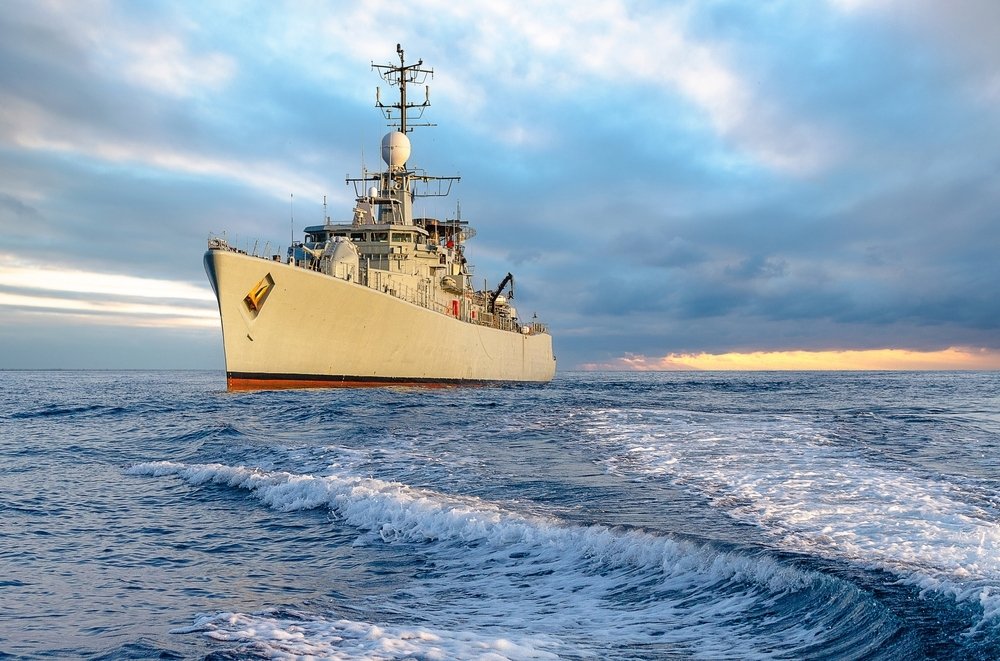
The recent attacks on merchant ships in the Black Sea raise an increasingly concrete strategic question for Türkiye. How much responsibility should Ankara assume for the functioning of the regional security order while advocating for its maintenance? According to open-source data, at least seven cargo ships have been attacked off the coast of Romania and Bulgaria since the beginning of the month, according to a report dated Oct. 16, 2026; two people have been killed, and at least 25 people are still missing at the time of publication. This balance sheet makes the security of maritime trade one of the urgent topics on the diplomatic agenda.
In my previous analysis of the “War of the Two Straits,” I argued that the pressure on Hormuz and Bab al-Mandeb turned these two narrow passages into an interconnected strategic issue for the Gulf and Türkiye. The Black Sea adds a different dimension to the same debate. Here, Türkiye is not only a country affected by instability in trade routes, but also an actor that plays a central role in the implementation of the Straits regime and aims to lead regional security cooperation.
This is where Ankara’s dilemma regarding its role as a guardian comes into play. If Türkiye fails to take the lead in ensuring adequate protection, its claim to regional ownership could erode. If it transforms its protective role into direct military engagement, its capacity to contain the conflict and act as a mediator could come under pressure.
Changing geography of threat
Attacks on merchant ships are nothing new. On Nov. 28, 2025, the Turkish Ministry of Foreign Affairs officially documented the attacks on the tankers Kairos and Virat. Subsequent reports by Lloyd’s List examined these vessels, which were struck by unmanned maritime vehicles off the coast of Türkiye in the context of Russian oil trade and sanctions. The events of October 2026, meanwhile, highlight the vulnerability of trade routes in the western Black Sea.
Türkiye’s interest in these developments stems not only from its geographical proximity. According to a report dated Oct. 6, a Turkish-owned cargo ship carrying corn off the coast of Romania reportedly caught fire and sank following a drone attack. Turkish ownership and the Turkish flag are not the same thing; however, the incident highlights the risks directly faced by Türkiye-linked commercial activities.
There may not be sufficient evidence to interpret these incidents as a single attack campaign. Findings regarding the ships’ commercial ties, the attack methods, and the perpetrators must be evaluated separately. Indeed, while Bulgaria identified Russia as a likely culprit in the October attacks, it also noted that it could not prove this. It is important to maintain the distinction between an official accusation and confirmed responsibility.
However, the common strategic implication of these various events is clear: it is becoming increasingly difficult to ensure the security of trade by defending ports alone. The maritime routes leading to ports must also be monitored and protected. Since aerial drones and unmanned maritime vehicles pose different threats, it is essential to consider both the air and maritime dimensions of protection together.
From authority to expectation
The Montreux Convention establishes a fundamental link between Türkiye’s security and the military balance in the Black Sea. The treaty does not entirely exclude warships from non-littoral states; rather, it subjects their transit and presence in the Black Sea to specific rules. Tonnage limits and a maximum stay of 21 days are stipulated for these vessels. Thus, the function of the Montreux Convention is to establish a balance that limits and makes predictable the presence of non-regional naval forces.
However, regulating the passage of warships through the Straits and protecting merchant ships in the Black Sea from attacks are different tasks. New means of attack make it possible to exert pressure at sea without the need to send additional warships through the Straits. While the balance provided by the Montreux Convention remains important, the need for complementary mechanisms to ensure the security of trade is growing.
Here, it is necessary to distinguish between legal obligations and political expectations. The Montreux Convention does not assign Türkiye the duty of protecting all commercial vessels in the Black Sea. In contrast, the approach of regional ownership advocated by Ankara is based on the claim that riparian states can jointly devise solutions to security issues. The credibility of this claim is tested by the capacity demonstrated during periods of heightened threats.
The role of guardian thus takes on a political significance that goes beyond the mere implementation of the transitional regime. A state that seeks to lead the regional order is also expected to demonstrate how it will contribute to the maintenance of that order.
Cost of security vulnerability
The impact of the attacks is not limited to the ships that were struck. The pricing of risk can also make voyages that were not attacked more expensive.
A concrete example of this was seen following the November 2025 attacks. According to a Dec. 3, 2025, report by Lloyd’s List, citing information from two insurers, war risk premiums per voyage for ships calling at Russian Black Sea ports rose from approximately 0.50% to 0.65% of the vessel’s value within a week. This data pertains to a specific period and route; it cannot be generalized to all current Black Sea voyages. However, it demonstrates how quickly security incidents can translate into commercial costs.
For this reason, from Türkiye’s perspective, the debate extends beyond the preservation of diplomatic influence. The safety of seafarers, the predictability of shipping, and the cost of trade are all part of the same issue. Failure to address the need for protection could lead neighboring states to seek alternative security arrangements.
However, more active military protection also comes at a cost. Escorting a merchant ship raises the question of how to respond if an attack occurs. If the perpetrator is unknown, it becomes difficult to make a decision; if the perpetrator can be identified, the risk of direct conflict arises. Ankara needs to increase its protection capabilities while keeping the limits of engagement open.
Between NATO and ownership
Bucharest’s initiative shows that the quest for security is beginning to take the form of institutional proposals. Romanian Defense Minister Radu Miruta announced on Oct. 14 that he had proposed, in a joint letter to his Bulgarian counterpart and NATO leadership, the establishment of a military command in the Black Sea. He noted that Romania could host the command starting in 2028, and that until then, the command could operate from Türkiye’s Black Sea coast with the participation of Romanian and Bulgarian officers. This is not a finalized NATO decision; it is a proposal put forward by Bucharest.
It is important that the proposal includes Türkiye. The challenge facing Ankara is not limited to responding after the fact to a structure established without its involvement; it also has the opportunity to define the role and boundaries of an arrangement that is still taking shape. A BTA report dated Oct. 13, based on a statement from the Bulgarian Ministry of Defense, also indicates that Sofia is conducting security talks with both Romania and Türkiye.
This situation makes it difficult to treat NATO support and regional ownership as mutually exclusive options. Türkiye, Romania and Bulgaria are all members of the same alliance. The real questions are: for which missions will the support be provided, who will make the operational decisions, and how will the naval components be organized?
The deployment of warships from non-littoral states, coupled with aerial surveillance, intelligence sharing, and counter-UAV defense support, leads to different outcomes. Rather than assuming that every NATO initiative will inevitably result in a demand to amend the Montreux Convention, it is necessary to evaluate specific proposals regarding forces and missions.
An effective approach for Ankara would be to bring together the leadership of neighboring allies, compliance with the Montreux Convention, and clearly defined defense missions within a common framework.
Phased protection model
Türkiye has institutional experience it can draw upon. The agreement establishing the Black Sea Counter-Mine Task Force between Türkiye, Romania and Bulgaria was signed on Jan. 11, 2024; the activation ceremony was scheduled for July 1, 2024. This initiative demonstrates that the three coastal allies are capable of acting in unison against a specific threat.
However, the shift from mine-clearing cooperation to protecting merchant ships against drone attacks is not simply an expansion of the mission. New missions require different sensors, defense systems, command structures, and political authorization. The current framework offers a basis for cooperation upon which new arrangements can be built, rather than a ready-made solution.
The first step could be the development of joint maritime and air surveillance. Identifying high-risk areas, providing early warnings to commercial vessels, and sharing incident information can enhance protective capabilities without resorting to further military engagement. Joint efforts to identify the sources of attacks also strengthen the credibility of diplomatic initiatives.
In the second phase, targeted defense measures for port approaches and heavily trafficked trade routes could be evaluated. The escorting of convoys, however, should be considered as an option with a predefined scope. Initiating operations before it is clear which ships will be protected, in which waters, and under which rules of engagement could create new uncertainties.
These measures should be supported by diplomatic efforts with Moscow and Kyiv. Seeking a partial agreement to limit attacks on merchant ships and port infrastructure could reduce the military pressure on protection operations. For such an arrangement to work, the scope of the activities to be protected, the methods for detecting violations, and the communication channels between the parties must be clearly defined.
Türkiye’s ability to manage its security dilemma depends on accurately defining the scope of its responsibility. Ankara cannot single-handedly assume responsibility for the security of the entire Black Sea region. However, by bringing together its coastal allies, shaping the terms of allied support, and pursuing diplomacy with the warring parties, it can play a decisive role.
The recent attacks are making it more costly to postpone this decision. Türkiye’s regional leadership will be strengthened to the extent that it can establish concrete cooperation that protects trade, limits the risk of escalation, and preserves the Montreux Convention.
The views and opinions expressed in this article are solely those of the author. They do not necessarily reflect the editorial stance, values or position of Daily Sabah. The newspaper provides space for diverse perspectives as part of its commitment to open and informed public discussion.
DAILYSABAH
هلدینگ کاسپین استانبول | خرید ملک در ترکیه | صرافی معتبر ایرانی در ترکیه | خرید و فروش طلا در ترکیه | مهاجرت به ترکیه | واردات و صادرات در ترکیه | نیازمندیهای ترکیه | اخبار ترکیه | اخبار جهانی | توریست ایران | خدمات توریستی در ایران | تورهای گردشگری ایران | هلدینگ اول | خدمات کاریابی و فریلنسری و شغل | مرجع اطلاعات ایران (همه چیز در ایران) | کیف پول و خدمات مالی و پرداخت یار | اخبار ایران | تابلو زنده قیمت ارز در ترکیه و استانبول | صرافی آنلاین ترکیه | قیمت طلا و نقره در ترکیه | سرمایه گذاری در ترکیه | جواهرات در ترکیه | نرخ لحظه ای ارزها در استانبول | قیمت دلار امروز در ترکیه | قیمت دلار استانبول امروز | قیمت لحظه ای دلار | اخبار روز ترکیه استانبول | اپلیکیشن ISTEX | اپلیکیشن قیمت لحظه ای دلار و یورو و لیر و ارزها در ترکیه
About the Author